Category: Case Studies

  • IKEA Tricks You Into Buying Things You Never Planned to Buy

    IKEA Tricks You Into Buying Things You Never Planned to Buy

    You walked into IKEA for a $79 bookshelf.

    You walked out with the bookshelf, two cushions, a plant you have absolutely no idea how to keep alive, six glasses, a lamp, Swedish meatballs, and a tiny storage box whose only job is apparently to store the other things you bought at IKEA.

    And the funniest part? You probably think you made all those decisions yourself. That is what makes IKEA’s marketing so interesting. It doesn’t need to scream BUY THIS.

    Instead, IKEA builds an environment where buying feels like the natural conclusion of the experience.

    And this isn’t some tiny retail experiment. In FY2025, IKEA generated €44.6 billion in global retail sales, while its stores welcomed 915 million visitors, up from 899 million the year before. Online sales accounted for another 28% of IKEA turnover.

    In the U.S. alone, IKEA reported $5.3 billion in FY2025 sales, including $1.9 billion from e-commerce. Nearly 61 million people visited its U.S. stores, while more than 457 million visited IKEA online. Its IKEA Family loyalty program reached 25 million U.S. members, a 17% increase from the previous year.

    So, yes, the furniture is doing some work. But the marketing system around the furniture is doing considerably more.

    IKEA Doesn’t Put Products, It Puts Possibilities

    Walk through a traditional furniture store and you might see a sofa. Walk through IKEA and you see a life involving the sofa.

    The sofa isn’t sitting there looking lonely under fluorescent lights.

    It’s surrounded by a coffee table, rug, cushions, lighting, books, plants and some suspiciously perfect-looking Scandinavian person-shaped absence.

    Suddenly, you’re not evaluating a sofa. You’re imagining your living room. That’s a huge distinction in marketing.

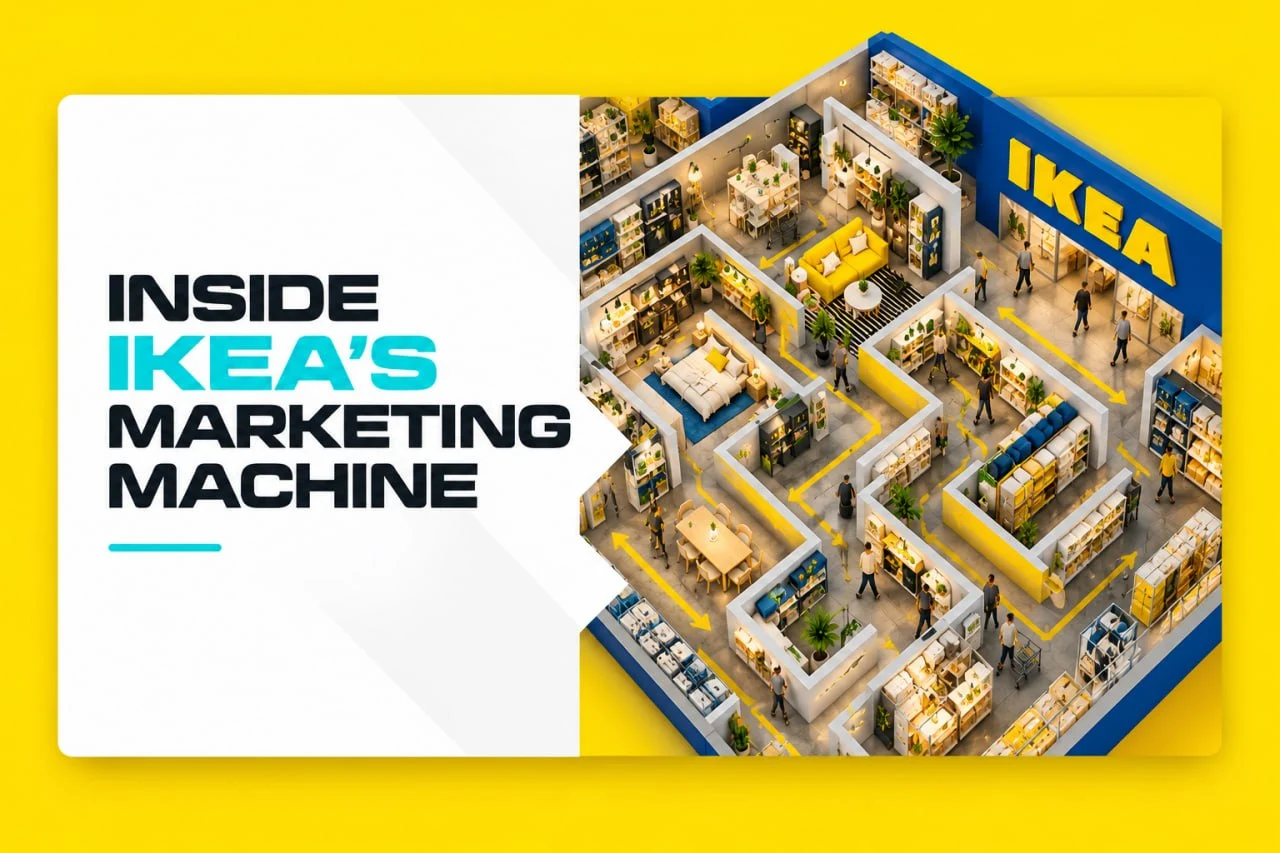
    IKEA officially describes its showroom as a series of realistic room settings where shoppers can interact with products, sitting on sofas, opening drawers, pretending to cook, lying on beds and experiencing products as they would at home.

    This is experiential merchandising. Instead of saying “Here’s a $399 sofa.” IKEA is effectively saying “Here’s what your Tuesday night could look like if your apartment stopped looking like a storage unit.” And that’s a much easier thing to sell.

    The product becomes part of a desired lifestyle rather than an isolated object.

    This matters because people don’t always buy products based purely on their functional specifications.   They buy what those products represent.

    A desk isn’t just a desk., it’s productivity. A dining table isn’t just a table, it’s dinner parties. A wardrobe isn’t just storage, It’s the fantasy that your clothes will finally stop living on that chair.

    IKEA sells the after-picture.

    The Showroom Is Basically a Physical Content Funnel

    Here’s where IKEA gets particularly clever. Its store isn’t simply organized by product category.

    The journey typically moves through Showroom → Market Hall → Self-Serve → Checkout. IKEA itself describes these as distinct parts of the store experience.

    That’s essentially a physical marketing funnel.

    Awareness – You enter the showroom and encounter ideas.

    Consideration – You see products in actual rooms and start imagining them in your own home.

    Intent – You remember a product number, price or location.

    Conversion – You eventually reach the self-service area and pick up the flat-pack box.

    Expansion – And then there are all those little products you’ve encountered along the way.

    The genius is that IKEA doesn’t rush you toward checkout. It gives you more opportunities to develop reasons to buy. And this is where the famous IKEA “maze” becomes more interesting. 

    The long path isn’t necessarily just about confusing you, it’s about exposure. If you came in wanting a desk, IKEA has plenty of time to show you what else could go with that desk.

    IKEA Turns Browsing Into a Series of Tiny Sales Pitches

    Think about how many decisions happen during an IKEA visit.

    You see a room, then a product, then another product that complements it, then you notice the price, then you touch it, then you imagine it at home, then you start thinking “Actually… I could use that.” That last sentence is marketing gold. Because the customer has now created the purchase rationale themselves.

    IKEA doesn’t necessarily have to persuade you that you need a product. The environment helps you persuade yourself.

    Research on store atmospherics supports this broader principle. A Journal of Retailing study found that pleasant in-store experiences were associated with shoppers spending more time in stores and spending more money than they had originally intended.

    A more recent study of 683 supermarket shoppers similarly found that sensory marketing influenced dwell time and purchasing behavior, with emotional responses mediating part of that relationship.

    IKEA’s version is more sophisticated because the sensory experience isn’t just about music, lighting or smell.

    It’s visual storytelling.

    The $5 Product Is Not Really About the $5 Product

    This is one of the easiest IKEA tactics to overlook.

    A customer might enter thinking “I need a wardrobe.” But along the journey, they encounter dozens of relatively inexpensive products. None of those products individually feels like a serious financial decision.

    And that’s exactly why they are dangerous. A $3 impulse purchase doesn’t trigger the same mental resistance as a $300 purchase. But ten tiny decisions can quietly turn into a very non-tiny receipt. 

    This is basket expansion. Instead of increasing the price of the product you originally came for, IKEA increases the number of products in your basket. And IKEA’s huge product ecosystem makes that possible.

    The customer isn’t just buying a wardrobe. They’re buying the wardrobe ecosystem.

    IKEA Makes the Customer Part of the Product Story

    Here’s where IKEA pulls off something most furniture brands would probably love to manufacture but can’t. It makes the customer work for the product. That sounds like terrible customer experience advice.

    Usually, marketers spend their lives trying to remove friction. One-click checkout. Free delivery. No-questions-asked returns. Fewer forms. Fewer steps. Less effort.

    IKEA went in a slightly different direction.

    You find the product yourself.

    You pick it up yourself.

    You take it home yourself.

    And then, armed with an Allen key and questionable confidence, you build it yourself.

    Yet that effort can actually become part of the product’s value.

    Researchers Michael Norton, Daniel Mochon and Dan Ariely famously called this the “IKEA effect” after finding that people who successfully assembled IKEA products tended to value their creations more highly. Their experiments weren’t limited to IKEA furniture either; participants assembled origami and LEGO creations, showing that the underlying effect was connected to the act of completing something yourself.

    A 2025 meta-analysis took the idea further, analysing 55 studies involving 5,454 participants and finding a significant relationship between self-assembly and increased product valuation.

    From a marketing perspective, that’s fascinating. Because IKEA isn’t simply handing customers a finished product. It’s giving them a story about the product.

    That bookshelf isn’t just something you purchased on Saturday, you built it, and you remember where it nearly went wrong, you remember which screw mysteriously remained after you finished, you probably remember the exact moment you finally stood it upright.

    And suddenly, the product has a little history attached to it. IKEA has turned assembly from an inconvenience into part of the brand experience. That’s a very different kind of customer engagement.

    IKEA Doesn’t Just Sell Furniture. It Sells Permission to Redesign Your Life

    There’s another reason IKEA’s marketing works so well. Its products rarely arrive with the emotional weight of a luxury purchase. You don’t need to convince yourself that buying a $6 storage box is a life-changing financial decision. And that matters.

    IKEA has spent decades positioning functional design as something ordinary people should be able to afford. Its famous concept revolves around offering well-designed, functional products at prices accessible to as many people as possible.

    That positioning creates an interesting psychological combination:

    Design feels aspirational.

    Price feels approachable.

    And when those two meet, the customer doesn’t necessarily feel like they’re splurging. They feel like they’re being sensible. That’s a powerful position for a retailer.

    Luxury brands often say “You deserve something special.” IKEA’s message is closer to “Why shouldn’t your everyday life look better?”

    A better kitchen doesn’t have to be a luxury project., a nicer workspace doesn’t have to mean designer furniture, a more organised bedroom doesn’t have to require a massive renovation.

    That expands the number of situations in which IKEA can enter a customer’s life.

    And once you’ve accepted the idea that good design can be affordable, suddenly upgrading the boring parts of your home doesn’t feel extravagant. It feels overdue.

    Then IKEA Gives You a Reason to Stay

    Furniture shopping isn’t exactly known for being entertaining. Nobody wakes up on Saturday morning thinking, “Can’t wait to spend four hours comparing wardrobes.”

    IKEA understood this problem early. So it turned the shopping trip into a destination. And this is where the food becomes far more important than it first appears.

    The IKEA restaurant, Bistro and Swedish Food Market aren’t merely convenient places to grab something when you’ve been wandering around for too long.

    They extend the IKEA experience beyond furniture.

    The company’s food business has become enormous. IKEA says around 680 million customers experienced its food offer globally in 2019, while its famous food balls have become one of the brand’s most recognisable products. IKEA says it has sold around 1.4 billion food balls annually since introducing meatballs in 1985.

    Think about what that does from a branding perspective. You don’t just remember the sofa, you also remember the meatballs, the cheap coffee, going there with your parents, wandering around the bedroom displays, even arguing about whether the lamp actually matches the curtains.

    The brand becomes attached to an experience, not just a product category. And experiences are much harder for competitors to copy. A furniture company can copy a minimalist coffee table.

    Copying decades of memories around meatballs, Swedish design, flat-pack furniture and Saturday shopping trips is considerably harder.

    IKEA made the store itself part of the brand.

    The Price Tag Is Doing More Marketing Than the Billboard

    IKEA’s pricing strategy deserves its own attention because affordability isn’t just a financial decision for the company. It’s part of the brand identity.

    In FY2025, IKEA said it had lowered prices by around 10% over the previous two years, with the company reporting that sales volumes and customer numbers both increased by around 3% during FY2025.

    That tells us something important about how IKEA uses price.

    The company isn’t simply trying to be cheap, it’s trying to make good design feel attainable and that is a different proposition.

    Imagine seeing a beautifully styled room where almost everything has a price attached to it.

    Instead of thinking “That whole room must cost a fortune,” you discover that the lamp is affordable. The chair is affordable, the side table is affordable, the storage is affordable, ssuddenly, the entire room feels achievable.

    This is where IKEA’s room displays and pricing strategy reinforce each other.

    The showroom creates desire.

    The price removes resistance.

    That’s much more powerful than either one operating alone.

    The $4.99 Purchase Is Doing a Bigger Job Than You Think

    There’s another clever consequence of IKEA’s pricing architecture.

    Low-priced products lower the psychological stakes of experimentation. You’re much more likely to think “I’ll just try it.” When the price is small enough, the decision doesn’t feel like a serious purchase. And that’s where basket expansion starts happening.

    You came for a wardrobe, then you see an organiser, then a laundry basket, then some hooks, then a little lamp, then something for the kitchen because, apparently, the kitchen has suddenly become part of this project too.

    None of these decisions feels particularly dramatic, and that’s the point. IKEA doesn’t necessarily have to make every additional purchase exciting. It just needs to make each one easy to justify.

    The customer’s internal conversation changes from “Do I really need this?” to “It’s only $5.”

    Multiply that behaviour across hundreds of products and millions of shoppers, and tiny decisions become a very serious retail strategy.

    IKEA Family Is Where the Shopping Trip Becomes a Relationship

    Getting someone to buy a product once is acquisition. Getting them to come back is marketing with a longer memory. IKEA Family is central to that second part.

    In the U.S., IKEA said its IKEA Family membership reached 25 million members in FY2025, representing a 17% increase from the previous year. The company also reported more than 61 million store visits and $5.3 billion in U.S. sales during the year.

    But the interesting part isn’t simply the size of the loyalty programme. It’s what IKEA is doing with it.

    In 2025, IKEA U.S. expanded its rewards programme so customers could earn points through activities across the journey, including shopping and planning, with rewards including discounts, delivery savings and free meals.

    That changes the role of loyalty. The customer isn’t only valuable when they hand over money. Their relationship with the brand can begin while they’re planning what to buy. That’s a subtle but important shift.

    IKEA is moving from “Come to our store when you need furniture.” toward “Come to us when you’re thinking about changing your home.” And that is a much larger piece of the customer’s decision-making journey.

    IKEA Customers Started Doing the Marketing for IKEA

    Here’s where the strategy gets even more interesting.

    People don’t just buy IKEA products. They modify them, combine them, hack them, redesign them, post before-and-after photos, and show off their kitchens, wardrobes, desks and tiny-apartment transformations.

    Search online for IKEA hacks and you’ll quickly discover that the internet has effectively created an unofficial IKEA content department. And IKEA gets something incredibly valuable out of that… people demonstrating what its products can become.

    The company doesn’t have to publish every possible use case itself. Customers do it. One person turns a bookshelf into storage, another turns a cabinet into a vanity, someone else creates a home office from a combination of products.

    The original product becomes the starting point for a much larger stream of content.

    This is one of the strongest forms of marketing because the brand isn’t simply saying “Look what our product can do.” A customer is saying it. That difference matters. The customer has no reason to make the product look good for IKEA. They’re showing people what they actually did with it. And suddenly a basic furniture product becomes inspiration for someone else’s purchase.

    IKEA doesn’t just sell furniture. It sells raw material for creativity.

    The Giant Blue Box Is No Longer the Whole Strategy

    For decades, the IKEA experience was built around one very specific ritual:

    Drive somewhere, enter the giant blue building, walk approximately the length of a small country, buy furniture, eat meatballs, find your car, discover that the box is significantly larger than you remembered.

    But IKEA knows consumer behaviour has changed.

    In FY2025, IKEA opened 66 new sales locations globally, including smaller formats and Plan & Order Points.

    In the U.S., IKEA added 14 new retail locations during FY2025, including smaller-format stores, while expanding Plan & Order Points. The company also reported $1.9 billion in U.S. e-commerce sales.

    That’s important strategically. The customer no longer has to complete the entire IKEA journey inside the traditional store. They can discover online, plan online, visit a smaller location, order, pick up and then return to the ecosystem when they’re ready for the next project.

    The physical store remains important.

    But IKEA is increasingly building a connected customer journey rather than a single retail journey. And that’s a much more modern marketing strategy.

    So, Does IKEA Really “Trick” You?

    Not exactly. And that’s actually the most interesting conclusion. IKEA isn’t secretly manipulating customers into buying products they don’t want.

    The customer is still making the decision.

    The clever part is that IKEA spends enormous effort designing the environment in which those decisions are made.

    It combines aspirational merchandising to create desire, accessible pricing to reduce resistance, product placement to encourage discovery, self-assembly to deepen involvement, food and store experience to create memories, loyalty marketing to encourage return visits, user-generated content to extend the brand beyond its stores, and digital and smaller-format retail to stay present throughout the buying journey.

    None of those tactics alone explains IKEA.

    Together, they create a retail system where buying feels like the natural next step which is much more powerful. And that’s the real lesson for marketers.

    The strongest brands don’t always win by shouting louder about their products.

    Sometimes they win by designing the journey so well that the customer arrives at the purchase decision almost naturally.

    IKEA doesn’t need to tell you that you need another cushion.

    It just needs to put the cushion next to the sofa, give it a beautiful room to live in, price it at $9.99, and let your brain finish the sales pitch.

    And if that doesn’t work?

    Well…

    There’s always the meatballs.
  • Apple Convinced Millions to Queue Overnight for Something They Already Owned

    Apple Convinced Millions to Queue Overnight for Something They Already Owned

    There are few things people hate more than waiting in line. Unless the line is outside an Apple Store. Then, apparently waiting 14 hours in the cold becomes a personality trait.

    When the original iPhone went on sale in the U.S. on June 29, 2007, people didn’t simply show up, buy one, and go home. They camped outside stores. They brought lawn chairs, sleeping bags, and umbrellas. Some waited through thunderstorms. At Apple’s Fifth Avenue store in New York, hundreds of people gathered around the entrance. Across the country, the launch looked less like an electronics sale and more like a concert.

    And here’s the part that makes the story interesting from a marketing perspective. Apple had somehow made the queue itself part of the product. The really impressive trick came later.

    Because once the iPhone became successful, Apple didn’t need customers to discover an entirely new device every year.

    It needed them to believe that the phone they already owned was worth replacing. That is a much harder marketing problem.

    Apple turned the annual upgrade into a ritual

    Apple Didn’t Invent the iPhone Launch Queue. It Made the Queue Valuable.

    The original iPhone was genuinely new.

    In 2007, Apple was entering a mobile-phone market dominated by companies such as Nokia, Motorola and BlackBerry. The product combined a phone, an iPod and an internet device, and Apple priced the 4GB model at $499 and the 8GB model at $599. So people had a legitimate reason to be curious.

    But Apple didn’t launch it like an ordinary consumer-electronics product.

    All 164 U.S. Apple Stores stayed open until midnight. Apple announced the exact 6 p.m. launch time. Customers could buy up to two phones. The company also positioned its stores as places where people could physically experience the product, receive Genius Bar support, and attend free workshops.

    That was important.

    Apple wasn’t simply saying “Here’s a phone. Buy it.” It was saying “Something is happening at 6 p.m.” That’s a completely different psychological frame.

    The launch became an event. And events have audiences.

    The Queue Became Free Advertising

    Think about what a traditional product launch normally requires. Advertising, billboards, television, influencers, press releases, and paid social. Then look at an Apple Store on launch day. A line of hundreds of people is already doing the advertising for you.

    A journalist doesn’t need to write:

    “Consumers appear interested in Apple’s new product.”

    They can simply photograph 1,000 people standing outside an Apple Store. The photograph becomes the headline. That happened almost immediately with the iPhone.

    Contemporary coverage documented huge lines across U.S. stores, including hundreds of people at individual locations. At Apple’s Fifth Avenue store during the 2013 iPhone 5s/5c launch, the line reportedly reached 1,417 people by 8 a.m., compared with 549 for the iPhone 3G at the same location in 2008.

    And the media didn’t have to be persuaded very hard. The crowd was the story. That’s an extraordinarily efficient marketing asset.

    Apple created something that looked like earned media but behaved like advertising. And unlike a billboard, the advertisement moved. It appeared on television, in newspapers, on technology websites, appeared in photographs, and later, it appeared on YouTube, Instagram, TikTok, and X.

    The customers were literally standing inside Apple’s marketing campaign.

    Then Apple Discovered Something Even More Useful

    The queue didn’t only create awareness. It created social proof. This is where the strategy gets much more interesting.

    Imagine you’re undecided about buying a $599 smartphone. You see one person buying it and think it’s interesting. You see ten people buying it and think maybe there’s something special about it. You see hundreds of people camping outside the store overnight to buy it, and now the question subtly changes.

    Instead of asking “Is this phone worth buying?” You start asking “What do all these people know that I don’t?” That’s social proof in action.

    And Apple didn’t have to say, “People really want this.”

    The crowd said it for them.

    In fact, contemporary reporting found that not everyone in the original queues was even there purely because they wanted the phone. Wired’s survey of the first 50 people in line at an Apple Store in San Francisco found that 32 said they were there because of their enthusiasm for Apple, while 13 planned to resell the phone. Some were there for business purposes, and even one person’s position in line had reportedly been offered for sale.

    That detail is fascinating. Because it shows that once the queue became culturally valuable, other people started exploiting Apple’s marketing machine for their own benefit.

    Apple didn’t have to pay them. They showed up anyway.

    Apple Turned Scarcity Into Theatre

    There is another piece of the puzzle. Scarcity.

    Scarcity makes products feel more valuable because availability becomes part of the story. Apple repeatedly created launch situations where supply appeared constrained, or demand exceeded initial availability.

    For the iPhone 5 in 2012, Apple sold more than 5 million units in the first three days and explicitly said demand exceeded its initial supply.

    Two years later, the iPhone 6 and 6 Plus sold more than 10 million units in their first three days, with Apple again saying it could have sold more had supply been greater.

    And here’s where scarcity becomes more than inventory management. A product that is difficult to get becomes something people talk about.

    “It’s sold out.”

    “There’s a two-week wait.”

    “Stores are packed.”

    “The Pro Max is impossible to find.”

    Suddenly the shortage itself becomes a distribution channel for attention.

    Of course, not every shortage is necessarily a deliberate marketing tactic. Apple’s supply chain is enormous, and launch demand can genuinely exceed forecasts. But from a consumer-psychology perspective, the effect is similar: limited availability can intensify urgency.

    And Apple had another advantage. It didn’t need consumers to believe the iPhone would disappear forever. It only needed them to believe that getting it first mattered.

    That’s a much cheaper proposition.

    The Most Brilliant Part

    This is where the case study moves beyond launch hype. The real marketing challenge isn’t selling the first iPhone. It’s selling the second iPhone to someone who already owns the first one. Then the third. Then the fourth. 

    And suddenly the competition isn’t another smartphone. It’s the customer’s existing smartphone.

    CIRP’s research has repeatedly highlighted how long iPhone users keep their devices. In 2024, more than one-third of new U.S. iPhone buyers had owned their previous phone for three years or longer.

    Counterpoint’s 2025 research across the U.S., China, the UK and India found that Pro iPhone users replaced their phones after an average of 2.75 years, compared with 3.15 years for non-Pro users.

    So Apple isn’t operating in a market where everyone automatically needs a new phone every September. It has to create a reason to upgrade. And this is where Apple’s annual launch cycle becomes incredibly useful.

    Every year brings:

    A new chip.

    A new camera.

    A new material.

    A new color.

    A new button.

    A new display.

    A new AI feature.

    A new design detail.

    Sometimes a genuinely meaningful hardware change. Sometimes a relatively small one. But marketing doesn’t necessarily require the entire product to become new. It requires the reason to upgrade to become new.

    That’s a subtle distinction.

    Apple Sells the Gap Between “Works Fine” and “I Want the New One”

    This might be the most overlooked part of Apple’s strategy. A smartphone doesn’t have to stop working for someone to replace it. That’s a terrible situation for marketers.

    Traditional replacement marketing has an obvious trigger:

    Old product breaks → customer buys new product.

    Apple’s category works differently.

    The phone can still work perfectly, the camera can still take good pictures, the battery can still survive most of the day, the apps still work, the screen still turns on, and there is no emergency.

    So Apple has to market desire rather than necessity. And product launches are perfect for that.

    The message isn’t:

    “Your current iPhone is useless.” It’s closer to “Look what your current iPhone doesn’t have.” That’s a far more sophisticated upgrade strategy.

    Apple Doesn’t Just Sell the Phone. It Sells the Ecosystem Around It.

    Here’s where the annual upgrade gets even more powerful.

    An iPhone isn’t an isolated purchase anymore. It’s connected to AirPods, Apple Watch, Mac, iPad, iCloud, Apple Music, Apple Pay, the App Store, and countless apps and services that people use every day.

    Apple reported that its installed base surpassed 2.2 billion active devices in early 2024. By December 2025, Apple said that figure had crossed 2.5 billion active devices.

    That number matters because Apple’s marketing isn’t simply convincing someone to buy another phone. It is maintaining a relationship with an enormous installed base. And the ecosystem makes switching more complicated.

    Kantar’s Worldpanel research found that 97% of iPhone owners who also owned multiple Apple devices remained loyal to iPhone when upgrading, seven percentage points higher than people who owned only an iPhone.

    That’s the quiet engine behind the flashy launch. The queue gets attention. The ecosystem helps keep the customer.

    The Apple Store Wasn’t Just a Store

    This is another part marketers often overlook. Apple understood early that the physical store could become part of the brand experience.

    When the original iPhone launched, Apple explicitly described its retail stores as places created for customers to “touch and experience” the product.

    That’s not accidental wording. Apple wasn’t treating retail as a warehouse with a cash register.

    The store was the stage, the product was the star, the employees were part of the experience, the queue was the audience, and the launch moment was the show. Even the entrance mattered.

    When the first iPhone buyers entered stores in 2007, Apple employees reportedly clapped and celebrated customers as they came inside. CNN described the atmosphere at the Soho store as resembling a rock concert, with cheering, fist-pumping, and camera flashes.

    Think about how unusual that is. Most retailers try to make purchasing frictionless. Apple sometimes made the purchase feel ceremonial. You weren’t just picking up electronics; you were participating in an event.

    The Customer Didn’t Just Buy the Product. They Bought the Story.

    This is where Apple’s launch strategy becomes almost ridiculously good at generating content.

    Someone waits eight hours, someone posts a picture, someone interviews them, someone asks why they’re there, someone uploads the unboxing, someone records the first boot, someone compares the camera, someone posts the new color, someone shows the Apple Store crowd.

    And someone else watches all of it and thinks:

    “Maybe I should get one.”

    That’s a marketing loop.

    Launch → crowd → coverage → social conversation → curiosity → demand → more crowds.

    The customer becomes the media, the media becomes the advertising, the advertising creates more customers, and the customers create more media.

    Apple doesn’t need to manufacture every piece of content when the launch itself is content.

    But Here’s the Twist: The Queue Wasn’t Always About Scarcity

    This is where the “Apple created artificial scarcity” explanation becomes too simplistic. There were plenty of instances where people could order iPhones online or purchase them through carriers.

    By 2023, Apple was actively making pre-orders easier, offering delivery and pickup options and allowing customers to prepare their orders before pre-order time.

    By the iPhone 16 launch in 2024, Counterpoint researchers observing U.S. stores reported that inventory was relatively healthy and that more walk-in customers could purchase devices.

    Yet people still showed up. That’s the giveaway. The queue had become bigger than the inventory problem. People weren’t necessarily standing there because there was no other way to buy an iPhone. They were standing there because being there was part of the experience. That’s an enormous difference.

    Apple Turned “First” Into a Product Feature

    Think about the psychology of being first.

    First person in line.

    First customer in the store.

    First person in your office with the new camera.

    First person to post the unboxing.

    First person to show the new color.

    None of these things improve the processor. But they improve social status. The product becomes a badge. This is especially powerful for technology because technology has always carried an element of identity.

    You’re not only saying “I own this.” You’re also saying “I am the kind of person who owns this.”

    And Apple has spent decades building an identity around design, creativity, premium technology, and cultural relevance.

    The iPhone therefore doesn’t have to win every feature comparison. It has to remain culturally desirable. That’s a different marketing battlefield.

    Apple Has Evidence That the Loyalty Machine Still Works

    Apple’s own financial commentary consistently points to high customer satisfaction and loyalty alongside its growing installed base.

    CIRP’s research estimated iPhone loyalty at 89% for the 12 months ending June 2025.

    Bloomberg Intelligence’s 2023 survey of more than 1,600 U.S. smartphone users put Apple loyalty at 93%, compared with 80% for Android. The same research found that only 62% of respondents owned a phone released within the previous three years, highlighting the tension between strong loyalty and slower upgrade cycles.

    That tension is important.

    Because Apple’s challenge isn’t simply “Can we make people love the iPhone?” Clearly, many do. The harder question is “Can we make someone who already loves their iPhone want another one?”

    That’s where annual launches, trade-ins, financing, new features, ecosystem integration, and retail theatre all work together.

    The Marketing Lesson Isn’t “Create Hype”

    That’s too easy. Every brand wants hype. The interesting lesson is how Apple turned hype into a repeatable system.

    The original 2007 launch created the ritual; subsequent launches reinforced it; the stores gave the ritual a physical location; the media amplified it; customers documented it; scarcity increased urgency; new features created upgrade reasons; the ecosystem increased switching costs; trade-ins reduced the psychological pain of paying full price.

    And the next launch arrived before the previous one had completely disappeared from cultural memory.

    That’s not one campaign. That’s a marketing architecture.

    The Queue Was the Advertisement

    Apple didn’t need millions of people to queue overnight because Apple had no other way to sell an iPhone.

    It had websites, carriers, pre-orders, online delivery, retail partners, financing, and even trade-ins. The queue solved a completely different problem. It made demand visible. And visible demand creates perceived value.

    A person sitting alone at home with a new iPhone is a customer. A thousand people standing outside an Apple Store is a headline. That distinction is everything.

    The genius wasn’t convincing someone to wait eight hours for a phone. The genius was making eight hours of waiting look like proof that the phone was worth wanting. And once customers started treating launch day like an annual ritual, Apple had a marketing event that customers willingly staged themselves.

    The phone changed every year. The marketing machine didn’t have to.

    What Marketers Can Learn From Apple

    Not the queues. Please don’t make people camp outside your office for your SaaS update.

    The transferable ideas are much more useful:

    Turn a product launch into an event – People remember events more vividly than ordinary transactions.

    Make demand visible – Social proof works differently when customers can actually see other people choosing the product.

    Give customers a reason to upgrade, not just a reason to buy – Existing customers are a completely different marketing problem from new prospects.

    Make the buying experience part of the brand – Apple understood that the store, employees, launch moment, and unboxing could all become part of the product story.

    Build a system, not a campaign – The real advantage is the interaction between product, PR, retail, community, ecosystem, and customer loyalty.

    Let customers become your distribution channel – The best part of Apple’s launch marketing was that customers, journalists, creators,s and even resellers helped spread the story.

    The Real Apple Marketing Trick

    Apple didn’t convince people that their old iPhone was garbage. That would have been a terrible strategy.

    Instead, it created a yearly moment where “the phone I own” quietly became “the phone I owned before this one.”

    That distinction is worth billions.

    Because when a product is genuinely necessary, you market its usefulness. When a product is already good enough, you have to market possibility, identity, experience, and desire. Apple mastered the second category. And somewhere along the way, the queue stopped being an obstacle between the customer and the product.

    The queue became the product launch, the launch became the marketing, and the marketing became the reason people wanted to be there in the first place, which is how Apple got millions of people to advertise a product… while standing in line to buy it.

  • How KFC Turned 1,000 Rejections Into a Global Brand

    How KFC Turned 1,000 Rejections Into a Global Brand

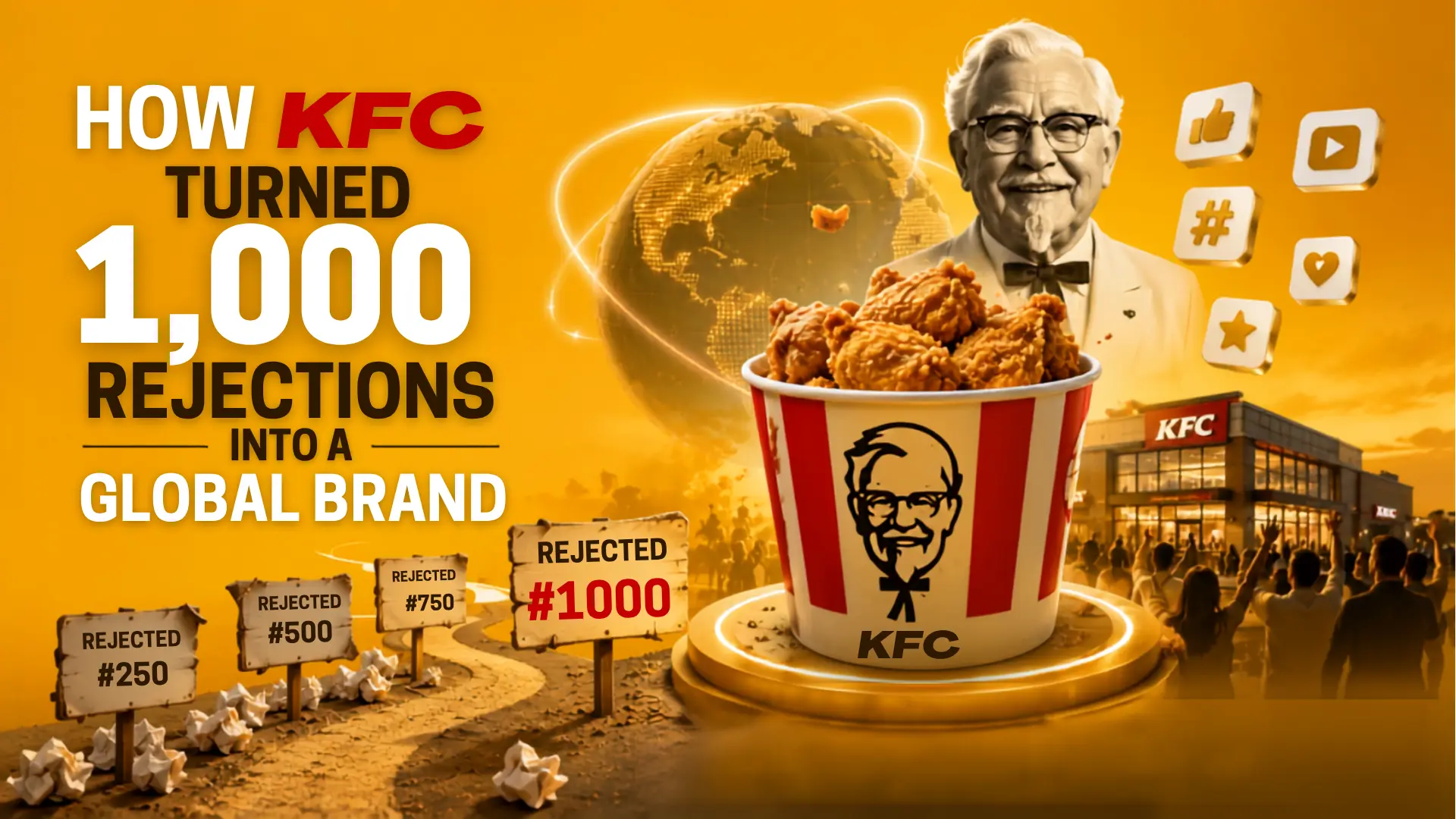
    Imagine hearing “No” so many times that most people would have stopped counting. Colonel Harland Sanders apparently heard it more than 1,000 times.

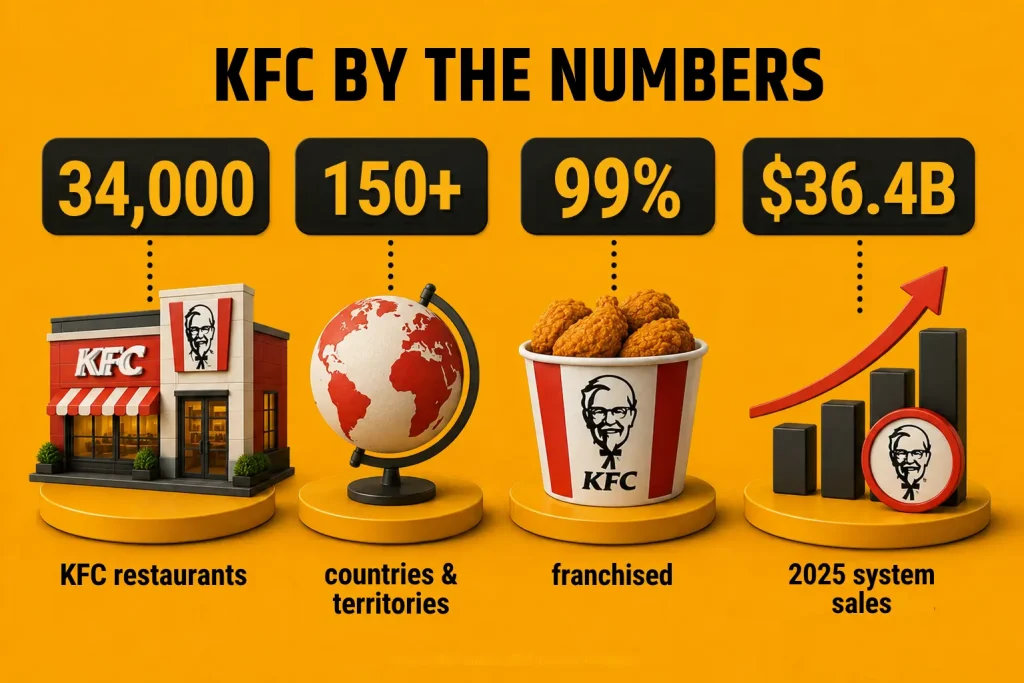
    And somehow, the man who couldn’t convince enough restaurant owners to sell his chicken eventually built a brand with 34,000 restaurants across 150+ countries and territories, generating $36.4 billion in system sales in 2025.`

    Oh, and about 99% of those restaurants are franchised. That’s not just a comeback story. That’s a marketing case study hiding inside a bucket of fried chicken.

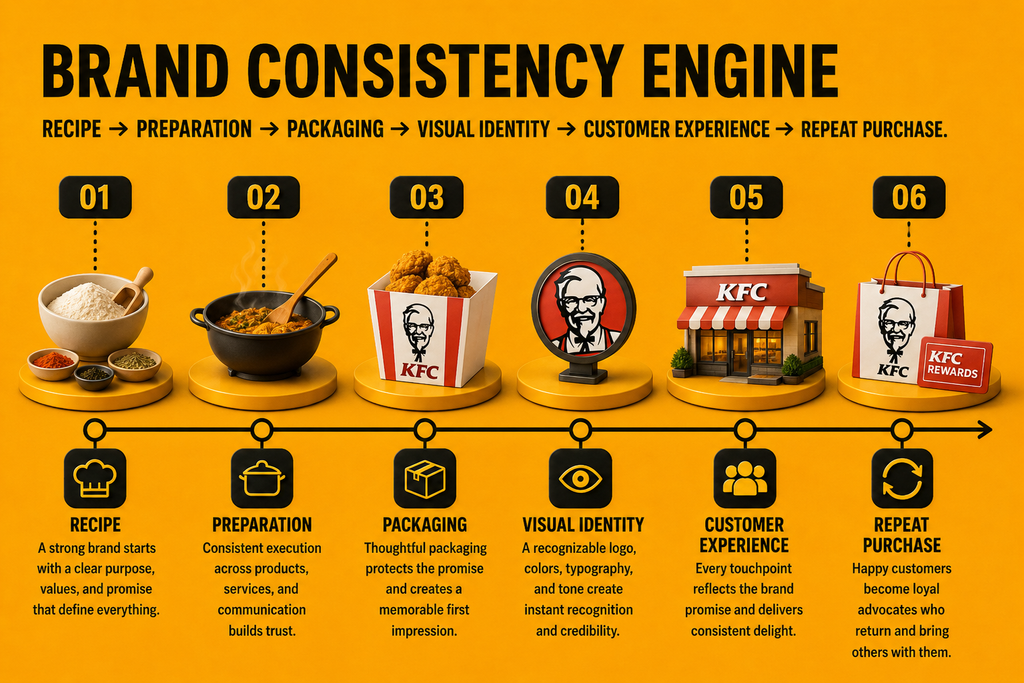
    The popular version of the KFC story goes something like… Colonel Sanders had a recipe → People rejected him → He kept going → Eventually, someone said yes → KFC became huge.

    Nice story… In fact, very inspirational. Also, way too simple. Because thousands of entrepreneurs have had great recipes, faced rejection, and refused to quit. They didn’t all end up with nearly 34,000 restaurants.

    The interesting question isn’t “How did Sanders survive 1,000 rejections?” It’s “What did Sanders build that made the next yes scalable?”

    That is where the real KFC marketing story begins.

    First, Let’s Kill the Most Popular KFC Myth

    You will often see the story repeated that Sanders was rejected 1,009 times before someone finally accepted his chicken. It’s a great number. It is also one we should treat carefully.

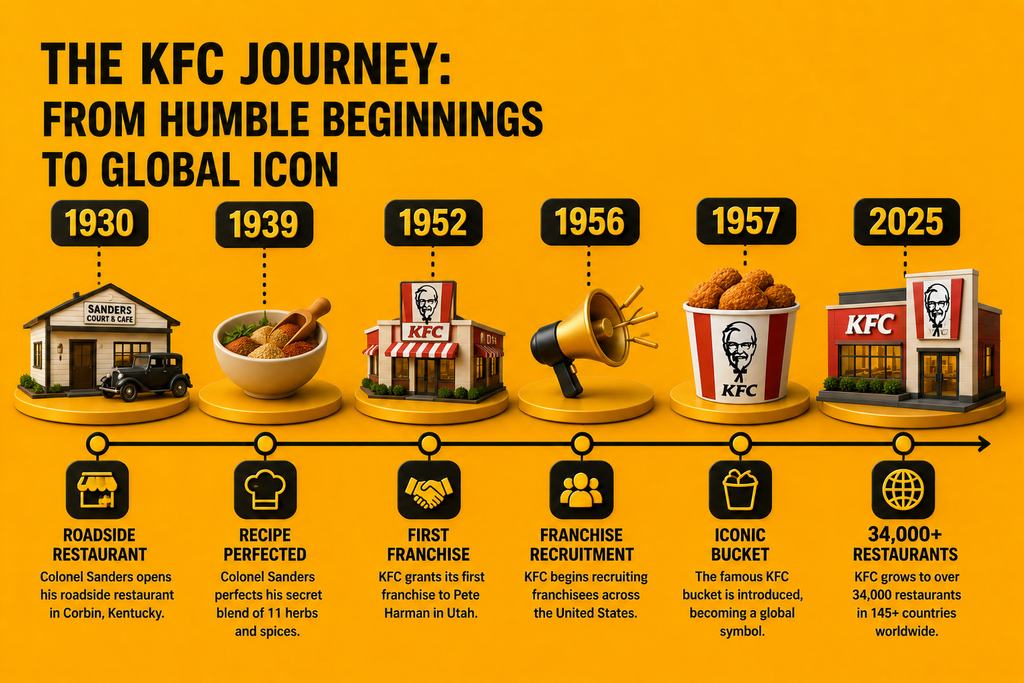
    KFC’s official history confirms that Sanders went on the road in 1956 to recruit franchisees after selling his Corbin restaurant, and that the first KFC franchise opened near Salt Lake City in 1952. But KFC’s official timeline does not substantiate the exact “1,009 rejections” figure.

    So for a serious case study, the better phrasing is “Over 1,000 rejections” rather than presenting 1,009 as an audited historical fact. And honestly, the exact number isn’t even the most interesting part.

    Because rejection wasn’t the breakthrough. The system Sanders built after rejection was.

    The First Marketing Lesson: A Great Product Is Not Enough

    Sanders had something genuinely differentiated.

    He had spent years developing his fried chicken recipe and eventually perfected the blend of 11 herbs and spices. KFC’s history dates the perfected recipe to 1939.

    But having a differentiated product and having a scalable business are two completely different things.

    “I only have two rules: Do all you can and do the best you can.”
    –Colonel Harland Sanders

    Imagine opening the greatest little burger restaurant in America. People love it, so they come back, you make money. Great.

    Now try putting that exact experience in 500 cities.

    Suddenly, you have problems. Who makes the burgers? How? With what ingredients? At what temperature? How much? What packaging? What does the restaurant look like? What happens if the customer orders it somewhere else? That’s where KFC’s story becomes a marketing story rather than merely a food story.

    Sanders didn’t just have to convince people that his chicken tasted good. He had to make the chicken repeatable. That distinction is enormous.

    A product can create a customer. A repeatable product can create a brand.

    Timeline of KFC

    Sanders Wasn’t Really Selling Chicken

    This is perhaps the biggest overlooked part of the story.

    When Sanders started approaching restaurant owners, he wasn’t simply saying “Hey, I’ve got some really good chicken.” That wouldn’t be much of a business proposition.

    He was effectively offering restaurant operators a way to add a proven product to their existing business. That’s a very different pitch.

    Instead of “Come eat at my restaurant.” The model became “Let your restaurant sell my chicken.” And suddenly, the growth problem changed. Sanders didn’t need to personally own every restaurant.

    Other people could provide the location, staff, investment, local knowledge, and day-to-day operation. Whereas KFC could provide the brand, product system, and operating model. That is the beauty of franchising. And the scale of that decision is visible today.

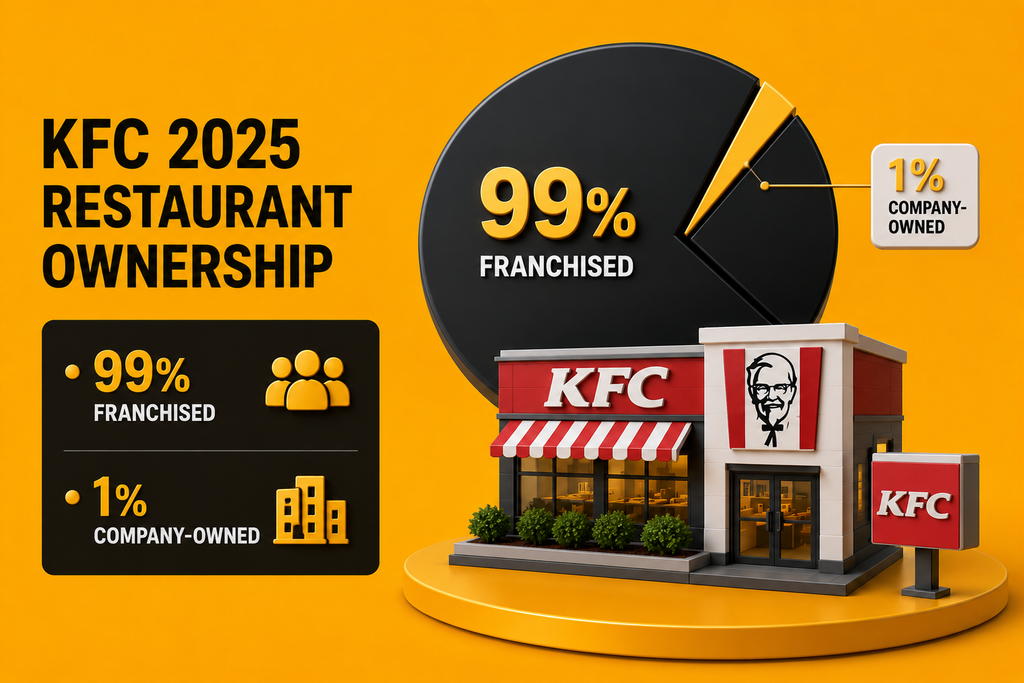
    In 2025, 99% of KFC’s restaurants were franchised, with 90% of its units located internationally.

    KFC Restaurant Ownership

    Think about what that means from a marketing perspective.

    KFC didn’t just build an audience. It built a distribution network around the audience. That’s a very different way of thinking about growth.

    Brilliant Idea of Sanders: He Became the Brand

    Today, we call it personal branding. In the 1950s, it was basically “This guy looks memorable.” In 1950, Sanders adopted the white suit that would become inseparable from his public identity. KFC’s official history says he wore the suit whenever he appeared publicly.

    Think about the decision. He could have marketed 11 herbs and spices. Instead, he also marketed a human being: a white suit, black string tie, goatee, glasses, southern gentleman persona, and Colonel Sanders.

    Suddenly, the brand had a face. And faces are easier to remember than recipes. The Colonel turned a product story into a character story. That matters because people don’t naturally remember corporate entities. They remember people.

    Think about the brands you can identify instantly. Sometimes it’s a logo, sometimes it’s a color, sometimes it’s a sound, and sometimes… it’s a person.

    The Colonel became KFC’s human shortcut. You didn’t need to explain what KFC was every time. Show the Colonel and people instantly knew.

    The Bucket

    Now we get to one of KFC’s most underrated marketing moves.

    The bucket.

    In 1957, Sanders and early franchisee Pete Harman developed the takeout bucket concept. KFC says Harman purchased 500 paper buckets from another franchisee, then filled them with 14 pieces of chicken, five rolls, and a pint of gravy. The idea became an instant success and remained a signature part of KFC for decades.

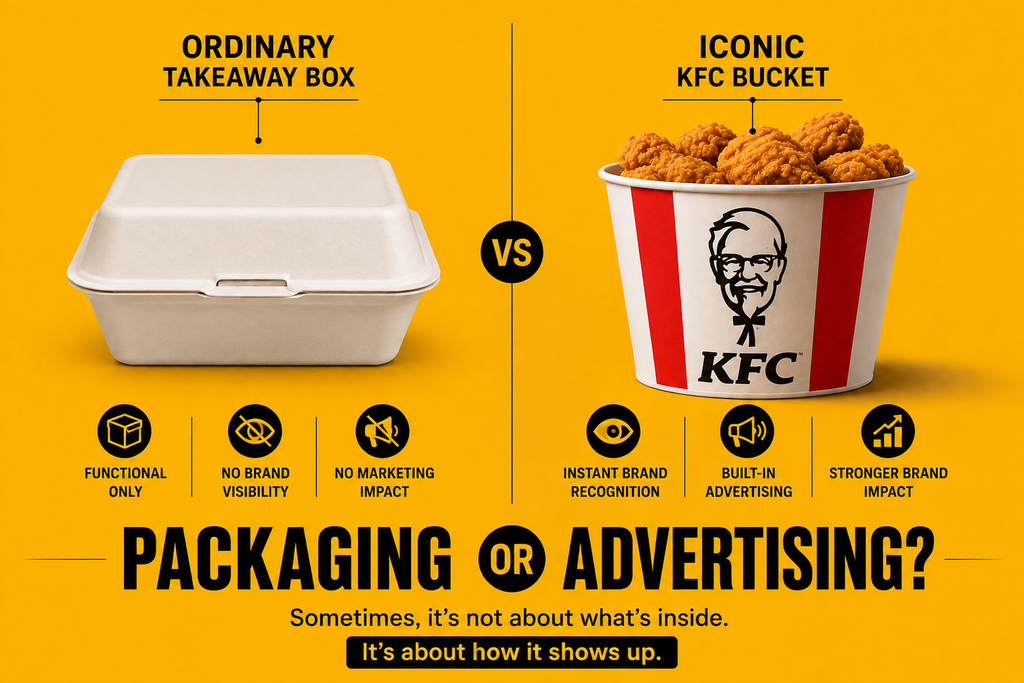
    At first glance, this looks like packaging. But if you think a little too deeply, it wasn’t. It was media. Think about the difference.

    A regular box goes from restaurant → customer → trash.

    A bucket goes from restaurant → customer → car → home → dinner table → party → social gathering.

    And when everyone sees it, the Colonel’s face is on it, the KFC branding is on it… Like the product is literally sitting inside it. The quantity is visible. The brand becomes part of the occasion. 

    KFC turned packaging into advertising that customers carried for free.

    KFC Packaging vs Advertising

    And there’s another clever psychological element. The bucket isn’t just a container for one person’s meal. It naturally suggests sharing. A bucket is bigger; a bucket goes in the middle of the table; a bucket says “We’re eating together.” That’s positioning.

    KFC wasn’t simply selling individual pieces of chicken. It was gradually owning a social eating occasion. KFC Didn’t Just Sell Food. It Sold a Ritual. 

    This is where marketers should pay attention. Strong brands often become attached to behaviors. Starbucks isn’t only coffee. Nike isn’t only shoes. Apple isn’t only computers. And KFC isn’t only fried chicken.

    It’s bucket + family + gathering + indulgence + recognizable taste + Colonel.

    The customer isn’t necessarily thinking “I require precisely eight pieces of pressure-cooked chicken.” They’re thinking “Let’s get KFC.” That’s a completely different level of brand strength.

    The brand becomes a verb-like shortcut for a decision. And once a brand owns a mental shortcut, competitors have a much harder job.

    The Real Secret Was Consistency

    Here’s where the story gets less glamorous and much more important. Branding gets the attention. Consistency earns the trust. 

    KFC’s Original Recipe isn’t simply a marketing claim. The company says its chicken is still prepared using its secret blend of 11 herbs and spices, hand-breaded and cooked using its established preparation process.

    Why does this matter?

    Because KFC was trying to create something that could travel. Kentucky, Utah, New York, London, Sydney, Dubai, and India. Different customers, different cultures, different employees, different restaurant owners, yet the customer should still feel “Yep. That’s KFC.” That’s the promise.

    Consistency is what allows a brand to scale without becoming unrecognizable.

    This is also why franchising and marketing are connected. A franchise system can’t survive if every restaurant interprets the brand differently. So the operational system becomes part of the brand.

    Marketing makes the promise. Operations keep it.

    KFC Faced the Hardest Marketing Problem of All

    Going global.

    Because America isn’t the world. A brand can be extremely successful domestically and still fail miserably overseas. Why? Because customers don’t leave their culture at the restaurant door.

    Taste changes, food habits change, price expectations change, religious considerations change, occasions change, competition changes. So KFC had to solve a difficult equation…How do you remain KFC without making every market feel like America was copied and pasted into it? The answer has been global consistency with local adaptation.

    KFC’s global platform highlights market-specific products and campaigns rather than treating every country as identical.

    The core remains recognizable. The execution changes. That distinction is incredibly important. Global brands don’t win by being identical everywhere. They win by being recognizable everywhere.

    The Numbers Make the Strategy Hard to Ignore

    By the end of 2025, KFC had 34,000 restaurants, over 150 countries and territories, with 90% of its restaurants outside the U.S. and 99% franchised.

    Its 2025 system sales reached approximately $36.434 billion. That’s the result of decades of brand building, distribution, franchising, and operational standardization.

    KFC By the Numbers

    And there’s one number that should particularly interest marketers… 90% international. Because that means KFC didn’t merely create a successful American restaurant. It created a brand architecture capable of traveling.

    Here’s Where Things Get Really Interesting

    You might think that after becoming one of the world’s largest restaurant brands, KFC could simply sit back. Chicken sells, buckets sell, the Colonel is famous, and the job done… Nope.

    In 2025, KFC U.S. launched what it called its “comeback era.”

    The brand openly acknowledged fierce competition in the fried chicken category and returned the Colonel to advertising while emphasizing Original Recipe and improvements in taste and customer satisfaction.

    Read that carefully.

    A 75-year-old brand was talking about winning customers back. That’s fascinating. Because brand equity doesn’t make you permanently relevant. Competitors don’t care how famous you were in 1975. Consumers don’t owe you loyalty because your founder wore a white suit. And nostalgia only works until somebody else becomes more interesting.

    KFC understood that. So the brand went back to one of its oldest assets… The Colonel. But it didn’t simply recreate old advertising.

    It used the Colonel in a new cultural context, describing him as a “chefpreneur” and positioning the campaign around the brand’s pursuit of flavor.

    That’s not nostalgia for nostalgia’s sake. That’s using heritage as a strategic asset.

    Difference Between Heritage and Nostalgia

    Nostalgia says “Remember when we were great?” Heritage says “Here’s what made us great. Now watch us use it again.” That’s a huge difference.

    KFC’s 2025 comeback campaign leaned into its history while addressing a current competitive problem. This is something many legacy brands struggle with. They either become obsessed with their past… or become so desperate to look young that they abandon everything recognizable about themselves.

    KFC’s challenge is more interesting… How do you modernize without deleting the reason people remember you? That is a branding problem. Not an advertising problem.

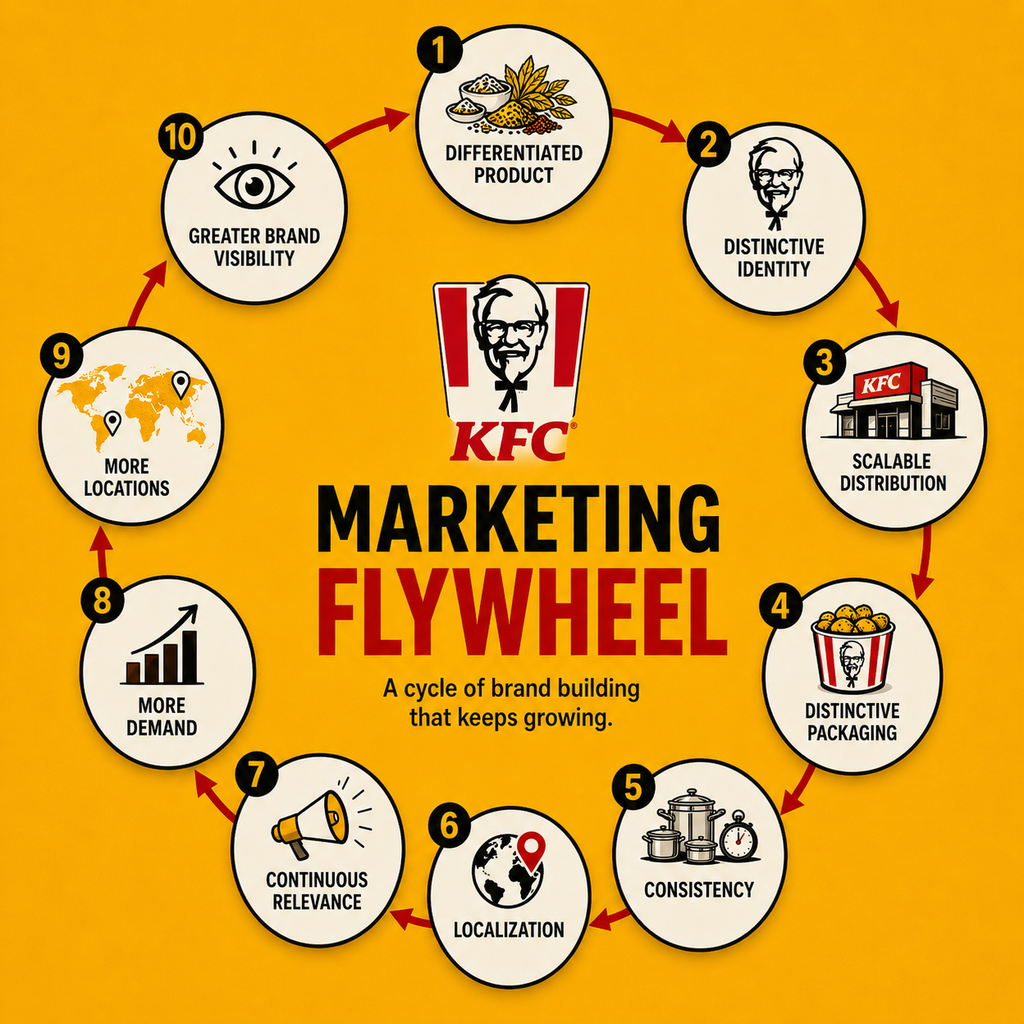
    KFC’s Marketing Flywheel

    If you strip away the Colonel jokes, secret recipes, and buckets, KFC’s growth starts looking like a very sophisticated marketing flywheel.

    1. Differentiated product

    The 11 herbs and spices gave KFC a recognizable product story.

    1. Distinctive identity

    The Colonel gave the product a human face.

    1. Scalable distribution

    Franchising allowed other operators to bring KFC to new markets.

    1. Distinctive packaging

    The bucket turned the product into a visible brand asset.

    1. Consistency

    Standardized preparation helped maintain the recognizable KFC experience.

    1. Localization

    Markets could adapt products and campaigns without abandoning the core identity.

    1. Continuous relevance

    Advertising and new product launches keep the brand in culture.

    1. More demand

    More demand makes the franchise model more valuable.

    1. More locations

    More locations create greater availability.↓

    1. Greater brand visibility

    And the flywheel starts again.

    KFC Marketing Flywheel

    That’s the part the inspirational versions of the Sanders story leave out. Persistence is not a growth strategy. It only becomes one when you learn from every rejection.

    The “No” Was Actually Market Research

    Here’s another way to look at those famous rejections. Every rejection contained information. 

    “One has to remember that every failure is a step toward success.”

    – Colonel Harland Sanders

    Maybe the restaurant owner didn’t see the value, maybe the economics weren’t attractive, maybe the product wasn’t easy enough to integrate, maybe the pitch wasn’t compelling, maybe the restaurant didn’t trust the opportunity.

    We don’t know the exact reason behind every rejection. But here’s the broader marketing lesson:

    • A rejection is data. That’s true today.
    • If customers don’t click, that’s data.
    • If they click but don’t buy, that’s data.
    • If they buy once but don’t return, that’s data.
    • If franchisees don’t renew, that’s data.
    • If a campaign gets attention but no sales, that’s data.

    The worst response to rejection is “They just don’t understand.” The better response is “What exactly are they telling us?” The market isn’t always rejecting your idea. Sometimes it’s rejecting the way you’ve packaged it. That distinction can change an entire business.

    KFC Has Never Been Afraid of Being Weird

    This is another part modern marketers can learn from. KFC has repeatedly leaned into humor, absurdity, and pop culture. The brand has turned the Colonel into different versions of himself, used bizarre partnerships, and even created a campaign around RoboCop protecting the secret recipe.

    Completely ridiculous? Yes. Completely random? Not really. The underlying asset stays the same… The Colonel + secret recipe + KFC. That’s why weirdness can work. The campaign changes, but the memory structure doesn’t, and that’s an important distinction.

    Be unpredictable in the campaign. Be predictable in what the brand stands for. That’s how you can be funny without becoming forgettable.

    So What Did KFC Actually Build?

    KFC built a recognition machine. The product creates the first reason to try.

    • The Colonel creates recognition.
    • The bucket creates visibility.
    • The franchise network creates availability.
    • Consistency creates trust.
    • Localization creates relevance.
    • Advertising creates attention.

    And all of it feeds back into the brand.

    That’s why the company can operate at extraordinary scale without becoming a completely different brand every time you cross a border.

    The Bigger Marketing Lesson

    There is a dangerous misconception in marketing… If the product is good enough, people will eventually come. KFC’s history tells us something different. The product matters. But the product is only one piece. 

    You also need to answer: why should people notice you? Why should they remember you? Why should they trust you? Why should they choose you instead of the next chicken restaurant? Why should someone else want to distribute your product? Why should the brand still matter 20, 50, or 75 years later?

    Sanders didn’t solve all of those questions at once. He built them over time. That’s what makes the story so valuable.

    The Most Important Number Isn’t 1,009

    It isn’t 34,000 either.

    It isn’t $36.4 billion.

    The most important number in the KFC story might actually be… 1.

    One recipe, one recognizable character, one franchise model, one bucket, one consistent brand promise, and then scale. Because brands don’t become enormous by having thousands of disconnected ideas. They become enormous by making a few memorable ideas work thousands of times.

    KFC didn’t win because it had more marketing. It won because more of its marketing pointed back to the same idea. That’s the difference between activity and brand building.

    What Today’s Marketers Can Steal From KFC

    Not the chicken. Obviously!.

    Steal the thinking.

    1. Stop asking whether your product is good enough.

    Ask whether your product is easy to understand and remember.

    1. Build something recognizable.

    A color, a character, a phrase, a visual, or a format- something customers can identify before they see your logo.

    1. Turn distribution into part of your strategy.

    A brilliant product nobody can access is still a small business.

    1. Make your brand operational.

    If your marketing promises something your customer experience cannot deliver, advertising becomes expensive damage control.

    1. Don’t confuse consistency with boring.

    KFC kept its core recognizable while continuously experimenting with products, campaigns, and cultural moments.

    1. Treat rejection as information.

    The market is giving you feedback. Don’t waste it.

    Why the Colonel’s Story Matters

    The inspirational version of the story is “Colonel Sanders was rejected over 1,000 times and never gave up.” It’s a nice quote for a motivational poster. But it’s not the most useful lesson for a marketer.

    The more interesting version is… 

    Sanders had a differentiated product. 

    ↓

    Then he created a recognizable identity. 

    ↓

    He found a scalable distribution model.

    ↓

    He turned packaging into a brand asset.

    ↓

    He built consistency into the experience.

    ↓

    He adapted the brand across markets.

    And decades later, KFC is still using its founder as one of its most powerful marketing assets.

    Today, KFC has nearly 34,000 restaurants in 150+ countries and territories, with $36.4 billion in 2025 system sales and approximately 99% of restaurants franchised.

    That’s what happened after the “yes.” And that is the part worth remembering.

    The Xparro Takeaway

    Most businesses ask “How do we get more customers?” KFC’s history suggests a better question: “How do we build a brand that makes distribution, recognition, and demand easier?”

    Because when your product is recognizable… your marketing gets easier. When your brand is memorable… your advertising gets stronger. When your experience is consistent… your reputation compounds. When your distribution scales… your reach compounds.

    And when all four work together? You don’t just sell more chicken. You build an icon. And somewhere in that story is a Colonel in a white suit, walking into another restaurant and hearing:

    “No.” again, and again, and again. Until one “yes” became a system. Then the system became a brand. Then the brand became a global habit. That’s the real KFC story.

  • How McDonald’s Built a Billion-Dollar Marketing Machine

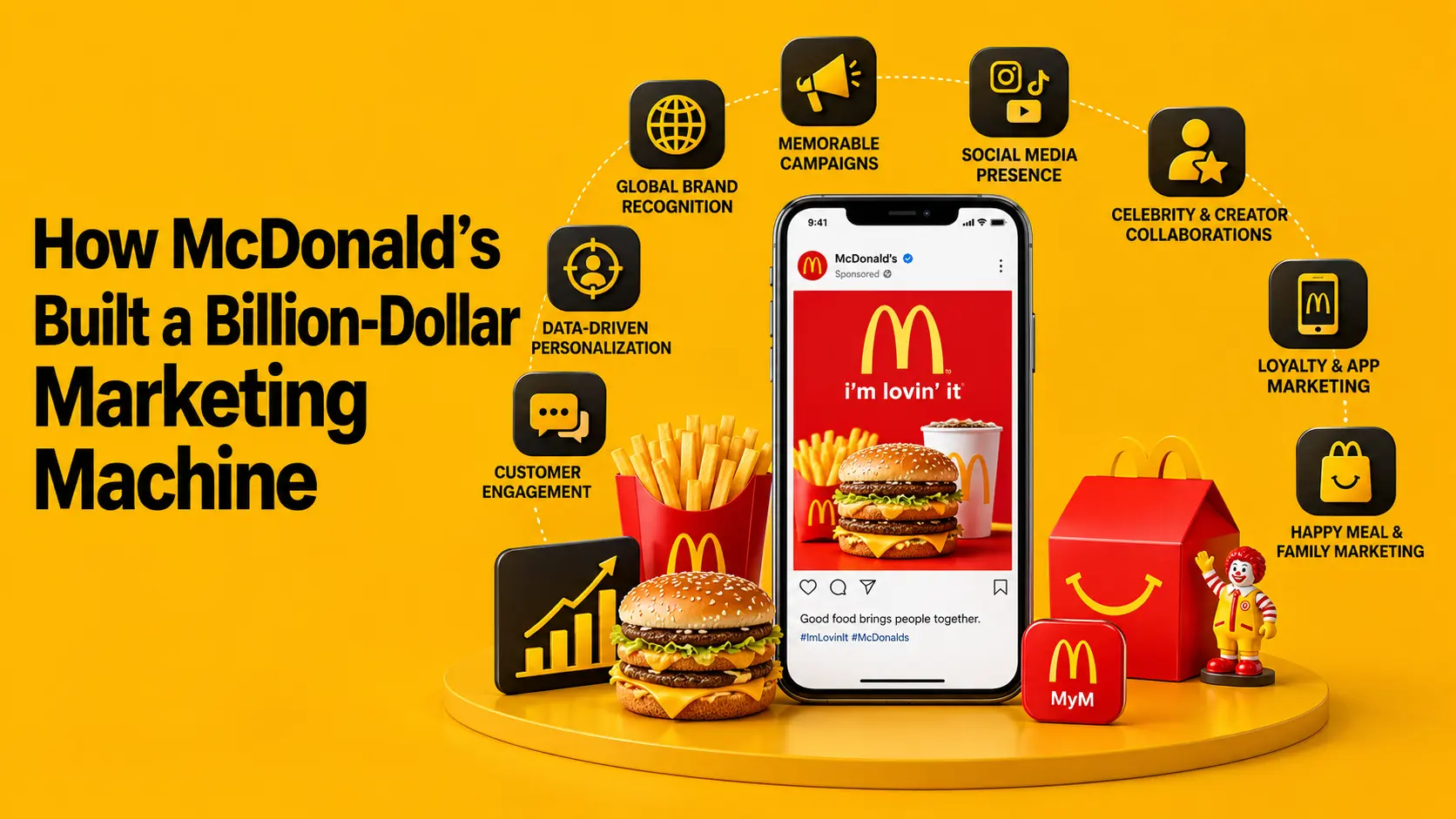
    How McDonald’s Built a Billion-Dollar Marketing Machine

    McDonald’s has spent decades convincing America that it is in the burger business. Guess what? It isn’t.

    At least, that’s not where its real marketing genius lies. Because if McDonald’s were simply selling burgers, it would have been crushed by thousands of better burgers.

    There is always a better burger.

    A local diner has one. Your favorite neighborhood joint has one. Some chef in Brooklyn has probably spent six months making a burger that costs $27 and comes with a paragraph explaining the emotional journey of the onion.

    And yet, when someone says “I’m hungry,” McDonald’s somehow still manages to show up in the conversation.

    That’s the part worth studying.

    McDonald’s didn’t build one of the world’s most recognizable brands by convincing everyone that its burger was the greatest burger ever made. It built the brand by making itself familiar, memorable, culturally relevant, and ridiculously easy to choose.

    The burger was the product. The feeling of knowing exactly what you were getting was the marketing. And once you see McDonald’s that way, its entire advertising history starts to look very different.

    McDonald’s Didn’t Sell Food. It Sold a Shortcut

    Think about the last time you saw the Golden Arches. You probably didn’t stop and think, ‘Ah yes, a multinational foodservice corporation operating a vast franchise network.’ You thought McDonald’s.

    That’s brand recognition doing its job. And McDonald’s has an absurd amount of it.

    Interbrand valued the McDonald’s brand at $53 billion in its 2025 Best Global Brands ranking, placing it ninth among the world’s most valuable brands. Interbrand also estimates that McDonald’s serves more than 69 million people every day worldwide.

    But here’s the interesting part…

    People don’t recognize McDonald’s because someone repeatedly told them that McDonald’s is a good company. They recognize it because McDonald’s has spent decades putting the same handful of visual and verbal assets into their heads.

    The arches, the red, the fries, the Big Mac, the “I’m lovin’ it” , the Happy Meal, the playground, the drive-thru, and of course the little yellow smile.

    It is basically a marketing textbook disguised as a fast-food chain.

    McDonald’s Didn’t Just Buy Land. It Bought Attention

    Here’s where the McDonald’s story gets a little sneaky.

    While everyone else was looking at the burger, Ray Kroc, the one who came into McDonald’s to sell milkshake machines, had an idea that changed the whole story of McDonald’s.

    The land.

    The popular version of the story says Kroc discovered that McDonald’s could make money by owning real estate and leasing restaurants to franchisees. That’s true. But for marketers, there’s a much more interesting question:

    What did owning the locations do for the brand? Quite a lot. Because McDonald’s didn’t just use real estate to make money; it used real estate to make the brand visible, accessible, and ridiculously difficult to forget.

    And that changes the way we should look at the Golden Arches.

    The Restaurant Was Part of the Advertisement

    Think about driving down a highway… You see the Golden Arches… you weren’t necessarily hungry five seconds ago, but now you’re thinking about fries.

    That’s marketing.

    But here’s the clever part: McDonald’s didn’t have to buy an advertising slot for that moment. The restaurant itself was doing the advertising.

    McDonald’s has historically invested heavily in the real estate and buildings behind its franchised restaurants. Under its conventional franchise model, McDonald’s generally owns or controls the property and leases it to franchisees, who operate the restaurant and pay rent and royalties. The company says it manages site evaluation, acquires the property, and constructs the building for these locations.

    So the physical restaurant isn’t just the place where the transaction happens.

    It is also a giant, permanent brand asset sitting exactly where McDonald’s wants customers to see it.

    A billboard says, “Remember us,” And a McDonald’s on your daily commute says, “I’m right here.” That’s a much better advertisement.

    Kroc Understood Something About Franchising

    The genius wasn’t simply putting other people in McDonald’s restaurants.

    It was creating a system where the franchisee could run the restaurant while McDonald’s retained control of the property and brand.

    The franchisee gets a business. McDonald’s gets rent, royalties, and a long-term presence in the location. And when the restaurant does well, everybody has a reason to keep it doing well.

    In 2024, McDonald’s reported $10.017 billion in rent revenue from franchised restaurants, compared with $5.606 billion in royalty revenue.

    That’s not pocket change from the couch cushions. It’s a significant part of the business.

    McDonald’s also reported approximately $6.4 billion in land within its property and equipment associated with franchise arrangements at the end of 2024.

    So while customers were debating whether McNuggets count as a proper meal, McDonald’s was sitting on a serious physical footprint. But the bigger marketing advantage was what that footprint allowed the brand to do.

    Own the Location, Own the Visibility

    Marketing is usually described as getting people to notice you. McDonald’s took that idea literally. If you control where your restaurants are located, you control where your brand appears.

    Busy intersection? Golden Arches.

    Highway exit? Golden Arches.

    Shopping center? Probably Golden Arches.

    Airport? You know the drill.

    The more strategically placed locations a brand has, the more frequently customers encounter it.

    And repeated exposure matters. You may not consciously think,
    “I have now been exposed to McDonald’s branding for the fourth time this week.” Your brain doesn’t work like a media planner. It simply starts thinking, ‘McDonald’s is everywhere.’ And “everywhere” creates familiarity.

    Convenience Became a Brand Message

    McDonald’s has always sold convenience. Fast food, drive-thrus, quick meals, and easy ordering… but convenience isn’t only about how fast the kitchen works.

    It’s also about how little effort it takes to find the restaurant.

    If there is a McDonald’s near your home, another near your office, and another beside the highway you take on weekends, the brand becomes part of your routine. That’s powerful.

    Because the strongest brands aren’t necessarily the ones customers spend the most time researching. They’re the ones customers can retrieve from memory in half a second. McDonald’s spent decades making sure the physical world reinforced that mental shortcut.

    The Franchisee Became Part of the Marketing Machine

    There’s another clever layer. McDonald’s could maintain a globally recognizable brand while giving local operators a stake in the business.

    The company says approximately 95% of McDonald’s restaurants worldwide are owned and operated by local business owners. That matters because a global brand still has to behave like a local business.

    The McDonald’s in Texas doesn’t necessarily need to speak to customers the same way as one in New York. And neither should have exactly the same marketing approach as one in India or Japan.

    The brand stays recognizable. The local execution adapts, and that balance is one of McDonald’s greatest marketing advantages: global recognition and local relevance.

    The Really Clever Part

    The marketing pays for the real estate, and the real estate reinforces the marketing. This is where the model becomes a beautiful little loop. McDonald’s invests in locations.

    The locations increase visibility and accessibility. While visibility creates familiarity, familiarity makes the brand easier to choose, and more customers create more sales. And that revenue supports the larger system that keeps expanding the brand.

    So the restaurant isn’t simply the end of the marketing funnel. It’s part of the funnel.

    McDonald’s Didn’t Just Put Restaurants Where People Were

    McDonald’s put the brand where people were. That’s the real lesson hidden inside the real-estate strategy.

    Most brands ask “How do we get our product into more places?” McDonald’s effectively asked, “How do we get our brand into more people’s routines?” That’s a much smarter question. Because once a brand becomes part of someone’s routine, advertising doesn’t have to work as hard.

    The Golden Arches aren’t just a logo. They’re a location strategy you can see from the highway. And that may be the most overlooked part of McDonald’s marketing machine: It didn’t just spend decades putting McDonald’s into people’s heads.

    It put McDonald’s in their path.

    The First Trick: Make the Brand Impossible to Misunderstand

    McDonald’s has never been particularly complicated, and that’s intentional. 

    A lot of brands want to sound intelligent. They create elaborate positioning statements, poetic taglines, and websites that require three scrolls just to figure out what they actually sell.

    McDonald’s went the other way. Golden arches, red box, Big Mac, and fries? Done. That simplicity matters because attention is scarce. You don’t need a customer to remember your entire brand strategy. You need them to remember you.

    McDonald’s has spent decades building what marketers today would call distinctive brand assets… recognizable elements that trigger the brand without needing the name spelled out.

    And the Golden Arches are probably the best example. You can remove the word McDonald’s and leave the arches. People still know. That’s not decoration; that’s marketing infrastructure.

    McDonald’s Gave Something More Powerful Than a Product

    It gave people a personality to associate with the product.

    Enter Ronald McDonald. Today, the character can look slightly surreal if you stare at him for too long. But the marketing idea was brilliant.

    McDonald’s didn’t want to be just a restaurant. It wanted to be a place associated with childhood, fun, and family.

    The Happy Meal did something similar. Instead of simply selling a children’s meal, McDonald’s wrapped the purchase in a little ritual:

    • Food
    • Toy
    • Box
    • Surprise
    • Collectible

    And, if you’re a parent, the possibility of getting through dinner without negotiating with a tiny dictator. That is clever product marketing. The product became an experience, and experiences are much easier to remember than ingredients.

    The “I’m Lovin’ It” Move Was Much Smarter Than It Sounds

    In 2003, McDonald’s launched its first global advertising campaign, “I’m Lovin’ It,” in Munich, Germany.

    And look at what the tagline doesn’t do. It doesn’t say “Our burgers are delicious.” It doesn’t say “We use the finest ingredients.” It doesn’t say “Come experience our world-class culinary excellence.” Thank God. 

    It simply says “I’m lovin’ it.”

    That’s not a food claim. It’s a feeling, and that distinction is huge. Because food claims invite comparison.

    If McDonald’s says we make the best burger, someone can respond, ‘No, you don’t.’ And then the internet gets involved.

    But if McDonald’s says I’m lovin’ it, there is nothing to fact-check. It’s emotional positioning. The brand isn’t asking you to agree that the burger is objectively superior. It’s asking you to associate McDonald’s with a good moment.

    Music helped make that association even stronger. The five-note musical hook became almost as recognizable as the slogan itself.

    And that is another lesson hiding in plain sight… The strongest brands don’t only create messages. They create memory triggers.

    McDonald’s Doesn’t Always Advertise the Product

    This is probably one of the biggest things marketers can learn from McDonald’s.

    Look at its most memorable advertising. You don’t always see a giant burger sitting in the middle of the screen while someone explains why the bun is amazing.

    Instead, you often see people hanging out, friends laughing, families eating, young people being young, music, humor, pop culture, a weirdly satisfying shot of fries.

    Then, somewhere in the middle of all that, the arches- that’s deliberate.

    McDonald’s often sells the occasion, not the food. Because the food is already understood. The marketing job is to create a reason to think about the brand. That’s a completely different objective.

    McDonald’s Got Very Good at Showing Up in Culture

    This is where the brand stopped behaving like a fast-food company and started behaving like a media brand.

    McDonald’s has repeatedly inserted itself into moments people are already talking about. Like sports, music, movies, gaming, fashion, internet culture, celebrity collaborations, memes, and social media, instead of constantly saying “Hey! Remember that we sell burgers!”

    It asks a more interesting question:n “What is America talking about right now, and how can McDonald’s participate?” That’s cultural marketing.

    And it works because people don’t want more advertising. They want brands that understand the conversation they’re already having. McDonald’s doesn’t need to invent every conversation. It just needs to find the ones where it belongs.

    The Travis Scott Meal Wasn’t Really About the Meal

    Take the 2020 Travis Scott collaboration. On paper, it was simple:e, a celebrity, a meal, and a promotion. But strategically, it was much more interesting.

    McDonald’s turned a menu order into a piece of culture. Suddenly, the purchase wasn’t just “I’ll have a Quarter Pounder.” It was “I’ll have the Travis Scott Meal.” That’s a completely different psychological frame. The product became a cultural object.

    And that is the power of collaboration marketing.

    You don’t always need to build attention from scratch. Sometimes you can borrow attention from somebody who already owns it. That’s a lesson brands across industries can steal. A collaboration isn’t valuable merely because two logos appear together.

    It’s valuable when one brand transfers some of its cultural relevance to the other.

    McDonald’s Started Turning Customers Into Participants

    For years, traditional advertising was basically:

    McDonald’s → message → customer.

    Then social media changed the game. Because now it became:

    McDonald’s → customer → internet → everyone else.

    That’s a much more powerful loop because customers don’t just consume McDonald’s marketing.

    They remix it, post it, joke about it, complain about it, and even turn it into memes. So basically the audience becomes part of the media engine. And McDonald’s has become exceptionally good at operating inside that environment.

    Localization: Same Brand, Different Conversation

    Here’s another piece of McDonald’s marketing strategy that deserves more attention.

    Global brands have a problem. If you standardize everything, you become boring. If you localize everything, you stop feeling like the same brand.

    McDonald’s has spent decades walking the line between the two.

    The Golden Arches stay. But the conversation, products, campaigns, and cultural references change. That’s why McDonald’s can feel unmistakably American in the U.S. while still creating products and campaigns that make sense in other markets.

    The company itself gives examples, including the McArabia in the Middle East, McAloo Tikki in India, and Teriyaki McBurgers in Japan.

    From a marketing perspective, that’s not simply “localization.” It’s “One global identity + thousands of local conversations.” And that is much harder to execute than simply translating an advertisement.

    The Brand Started Listening

    Here’s where McDonald’s marketing story gets really interesting.

    In 2015, McDonald’s USA announced a new brand vision that explicitly described a shift from “billions served” to “billions heard.” That sentence tells you a lot about how marketing was changing.

    For decades, brands talked, and customers listened. Then social media, mobile technology, and digital commerce flipped the relationship. Customers started talking back. So McDonald’s had to become more than a broadcaster. It had to become a listener.

    And eventually, listening became data.

    The App Quietly Changed the Marketing Game

    This might be one of McDonald’s least glamorous but most important marketing moves.

    The app.

    Because an advertisement can tell you that someone likes McDonald’s, an app can show you what they actually buy. That’s a massive difference.

    By the end of 2024, McDonald’s reported more than 175 million active loyalty users across 60 markets. Those loyalty members generated approximately $30 billion in systemwide sales in 2024, up 30% from the previous year.

    Now think about what that means from a marketing perspective. McDonald’s isn’t just hoping you remember it. It has a direct digital relationship with you. It can offer promotions, encourage repeat purchases, personalize offers, create loyalty, learn purchasing behavior, and turn a one-time customer into an identifiable relationship.

    The Golden Arches got people to recognize the brand. The app gives the brand a chance to recognize the customer. That’s a very different level of marketing.

    What Marketers Should Actually Steal From McDonald’s

    Not the arches. Please don’t put yellow arches on your SaaS website.

    The lesson is deeper.

    1. Stop trying to explain everything.

    If customers need a five-minute explanation to understand your brand, your marketing has work to do. McDonald’s can communicate its identity in a few seconds.

    That’s power.

    1. Build things people can remember.

    A tagline, a color, a sound, a visual, a recurring format, or a recognizable personality. The goal isn’t simply consistency.

    It’s recognizability.

    1. Sell the moment, not just the product.

    McDonald’s doesn’t need to explain what a burger is. It sells the reason you might want one right now. Your brand should ask the same question:

    What situation makes someone need us?

    1. Borrow culture instead of constantly creating it.

    You don’t need to manufacture every trend. Find the conversations where your brand naturally belongs.

    Then participate intelligently.

    1. Give people a reason to come back.

    The first purchase proves the product works. The second purchase starts becoming a habit.

    Loyalty programs, personalized offers, and digital experiences turn that habit into a relationship.

    1. Don’t confuse being loved with being remembered.

    This may be the biggest lesson of all. You don’t need every customer to tattoo your logo on their arm. You need them to remember you when the need appears.

    McDonald’s Didn’t Win the Burger War

    It won the memory war. McDonald’s built a brand that lives inside people’s everyday mental shortcuts.

    Interbrand’s $53 billion brand valuation is a useful reminder of just how valuable that mental real estate has become.

    And the company’s 2024 numbers show where that brand is heading next: more than 175 million active loyalty users, approximately $30 billion in loyalty-member sales, and more than $130 billion in global systemwide sales.

    The burger may get the credit. The marketing deserves the investigation because McDonald’s didn’t spend decades asking America to believe that it had the world’s best burger.

    It spent decades making sure that when America thought about fast, familiar, affordable, convenient food, McDonald’s was already sitting somewhere near the front of the list. And that might be the most important marketing lesson hidden behind those ‘Golden Arches.’

    You don’t always win by convincing people you’re the best. Sometimes, you win by becoming the brand they remember first.