Category: Digital Marketing

  • 3-3-3 Rule in Marketing: What It Means & How It Works

    3-3-3 Rule in Marketing: What It Means & How It Works

    Your marketing probably doesn’t need more content. It needs better direction.

    One team is writing blogs. Another is running paid ads. Social is posting three times a week. SEO is chasing keywords. And somehow, all of them are talking to the same customer like they’ve never met. That’s where a simple framework can help.

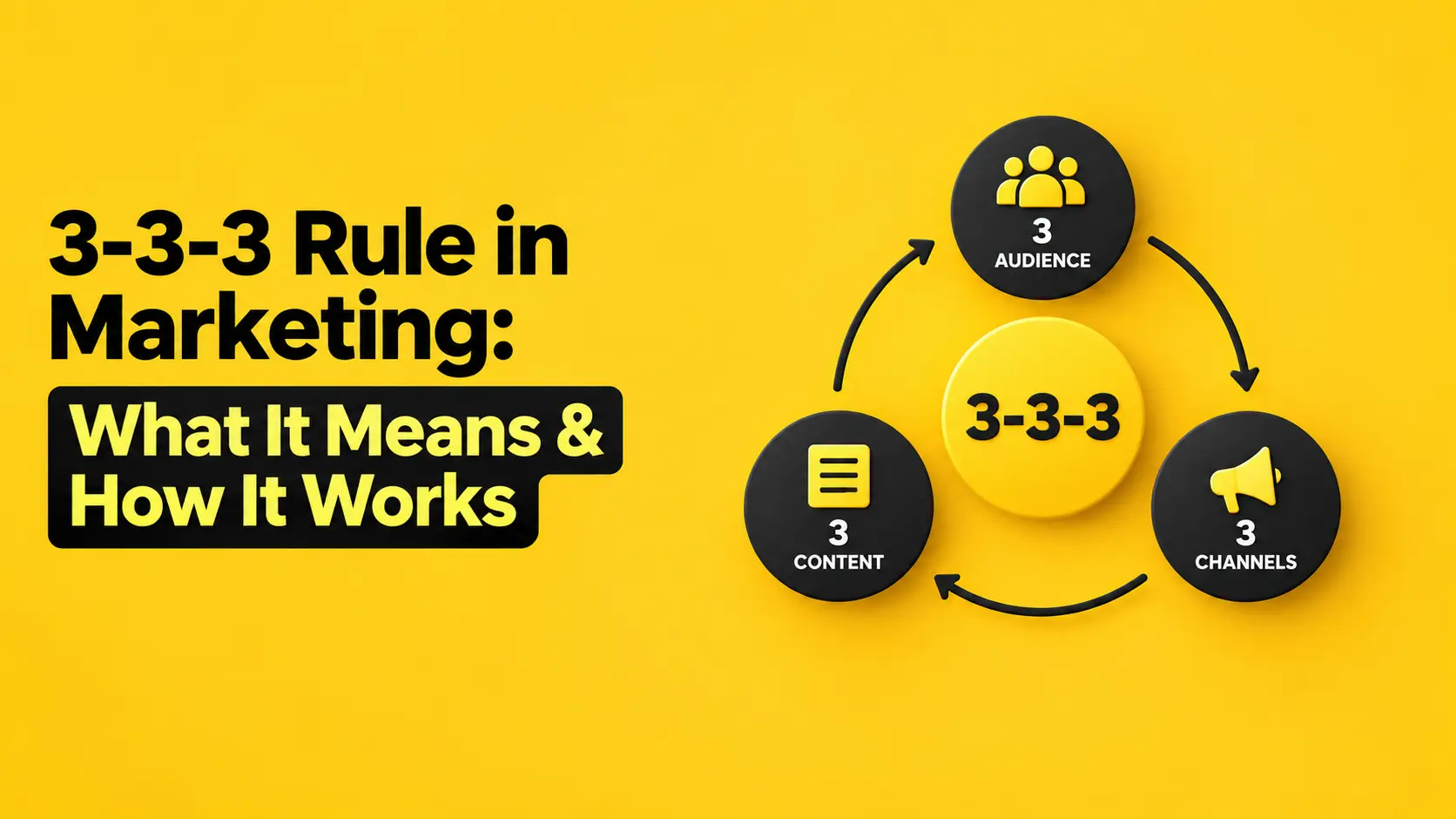
    The 3-3-3 rule in marketing gives businesses a practical way to organize their marketing and content around three content types, three distribution channels, and three stages of the buyer journey.

    It isn’t a magic formula. But it can stop your strategy from becoming a giant spreadsheet of random marketing activities.

    Key Takeaways

    • Marketing and content work better together when your SEO, social, paid campaigns, and content are all pulling toward the same goal.
    • The 3-3-3 rule keeps things simple: three content types, three distribution channels, and three stages of the buyer journey.
    • Your content creation strategy should match buyer intent, whether someone is discovering a problem, comparing solutions, or ready to buy.
    • A smarter SEO marketing plan measures what matters, from organic traffic and leads to conversions, pipeline, and revenue.

    What Is the 3-3-3 Rule in Marketing?

    The 3-3-3 approach is built around three questions:

    What should we create? Where should we distribute it? And where is the customer in their buying journey?

    The original framework breaks this into:

    3 content types: Educational, inspirational, and entertaining

    3 distribution channels: Owned, earned, and paid media

    3 buyer stages: Awareness, consideration, and acquisition

    Put those together and you get a simple system for planning your marketing and content instead of throwing ideas at the wall and hoping one sticks.

    Start With Three Types of Content

    Not every customer wants another 1,500-word blog post.

    Some want an answer. Some want proof. Some just want something interesting enough to make them stop scrolling.

    That’s why your content creation strategy needs variety.
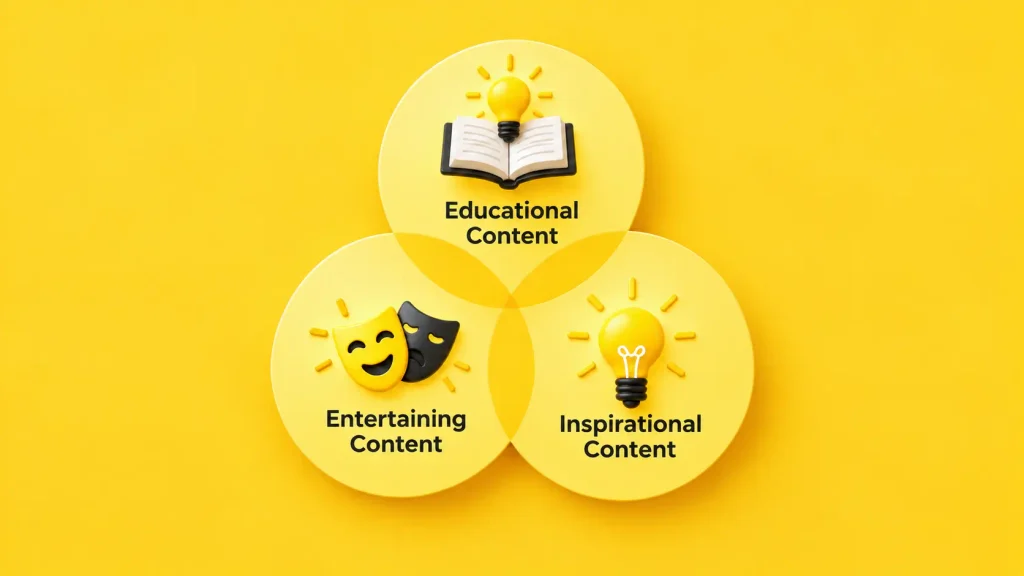
    Educational Content

    This answers questions and solves problems.

    Think:

    • How-to guides
    • SEO blogs
    • Industry explainers
    • Webinars
    • Tutorials
    • Research-driven articles

    For example, a cybersecurity company could publish “How Zero-Trust Architecture Works” rather than another painfully vague post titled “Why Cybersecurity Matters.”

    Educational content is particularly useful for SEO because it can target informational search intent and bring potential customers into your funnel before they’re actively shopping.

    Inspirational Content

    This is where you show people what’s possible.

    Case studies, customer stories, testimonials, transformation stories, and expert opinions belong here.

    Instead of saying, “Our SEO services deliver results,” show what changed for a client after fixing technical SEO, improving internal linking, or rebuilding its content architecture.

    Proof beats promises.

    Entertaining Content

    Yes, B2B companies are allowed to have a personality.

    Memes, short-form videos, behind-the-scenes content, clever commentary, and relatable industry posts can make your brand feel considerably less like a corporate instruction manual.

    The goal isn’t to make everything funny. It’s to make your brand worth paying attention to.

    Put Those Three Content Types on Three Channels

    Creating good content is only half the job. If nobody sees it, congratulations, you’ve created a very well-written secret.

    The 3-3-3 framework separates distribution into owned, earned, and paid media.
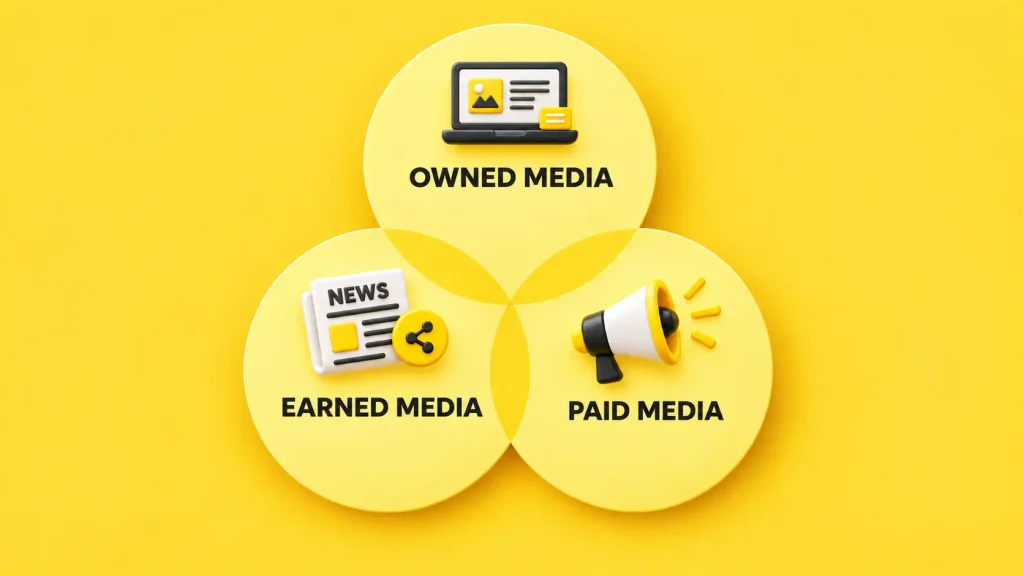
    3 Types of Channels

    Owned Media

    These are channels you control.

    Think:

    • Website
    • Blog
    • Email
    • Social profiles

    Your website and email list are especially valuable because you aren’t completely dependent on an algorithm deciding whether your audience gets to see your content.

    Earned Media

    This is attention you don’t directly buy.

    Reviews, backlinks, PR mentions, customer recommendations, interviews, and organic brand mentions can all contribute to credibility.

    For SEO, earned media can also support authority through relevant backlinks and third-party mentions.

    Paid Media

    This is where you pay to accelerate reach.

    Google Ads, paid social, display advertising, sponsored content, and other PPC campaigns can put your message in front of a highly targeted audience quickly.

    But don’t make the classic mistake of sending paid traffic to a generic homepage.

    If your ad promises “Reduce SaaS Customer Acquisition Costs,” the landing page should continue that conversation, not suddenly start talking about your company history.

    That’s where your marketing campaign strategy either works or falls apart.

    Match Content to the Buyer’s Journey

    A person discovering your brand for the first time isn’t looking for the same thing as someone comparing your service with a competitor.

    So why give them the same content?
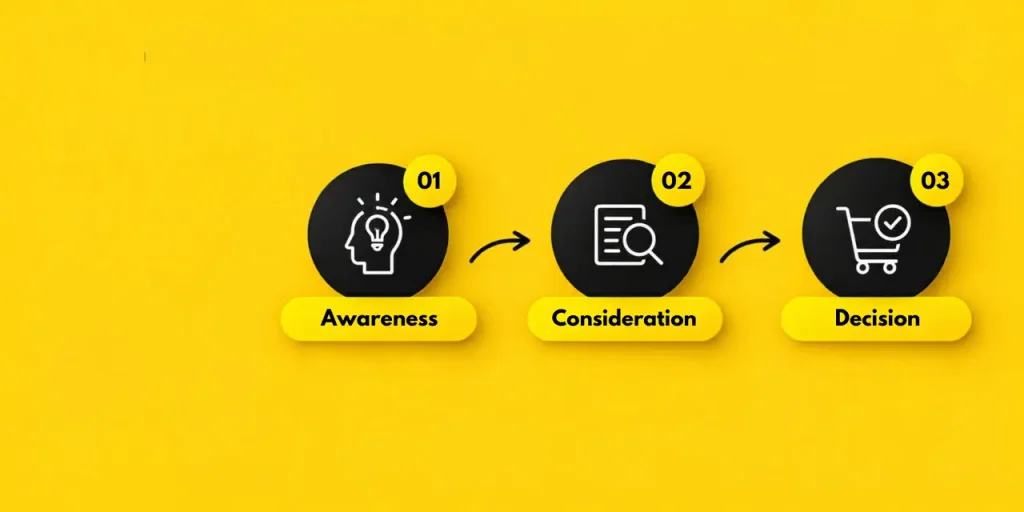
    3 Types of Buyers Journey

    Awareness: “I have a problem.”

    At this point, your audience may not even know what solution they need.

    Create:

    • Educational blogs
    • Short videos
    • Industry insights
    • Social posts
    • Beginner-friendly guides

    Your job isn’t to aggressively sell. It’s to make the audience think “Wait. That’s exactly the problem we’re dealing with.”

    Consideration: “Which solution should I choose?”

    Now the buyer is researching.

    This is where comparison pages, case studies, expert guides, product demos, ROI content, and detailed service pages become useful.

    For example, someone searching “SEO agency vs in-house SEO team” isn’t casually browsing. They’re evaluating options. Your content should help them make that decision.

    Acquisition: “I’m ready. Convince me.”

    This is where the content becomes more conversion-focused.

    Use:

    • Pricing pages
    • Service pages
    • Testimonials
    • Case studies
    • Free consultations
    • Product demos
    • Strong CTAs

    Don’t make someone dig through six pages to figure out how to contact you. They’ve already done the research. Let them take the next step.

    Turn the 3-3-3 Rule Into an SEO Marketing Plan

    Here’s where the framework becomes genuinely useful. Suppose you’re an American B2B SaaS company selling project management software.

    Your three content types could be:

    • Educational: Project management guides and workflow tips
    • Inspirational: Customer success stories
    • Entertaining: Workplace memes and short videos

    Your three channels:

    • Owned: Blog, email, LinkedIn
    • Earned: Industry publications, reviews, backlinks
    • Paid: Google Ads and LinkedIn Ads

    Your three buyer stages:

    • Awareness: “How to manage remote teams”
    • Consideration: “Best project management software for remote teams”
    • Acquisition: “Project management software pricing”

    Now you have an actual content system.

    And more importantly, your keyword strategy, content calendar, social posts, email campaigns, and paid media aren’t operating independently.

    They’re supporting the same journey.

    Don’t Let the 3-3-3 Rule Become Another Marketing Chore

    Here’s the catch. Frameworks are useful until marketers start following them like commandments. You don’t need exactly three blogs, three ads, and three social posts every Tuesday because a blog told you so.

    The point is focus.

    Your strategy should answer:

    • Who are we trying to reach?
    • What does this audience need right now?
    • Which content format makes sense?
    • Which channel can reach them?
    • What action should happen next?
    • How will we know if it worked?

    Then measure the answer.

    Look beyond likes and impressions. Track organic clicks, engagement rate, conversion rate, MQLs, cost per lead, customer acquisition cost, pipeline, and revenue.

    Google also recommends creating helpful, reliable, people-first content rather than producing content simply to manipulate search rankings.

    That distinction matters. Because publishing 50 articles nobody needs isn’t a content strategy. It’s just 50 articles.

    The Bottom Line

    The best marketing and content strategies aren’t necessarily the ones with the biggest content calendars. They’re the ones where everything has a reason to exist.

    Use the 3-3-3 framework as your starting point:

    3 content types → 3 distribution channels → 3 buyer stages.

    Then layer your SEO marketing plan, content creation strategy, and marketing campaign strategy on top of it. Educate people when they’re learning. Build trust when they’re comparing. Make conversion easy when they’re ready. And yes, throw in a funny LinkedIn post once in a while.

    Your audience will appreciate the proof that there are actual humans behind the brand.

    If your content, SEO, paid media, and social campaigns are all working separately, Xparro can bring them together into one strategy built around visibility, engagement, and measurable growth.

    FAQs

    1. What is the 3-3-3 rule in marketing?

    The 3-3-3 rule is a simple way to organize your marketing around three content types, three distribution channels, and three stages of the customer journey.

    1. How does the 3-3-3 rule help with content creation?

    It stops your content calendar from becoming a random collection of blogs and social posts. You can create content based on what people need and where they are in the buying process.

    1. Can the 3-3-3 rule be used in an SEO marketing plan?

    Absolutely. You can use it to connect search intent, content topics, distribution channels, and conversion goals, so your SEO isn’t just chasing traffic, but attracting people who may actually become customers.
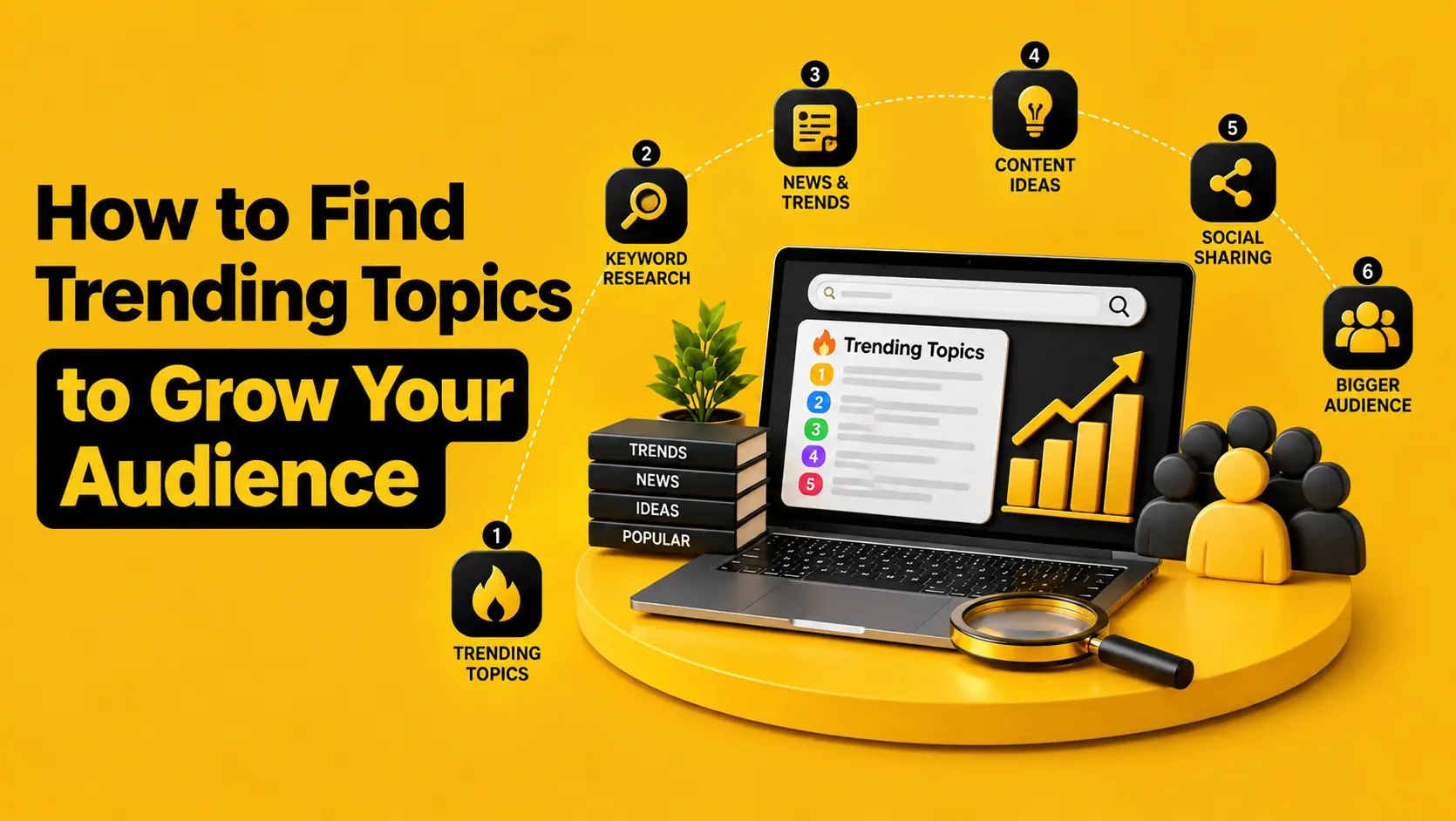
  • How to Find Trending Topics to Grow Your Audience

    How to Find Trending Topics to Grow Your Audience

    Ever spent hours writing a blog, hit publish, and then watched the traffic numbers sit there as they have absolutely no idea who you are?

    Your writing may not be the problem. Your topic might be.

    Content created based on trending topics has a higher chance of catching your audience’s attention since the topics are already being searched for, talked about, and shared. But before diving straight into finding out which topics are hot right now, there are some aspects of doing research on trending topics that need to be considered.

    Let’s get into the basics first.

    Key Takeaways

    • Find rising searches, related queries, and emerging topics using Google Trends.
    • Discover new conversations, questions, and trends via social media and Reddit.
    • Verify trending keywords through search volume, intent, competition, and relevance to business.
    • Create content based on trends by identifying niches, offering unique insight, and generating content when demand is growing.

    What Are Trending Topics?

    Trending topics are subjects getting more attention than usual over a specific period.

    Increased visibility may include:

    • Sudden spike in Google searches
    • Rise in social media conversations
    • Increased number of news articles covering the topic
    • More discussions on Reddit
    • Increase in the number of video views
    • New questions about a certain topic
    • Increased searches for keywords related to the topic

    Some trends appear unexpectedly. Others build slowly over weeks or months.

    For example, tax filing trends every year, but a new tax rule can suddenly create a wave of specific searches. That’s the important distinction. You’re not simply looking for popular topics. You’re looking for topics where interest is increasing.

    How to Find Trending Topics Online

    You don’t need 14 monitors or five subscriptions. A few reliable tools can give you useful signals.

    1. Start With Google Trends
    Google Trends

    If you’re wondering how to find trending topics online, Google Trends should be one of your first stops. It shows how search interest changes over time and lets you compare topics and search terms. You can explore interest over time, regions, related topics, and rising searches.

    The Rising section is especially useful because it highlights queries experiencing significant growth. Google says searches marked “Breakout” have grown by more than 5,000%. That’s not exactly a gentle nudge. That’s the internet yelling, “LOOK AT THIS.”

    Here’s the smarter way to use it.

    Don’t search only for your exact target keyword.

    Let’s say you create content for a fitness brand. Instead of searching only for “fitness,” try “strength training,” “home workouts,” “protein intake,” or “running recovery.” Then check the related queries. You might discover that “fitness” is stable while “strength training for beginners” is suddenly gaining attention. That’s a much more specific content opportunity.

    Compare seven days, 30 days, 90 days, 12 months, and five years. A topic can look huge over five years while actually declining today.

    And remember: not every spike is a trend. Sometimes it’s just Thanksgiving being Thanksgiving.

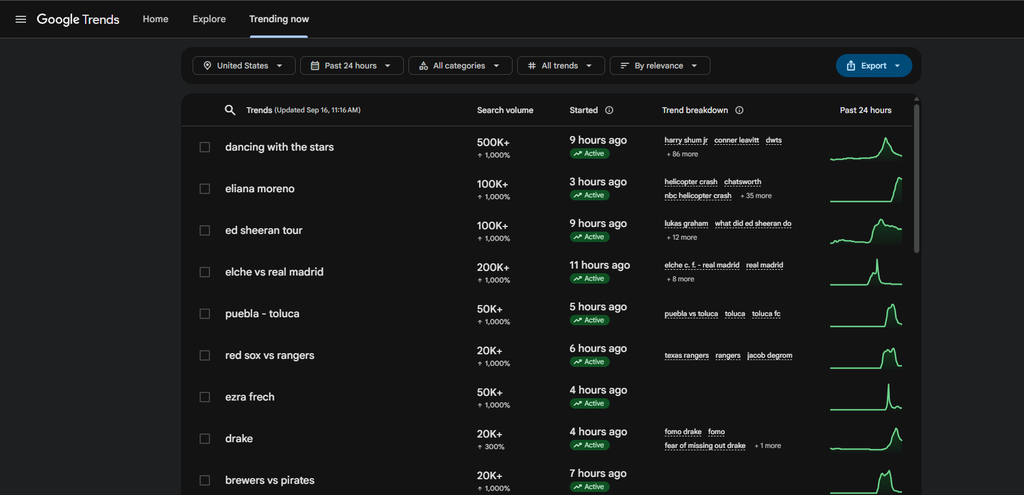
    1. Check Google’s Trending Now

    Want to know what’s trending right now?

    Google Trends’ Trending Now section is designed for that. It tracks trending searches across more than 100 countries and regions and lets you explore recent trends across short time periods. This can help with breaking news, industry developments, events, reactive content, and commentary. But don’t turn every trending search into a blog.

    A celebrity breakup might be trending. That doesn’t mean your B2B cybersecurity company needs a 1,500-word article about it. Trending doesn’t automatically mean relevant.

    Always ask: “Does my audience actually care about this?” If not, let the internet have its moment.

    How to Find Top Trending Keywords

    A trending topic and a trending keyword aren’t quite the same thing. A topic is the broader idea. A keyword is the specific phrase someone types into a search engine.

    For example:

    Topic: Artificial intelligence

    Potential keywords:

    • AI tools for businesses
    • AI marketing tools
    • AI search optimization
    • AI productivity tools
    • AI content detection

    Google Trends can help you identify related searches and rising queries. Take promising keywords into your preferred SEO tool.

    Look at:

    • Search volume
    • Keyword difficulty
    • Search intent
    • Cost per click
    • SERP competition
    • Traffic potential

    This is where trend research becomes useful for SEO.

    You’re no longer asking “What’s popular?” You’re asking “Which keywords around this growing topic are worth targeting?” That’s the better question.

    How to Find Social Media Trends

    Google tells you what people are searching for. Social media can tell you what people are talking about. And sometimes, those conversations start before search demand catches up.

    If you’re trying to figure out how to find social media trends, start with the platforms where your audience actually spends time.

    According to Pew Research Center in 2025, 84% of American adults use YouTube, 71% use Facebook, 50% use Instagram, 37% use TikTok, and 26% use Reddit.

    Choose social media that matters to your audience.

    TikTok

    TikTok Creative Center allows discovering the most popular hashtags, videos, music, creators, and other trend signals.

    It’s possible to look for industry-related trends and trends per time period, rather than spending two hours scrolling and calling it market research.

    What to look for:

    • Questions asked repeatedly
    • New phrases being used
    • Popular content format
    • Product mentions
    • Repeated complaints
    • Industry talks

    Reddit

    Reddit can become quite helpful in finding real problems to solve. Visit relevant subreddits and look for questions that keep appearing. If several people are asking different versions of the same question, you’ve probably found a content opportunity.

    Don’t focus only on upvotes. Look for patterns. One viral post can disappear tomorrow. A recurring problem can become a reliable content topic.

    Follow Industry News

    Not every trend starts with a Google search. A new regulation, product launch, algorithm update, technology announcement, or major industry event can create an entire wave of searches afterward.

    That’s why trend research should also include industry publications, news sites, competitor blogs, trade publications, LinkedIn, YouTube, podcasts, and company announcements. You’re looking for new developments entering the conversation.

    For example, if a major search engine announces a significant change, don’t wait three months until everyone has published:

    “Everything You Need to Know About Google’s Latest Update”

    Look at the questions people are asking immediately. That’s where timely content has an opportunity to win.

    Use Trend Discovery Tools

    Tools such as Exploding Topics can help identify subjects that are gaining momentum. These tools are useful when you’re looking for emerging trends rather than topics that are already everywhere. Think of it as finding the party before everyone starts posting pictures from it.

    Combine trend-discovery tools with Google Trends to validate whether an emerging subject has meaningful search interest. The important word is validate. Use multiple signals before deciding that a trend deserves your time.

    How to Find Trending Topics for a Blog

    Finding a trend is easy. Finding a good blog topic from that trend is where things get interesting.

    Use this five-step process.

    Step 1: Start With Your Industry

    Begin with topics your business already understands.

    For an SEO company:

    SEO → AI search → AI Overviews → AI search visibility

    For a SaaS company:

    Productivity → remote work → AI productivity tools

    Start with relevance, not virality.

    Step 2: Find Growing Subtopics

    Use Google Trends, social media, Reddit, news, and trend platforms.

    Look for rising searches, new questions, emerging terminology, new products, growing complaints, and industry debates.

    You’re looking for the smaller wave forming around the bigger topic.

    Step 3: Validate Search Demand

    A topic might be exploding on TikTok but have almost no meaningful search demand. That might make an excellent social post.

    But if you’re spending hours creating an SEO-focused article, check its search potential first. 

    Look at search volume, search trend, search intent, keyword difficulty, and SERP competition. Don’t build a 2,000-word article around a keyword searched by approximately your cousin and three bots.

    Step 4: Check Business Relevance

    Ask one simple question:

    “If this article ranks, do I actually want these people visiting my website?”

    If the answer is no, reconsider the topic. Traffic is nice. Relevant traffic is much nicer.

    Step 5: Find the Content Gap

    Search the topic yourself and study the current results.

    Then ask:

    • What’s missing?
    • Are the examples outdated?
    • Is the information too generic?
    • Are important questions unanswered?
    • Can you provide original data?
    • Can you explain the topic better?

    Google recommends creating people-first content that provides original information, research, analysis, or meaningful value rather than simply rewriting what already exists.

    In other words, don’t just be first. Be useful.

    A Simple 30-Minute Trend Research Routine

    You don’t need to spend all morning hunting for the next big thing.

    Try this:

    • 10 minutes: Check Google Trends and Trending Now
    • 5 minutes: Search through social sites
    • 5 minutes: Go through Reddit or industry-specific forums
    • 5 minutes: Scan industry news
    • 5 minutes: Confirm your best ideas using keyword research

    Keep your ideas in a simple spreadsheet with columns for topic, source, growth, relevance, competition, and content angle.

    Now you’re not collecting random ideas. You’re building a content opportunity list.

    Don’t Chase Every Trend

    A topic trending today doesn’t automatically deserve a blog tomorrow.

    Before jumping on a trend, ask:

    • Is it relevant? Does your audience care?
    • Is interest growing? Are search, social, or news signals increasing?
    • Can you compete? Are you early enough to have an opportunity?
    • Can you add something useful? Do you have expertise, data, examples, or analysis?

    If you can’t answer “yes” to at least three, skip it. Your calendar will survive.

    The Bottom Line

    Finding trending topics isn’t about endlessly scrolling social media and hoping inspiration smacks you in the face.

    It’s about watching where attention is moving.

    Use Google Trends to understand search behavior. Scan social media to find discussions early on. Check out Reddit to get actual questions and concerns. Follow industry news for new trends. Afterward, validate your ideas by checking the search demand, competition, audience relevance, and business intentions.

    Above all else, do not mistake viral for valuable. The best trending topic for your business is where growing audience interest meets your expertise. That’s the sweet spot.

    And yes, it’s usually more useful than publishing your 47th article titled “10 Tips to Improve Your Marketing.”

    FAQs

    1. How do I find trending topics online?

    Go to Google Trends first, then have a look at social media, Reddit, and industry blogs. Find those topics which are becoming popular, not those which are already everywhere.

    1. How do I know if a trending topic is worth blogging about?

    Think about three points: Is my audience interested in this topic? Is their interest increasing? Do I have something valuable to add? Yes? Well, you have found a great topic.

    1. How can I find trending topics for my blog before they become too competitive?

    See early indicators such as a rising number of Google searches, repeating questions on Reddit, growing social buzz, and new industry developments. Spot trends early rather than waiting till everybody writes about it.

  • 15 Senior Living Marketing Strategy Tips for 2026

    15 Senior Living Marketing Strategy Tips for 2026

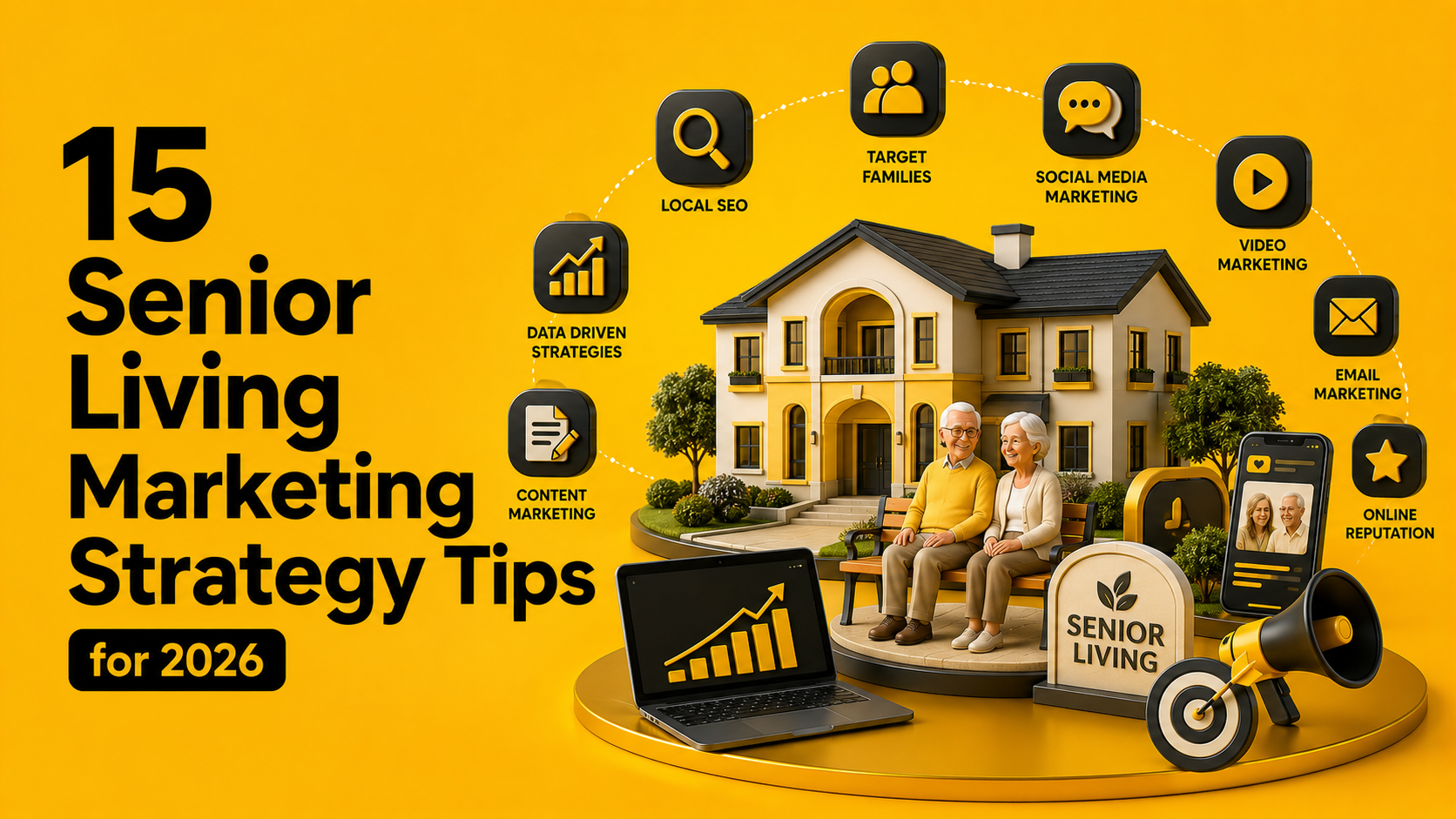
    The senior living industry has changed. Families don’t choose communities the way they did five years ago. And if your marketing strategy still relies on brochures, referrals, and hoping people find your website, you’re probably leaving occupancy, and revenue, on the table.

    Imagine spending thousands on advertising only to receive inquiries from people who aren’t ready to move, don’t fit your community, or disappear after the first call.

    Frustrating, right?

    Meanwhile, another senior living community across town is filling tours, nurturing families through long decision-making cycles, and maintaining waiting lists.

    What’s their secret?

    They understand that today’s buyers aren’t just seniors. They’re adult children, caregivers, spouses, healthcare professionals, and sometimes even grandchildren acting as researchers. That means your senior living marketing strategy must speak to multiple audiences simultaneously.

    The good news? You don’t need a massive budget to win. You need the right strategy. And this is precisely what our guide will discuss.

    Why Senior Living Marketing Is Different from Traditional Marketing

    Let’s be honest.

    Nobody wakes up on a Tuesday morning and says:

    “Honey, let’s go shopping for assisted living communities today!”

    The decision is emotional. It’s often stressful. Sometimes it follows a health scare, hospital discharge, or family crisis.

    Unlike buying a new car or choosing a restaurant, selecting a senior living community involves:

    • Trust
    • Security
    • Health care concerns
    • Dynamics within the family
    • Financial planning
    • Emotional preparedness

    This is why effective marketing programs for senior living centers emphasize education over selling. The communities that understand this create relationships long before move-in day.

    Understanding the Modern Senior Living Buyer Journey

    Before launching campaigns, you need to understand how families make decisions.

    The journey usually looks something like this:

    Stage 1: Awareness

    A family notices:

    • Mom is becoming forgetful
    • Dad is struggling with mobility
    • Daily tasks are becoming difficult

    At this point, they’re searching:

    • “When is it time for assisted living?”
    • “Signs my parent needs senior care”
    • “Independent living vs assisted living”

    They’re not looking for your community yet. They’re looking for answers.

    Stage 2: Research

    Here comes the comparison shopping.

    Questions to be answered are:

    • What services are offered?
    • How much will it cost?
    • What amenities are important?
    • Where are the highly-rated communities located?

    Stage 3: Evaluation

    At this point, families narrow their choices.

    They:

    • Read online reviews
    • Watch video testimonials
    • Take tours
    • Compare costs
    • Consult with an advisor

    And now your marketing becomes differentiating.

    Stage 4: Decision

    Trust becomes the deciding factor.

    The community that makes families feel safe and confident often wins.

    Not necessarily the cheapest one. Not even the closest one. The most trusted one.

    The Foundation of Every Successful Senior Living Marketing Strategy

    Before discussing tactics, let’s discuss the foundation.

    Many communities chase leads without fixing the basics. It’s like pouring water into a bucket with holes. Your marketing foundation should include:

    A Professional Website

    Your website isn’t an online brochure. It’s your top salesperson.

    It must be:

    • Fast-loading
    • Mobile-friendly
    • Have clear CTAs
    • Be full of community photos
    • Feature stories of residents
    • Make it easy to schedule tours

    Families can assess your credibility in seconds. If your website looks outdated, they may assume your community is too.

    Strong Brand Positioning

    Many communities sound identical.

    They all say:

    • Caring staff
    • Comfortable living
    • Exceptional service
    • Resident-focused care

    That’s nice. But it’s also what everyone says.

    Ask yourself:

    Why should families choose you?

    Do you have:

    • Luxurious amenities
    • Memory care services
    • Resort-style living
    • Religious services
    • Focus on wellness

    Be different.

    Marketing Ideas for Senior Living That Actually Generate Results

    Let’s get into some actual tactics.

    Here are marketing strategies that have proven successful at filling up senior living communities.

    1. Create Helpful Educational Content

    Families spend weeks or months researching before contacting communities. Meet them early.

    Create blog content around questions such as:

    • When should seniors move to assisted living?
    • What are the signs of cognitive decline?
    • How much does senior living cost?
    • How to talk to parents about senior care

    Educational content builds trust before sales conversations begin.

    And trust drives tours.

    2. Invest in Local SEO

    Most families search locally.

    Examples include:

    • Assisted living near me
    • Senior living in Dallas
    • Memory care community in Tampa

    Your Google visibility matters.

    Optimize:

    • Google Business Profile
    • Location pages
    • Local keywords
    • Community listings
    • Reviews

    Local SEO can attract high-quality traffic.

    3. Turn Resident Stories into Marketing Gold

    Real stories outperform polished sales messages. Every. Single. Time. Families want proof.

    Share:

    • Resident success stories
    • Family testimonials
    • Lifestyle transformations
    • Community experiences

    People trust people more than advertisements. Always have. Always will.

    4. Build a Video-First Strategy

    Let’s face it. Nobody wants to read a 50-page brochure anymore. Video helps families experience your community before they visit.

    Make:

    • Virtual tours
    • Introductions of staff members
    • Interviews with your residents
    • Events coverage
    • “Day in the life” videos

    Videos eliminate uncertainty.

    5. Use Facebook Advertising Strategically

    Unlike common belief, Facebook is not just about posting vacation pictures and debating whether pineapple goes on pizza.

    Facebook ads are extremely effective for marketing senior care communities.

    Why?

    Because adult children, the primary decision-makers, spend significant time on Facebook.

    Target:

    • Adults aged 45-65
    • Caregivers
    • Local audiences
    • Healthcare interests

    Promote:

    • Educational guides
    • Community tours
    • Events
    • Webinars

    6. Offer Downloadable Resources

    Lead magnets work exceptionally well in senior living.

    Examples include:

    • Free Guides
    • Assisted Living Cost Guide
    • Senior Care Planning Checklist
    • Family Caregiver Handbook
    • Downsizing Guide for Seniors

    Families exchange contact information because the resource provides immediate value.

    You gain qualified leads. Everyone wins.

    7. Host Educational Events

    Events allow building authority and generating leads.

    Popular topics include:

    • Aging and wellness
    • Financial planning
    • Estate planning
    • Memory care education
    • Caregiver support

    You become more than a community. You become a trusted resource.

    Marketing to Senior Living Communities Requires Emotional Intelligence

    One major mistake marketers make? 

    They focus only on features. Families care more about outcomes.

    Instead of saying: “Private dining room available.”

    Say: “Celebrate your family events without ever having to leave the community.”

    Rather than: “24/7 staff.”

    You should be saying: “Peace of mind that there is always help available.”

    Sell the outcome. Not the feature.

    8. Build an Email Nurture Campaign

    Most leads won’t convert immediately.

    That’s normal.

    A decision may take:

    • 30 days
    • 90 days
    • 6 months
    • Longer

    Without nurturing, many prospects disappear.

    So build an email campaign which:

    • Educates
    • Reassures
    • Answers any questions
    • Showcases successes
    • Offers tours

    Stay visible until they’re ready.

    9. Strengthen Your Online Reputation

    Reviews heavily influence decisions. Families read them. A lot. Encourage satisfied residents and families to leave reviews. Respond professionally to all feedback.

    Positive reviews improve:

    • Trust
    • Local SEO
    • Conversion rates

    A five-star reputation can become your strongest marketing asset.

    10. Develop Healthcare Referral Partnerships

    Lots of move-ins come through referrals.

    Create relationships with:

    • Hospitals
    • Doctors
    • Physical rehabilitation centers
    • Home healthcare organizations
    • Social service organizations

    Referrals may be the best source for your occupancy rate.

    11. Use Retargeting Campaigns

    Most website visitors leave without converting.

    That doesn’t mean they’re uninterested. They’re thinking. Researching. Comparing.

    Retargeting ads help bring them back. These campaigns often produce some of the highest ROI in digital marketing.

    How to Turn Senior Living Leads Into Scheduled Tours

    Generating leads is only half the battle.

    Many senior living communities celebrate when they receive a form submission, only to discover that most inquiries never become tours.

    The reality is that occupancy growth depends less on lead volume and more on lead conversion.

    A community generating 50 leads and converting 20% into tours will outperform a community generating 150 leads with a 3% conversion rate.

    That’s why every senior living marketing strategy should include a structured lead nurturing process.

    Respond Within Five Minutes

    The first community to respond often wins.

    When a daughter submits an inquiry about assisted living for her father, she’s usually contacting multiple communities at the same time.

    If your team waits until the next day to call, another community may have already scheduled a tour.

    Speed matters.

    Automate workflows to instantly:

    • Send a confirmation email
    • Provide some information
    • Notify the sales team
    • Schedule a follow-up call

    The faster the response, the higher the likelihood of conversion.

    Use Multiple Follow-Up Channels

    Most prospects won’t answer the first call.

    That doesn’t mean they’re uninterested.

    Families are often:

    • Managing caregiving responsibilities
    • Discussing options with siblings
    • Researching costs
    • Comparing communities

    Use a combination of:

    • Phone calls
    • Email sequences
    • SMS reminders
    • Retargeting ads

    to stay visible throughout the decision-making process.

    Focus on Booking Tours, Not Selling Rooms

    One of the biggest mistakes sales teams make is trying to close too early.

    Families are not ready to commit after their first inquiry.

    Instead, focus on the next logical step:

    A community tour.

    Tours allow prospects to:

    • Experience the environment
    • Meet staff members
    • See amenities firsthand
    • Build emotional confidence

    The goal of your marketing should be to move prospects from inquiry to tour as efficiently as possible.

    Automate Long-Term Lead Nurturing

    Not every prospect is ready today. Some families may not make a move for six months or even a year. Without nurturing, these opportunities disappear.

    Create automated email campaigns that provide:

    • Caregiving resources
    • Senior living guides
    • Resident success stories
    • Wellness tips
    • Community updates

    This keeps your community top of mind until the family is ready to take action.

    Measure Your Tour Conversion Rate

    Most communities track leads. Fewer track tours. The best operators track both.

    Monitor metrics such as:

    • Lead-to-tour rate
    • Tour-to-move-in rate
    • Average response time
    • Cost per tour
    • Cost per move-in

    These numbers reveal whether your marketing is generating genuine occupancy opportunities or simply producing inquiries.

    Because in senior living marketing, tours are the bridge between awareness and move-ins.

    The communities that consistently fill tours are usually the communities that consistently fill rooms.

    The Role of Content Marketing in Senior Care Marketing

    Content marketing isn’t just about publishing blogs. Content marketing is creating a trusted brand.

    Consider:

    Which of the following companies would you rather purchase services from?

    Company A

    “Schedule a tour today!”

    Company B

    “We have assisted hundreds of families in navigating senior care with ease.”

    The answer is obvious. Authority creates trust. Trust creates tours. Tours create move-ins.

    12. Create Topic Clusters around Senior Living

    Instead of randomly writing articles, create topic clusters.

    Example:

    Main Topic

    Guide to Senior Living

    Articles within cluster:

    • Understanding Independent Living
    • Assisted Living Costs
    • Memory Care Information
    • Downsizing
    • Senior Wellness Programs

    SEO will benefit and assist the family during their buying journey.

    13. Make Effective Use of Social Media Storytelling

    Social media is not about uploading generic holiday images.

    Families crave authenticity.

    Include:

    • Resident events
    • Communal events
    • Staff interviews
    • Wellness programs
    • Volunteer activities

    Showcase what happens within the community. No need for any marketing talk here.

    14. Use Data to Improve Marketing Performance

    The best marketers don’t guess. They measure.

    Track:

    • Website traffic
    • Lead sources
    • Cost per lead
    • Tour bookings
    • Move-in conversions
    • Email engagement

    Marketing without analytics is like driving blindfolded. Technically possible. Highly discouraged.

    15. Create a Resident Ambassador Program

    Happy residents can become powerful advocates.

    Encourage residents and families to:

    • Participate in videos
    • Attend open houses
    • Share testimonials
    • Refer friends

    Word-of-mouth remains one of the strongest drivers of occupancy. Especially in senior living.

    Common Senior Living Marketing Mistakes to Avoid

    Even great communities commit these errors.

    • Focusing on Occupancy – Occupancy is the goal. Trust is what drives occupancy. Start by building trust.
    • Overlooking Mobile Optimization – Most searches start on a phone. Poor optimization leads to missed opportunities.
    • Using Generic Language – All communities care. Show how you’re unique.
    • Missing Follow-Up – Many visits take more than one contact. It pays to be persistent.
    • Downplaying Content Marketing – Families need advice. Content provides it.

    Educating beats just advertising.

    Future Trends Shaping Marketing Strategies for Senior Living

    The senior living industry moves fast. Leading seniors housing communities understand the need to embrace:

    Artificial Intelligence

    AI enables better personalization of communication, automation of follow-ups, and lead qualification.

    Virtual Reality Tours

    Families are getting used to having immersive experiences before visiting the place physically.

    Voice Search Optimization

    Queries such as:

    • “Best assisted living near me”
    • “Seniors housing community nearby”

    are growing.

    Personalized Marketing

    One-size-fits-all marketing campaigns are becoming ineffective. Families are expecting personalized approaches.

    Reputation-Guided Growth

    Reviews, testimonials, and community reputation signals will remain a decisive factor.

    How Xparro helps Senior Living Communities Grow

    Developing the right marketing system for a senior living facility goes beyond advertising and blog posting.

    It takes:

    • Strategic SEO
    • Conversion-oriented websites
    • Content marketing
    • Local search optimization
    • Lead nurturing
    • Performance analytics
    • Reputation management

    At Xparro, we assist senior living communities in developing marketing systems that bring in qualified leads, drive tours, and increase occupancy rates.

    We help attract the right families, build trust through the whole process, and convert digital presence into sales. Because empty rooms don’t bring any income. But strategic marketing can.

    Final Thoughts

    Not all successful communities are necessarily new, big, or fancy. They are those who can effectively communicate trust. Families of today do a lot of homework before making any decision.

    They compare options. They read reviews. They watch videos. They consume content.

    And they choose communities that make them feel confident about one of the most important decisions they’ll ever make.

    A powerful senior living marketing strategy doesn’t push people toward a sale.

    It guides them toward a solution. Focus on education. Invest in trust. Create meaningful connections. And occupancy growth will follow.

    Because in senior living, marketing isn’t really about marketing. It’s about how you help families in dire need.

  • Top AI Marketing Tools for Marketers in 2026

    Top AI Marketing Tools for Marketers in 2026

    Let’s be honest.

    Marketing in 2026 is like doing tricks with flaming swords while riding a unicycle.

    You’re supposed to generate content, manage social media, optimize SEO, conduct ad campaigns, analyze data, personalize the customer experience, respond to leads, and somehow make room for planning and strategy development.

    The result?

    Most marketers today struggle with getting things done, rather than helping their companies grow.

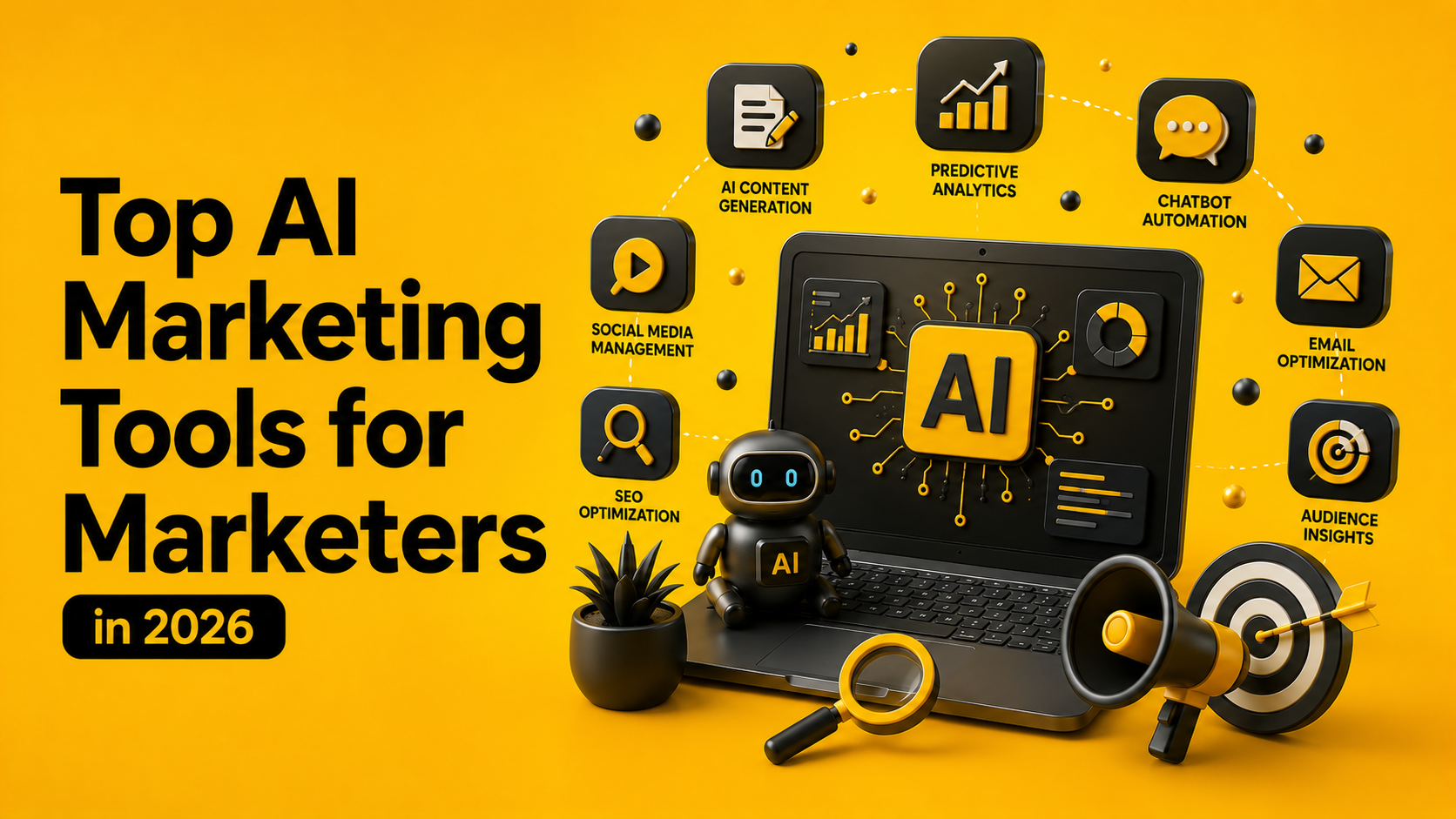
    This is precisely why marketing tools powered by AI became a must-have instead of a nice-to-have. With the proper choice of AI tools, you can automate boring and repetitive tasks, get insights faster, improve the performance of your marketing campaigns, and deliver more with the same number of people in the team.

    But there is a catch: all software companies call themselves “AI-powered.” Some of them really change the game in marketing. Others are regular software dressed up as AI.

    Here’s how to navigate through the market of AI marketing tools and choose the best products for your needs.

    Why AI Marketing Tools Are Dominating Marketing in 2026

    Marketing is too complex to be performed manually.

    The modern companies perform many activities such as:

    • Multichannel advertising
    • Use of social media channels
    • Performing SEO
    • Email marketing
    • Creating a customer journey
    • Content creation
    • Data analytics
    • Using CRM

    How AI can help:

    • Automate tasks
    • Predict customer behavior
    • Personalize content
    • Improve targeting
    • Create creative content
    • Campaign optimization in real time
    • Analysis of large data sets in an instant

    Instead of replacing marketers, AI will take out routine activities that allow marketers to concentrate on strategy and creativity.

    This is why businesses using AI-based marketing tools have a competitive edge.

    The Hidden Cost of Not Using AI in Marketing

    AI is still seen as a “nice-to-have” technology by many organizations. This is turning out to be an expensive blunder.

    On a daily basis, marketers use up numerous hours doing things that could easily have been done in minutes with AI:

    • Scheduling social media posts
    • Analyzing campaign performance
    • Segmenting audiences
    • Creating ad variations
    • Generating reports

    The issue is not just the lost hours. There’s an opportunity cost associated with this.

    When one marketing team is using three days on report preparation, the other marketing team is using AI to gain insights in seconds and spending the three days launching campaigns.

    Herein lies the competitive advantage.

    Firms that deploy AI technology are:

    • Launching campaigns faster
    • Testing more creative variations
    • Personalizing customer experiences at scale
    • Improving conversion rates
    • Reducing customer acquisition costs

    In a highly competitive industry, speed makes the difference. The issue is not whether companies should use AI, but how fast.

    Expand Existing Section

    What makes a Good AI Marketing Tool?

    Add:

    Quality of Outputs

    All AI tools are not the same.

    Some create output that comes off as robotic and generic. Some create output that needs little editing.

    Before choosing an AI marketing tool, marketers must assess its:

    • Accuracy
    • Creativity
    • Contextual understanding
    • Consistency of voice with the brand’s
    • Learning abilities

    An AI tool that will save you ten minutes but take you two hours to edit isn’t saving you any time.

    Security and Compliance

    Security is just as crucial for corporations and compliance-based industries as functionality.

    Enterprises need to make sure their AI systems offer:

    • Data security features
    • User permissions
    • Support for compliance
    • Secure integrations

    As AI becomes an integral part of the business process, trust becomes a key competitive feature.

    What Makes a Great AI Marketing Tool?

    Instead of purchasing one more subscription to which you will forget to unsubscribe, assess the tools based on:

    Ease of Use

    If it takes three weeks of learning to create a marketing campaign using your new tool, it is hardly going to save time.

    Automation Capabilities

    The best AI tools automate everything.

    Data Intelligence

    Is it able to detect information that you won’t be able to?

    Integration Options

    It needs to integrate seamlessly with your CRM, analytics, advertising, and content creation platforms.

    Scalability

    Will it continue working as efficiently once your company grows in size by 100%?

    Potential ROI

    Every good tool should help in achieving one of the following goals:

    • Increasing profits
    • Improving efficiency
    • Reducing acquisition costs

    Best AI Marketing Tools for Content Creation

    Content continues to be one of the largest investments in marketing, but it also takes up a lot of your time.

    These AI tools for marketers will speed up the content creation process without compromising its quality.

    1. Claude

    Claude is a renowned AI writing assistant that is highly capable in terms of researching, writing, a nd strategic planning.

    Marketers utilize it for:

    • Blog post writing 
    • Content briefing 
    • Competitive analysis 
    • Brand message crafting
    • Content strategy development

    Best For

    Content marketers, SEO specialists, agencies, and B2B marketers.

    Why It Matters

    Claude has proven to be an effective writing assistant in developing well-researched and structured content.

    1. ChatGPT

    ChatGPT is the equivalent of the Swiss Army knife of marketing.

    It is used by marketers for:

    • Creating blog outlines
    • Writing ad copy
    • Creating email campaigns
    • Creating product descriptions
    • Creating landing pages
    • Ideating content
    • Audience research

    Best For

    • Content marketers
    • SEO professionals
    • Copywriters
    • Agencies

    Why Does it Matter? 

    Rather than wasting hours staring at a blank page, marketers can produce drafts within minutes.

    Just remember:

    AI produces drafts. People create great marketing.

    1. Jasper

    Jasper was created specially for marketing teams.

    Its features include:

    • Customizing brand voice
    • Creating campaigns
    • Creating SEO-based content
    • Marketing workflows
    • Collaboration

    Best For:

    Businesses are generating large amounts of content.

    Strength:

    Consistency in messaging on different platforms.

    1. Copy.ai

    Copy.ai is mainly focused on marketing and sales copywriting.

    Some common applications are:

    • Prospecting emails
    • Social media content
    • Website copywriting
    • Sales campaigns

    Why Marketers Use It

    Fast and easy content creation process without a lot of prompts.

    Best AI Tools for SEO and Organic Growth

    SEO has evolved greatly due to the rise of AI-powered search experiences.

    The following tools will help marketers remain relevant.

    1. Surfer SEO

    Surfer combines content optimization with AI recommendations.

    Features:

    • Content scoring
    • SERP analysis
    • Keyword optimization
    • Competitor analysis

    Best For

    Businesses that prioritize organic performance.

    Key Advantage

    Lowers the amount of guesswork in on-page SEO.

    1. Semrush AI Toolkit

    Semrush keeps progressing to become an AI-driven marketing solution.

    Features include:

    • Keyword analysis
    • Competitive analysis
    • Content suggestions
    • Traffic analysis
    • AI insights

    Why It’s Useful

    Gives you a full view of your search environment.

    1. Clearscope

    Clearscope helps marketers to produce content in line with search intent.

    Best For:

    • Large enterprise content teams
    • SEO agencies
    • Publishers

    Strength

    Boosts content quality instead of just adding more keywords.

    Because Google favors helpful content, not keyword stuffing of 2012.

    Best AI Marketing Tools for Social Media Management

    Social media never sleeps. Unfortunately, marketers do need to sleep. That’s where these tools come into play.

    1. Sprout Social AI

    AI is used by Sprout Social to make social media operations easy.

    Includes:

    • Content recommendations
    • Audience analytics
    • Sentiment analysis
    • Performance reports

    Best For

    Brands with multiple social media channels.

    1. Hootsuite AI

    The AI tools of Hootsuite assist marketers to:

    • Create posts
    • Schedule content
    • Analyze performance
    • Best Time For Publishing

    Advantage

    Less need for manual management of social media.

    1. Predis.ai

    Predis.ai is an AI tool to generate social media content.

    Includes:

    • AI-generated creatives
    • AI-generated captions
    • Reels
    • AI-generated ads concepts

    Best For

    Agencies and small businesses for fast content generation.

    Best AI Tools for Digital Advertising

    AI has made digital advertising more data-driven. AI has been able to optimize campaigns in less time than any manual management.

    1. Google Performance Max

    With the use of Google’s AI, Performance Max optimizes:

    • Search campaigns
    • Display campaigns
    • Shopping ads
    • YouTube ads

    Benefits

    • Automated bidding
    • Audience targeting
    • Budget allocation

    Why It Is Best?

    It is an automatic learning tool that changes its strategy based on performance.

    1. Meta Advantage+

    Meta’s AI-advertising suite makes digital campaigns easy.

    It has these capabilities:

    • Audience Discovery
    • Creative Optimization
    • Placement Optimization
    • Budget Optimization

    Suitable For

    Ad Campaigns on Facebook and Instagram.

    1. AdCreative.ai

    AdCreative.ai specializes in creating ad creatives.

    Features:

    • AI-created ad design
    • Visual focus on conversion
    • Creative scoring
    • A/B testing

    Biggest Advantage

    It reduces the time needed for creative design.

    Best AI-Powered Marketing Tools for Email Marketing

    Email marketing is one of the best ROI marketing tools. AI increases effectiveness further.

    1. HubSpot AI

    The marketing platform uses AI across its entire system.

    Features include:

    • Email generation
    • Lead scoring
    • Workflow automation
    • Customer insights

    Why Marketers Choose It

    Everything lives within a single platform.

    1. Mailchimp AI

    Mailchimp uses AI to assist marketers in:

    • Generate email copy
    • Predict customer behavior
    • Optimize send times
    • Personalize campaigns

    Best for

    Small and mid-size companies

    Best AI Marketing Tools for Analytics and Insights

    Data is useless without any analysis of it.

    The tools below help convert data into insights.

    1. Tableau AI

    The platform offers analytics and insights based on artificial intelligence.

    Advantages

    • Automatic reports
    • Predictive analytics
    • Visualization of data
    • Forecasting

    Best for

    Large datasets in marketing.

    1.  Microsoft Power BI with Copilot

    The AI capabilities in Power BI make analytics easier than ever. Marketers can query in plain English and get real-time responses.

    Example:

    Rather than creating an overly complex report, you can simply ask:

    “What campaigns provided the best ROI last quarter?”

    The system takes care of the rest.

    Best AI Marketing Tool for Customer Journey Optimization

    1. Salesforce Marketing Cloud AI

    Salesforce applies AI to customer interactions in large numbers.

    Features Include:

    • Predictive personalization
    • Customer journey maps
    • Lead scoring
    • Behavioral analysis

    Why Is It Unique?

    It offers highly personalized experiences across several touchpoints.

    How AI Marketing Tools Are Transforming Every Stage of the Customer Journey

    There is an assumption that AI tools can only be applied for content creation purposes. However, AI is having an impact on all phases of the customer journey.

    Awareness Stage

    At the very first stage, AI helps marketers:

    • Find trending topics
    • Determine audience interests
    • Come up with ideas for creating content
    • Develop SEO strategies

    Thus, companies manage to draw more traffic.

    Consideration Stage

    While evaluating their options, buyers will benefit from:

    • Personalized email campaigns
    • Dynamic websites
    • Recommendations based on prediction
    • Audience segmentation

    Nowadays, people expect brands to know what they need before they do.

    Decision Stage

    Once buyers are ready to make purchases, AI can help by:

    • Determining lead scores
    • Forecasting purchasing intention
    • Adjusting ad targeting strategies
    • Tailoring special offers

    This way, sales and marketing teams will be able to concentrate on valuable deals.

    Retention Stage

    The journey is not over at this stage.

    Through AI, companies will be able to:

    • Analyze customer behavior
    • Optimize loyalty programs
    • Communicate personally with customers
    • Forecast customer churn

    Retaining old customers is much more cost-effective than finding new ones.

    How to Choose the Right AI Marketing Tool

    One of the most common blunders companies commit is subscribing to all of the emerging AI platforms. Just because you have more tools doesn’t necessarily mean you’re going to be a better marketer.

    First, determine where your major bottleneck lies.

    For Poor Content Creation

    Think about using:

    • ChatGPT
    • Jasper
    • Copy.ai

    If SEO Is Underperforming

    Think about using:

    • Surfer SEO
    • Semrush
    • Clearscope

    If Social Media Is Overwhelming

    Think about using:

    • Sprout Social
    • Hootsuite
    • Predis.ai

    If Advertising Costs Are Rising

    Think about using:

    • Performance Max
    • Meta Advantage+
    • AdCreative.ai

    If Analytics Feels Confusing

    Think about using:

    • Tableau
    • Power BI

    Sometimes the optimal approach includes a few complementary tools rather than multiple redundant subscription plans.

    Common AI Marketing Mistakes to Avoid

    Despite being highly advanced in nature, even the best AI solutions in digital marketing are unable to salvage a poor strategy.

    These are some mistakes you should avoid:

    Treating AI as a Replacement for Strategy

    AI can implement. However, it cannot strategize for your business.

    Publishing AI Content Without Human Review

    AI-generated content will immediately be identified by your customers.

    Ignoring Brand Voice

    Consistency is essential.

    Automating Everything

    Not all customer interactions can be automated.

    Chasing Every New Tool

    The market of AI solutions in marketing evolves weekly. Be outcome-oriented rather than technology-oriented.

    The Future of AI Marketing Tools

    In the future, the following capabilities might be included in AI marketing tools:

    • Campaign management
    • Content creation
    • Personalization
    • Customer journey management
    • Market forecasting

    Marketing departments will spend more time thinking strategically and less time executing. Organizations adopting AI now are likely to outperform the competition tomorrow.

    Building Your AI Marketing Stack Without Wasting Money

    Here lies the major mistake that a lot of businesses make. They subscribe to all popular AI platforms that appear on LinkedIn.

    Now they are spending money on:

    • Five content tools
    • Three analytics tools
    • Four social media tools
    • Multiple CRM platforms

    And the majority of these tools perform similar tasks. Thus, it would be wiser to form your efficient AI stack.

    For Small Businesses

    It may contain the following components:

    • ChatGPT as a content creator
    • Surfer SEO as a content optimizer
    • Mailchimp AI as an email marketing tool

    With these three components, you will cover the most essential marketing needs.

    For Growing Businesses

    Having scaled the marketing process, a business may include the following tools:

    • HubSpot AI
    • AdCreative.ai
    • Sprout Social

    For Enterprise Organizations

    In case we speak about large-scale teams, the list may include:

    • Salesforce Marketing Cloud AI
    • Tableau AI
    • Semrush Enterprise

    Again, it is not about the number of tools. It is about the workflow efficiency. Sometimes less is more inthe case of efficient use of fewer tools.

    AI Doesn’t Replace Great Marketers, It Amplifies Them

    The rise of AI marketing tools isn’t about replacing marketers.

    The goal is to automate mundane tasks for them to concentrate on strategic and creative activities.

    Top AI-powered marketing tools increase productivity, make better decisions, and boost the performance of marketing activities via all available channels.

    If you start considering AI-powered tools for marketers or searching for the best AI marketing tools 2026 will offer, the right choice means addressing your business problems, not merely sticking to trends.

    AI ultimately does not generate successful marketing strategies. Good marketers do.

  • Inbound Marketing Strategies for Qualified Leads

    Inbound Marketing Strategies for Qualified Leads

    You’re Getting Traffic. But Why Aren’t You Getting Customers? Thousands of visitors hit your website each month. They click. They read. They vanish. No demo requests. No lead generation. No sales.

    Does this story ring a bell?

    This is not an issue of traffic. It’s a question of approach.

    Instead of focusing on creating strategic blog posts, using trending keywords, and counting vanity metrics, other companies are building an inbound system of attracting, nurturing, and converting highly qualified buyers 24/7.

    Great businesses do not “force” themselves to sell more. They become solutions that their prospects seek.

    That’s what inbound marketing strategy does for you.

    Here, in this ebook, we will look into proven frameworks, techniques, content creation approaches, workflow automation and conversion processes that bring revenue to American businesses.

    What Is Inbound Marketing?

    Before diving into strategies, let’s start with understanding inbound marketing.

    Inbound marketing is a customer-focused approach to attracting potential buyers with valuable content and experiences that suit their interests rather than interrupting them with advertisements.

    As opposed to pursuing clients…

    Clients find you.

    Just think about how you search for products yourself.

    When you are ready to purchase some software, contract some agency, or get expensive equipment – what do you do?

    You use Google. You make comparisons. You watch videos. You write queries to ChatGPT. That’s inbound marketing in practice.

    Your company appears precisely at the moment when prospects are searching for answers.

    Inbound Marketing vs Digital Marketing: What’s the Difference?

    Many businesses use these terms interchangeably.

    They’re not the same.

    Inbound MarketingDigital Marketing
    Strategy-focusedChannel-focused
    Pulls customers toward your brandCan both attract and interrupt users
    Focuses on long-term authorityIncludes both short and long-term campaigns
    Relies heavily on valuable contentIncludes PPC, display ads, email, SEO, social media
    Builds trust firstMay prioritize immediate conversions

    Think of it this way. The digital marketing is the toolkit. The inbound marketing is the map.

    The SEO, email marketing, automation, webinars, content marketing, podcasts and social media are all channels for the digital marketing.

    But when they are used to educate, nurture and convert prospects organically, they are inbound marketing.

    And that’s the actual distinction between inbound marketing vs digital marketing.

    Why Inbound Marketing Works Better Than Ever in 2026

    The buying process has undergone a complete transformation.

    Now, the customer completes about 70% of the purchase research before even contacting the sales representative.

    Which implies that your website becomes the most important sales representative you have.

    The customer expects:

    • Educational resources
    • Transparency of pricing
    • Case studies
    • Comparisons
    • Interactive tools
    • Reviews
    • Video presentations

    If they are not available at your website, they will be available somewhere else. Because inbound marketing fits into the needs of modern consumers perfectly.

    The Four Stages of Modern Inbound Marketing

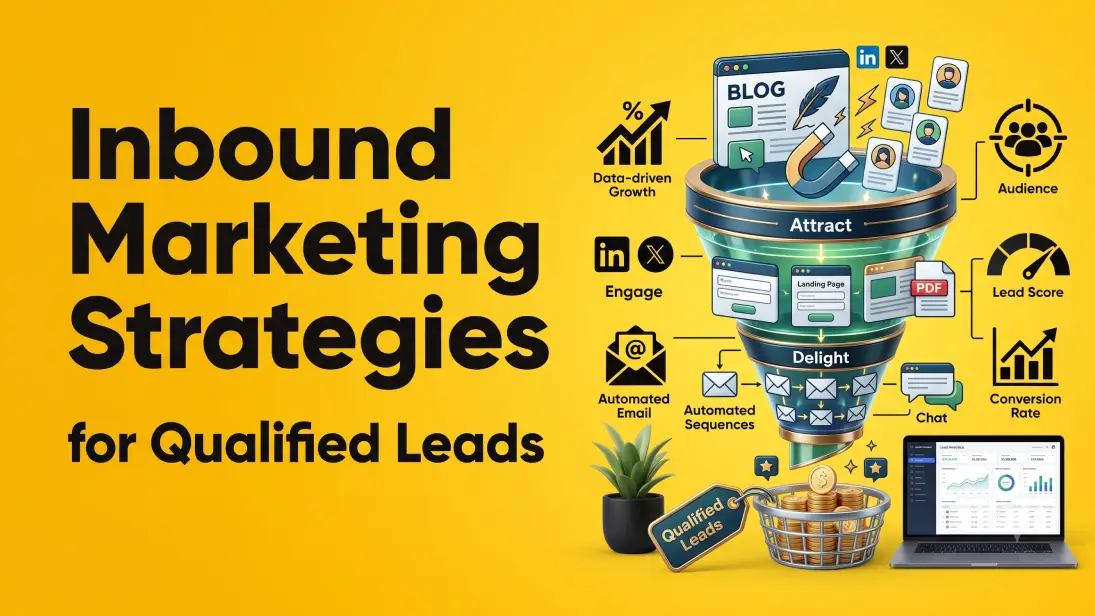
    Every successful inbound strategy follows four stages.

    1. Attract

    Attract qualified visitors by using:

    • SEO
    • AI-driven search optimization
    • Educational blogs
    • Thought leadership on LinkedIn
    • YouTube videos
    • Podcasts
    • Social media

    Objective is to attract relevant visitors and not random ones.

    2. Engage

    When visitors arrive, engage with them.

    For example:

    • Interactive calculators
    • Industry reports
    • Free templates
    • Webinars
    • Comparison pages
    • Case studies

    Objective:

    To build trust.

    3. Convert

    Traffic is worthless without conversion.

    Visitors must be led towards:

    • Demo requests
    • Consultations
    • Newsletters
    • Product trials
    • Contact form submissions

    Conversion optimization is just as important as SEO.

    4. Delight

    Conversion does not equal the end of the customer journey.

    Happy customers will turn into:

    • Brand advocates
    • Referrals
    • Repeat customers

    Delighting the customers involves:

    • Personalized onboarding
    • Educational newsletters
    • Customer community
    • Product education
    • Exclusive content

    Happy customers result in organic growth.

    12 Proven Inbound Marketing Strategies That Drive Revenue

    Let’s move beyond theory. Here are some proven inbound marketing strategies.

    1. Build Topic Clusters Instead of Random Blogs

    Google doesn’t give points anymore for standalone articles.

    Now it gives for topical authority.

    Instead of creating:

    • SEO definition
    • SEO tips
    • SEO checklist

    Create a topic cluster.

    Example:

    • Pillar page
    • Comprehensive guide on SEO

    Supporting content:

    • Technical SEO
    • Local SEO
    • eCommerce SEO
    • Link building
    • Core Web Vitals
    • AI SEO

    Everything is interconnected. Search engines recognize your authority. Users will spend more time there. Authority grows.

    2. Map Content to Buyer Intent

    Every user that comes to your site isn’t ready to purchase right now.

    And different users need different content at different stages.

    • Awareness
    • Education blog posts
    • Industry statistics
    • Guide posts
    • Consideration
    • Comparison articles
    • List of the best software tools
    • Strategy posts
    • Decision
    • Pricing
    • Testimonials
    • Case studies
    • Product demos

    This simple connection can increase conversion rate.

    3. Create High-Intent Landing Pages

    Your visitors aren’t supposed to land on your homepage.

    Instead make pages with targeted content for:

    • Industry
    • Service
    • Geographic area
    • Specific customer pain point

    Example:

    Instead of:

    “Marketing services”

    Use:

    “SEO services for SaaS companies”

    The more relevant your landing page is, the higher the conversion rate.

    4. Use AI Search Optimization

    Search is changing rapidly. People now pose complex questions to AI assistants.

    Optimize for conversational searches such as:

    • Best CRM for startup businesses in healthcare
    • What should I do to lower my CAC?
    • Best SEO agency for manufacturing industries

    By incorporating the following elements:

    • Answers
    • Structured headers
    • FAQs
    • Entity optimization
    • Schema markup

    Your content is optimized for AI.

    5. Turn Every Blog into Multiple Content Assets

    One blog post shouldn’t be ‘just one blog post.’

    Turn it into:

    • LinkedIn post
    • Infographic
    • Newsletter
    • YouTube Short
    • Podcast
    • Webinar
    • Carousel

    One idea. Ten distribution platforms. That is what smart inbound marketing is.

    6. Build Automated Email Nurture Sequences

    Most visitors won’t buy immediately. That’s normal. Automation keeps the conversation alive.

    Example:

    Day 1 – Welcome email

    Day 3 – Educational guide

    Day 6 – Case study

    Day 10 – Product comparison

    Day 14 – Demo invitation

    Instead of aggressive selling, you’re building confidence.

    7. Publish Original Research

    Everyone cites statistics. Very few make their own.

    • Do surveys.
    • Analyze customer data.
    • Publish annual reports.
    • Benchmark your industry.

    Data will naturally generate backlinks, citations, and media coverage. Your authority compounds exponentially.

    8. Optimize Every Conversion Path

    Leakage is inevitable everywhere.

    Optimize:

    • Call-to-action placement
    • Page speed
    • Mobile responsiveness
    • Form length
    • Button wording
    • Visual hierarchy

    Even small optimizations will raise conversion rates by double-digit percentages.

    9. Use Interactive Content

    People love to engage.

    Create:

    • ROI calculators
    • Website grader tool
    • Cost calculator
    • SEO audit tools
    • Quizzes
    • Assessments

    Interactive content boosts engagement and leads generated by the roof.

    10. Focus on Video SEO

    Videos exist all over Google Search, AI Overviews, and YouTube.

    Produce:

    • Product tours
    • Tutorials
    • Interviews with customers
    • Webinars
    • Industry explainers

    Embed videos in blog posts for maximum engagement.

    11. Personalize Website Experiences

    Modern inbound marketing relies on behavioral signals.

    Examples:

    Returning visitor? Showcase case studies.

    Enterprise visitor? Showcase enterprise pricing.

    Healthcare visitor? Showcase healthcare customers.

    Personalization raises conversions while reducing traffic requirements.

    12. Measure Revenue, Not Just Rankings

    The greatest mistake?

    Celebrating traffic.

    Track:

    • Marketing Qualified Leads (MQLs)
    • Sales Qualified Leads (SQLs)
    • Cost Per Lead
    • Customer Acquisition Cost (CAC)
    • Customer Lifetime Value (CLV)
    • Revenue Attribution
    • Assisted Conversions
    • Pipeline Velocity

    If content doesn’t influence revenue, it needs improvement.

    The Best Inbound Marketing Techniques for B2B Companies

    B2B purchase processes are long, involve several people and rely heavily on trust. Which means that your inbound marketing methods should educate your target buyers at various stages of their buying process.

    These are the practices that consistently work for B2B companies:

    Create Industry-Focused Solution Landing Pages

    Don’t create general pages about your services. Rather, make landing pages for industries that you serve, such as healthcare, SaaS, manufacturing, financial or legal services. It helps buyers see that you solved issues that they face.

    Create Comparison Content

    Buyers will often look for comparisons before buying.

    Some examples:

    • Agency vs in-house marketing
    • CRM A vs CRM B
    • SEO vs PPC
    • Marketing automation platforms compared

    Highly-intentional buyers come to the comparison pages.

    Develop Technical Case Studies

    Don’t write only “we increased traffic.”

    Provide some specific metrics, such as:

    • Revenue growth
    • Lead quality improvement
    • CAC reduction
    • ROAS improvement
    • Conversion rates improvement
    • Implementation period

    The more data you share, the more credibility you build.

    Build Resource Libraries

    Provide downloadable items like:

    • Checklists
    • Industry reports
    • Templates
    • ROI calculators
    • Planning worksheets

    The resources generate leads and make your company look like the industry expert.

    Inbound Marketing Ideas That Most Companies Ignore

    There is plenty of reused content out there. To differentiate from the rest, try some underused inbound marketing techniques.

    Customer-Led Content

    Speak with your best customers and transform their experience into blogs, video, or podcast interviews.

    Interactive Assessments

    They could be like:

    • “Is Your SEO Strategy Ready for AI Search?”
    • “What’s Your Website Conversion Score?”

    People love getting personal, so they convert better.

    Build a Free Tool

    Examples could be:

    • Marketing budget calculator
    • Website speed checker
    • Keyword opportunity analyzer
    • Content calendar creator

    Useful tools keep on working for years to come.

    Publish Failure Stories

    Reveal what hasn’t worked and what you have learned from that failure. Being transparent earns people’s trust because they know that there are lessons in any marketing campaign.

    Host Expert Roundups

    Invite industry experts to contribute opinions on a trending topic. You’ll gain fresh perspectives, social shares, and valuable backlinks.

    Common Mistakes That Kill Inbound Marketing Results

    Even high-quality content may underperform if there’s a problem with the strategy behind it.

    Some mistakes to avoid:

    Publishing Without a Distribution Plan

    Content creation isn’t everything, you need to promote it via email campaigns, LinkedIn, communities, partnerships, and paid promotion.

    Ignoring Technical SEO

    Broken links, long load times, bad Core Web Vitals, and other issues may stop good content from ranking.

    Writing for Search Engines Instead of Humans

    Keyword stuffing won’t get you a higher ranking with Google, or with real people either. Just write naturally and answer users’ needs.

    No Lead Magnets

    Without lead magnets, visitors will just go away, and you’ll miss out on future opportunities to communicate with them.

    Measuring the Wrong Metrics

    Pageviews and impressions don’t pay the bills. Measure pipeline contribution, revenue attribution, and customer acquisition instead.

    Essential Metrics Every Inbound Marketing Team Should Track

    Successful inbound marketing isn’t based on intuition. It’s driven by data.

    Track these KPIs regularly:

    MetricWhy It Matters
    Organic Traffic GrowthMeasures SEO performance
    Keyword VisibilityIndicates topical authority
    Click-Through Rate (CTR)Evaluates title and meta effectiveness
    Bounce RateShows content relevance
    Average Engagement TimeMeasures content quality
    Lead Conversion RateTracks visitor-to-lead performance
    Marketing Qualified Leads (MQLs)Identifies sales-ready prospects
    Customer Acquisition Cost (CAC)Measures acquisition efficiency
    Customer Lifetime Value (CLV)Indicates long-term profitability
    Revenue AttributionConnects marketing efforts to revenue

    When these metrics improve together, your inbound engine becomes predictable and scalable.

    The Future of Inbound Marketing Is AI + Human Expertise

    AI can create content. But it can never replace true expertise.

    The companies thriving in today’s world combine:

    • Human insights
    • AI-assisted workflows
    • Original research
    • Technical SEO
    • First-party data
    • Personalized customer experiences

    Experience, Expertise, Authoritativeness and Trustworthiness (E-E-A-T) are becoming more valued by search engines. Just AI-generated content is not going to lead to ranking success and customer trust building.

    The future will be bright for those who will leverage AI to increase their efficiency while allowing human expertise to guide strategy, creativity and decisions.

    Final Thoughts

    Inbound marketing isn’t about creating blogs or being active on every social media channel.

    It’s about building a system that will draw the right audience, gain its trust, nurture relations and convert interest into revenue.

    The most efficient inbound marketing systems will include the combination of technical SEO, conversion optimization, automation, personalization and data analysis into one seamless growth machine.

    The companies which always educate instead of selling, will get not only more leads but also better customers, cheaper customer acquisition and increased brand loyalty.

    If your marketing strategy is still based on finding customers, it’s high time to build a system where customers chasing prospects, it’s time to build a system where prospects come looking for you.

    Because the best salesperson isn’t the loudest one. It’s the one customers find exactly when they need help.