Category: PPC

  • What Is Paid Search Marketing? A Guide for Businesses

    What Is Paid Search Marketing? A Guide for Businesses

    Getting an ad in front of someone isn’t the hard part. Getting the right person to click, land on your website, trust your business, and take action? That’s where your money is either doing its job or quietly disappearing.

    For businesses in the US, where competitors are bidding on the same keywords and customers have plenty of options, a few poorly managed campaigns can get expensive fast. Let’s look at what paid search actually involves, where businesses tend to lose money, and what you should expect from a campaign that claims to deliver results.

    Key Takeaways

    • Paid search marketing puts your business in front of people actively searching for your products or services.
    • Smart keyword targeting, relevant ad copy, and landing pages help cut wasted ad spend.
    • Track CPC, conversion rate, CPA, and ROAS to see whether your campaigns are actually paying off.
    • The right paid search marketing agency can improve campaign performance, generate qualified leads, and make your ad budget work harder.

    What Is Paid Search Marketing?

    Paid search marketing is when a business pays to display ads on search engine results pages (SERPs). These ads usually appear when someone searches for a particular product, service, or solution.

    Say someone in Dallas searches for “emergency AC repair near me” in the middle of a Texas summer. They’re probably not interested in reading a 2,000-word article about how air conditioning works. They need a technician, and they need one soon.

    A well-targeted search ad can put your HVAC business in front of that person right when they’re looking for help. That’s the appeal of paid search advertising.

    Businesses commonly use platforms such as:

    • Google Ads: For reaching people searching on Google and its advertising network.
    • Microsoft Advertising: For accessing Microsoft’s search audience, including Bing.
    • Amazon Ads: For retailers looking to reach shoppers searching for products on Amazon.

    Paid search generally operates on a pay-per-click (PPC) model, meaning advertisers pay when someone clicks an ad. PPC is a broader category, though, and also includes advertising outside search engines.

    One important thing to remember: paying for a click doesn’t mean you’re paying for a customer. Those are two very different things.

    Why Are Businesses Spending Money on Paid Search?

    Because waiting for customers to find you organically isn’t always an option.

    A new business might need leads before its SEO strategy gains traction. An established company might be entering a new city. An online store might want to promote a product while demand is high. Paid search can help in all three situations.

    But there’s a catch. Competition can make clicks expensive, and not every visitor is worth the same amount.

    According to WordStream’s 2026 Google Ads benchmarks, which analyzed more than 13,000 US search advertising campaigns across 23 industries, the average cost per click was $5.42, while the average conversion rate was 8.18%.

    Those figures are industry-wide benchmarks, not a promise of what your campaign will achieve. A law firm competing for valuable legal keywords could face very different costs from a local bakery promoting custom cakes.

    Still, the takeaway is worth paying attention to. When clicks cost real money, sending the wrong people to your website isn’t a minor inconvenience. It can become a budget problem.

    Paid search can help your business:

    • Reach people actively searching for your products or services.
    • Generate leads while your organic visibility develops.
    • Target customers in specific US cities, states, or service areas.
    • Test offers and advertising messages without waiting months for organic traffic.
    • Find valuable search terms that can inform your SEO and content strategy.

    The goal isn’t to get the biggest number of clicks. It’s to attract visitors who have a reasonable chance of becoming customers.

    How Does Paid Search Marketing Work?

    Every search triggers an ad auction when eligible advertisers are competing for placement. But the highest bidder doesn’t automatically win the top spot.

    Google considers factors including bids, ad quality, the search context, competition, and the expected impact of ad assets. Its official Ad Rank documentation explains how these factors affect ad placement.

    So, what does this mean when you’re actually running a campaign?

    1. Find Keywords People Use When They’re Ready to Act

    Keyword research isn’t just about finding phrases with high search volume. It’s about figuring out what someone wants when they type those words.

    Take a commercial cleaning company in Chicago.

    Someone searching for “how to clean office carpets” might be looking for a DIY solution. Someone searching for “commercial office cleaning services Chicago” is much closer to contacting a provider.

    The second search is likely to have stronger commercial intent.

    That doesn’t mean informational searches are worthless. It means you shouldn’t treat every search as if the person is ready to buy.

    Use broad, phrase, and exact match strategically. Then check your search terms report to see what people actually typed before clicking your ads.

    1. Write Ads That Give People a Reason to Choose You

    “High-Quality Services. Affordable Prices. Contact Us Today.” You’ve probably seen some version of that ad a thousand times. It tells the reader almost nothing.

    Try being more specific.

    • Commercial Cleaning Services in Chicago
    • Flexible cleaning schedules for offices
    • Customized service plans
    • Request a free cleaning estimate

    Use the details that genuinely distinguish your business. If you offer same-day appointments, say so when relevant. If you serve only certain areas, make that clear.

    Your ad copy should also match the keyword and landing page. Someone searching for commercial cleaning shouldn’t click an ad and end up on a page about residential housekeeping.

    It sounds obvious. Yet message mismatches happen all the time.

    1. Stop Sending Every Click to Your Homepage

    Your homepage has a job. It introduces your business and helps visitors explore what you offer.

    A landing page has a more immediate job: persuade a specific visitor to take a specific action.

    If you’re advertising “commercial roofing contractors in Phoenix,” send people to a page about commercial roofing. Show the services you provide, the areas you cover, relevant project experience, and a clear way to request a quote.

    Keep the contact form sensible, too. Asking for a name, email, phone number, company, project budget, business address, and the name of the visitor’s first pet might be a little much for an initial inquiry.

    Make the page mobile-friendly, load it quickly, and remove anything that distracts from the next step. Your ad got the person there. Don’t make the website give them a reason to leave.

    Paid Search vs. SEO: Do You Need Both?

    Paid search and SEO often get treated like competing strategies. In reality, they can work together quite nicely.

    FactorPaid SearchSEO
    VisibilityCan start after ads are approved and launchedUsually builds over time
    Main costsAdvertising spend and campaign managementContent, technical improvements, and ongoing optimization
    TrafficDepends on budget, competition, and search demandDepends on rankings, search demand, and click-through rates
    ControlMore direct control over bids, targeting, and ad messagingLess direct control over rankings
    Best useCapturing existing demand and testing offersBuilding sustainable organic visibility

    Imagine you’re launching a new service in the US. Your website has barely started ranking, but potential customers are already searching for what you offer.

    Paid search can help you get in front of those people while your SEO work progresses. Meanwhile, the search terms and conversion data from your campaigns can show you which topics and services deserve more attention in your organic strategy.

    There’s no need to turn this into an either-or decision. The right balance depends on your budget, competition, and how quickly you need results.

    Which Paid Search Metrics Actually Matter?

    Let’s talk about the numbers, because this is where a campaign can look successful without actually being successful.

    A report showing 20,000 impressions and 1,500 clicks might look impressive. But if those clicks don’t lead to meaningful actions, what exactly are you celebrating?

    Here are the metrics worth watching.

    Click-through rate (CTR): The percentage of ad impressions that result in clicks. If CTR is low, your ad might not match the search intent, or your messaging may need work.

    Cost per click (CPC): The average amount you pay for each click. Lower isn’t automatically better if cheaper clicks bring visitors who never convert.

    Conversion rate: The percentage of measured interactions that result in a desired action, such as a purchase, qualified lead, or booked appointment.

    Cost per acquisition (CPA): How much you spend to generate a conversion. Make sure you’re measuring something valuable. A paying customer and someone who downloads a free checklist shouldn’t automatically count as equivalent acquisitions.

    Return on ad spend (ROAS): The revenue attributed to your ads divided by advertising spend. A 4:1 ROAS means $4 in attributed revenue for every $1 spent on ads. It doesn’t mean you’ve made $3 in profit.

    That last distinction matters. You still have product costs, salaries, fulfillment, agency fees, and other expenses to account for.

    For tracking, configure Google Ads conversion tracking and Google Analytics 4 where appropriate. If you’re running lead generation campaigns, connect your forms and phone calls to your CRM whenever possible. This helps you see which campaigns generate qualified opportunities and which ones produce leads that go nowhere.

    Otherwise, you might spend another month optimizing for the wrong result. Nobody needs that kind of surprise in their monthly report.

    When Does Hiring a Paid Search Marketing Agency Make Sense?

    Managing your own campaigns isn’t necessarily a bad idea. If you have the right expertise, time, and resources, an in-house team can handle paid search effectively.

    The trouble starts when campaigns grow more complicated and nobody has enough time to look beyond the surface-level numbers.

    Maybe your ad spend keeps increasing, but qualified leads aren’t following. Perhaps you’re getting clicks from irrelevant searches, or your tracking setup counts the same conversion twice. You might even have several campaigns competing for similar keywords without a clear reason.

    That’s when paid search management services can be useful.

    A good paid search marketing agency should help with keyword research, campaign structure, negative keywords, bidding strategies, ad testing, conversion tracking, and ongoing performance analysis. Depending on your needs, it may also recommend landing page changes and work with your sales team to understand lead quality.

    Before hiring anyone, ask a few direct questions:

    • Who owns the Google Ads account and campaign data?
    • How do you decide which keywords deserve more budget?
    • How do you track qualified leads and actual sales?
    • How frequently do you review search terms and add negative keywords?
    • What are your management fees, separate from advertising spend?
    • How will you report results against our business goals?

    Pay attention to how the agency answers. You should be able to understand what it’s doing and why, even if the technical details aren’t your specialty.

    And be careful with guarantees. An agency can’t promise a specific ranking, lead volume, or return on ad spend without knowing the circumstances, and even then, market conditions and customer behavior remain outside its control.

    Ready to Get More From Your Advertising Budget?

    Paid search advertising can put your business in front of people who are already looking for what you sell. But clicks alone won’t keep the lights on.

    If your campaigns are generating plenty of traffic without enough qualified leads or sales, it’s worth taking a closer look at your keyword strategy, landing pages, tracking, and overall campaign performance.

    At Xparro, we believe advertising budgets deserve more than a campaign launch and a monthly report full of green arrows. So talk to Xparro about paid search marketing services built around your business goals. Let’s figure out where your advertising budget is working, where it’s leaking, and what deserves attention next.

    FAQs

    What is paid search marketing in simple terms?

    It’s a way to pay for ads that appear when people search for relevant products or services. Advertisers commonly pay when someone clicks an ad, rather than simply because the ad appeared.

    How much does paid search advertising cost in the US?

    It depends on the industry, keyword, location, competition, and campaign setup. WordStream’s 2026 benchmarks reported an average Google Ads CPC of $5.42 across its analyzed campaigns. Your actual costs could be much lower or considerably higher.

    How long does paid search take to produce results?

    Ads can start appearing after approval and launch, but figuring out whether a campaign is profitable takes longer. You’ll need enough reliable conversion data to evaluate performance and make sensible adjustments.
  • On Page SEO Checklist: A Complete Guide for 2026

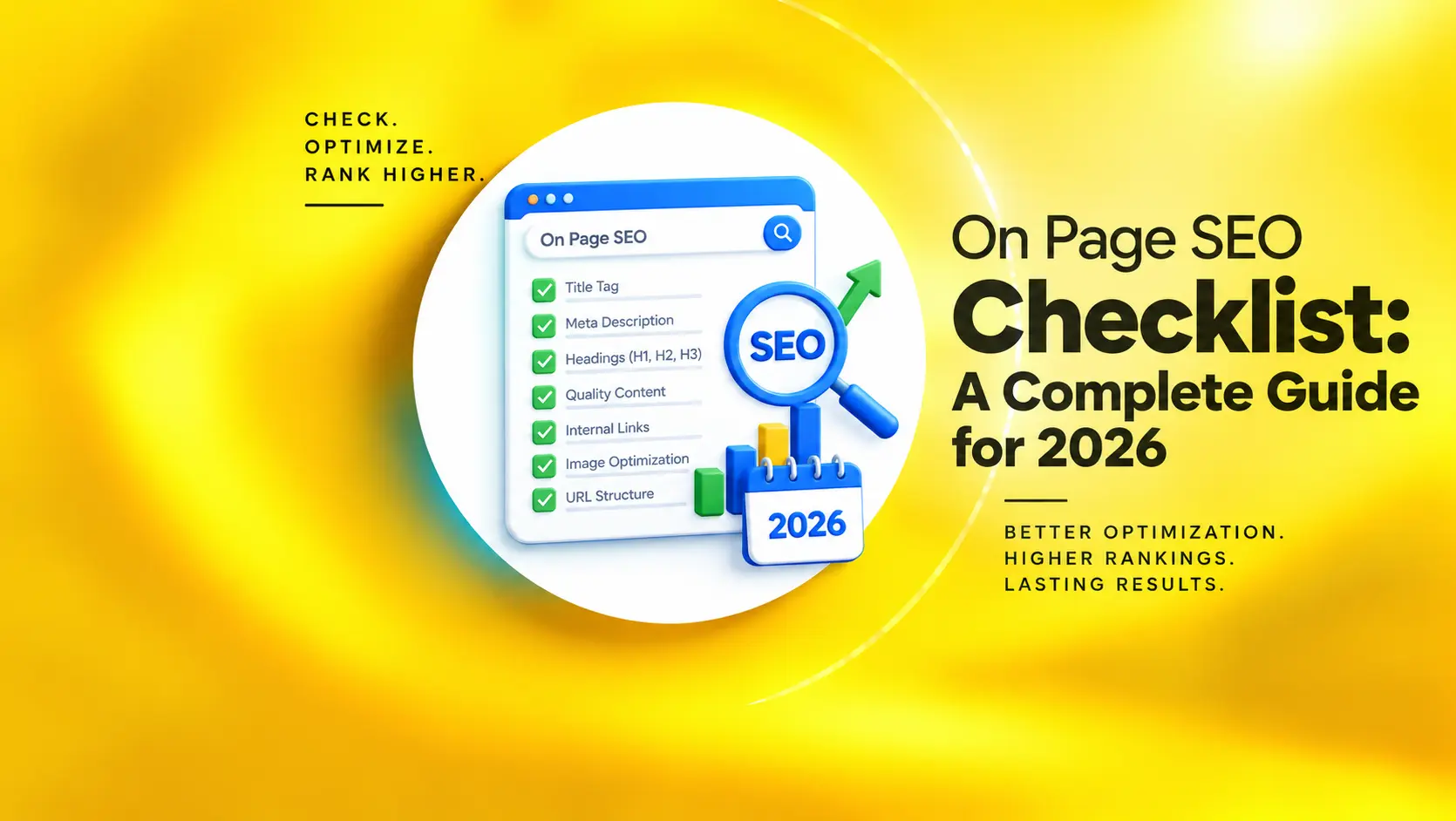
    On Page SEO Checklist: A Complete Guide for 2026

    You publish a blog post, share it on social media, and wait for Google to do its thing. A week passes. Then another. The traffic barely moves.

    Before you start rewriting the entire article, check the page itself. Maybe the title doesn’t match what people are searching for. Maybe Google can’t index the URL. Or perhaps the article answers a question nobody was asking in the first place.

    These problems are easy to overlook when you’re busy creating content. An on-page SEO checklist gives you a way to catch them before they pile up.

    Here’s what I’d look at first.

    The Basics You Should Check First

    If you’re about to publish a page, make sure you’ve covered these five things:

    1. The page targets a relevant keyword and matches the search intent.
    2. The title, description, and headings accurately describe the content.
    3. The article offers useful information instead of repeating what every other website says.
    4. Google can access the page, and its important content can be indexed.
    5. Visitors can navigate the page easily and find a relevant next step.

    That covers the foundation. Now for the things that tend to get missed.
    20 Things to Check on Your Page

    1. Search the Keyword Before You Write

    Don’t start an article without looking at the search results first. It takes a few minutes and can save you from writing the wrong kind of page.

    Take “best payroll software for small businesses,” for example. Someone searching that phrase probably wants to compare products. A long explanation of how payroll works won’t satisfy the same need.

    Look at the results for your primary keyword. Notice the types of pages ranking, the questions they answer, and anything useful they’re missing. Build your content around the actual search, not just the phrase itself.

    1. Rethink Your Title Tag

    A title like “Everything You Need to Know About Digital Marketing” doesn’t tell readers much. It could describe a hundred different articles.

    Be specific. If the page is a practical guide, say so. Include the primary keyword naturally, but don’t force it into a sentence that sounds awkward. For this article, “On-Page SEO Checklist: What to Fix Before Publishing” tells readers exactly what to expect.

    Google may rewrite your title in search results, so there’s no need to obsess over an exact character count. Make the wording clear and put the important information near the beginning.

    3.Don’t Leave the Meta Description Blank

    Google doesn’t always use the meta description you provide. It may generate a snippet from the page instead, depending on the search.

    Still, writing a useful description is worthwhile. Give readers a quick idea of what they’ll find and why the page might help them. For example: “Review your titles, content, internal links, and technical SEO before publishing. Use this checklist to spot common website issues.”

    Around 150 characters is a useful starting point, not a hard rule. Write something relevant to the actual page.

    4.Make Your Headings Useful

    Open a page with a wall of text and try finding one specific answer. Not fun, right?

    Headings make that job easier. Use an H1 for the main topic, H2s for major sections, and H3s where you need to break down a section further. You don’t need to put a keyword in every heading. A heading should tell readers what comes next. That’s its job.

    5.Clean Up the URL

      Compare these two URLs:

      /blog/post?id=58391

      /blog/on-page-seo-checklist/

      The second is easier to understand at a glance. Keep URLs descriptive and avoid unnecessary words or parameters when you can.

      Already have a URL that’s indexed and performing well? Leave it alone unless there’s a good reason to change it. If you do change it, set up an appropriate permanent redirect.

      6.Get to the Point Earlier

        People don’t visit a page because they want to admire its introduction.

        If someone searches for an SEO checklist, show them what needs checking. A short introduction is enough to explain the problem and set expectations.

        You can add background later, where it actually helps. There’s no prize for making readers scroll through half the article to find the answer.

        7.Give Readers Something They Can’t Get Everywhere Else

          Search the topic you’re writing about. Chances are, several websites have already covered it. That doesn’t mean you shouldn’t write about it. It means you need a reason for someone to read your version.

          Use a real example. Explain a confusing technical issue in plain English. Include original research if you have it, or answer a question competing articles have overlooked.

          Google’s guidance on helpful, reliable content is a useful reference here. There’s no prescribed word count that guarantees rankings.

          8.Use Related Keywords Where They Belong

            For an article, the secondary keywords may include “SEO checklist for blog posts,” “on-page SEO audit checklist,” and “list of on-page SEO activities.”

            They don’t all need to appear in the introduction. Use them in the sections where they make sense, and cover related questions naturally.

            If you’ve read a sentence aloud and it sounds like a search query wearing a disguise, rewrite it.

            9.Add Internal Links

              Your blog about SEO might mention technical audits, keyword research, or website design. If you already have useful pages on those subjects, link to them.

              Internal links help readers discover related information and help search engines find other pages on your site.

              Use anchor text that describes the destination. Check that the link works, too. A broken link is a small problem until it’s pointing visitors toward the service page you wanted them to see.

              10.Check Where Your Statistics Come From

                Numbers make an article look convincing. That doesn’t mean every statistic deserves to be there.

                If you mention an industry benchmark, link to the original report or a reliable source. Official documentation is especially useful for technical recommendations that may change over time.

                Don’t have a credible source? Remove the number or explain the point without it. Guessing isn’t research.

                11.Use Related Keywords Where They Belong

                  For an article, the secondary keywords may include “SEO checklist for blog posts,” “on-page SEO audit checklist,” and “list of on-page SEO activities.”

                  They don’t all need to appear in the introduction. Use them in the sections where they make sense, and cover related questions naturally.

                  If you’ve read a sentence aloud and it sounds like a search query wearing a disguise, rewrite it.

                  12.Add Internal Links

                    Your blog about SEO might mention technical audits, keyword research, or website design. If you already have useful pages on those subjects, link to them.

                    Internal links help readers discover related information and help search engines find other pages on your site.

                    Use anchor text that describes the destination. Check that the link works, too. A broken link is a small problem until it’s pointing visitors toward the service page you wanted them to see.

                    13.Check Where Your Statistics Come From

                      Numbers make an article look convincing. That doesn’t mean every statistic deserves to be there.

                      If you mention an industry benchmark, link to the original report or a reliable source. Official documentation is especially useful for technical recommendations that may change over time.

                      Don’t have a credible source? Remove the number or explain the point without it. Guessing isn’t research.

                      14.Make Sure Google Can Index the Page

                        This is one of the first things you should check when an important page isn’t appearing in search.

                        Look for an accidental noindex directive, a canonical pointing to the wrong URL, or a technical issue that prevents Google from accessing the content.

                        Google Search Console’s URL Inspection tool can help you investigate. It shows information about Google’s ability to access and index a URL. Keep in mind that indexability doesn’t guarantee a page will rank or even be indexed.

                        15. Check Your Core Web Vitals

                          A page can contain excellent information and still be frustrating to use. Slow loading, delayed responses, and content that jumps around are worth investigating.

                          Google’s recommended Core Web Vitals targets are:

                          MetricGood target
                          Largest Contentful Paint (LCP)2.5 seconds or less
                          Interaction to Next Paint (INP)200 milliseconds or less
                          Cumulative Layout Shift (CLS)0.1 or less

                          These thresholds are measured at the 75th percentile of page visits. You can check your site with PageSpeed Insights and read Google’s Core Web Vitals documentation.

                          Start with the issues affecting real users. A perfect score isn’t the goal.

                          16.Open the Page on Your Phone

                            Don’t assume the mobile version works because the desktop version looks fine.

                            Read the content, open the menu, tap the buttons, and try any forms. Look for text that’s difficult to read or important information that’s missing.

                            Google primarily uses the mobile version of a website’s content for indexing. Make sure the information you want search engines to find is available on mobile, too.

                            17. Tell Readers Who Wrote the Content

                              If your article offers professional advice, readers may want to know who’s providing it.

                              Include accurate author information, relevant qualifications where applicable, and links to your editorial policies when useful. Make your business information easy to find.

                              These details help readers assess credibility. They’re not a shortcut to higher rankings, and there’s no reason to make claims you can’t substantiate.

                              18.Give the Reader a Next Step

                                Not every visitor is ready to buy something. Some are researching a problem; others are comparing providers.

                                Think about what makes sense for that particular page. A blog post might link to a related guide. A service page could invite visitors to request a quote.

                                The CTA should follow naturally from the content. If someone has just learned what on-page SEO is, immediately pushing a sales call may be a bit much.

                                19.Check Links and Old Information

                                  Before publishing, click the important links and make sure they lead to the right places.

                                  Check statistics, product information, references, and claims that might have changed. If you’re updating an older post, don’t just change its date and call it refreshed.

                                  A meaningful update should improve the page. Sometimes that’s a new section; sometimes it’s correcting information that no longer holds up.

                                  20.Watch What Happens After Publication

                                    Once the page is live, use Google Search Console to see whether it’s getting impressions and clicks. Look at CTR and average position alongside the queries that bring people to the page.

                                    Use an analytics platform to see whether visitors take meaningful actions after arriving.

                                    Give changes time to show results. Google says search changes can take anywhere from hours to several months to be reflected. Check the trend before deciding that an update has failed.

                                    Final Thoughts

                                    A list of on-page SEO activities is useful because it gives you somewhere to start when a page isn’t performing as expected. It won’t fix a weak content strategy on its own, but it can help you find problems that are otherwise easy to miss.

                                    Pick a few important pages, work through the checks, and deal with the biggest issues first. Then look at the results before making another round of changes.

                                    If you’re not sure what’s holding your website back, Xparro can help you identify on-page SEO issues and prioritize improvements that support your search visibility and business goals.

                                  1. Top Most Popular Websites You Should Know in 2026

                                    Top Most Popular Websites You Should Know in 2026

                                    Some websites get visitors. Others get so many that their monthly traffic numbers look like population statistics.

                                    Google, YouTube, Reddit, Amazon, Facebook, and other digital giants have become part of how people search, shop, watch, communicate, and even make everyday decisions online. But what actually makes these websites so popular?

                                    And more importantly, what can a business learn from them?

                                    Let’s look at the most popular top visited websites, the numbers behind their traffic, and the digital strategies that keep people coming back.

                                    Key Takeaways

                                    • Google, YouTube, Reddit, Amazon, and other internet giants are pulling in billions of visits, but people use each one for very different reasons.
                                    • The websites people keep coming back to usually make life easier, whether that means finding an answer in seconds, watching something, shopping, or getting advice from other people.
                                    • A website can have great content and still lose visitors if it’s slow, confusing, or painful to use on a phone, so UX matters just as much as getting people through the door.
                                    • SEO is no longer just about chasing rankings and traffic, with AI, personalization, mobile-first experiences, and conversational search changing how people find and interact with websites.

                                    What Defines the Most Popular Top Visited Websites?

                                    There’s no single scoreboard for internet popularity.

                                    Website traffic rankings usually consider several metrics, including monthly visits, unique visitors, traffic sources, pages per visit, engagement, session duration, and bounce rate. Looking at only one number can be misleading.

                                    A website might attract millions of visits but have people leave within seconds. Another might receive fewer visits but keep users browsing, clicking, comparing, and buying.

                                    That’s why web analytics needs context.

                                    According to Semrush’s U.S. Traffic Analytics data for August 2026, Google received an estimated 24.54 billion visits, while YouTube recorded 10.43 billion and Reddit reached 2.57 billion.

                                    And yes, those numbers are massive. But they’re estimates, not a digital headcount. Different analytics platforms use different datasets and methodologies, so traffic figures can vary between sources. The useful part is understanding the scale and the behavior behind it.

                                    Top Contenders: The Most Popular Websites in 2026

                                    Some websites get traffic. Some websites practically own their corner of the internet.

                                    Semrush’s August 2026 U.S. data puts Google comfortably at the top, followed by YouTube, Reddit, and Facebook.

                                    RankWebsiteMonthly VisitsAnnualized Visits
                                    1Google24.54B294.48B
                                    2YouTube10.43B125.16B
                                    3Reddit2.57B30.84B
                                    4Facebook2.37B28.44B
                                    5Amazon692.46M8.31B
                                    6TikTok530.34M6.36B
                                    7Bing496.31M5.96B
                                    8Walmart491.63M5.90B
                                    9Temu485.98M5.83B
                                    10Weather.com471.60M5.66B
                                    11LinkedIn436.60M5.24B
                                    12USPS396.26M4.76B

                                    Annualized visits are monthly estimates multiplied by 12. They are not unique annual users. Look beyond the rankings and the list gets more interesting.

                                    Google is where people search. YouTube captures video discovery. Amazon and Walmart capture shopping intent. Reddit brings community-driven research, while LinkedIn sits heavily in the professional and B2B space.

                                    So the real story isn’t simply who gets the most visits. It’s why people visit in the first place.

                                    Why These Websites Attract Millions Every Day

                                    The biggest websites have something in common. They make the thing users came to do ridiculously easy.

                                    Need an answer? Search Google. Want to watch something? Open YouTube. Want to compare products? Head to Amazon. Want to know whether other people have had the same problem? Reddit probably has a 47-comment thread about it already.

                                    That’s the secret sauce: less friction, more usefulness.

                                    They solve a clear problem 

                                    The purpose is usually obvious. Search engines help people find information. E-commerce platforms help people shop. Social networks help people connect. Streaming platforms help people find something to watch.

                                    Users don’t need a tutorial before using them. That’s a pretty powerful UX strategy in itself. 

                                    They become habits 

                                    The biggest websites aren’t relying on one viral campaign to bring people back. People return because the platform has become part of their routine.

                                    You check Google when you need something. You check social feeds when you’re bored. You open Amazon when you’re shopping. YouTube can start with “I’ll watch one video” and somehow become an hour-long documentary about something you didn’t even know existed.

                                    That’s repeat behavior doing the heavy lifting.

                                    They keep finding new reasons to be useful

                                    The major platforms rarely stay in one lane. Google has search, Maps, Gmail, shopping, video, cloud services, and more. 

                                    Amazon grew far beyond books. YouTube moved from simple video sharing into entertainment, education, product discovery, creator content, and search. More useful features mean more reasons to return.

                                    How Website Design and Functionality Impact Popularity

                                    Getting someone onto your website is one problem. Giving them a reason not to leave is another. This is where UX becomes more than a nice-looking homepage.

                                    Popular websites tend to make basic actions feel almost invisible. Navigation makes sense. Search works. Pages load quickly. Buttons are where users expect them to be. Content doesn’t require detective work.

                                    And then there’s mobile.

                                    According to Semrush’s August 2026 data, mobile made up approximately 68.55% of YouTube’s U.S. web traffic and 57.96% of Amazon’s.

                                    So if your website looks fantastic on a 27-inch monitor but becomes a tiny, slow, impossible-to-navigate mess on a phone, there’s a problem. Your customer isn’t grading your desktop design. They’re trying to complete a task. Usually while holding their phone in one hand.

                                    The Role of SEO and Digital Marketing in Driving Website Traffic

                                    Here’s the awkward part.

                                    Most businesses aren’t Google. People aren’t waking up every morning thinking, “You know what? I should visit this random company’s website today.” They need a reason to find you. That’s where SEO, content marketing, digital advertising, backlinks, and organic search come in.

                                    SEO helps your website appear when people are actively looking for something relevant to your business. Content gives those searches useful answers. Backlinks can build authority. Paid advertising can put your offer in front of the right audience faster.

                                    But none of this should become a race for traffic numbers alone. The goal isn’t “Get more visitors.” It’s “Get more relevant visitors.”

                                    A thousand people who actually need your product can be worth far more than a million people who clicked by accident. That’s the difference between traffic and useful traffic.

                                    Emerging Trends Affecting the Popularity of Top Websites

                                    The websites at the top today won’t necessarily win attention in exactly the same way tomorrow. A few changes are already reshaping how people interact with the web. AI is changing how people search Search is becoming more conversational.

                                    Instead of typing a few keywords and opening several pages, users can increasingly ask questions in natural language and expect a direct answer.

                                    That changes the job for marketers.

                                    Creating a page that simply targets a keyword isn’t enough. Content needs to provide useful, specific information that can satisfy the underlying question.

                                    Personalization is becoming normal

                                    People are getting used to websites that remember what they like.

                                    Product recommendations, customized feeds, location-based results, and personalized content can make a website feel much more relevant. Of course, there’s a fine line.

                                    Recommend something I might like? Great. Recommend the exact thing I bought yesterday? Maybe give the algorithm a coffee break.

                                    Mobile isn’t going anywhere

                                    Responsive design, fast loading times, readable content, simple navigation, and mobile-friendly forms aren’t bonus features anymore.

                                    They’re basic requirements.

                                    If a visitor has to pinch, zoom, wait, reload, and hunt for the menu, they’re probably not staying around to admire your brand guidelines.

                                    Search is becoming more conversational

                                    Voice search, AI assistants, visual search, and natural-language queries are changing how people phrase their searches.

                                    “Best Italian restaurants NYC” is one type of search. “What’s a good Italian restaurant near me that’s open late?” is another. The second one sounds much more like an actual human. Content strategies need to understand that difference.

                                    Understanding the Most Popular Top Visited Websites

                                    The biggest websites aren’t popular simply because they have enormous marketing budgets. They’ve built something people repeatedly need, enjoy, trust, or find useful. That’s the bigger lesson behind website traffic rankings.

                                    For businesses, these platforms offer plenty to study,  from UX and mobile optimization to SEO, personalization, content strategy, and user engagement.

                                    But copying Google isn’t the answer.

                                    You don’t need Google’s 24.54 billion monthly visits. You need the people who are actually looking for what you offer.

                                    So instead of asking, “How do we get more website traffic?”, start with something more useful: “Why would the right person choose to visit us?” Once you have a good answer to that, the traffic strategy gets a whole lot easier.

                                    FAQs

                                    1. Which website gets the most traffic in the U.S.?

                                    Google is still way out in front. Semrush estimates that Google received around 24.54 billion U.S. visits in August 2026. That’s a lot of “quick searches” that definitely weren’t supposed to turn into a 45-minute research session.

                                    1. Why do people keep coming back to the same websites?

                                    Usually, because the website makes something ridiculously easy. Google helps you find an answer, YouTube gives you something to watch, Amazon helps you shop, and Reddit gives you other people’s opinions and experiences. Once a website becomes part of someone’s routine, coming back almost becomes automatic.

                                    1. What can my business learn from these high-traffic websites?

                                    You don’t need billions of visitors to borrow their best ideas. Make your website fast, easy to navigate, useful on mobile, and genuinely helpful to the people you’re trying to reach. Then use SEO and good content to make sure those people can actually find you in the first place.

                                  2. 10 Best PPC Companies in US for Business Growth

                                    10 Best PPC Companies in US for Business Growth

                                    Finding PPC companies in the U.S. isn’t exactly difficult. Google “PPC agency” and you’ll get enough options to make your browser question your life choices.

                                    The harder question is: which agency actually understands your business, your customers, and what your ad budget needs to accomplish?

                                    That’s where this guide comes in.

                                    We’ve rounded up 10 PPC agencies in the U.S. that businesses may come across while researching paid advertising partners. We’ve also broken down what each agency is known for, so you can narrow your options without spending three days opening 47 agency websites.

                                    Key Takeaways

                                    • 10 PPC companies that bring value to the table for businesses looking to improve paid advertising.
                                    • You’ll see why getting clicks is only part of the PPC game and why leads, sales, conversions, and revenue matter much more.
                                    • We break down the things worth checking before hiring a PPC agency, from keyword targeting and conversion tracking to landing pages and budget management.
                                    • You’ll also get practical questions to ask a PPC company so you can compare your options without getting lost in fancy marketing promises.

                                    10 PPC Agencies in the U.S. to Know

                                    1. Xparro
                                    Xparro

                                    Xparro is a performance-focused PPC agency helping U.S. businesses get more from their paid ad budgets. The idea is simple: don’t chase clicks, chase customers.

                                    Its PPC marketing services cover everything from Google Ads and keyword research to negative keywords, bid optimization, remarketing, conversion tracking, and performance reporting. And instead of treating PPC as a standalone channel, Xparro connects paid campaigns with SEO, content, social media, and conversion strategy.

                                    Good fit for: U.S. businesses that want PPC management focused on real leads, sales, and measurable growth, not vanity metrics.

                                    1. Disruptive Advertising
                                    Disruptive Advertising

                                    Based in Utah, Disruptive Advertising focuses heavily on paid media and performance marketing. Its services include PPC, paid social, CRO, and other acquisition-focused strategies.

                                    The agency is particularly associated with Google Ads and paid advertising for businesses looking to connect ad spend with measurable performance. It appears consistently across current U.S. PPC agency lists.

                                    Good to explore if: paid acquisition and performance marketing are your main priorities.

                                    1. Ignite Visibility
                                    Ignite Visibility

                                    Ignite Visibility is a full-service digital marketing agency based in California. Its services span PPC, SEO, paid media, social media, and other digital marketing channels.

                                    That broader service mix can be useful for companies that don’t want their paid campaigns operating on an island.

                                    Good to explore if: you want PPC alongside a wider digital marketing strategy.

                                    1. KlientBoost
                                    Klient Boost

                                    KlientBoost is known for PPC, paid media, and conversion rate optimization. That combination is worth paying attention to because getting the click is only half the job.

                                    If 1,000 people visit your landing page and nobody fills out the form, congratulations—you’ve successfully purchased 1,000 visits.

                                    Good to explore if: you want paid advertising and CRO working together.

                                    1. NP Digital
                                    NP Digital

                                    Founded by digital marketer Neil Patel, NP Digital works as a global performance marketing agency with a U.S. base.

                                    It provides solutions in paid media, as well as SEO, content, and performance marketing in general.

                                    Good to explore if: You are looking for a PPC service as part of an overall acquisition strategy.

                                    1. Power Digital
                                    Power Digital

                                    Power Digital is a performance marketing agency based in California and works in various areas including paid media, SEO, data, and more.

                                    This wider approach of the company makes it a good fit for companies that require something beyond a single PPC solution.

                                    Good to explore if: You are looking for a paid media service as part of a growth strategy in addition to other services.

                                    1. SmartSites
                                    Smart Sites

                                    SmartSites is a digital marketing agency based in New Jersey and offers various services, including PPC, SEO, web design, and others.

                                    The company pops up frequently in U.S. agency lists, especially for companies requiring a combo of PPC services and website-related services.

                                    1. Tinuiti
                                    Tinuiti

                                    Tinuiti is a performance marketing agency with particular expertise in eCommerce and retail media.

                                    Its capabilities include not just search but also advertising via Amazon and other commerce-specific ad platforms.

                                    Good to explore if: You run an eCommerce or retail brand that has multiple paid acquisition channels.

                                    1. WebFX
                                    WebFX

                                    WebFX is a large U.S.-based digital marketing agency that offers PPC as part of its offerings, which include SEO, web design, content, and other services.

                                    Thanks to its scale, businesses have access to more marketing capabilities than through separate agencies for each channel.

                                    Good to explore if: You want to integrate PPC into a digital marketing program.

                                    1. Wpromote
                                    Wpromote

                                    Wpromote is a U.S. performance marketing agency that operates across multiple channels, including paid media, SEO, commerce, and others.

                                    Wpromote is especially suited for large brands interested in a comprehensive performance marketing solution as opposed to only a PPC partnership.

                                    Good to explore if: You are operating a multi-channel paid media strategy.

                                    What Should You Actually Look for in a PPC Company?

                                    Okay, you’ve got your list. Now comes the part that matters more than the list itself. When comparing PPC companies, don’t get hypnotized by phrases like “360° marketing,” “cutting-edge solutions,” or “data-driven growth.”

                                    Every agency website says some version of that. Instead, ask how they handle the things that actually move campaign performance.

                                    Start With Conversion Tracking

                                    If an agency can’t clearly explain what counts as a conversion, that’s a problem.

                                    A serious PPC setup should connect Google Ads with meaningful actions like calls, purchases, qualified leads, booked appointments, or revenue and not just clicks.

                                    Google recommends assigning conversion values where appropriate so bidding can optimize toward business value rather than simply counting actions.

                                    Look at Search Intent

                                    “Running shoes” and “buy Nike running shoes size 10” are not the same search. One is broad. The other practically has its credit card out.

                                    Your PPC management company should understand that difference and build campaigns around intent, match types, audiences, locations, and negative keywords.

                                    Ask About Landing Pages

                                    Don’t blame Google for a landing page that looks like it was designed during the Obama administration. Your ad and landing page need to make sense together.

                                    If your ad promises a free consultation but the visitor lands on a generic homepage with six menus, three pop-ups, and no obvious CTA, you’re creating friction before the customer even gets a chance to convert.

                                    That’s why PPC and CRO often belong in the same conversation. Current agency comparisons also highlight CRO as an important complement to paid advertising.

                                    Don’t Obsess Over CPC Alone

                                    A $2 click isn’t automatically better than a $10 click.

                                    If the $2 traffic never converts and the $10 traffic consistently produces customers, the cheaper click isn’t doing you any favors.

                                    Look at the bigger picture:

                                    CPC → Conversion Rate → CPA → Revenue → ROAS

                                    The right metric depends on the business.

                                    For an eCommerce company, ROAS may be central. For B2B, qualified pipeline and customer acquisition cost may tell you much more.

                                    How Much Does PPC Cost?

                                    There’s no universal price tag.

                                    Your PPC budget depends on the competitiveness of your keywords, industry, geography, campaign goals, and expected conversion volume.

                                    And remember: agency fees and advertising spend are two different things.

                                    You’re paying the ad platforms for media spend. You’re paying the agency for strategy, management, optimization, testing, reporting, and expertise.

                                    Don’t compare two agencies solely because one has a lower management fee. Ask what you’re actually getting for it.

                                    Where Does Xparro Fit In?

                                    At Xparro, PPC isn’t treated as a glorified “boost post” button.

                                    What we do is formulate a paid campaign strategy based on the business objective – whether lead generation, sales, bookings, or customer acquisition.

                                    Some of our PPC marketing services include:

                                    • Google Ads campaign management
                                    • Keyword and competitor analysis
                                    • Search Intent mapping
                                    • Campaign structure
                                    • Negative keyword optimization
                                    • Conversion tracking
                                    • Remarketing
                                    • Bid and budget optimization
                                    • Landing page suggestions
                                    • A/B testing
                                    • Performance reporting

                                    Pretty simple, actually. Don’t just drive traffic; create a system where the traffic has somewhere to go.

                                    Before You Hire a Pay-Per-Click Agency, Ask These 5 Questions

                                    Keep this list handy when you’re on those agency calls:

                                    • What exactly will you track as a conversion?
                                    • How often will you review search terms and negative keywords?
                                    • Who owns the Google Ads account and campaign data?
                                    • How will you connect PPC results to actual revenue or qualified leads?
                                    • What happens if the campaign isn’t performing?

                                    The last question is particularly important. You don’t need an agency that promises everything will be perfect. You need one that can tell you what went wrong, why it happened, and what they’re changing next.

                                    The Bottom Line

                                    There are plenty of PPC agencies in the U.S., and many of them offer remarkably similar services.

                                    The difference usually comes down to strategy, specialization, tracking, communication, and how seriously they treat your money.

                                    So don’t hire a PPC company simply because it has a fancy dashboard or a wall full of awards. Ask harder questions, look at the numbers, understand what you’re paying for, and most importantly, make sure the agency understands that your goal isn’t more clicks. It’s more business.

                                    Because Google already knows how to charge you for clicks. You need someone who knows what to do with them.

                                    FAQs

                                    1. What should I look for when choosing a PPC company?

                                    Look at the basic things such as their process for handling keywords, conversion tracking, negative keywords, bids, landing pages, and reporting. More importantly, check whether they understand your business needs. It is not enough for a company to claim that they will give you everything; you need a company that can clearly tell you what they will do for you.

                                    1. How much does it cost to hire a PPC agency in the U.S.?

                                    There is no average cost because there are many factors involved, such as the industry, competitors, budget for ads, scale of the campaign, and level of management required. Remember that your agency fee and the cost of advertising are two separate things.

                                    1. Is hiring a PPC agency worth it for a small business? 

                                    Yes, especially in cases where the team is not able to devote time and effort to manage the campaigns correctly. There are many benefits associated with it, such as lowering wasted spend, identifying high-intent searches, improved conversion tracking, and proper management of campaigns. The real question isn’t whether PPC is expensive., it’s whether your campaigns are making your budget work hard enough.

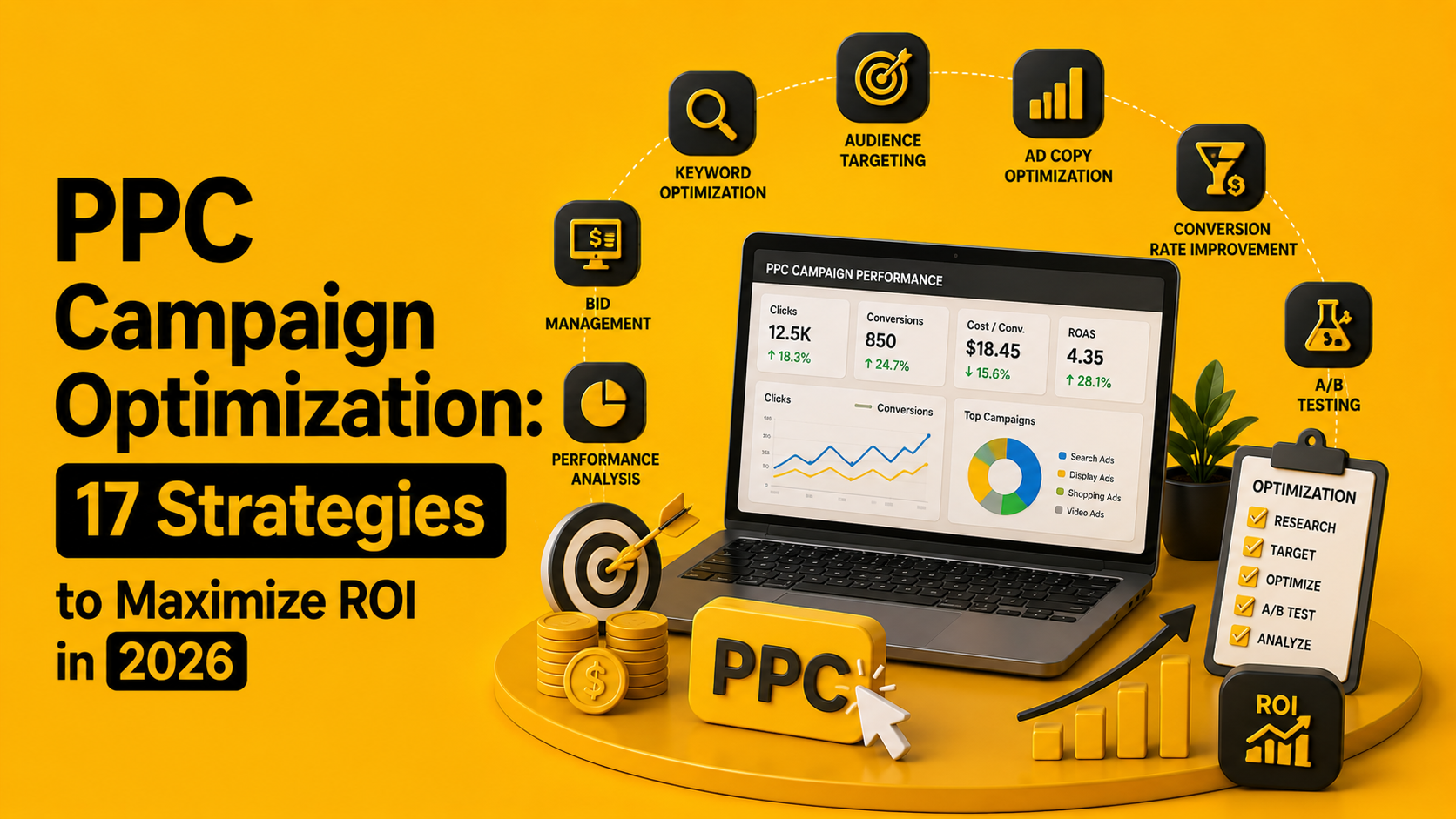
                                  3. PPC Campaign Optimization: 17 Strategies to Maximize ROI in 2026

                                    PPC Campaign Optimization: 17 Strategies to Maximize ROI in 2026

                                    Imagine paying $20 every time someone walks into your store… only for them to ask where the restroom is and leave.

                                    That’s exactly what happens when your PPC campaigns aren’t optimized.

                                    American businesses lose 15%-30% of their Google Ads budget due to bad targeting, irrelevant keywords, ineffective landing pages, and low-quality traffic. And what makes the situation worse? Most marketers believe that they need to spend more money to make everything right.

                                    It doesn’t work like this.

                                    The winners don’t spend more; they simply spend better.

                                    Regardless of whether you use Google Ads, Microsoft Ads, YouTube ads, or Performance Max campaigns, the line between profit and loss is the optimization of PPC campaigns.

                                    In our guide, we will tell you all about how to optimize PPC campaigns, improve Quality Score, reduce Cost Per Acquisition, increase Click-Through Rate, and get a better return on advertising spending.

                                    Let’s save your advertising budget from Google spending it on people who look for something free.

                                    What Is PPC Campaign Optimization?

                                    PPC campaign optimization is an ongoing effort to optimize every part of a Pay-Per-Click campaign in order to maximize conversions and minimize costs.

                                    Rather than just placing an ad and hoping for the best, optimization entails making improvements based on data in relation to:

                                    • Keyword targeting
                                    • Search intent alignment
                                    • Ad copy
                                    • Quality Score
                                    • Bidding strategies
                                    • Audience segmentation
                                    • Landing pages
                                    • Conversion tracking
                                    • Budget allocation
                                    • Device targeting
                                    • Geographic targeting
                                    • Ad extensions

                                    Consider PPC to be like Formula 1 racing. Success is not determined by how big your engine is. It’s about optimizing hundreds of small details until every dollar counts.

                                    Why PPC Optimization Matters More Than Ever

                                    Google Ads is getting more and more competitive.

                                    In many industries:

                                    • CPC is still growing year over year.
                                    • AI bidding shifts the playing field.
                                    • Search intent becomes more complicated.
                                    • Expectations are to have a personalized experience.
                                    • Privacy changes cut down audience data.

                                    Without optimization:

                                    • Cost Per Click grows
                                    • Conversion rate drops
                                    • Quality score declines
                                    • Impression share reduces
                                    • ROAS declines

                                    Companies that always optimize their campaigns tend to beat the competition even with a smaller budget.

                                    The PPC Formula That Actually Drives Profit

                                    Successful PPC isn’t just:

                                    Traffic → Sales

                                    It’s:

                                    Relevant Keywords

                                          ↓

                                    Higher Quality Score

                                          ↓

                                    Lower CPC

                                          ↓

                                    Better CTR

                                          ↓

                                    Higher Conversion Rate

                                          ↓

                                    Lower CPA

                                          ↓

                                    Higher ROAS

                                    Every optimization compounds.

                                    Make improvements by 10% in five different factors, and you’ll see the results.

                                    17 PPC Campaign Optimization Strategies That Actually Work

                                    1. Audit Your Search Intent Before Touching Keywords

                                    AdWords users keyword-optimize. Smart AdWords users optimize their intent.

                                    Someone searching:

                                    “What is CRM?” is researching.

                                    Someone searching:

                                    “Best CRM software for manufacturing companies” is buying.

                                    Keyword types include:

                                    • Informational
                                    • Guides
                                    • Tips
                                    • Definitions
                                    • Commercial
                                    • Best
                                    • Compare
                                    • Reviews
                                    • Transactional
                                    • Buy
                                    • Pricing
                                    • Demo
                                    • Quote
                                    • Book

                                    High-intent keywords should get the majority of your budget.

                                    2. Build Smaller, Highly Relevant Ad Groups

                                    What’s the biggest mistake when running PPC campaigns? Piling 100 keywords into one ad group.

                                    Better to:

                                    Structure:

                                    Campaign

                                     → Ad Group

                                     → 5 to 15 closely related keywords

                                    Example:

                                    • Ad Group:
                                    • Google Ads Management

                                    Keywords:

                                    • Google Ads agency
                                    • PPC management company
                                    • Google Ads experts
                                    • Google Ads services

                                    This will make your ads extremely relevant. Google likes relevant ads.

                                    3. Eliminate Wasted Spend with Negative Keywords

                                    Use negative keywords to avoid unnecessary searches.

                                    Without them, your ads can appear for:

                                    • Free
                                    • Jobs
                                    • Salary
                                    • Tutorial
                                    • Course
                                    • PDF
                                    • DIY
                                    • Cheap

                                    If you sell premium software.

                                    Someone searching:

                                    “Free accounting software” must not click on your ads.

                                    Check the regular Search Terms Report.

                                    4. Improve Your Quality Score

                                    The following are affected by Quality Score:

                                    • CPC
                                    • Ad Rank
                                    • Impression Share

                                    Depending upon:

                                    CTR (Expected)

                                    Is the click-through rate high?

                                    Relevancy of Ad

                                    Is the ad relevant to the keyword?

                                    Landing Page Experience

                                    Does the landing page meet the needs of users?

                                    If your Quality Score is higher, then:

                                    • Cost is reduced
                                    • Ranks well
                                    • Gives more impressions

                                    Just improving Quality Score from 5 to 8 reduces CPC.

                                    5. Write Ads That Sound Human

                                    These are typical ads:

                                    Best Digital Marketing Company

                                    This one is better: More Qualified Leads Needed? Not Just More Clicks.

                                    Our PPC experts maximize every penny spent on bringing in dollars. 

                                    See the difference? 

                                    Features > Jargon.

                                    6. Use Dynamic Keyword Insertion Carefully

                                    Dynamic Keyword Insertion (DKI) can improve relevance.

                                    For instance, instead of:

                                    Best Marketing Agency

                                    Google will show:

                                    Best PPC Campaign Optimization Agency

                                    And this usually increases CTR. However, use it wisely. Bad headlines lower credibility.

                                    7. Optimize Landing Pages, Not Just Ads

                                    The ad is responsible for clicks. The landing page is responsible for conversion.

                                    High-converting landing pages have the following elements:

                                    • Headline
                                    • CTA button
                                    • Loading speed
                                    • Proof
                                    • Customer reviews
                                    • Trust badges
                                    • Short forms
                                    • Mobile-friendly design

                                    Even a good ad will not help a bad landing page.

                                    8. Improve Mobile Experience

                                    Over half of the paid search traffic comes from mobile users.

                                    So ask yourself:

                                    Can the user:

                                    • Read your page easily?
                                    • Submit the form quickly?
                                    • Call with one click?
                                    • Load the page within three seconds?

                                    If not, you’re paying for frustrated users.

                                    9. Segment Audiences Instead of Treating Everyone the Same

                                    Each group needs different messages.

                                    Examples:

                                    First-Time Visitors  → Provide education.

                                    Repeat Visitors  → Provide proof.

                                    Older Customers  → Provide upgrades.

                                    Cart Abandoners  → Provide urgency. 

                                    Segmenting your audience is critical to conversions.

                                    10. Test Everything (Seriously, Everything)

                                    Assume nothing. Always test.

                                    Test A/B tests for:

                                    • Headlines
                                    • Description
                                    • CTA buttons
                                    • Images
                                    • Landing pages
                                    • Forms
                                    • Offers
                                    • Pricing
                                    • Colors
                                    • Ad Extensions

                                    Small improvements add up over time.

                                    11. Choose the Right Bidding Strategy

                                    Your PPC strategy should align with campaign goals, not guesswork.

                                    Google Ads offers several bidding options:

                                    GoalRecommended Bidding Strategy
                                    Website TrafficMaximize Clicks
                                    Lead GenerationMaximize Conversions
                                    Revenue GrowthTarget ROAS
                                    Cost EfficiencyTarget CPA
                                    Brand VisibilityTarget Impression Share

                                    Avoid switching between different bidding approaches all the time; Google’s Smart Bidding needs time to learn based on enough conversion data. The frequent changes will restart this process and negatively influence the results.

                                    12. Use Audience Signals Alongside Keywords

                                    Nowadays, PPC advertising uses targeting of both keywords and audiences.

                                    Include these segments in your campaigns:

                                    • In-market audiences
                                    • Affinity audiences
                                    • Customer Match
                                    • Remarketing lists
                                    • Similar audiences (if possible)
                                    • Demographic targeting

                                    For instance:

                                    Not just keywords “CRM software” but also people who have been recently searching for business software.

                                    Such an approach gives you better intentions and higher conversion rates.

                                    13. Monitor Key PPC Metrics Beyond Clicks

                                    Clicks do not earn you money. Revenue does.

                                    Focus on metrics that influence profitability:

                                    MetricWhy It Matters
                                    CTRMeasures ad relevance
                                    Conversion RateShows landing page effectiveness
                                    CPACost to acquire one customer
                                    ROASRevenue generated from ad spend
                                    CPCCost efficiency
                                    Impression ShareLost visibility against competitors
                                    Quality ScorePredicts ad performance
                                    Lifetime Value (LTV)Long-term profitability

                                    A campaign with fewer clicks but greater ROAS may be more valuable than one with huge traffic and low conversions.

                                    14. Schedule Ads Based on Performance

                                    Your audience performance differs throughout the day.

                                    To understand your performance by:

                                    • Time of day
                                    • Day of week
                                    • Season
                                    • Holiday
                                    • Business hours

                                    Increase your bid if Tuesdays always perform better than other days. On the contrary, lower the bid if the time of day results in poor performance to save on budget.

                                    Ad schedule is an easy technique to enhance performance with no need for extra budget.

                                    15. Optimize Geographic Targeting

                                    Market performance varies from one place to another.

                                    Geographical performance breakdown can be done according to:

                                    • States
                                    • Cities
                                    • ZIP codes
                                    • Metropolitan areas
                                    • Radius targeting

                                    For instance,

                                    If you notice that Texas delivers leads at half the cost of California, put more budget towards Texas. This type of geographical targeting is highly beneficial for service-oriented companies.

                                    16. Use Automation, But Don’t Let It Drive Blindfolded

                                    Clean data makes automation effective.

                                    Use:

                                    • Smart Bidding
                                    • Automated Rules
                                    • Performance Max Campaigns
                                    • Responsive Search Ads
                                    • Scripting for reporting
                                    • Budget alerts

                                    But be careful about accepting automated suggestions.

                                    Not all suggestions from Google are made to help you make money. Some are made to get you to do more stuff within your campaigns.

                                    Automation needs to be helping your marketing, not doing your job for you.

                                    17. Build a Continuous Optimization Process

                                    What’s the most common error made by companies?

                                    Optimizing only once.

                                    PPC marketing is about constantly improving things.

                                    Have a weekly optimization checklist:

                                    • Review Search Terms Report
                                    • Add negative keywords
                                    • Pause underperforming ads
                                    • Refresh ad copy
                                    • Analyze Quality Score changes
                                    • Check landing page speed
                                    • Review conversion tracking
                                    • Adjust bids
                                    • Compare device performance
                                    • Monitor audience performance

                                    Optimization isn’t a project, it’s an ongoing system.

                                    Common PPC Mistakes That Drain Your Budget

                                    Even seasoned advertisers still make expensive mistakes.

                                    Do not make these typical mistakes:

                                    Targeting Broad Match Without Control

                                    Broad Match can help you get more traffic, but without negative keywords and audience signals, most traffic will be irrelevant.

                                    Ignoring Conversion Tracking

                                    Without accurate conversion tracking, there’s nothing to optimize.

                                    Sending Paid Traffic to the Homepage

                                    The homepage requires the user to look around. Dedicated landing pages do not distract and increase conversions.

                                    Chasing Vanity Metrics

                                    Lots of impressions and clicks sound great.

                                    But if they do not turn into leads and money, they are just useless numbers.

                                    Setting and Forgetting Campaigns

                                    Google Ads is not a crockpot. Not changing your campaigns for many months is almost a surefire way to get poor results.

                                    Advanced PPC Campaign Strategy for Better ROI

                                    After learning all the basics, take a look at advanced strategies.

                                    Layer First-Party Data

                                    Use customer relationship management (CRM) data through Customer Match to target:

                                    • Existing customers
                                    • Valuable leads
                                    • Returning customers
                                    • Optimize With Value-Based Bidding

                                    Don’t optimize for conversion only, but for the highest lifetime value customers.

                                    Align PPC with SEO

                                    The organic search results provide insights into performing keywords to invest in the paid campaign. Similarly, the search term report in PPC campaigns provides insights into future SEO efforts.

                                    Optimize the Entire Funnel

                                    Your ads shouldn’t be limited to just getting clicks.

                                    Optimize every stage:

                                    Awareness → Consideration → Conversion → Retention

                                    Companies that optimize all stages of the customer’s journey beat companies that focus only on attracting traffic.

                                    How to Optimize PPC for Better ROI: A Simple Framework

                                    Here is a process for optimizing your PPC campaign for higher ROI:

                                    • Audit campaign strategy and objectives.
                                    • Analyze search intent and keyword relevance.
                                    • Cut unnecessary expenses through negative keywords.
                                    • Increase Quality Score by creating relevant ads and landing pages.
                                    • Constantly test the ad copy.
                                    • Adjust bidding strategy based on conversion objectives.
                                    • Improve landing page loading speed and UX.
                                    • Use audience segmentation.
                                    • Check CPA, ROAS, and conversion value weekly.
                                    • Repeat the process every month.

                                    The optimization process is never completed.

                                    Why Businesses Trust Xparro for PPC Campaign Optimization

                                    At Xparro, we don’t believe in “set it and forget it” advertising.

                                    Our team develops data-driven PPC campaigns that optimize their performance with the help of analytics, automation, and a conversion-focused approach.

                                    We use:

                                    • Detailed PPC campaigns’ audits
                                    • Analysis of keyword intent
                                    • Competitive benchmarking
                                    • AI-based bid management
                                    • Optimization of landing pages
                                    • Conversion rate optimization
                                    • Integration of GA4 & CRM
                                    • Dashboards with real-time analytics
                                    • Ongoing A/B testing
                                    • Transparency in reports: only KPIs that impact your revenue

                                    Be it e-commerce stores, lead generation in the B2B market, or expansion of a brand across the country – we make sure that every advertising dollar works on growing your business.

                                    Key Points About PPC Campaign Optimization

                                    How do you optimize PPC campaigns?

                                    To optimize your PPC campaigns:

                                    • Refine keyword targeting
                                    • Include negative keywords
                                    • Boost Quality Score
                                    • Test ad copy
                                    • Landing page optimization
                                    • Refine bidding strategies
                                    • Conversion tracking
                                    • Audience behavior analysis

                                    How can I improve PPC performance?

                                    Make your PPC work better through higher intent keywords, improving the Quality Score, better landing page experience, audience segmentation, using Smart Bidding properly, and constant testing of ads/offers.

                                    How do you optimize PPC for better ROI?

                                    To optimize your PPC for better ROI:

                                    • Avoid wasted ad spend
                                    • Boost conversion rate
                                    • Enhance Quality Score
                                    • Bidding strategies optimization
                                    • Audience targeting
                                    • ROAS tracking instead of click-throughs
                                    • Constant testing of campaigns and landing pages

                                    What is the best PPC campaign strategy?

                                    The best PPC campaign strategy is based on audience research, high-intent keywords, good ad copy, conversion-oriented landing pages, automated bidding, and regular campaign performance optimization.

                                    Final Thoughts

                                    Winning in PPC isn’t about outspending competitors.

                                    It’s about out-optimizing them.

                                    Each of the above-mentioned changes, be it in the selection of keywords, Quality Score, landing page quality, or bidding strategy, will create a snowball effect.

                                    Companies that see their PPC campaign as a developing system always surpass companies that aim to achieve immediate results.

                                    If you are spending lots of money on your campaigns but not getting the revenue, something needs to change. Since the most successful PPC campaigns do not just attract traffic; they attract the right traffic at the right price.

                                  4. Senior Living Advertising Secrets: How Google Ads Drives Real Leads for Senior Living Communities?

                                    Senior Living Advertising Secrets: How Google Ads Drives Real Leads for Senior Living Communities?

                                    Let’s start with the uncomfortable truth. Most senior living advertising isn’t failing because of budget; it’s failing because of visibility. Communities offer great amenities, compassionate staff, and beautiful environments, yet remain invisible online. 

                                    It’s like searching the entire house for your glasses while they’ve been sitting on your head the whole time. The opportunity is right there, you’re just not seeing it.

                                    Families today don’t “discover” senior living communities by driving around neighborhoods anymore. They Google. They compare. They read reviews. They click. If your community isn’t showing up in those moments, you’re not even in the conversation. And in the senior living industry, not being considered is the fastest way to lose move-ins.

                                    Why Most Senior Living Advertising Misses the Moment That Actually Converts?

                                    The real challenge isn’t just getting traffic, it’s getting the right traffic. Senior living decisions are emotional, urgent, and often made under pressure. That means your marketing needs to reach adult children, caregivers, and decision-makers exactly when they’re searching, not two weeks later when your organic post finally gets seen by three people and a bot.

                                    Most communities struggle with senior living lead generation. They either target too widely, resulting in wasted budget, or target so narrowly that no one ever sees their ads. Either way, the result is the same. Empty units and a marketing team wondering what went wrong.

                                    Here’s the kicker. Your audience is already searching. They’re typing things like “best assisted living near me” or “memory care for mom urgently.” If you’re not showing up at that exact moment, your competitor is. And they’re happily taking that lead you never knew existed.

                                    So no, the problem isn’t that people aren’t interested. It’s that your senior living advertising strategy isn’t aligned with how people actually search today. And that’s exactly where Google Ads comes in, no guessing, no hoping, just showing up when it matters most.

                                    The Magic of Google Ads: Turning Clicks into Community Members

                                    Google Ads for senior living isn’t magic, but when executed correctly, it delivers consistent results. But when done right, it feels like it. Because instead of chasing leads, you’re positioning your community right in front of people actively looking for solutions. That’s not marketing, that’s timing.

                                    Think about it. Someone searches “assisted living near me with immediate availability.” That’s not casual browsing, that’s high-intent, decision-ready search behavior. The kind of intent that turns into tours, calls, and move-ins if you capture it correctly.

                                    This is why senior living Google Ads consistently outperform most other channels. You’re not interrupting someone’s day; you’re answering their question. That difference leads to higher click-through rates, better lead quality, and shorter sales cycles.

                                    Now layer in assisted living Google Ads, and you get even more precise. You can segment campaigns based on care level, independent living, assisted living, and memory care, and tailor messaging to match exactly what the user needs. No more generic “We offer great care!” messaging that blends into the background.

                                    And let’s talk numbers for a second. Paid search users are significantly more likely to convert because they’re already in decision mode. They’re not scrolling for entertainment; they’re searching for answers. If your ad shows up with the right message, you’re already halfway to a conversion.

                                    But here’s where most communities mess it up. They treat Google Ads like a billboard. Broad keywords, vague messaging, and zero follow-through. That’s not a strategy, it’s wasted budget.

                                    The real “magic” of Google Ads for senior living comes from precision. Right keywords. Right timing. Right messaging. When those align, clicks stop being vanity metrics and start becoming real leads walking through your doors.

                                    Crafting Ad Copy That Even Grandma Would Click On

                                    Most senior living ad copy is painfully boring. Safe. Generic. Forgettable. And in a space where trust matters, being forgettable is just as bad as being invisible.

                                    Good senior living advertising doesn’t sound like marketing; it sounds like reassurance. It speaks directly to concerns, emotions, and urgency without feeling like a sales pitch. Because no one clicks on an ad that feels like it’s trying too hard.

                                    Your ad copy needs to answer three things instantly:

                                    • What is this?
                                    • Is this relevant to me?
                                    • Can I trust it?

                                    If you miss even one, that click goes to your competitor.

                                    This is where strong messaging in senior living Google Ads makes a huge difference. Instead of “Premium Senior Living Community,” try something like, “Safe, Comfortable Living for Mom, Schedule a Tour Today.”

                                    See the difference? One is generic. The other is personal.

                                    A measured amount of personality can also improve engagement. You don’t need stand-up comedy, but a touch of warmth or relatability goes a long way. People are making emotional decisions, so your copy should reflect that.

                                    For assisted living Google Ads, specificity wins every time. Mention services, proximity, availability, or even quick benefits like “24/7 care,” “chef-prepared meals,” or “same-week move-ins.” These aren’t features, they’re decision triggers.

                                    Also, don’t underestimate the power of headlines. That’s your first impression, and you don’t get a second shot. Strong, benefit-driven headlines outperform clever-but-confusing ones every time.

                                    Bottom line? If your ad copy sounds like it was written for everyone, it will resonate with no one. Make it human. Make it clear. And make it worth clicking.

                                    Bidding Strategies That Don’t Break the Bank

                                    Let’s talk money, because this is where most campaigns quietly fall apart. You don’t need a massive budget to win with Google Ads for senior living. You need a smart one.

                                    Throwing money at broad keywords like “senior living” is the fastest way to burn through your budget. Those keywords are expensive, competitive, and often too vague to convert. Instead, focus on intent-driven phrases like “assisted living in Florida” or “memory care with availability.”

                                    Smart bidding in senior living advertising is about balance, prioritizing the right auctions, not every auction. When you stop trying to win every auction, you start trying to win the right ones. That means prioritizing high-converting keywords over high-volume ones.

                                    Automated bidding strategies can help, but only if your data is clean. If you’re not tracking conversions properly, Google is basically flying blind, and so are you. And blind bidding is just expensive guessing.

                                    For assisted living Google Ads, consider segmenting budgets by service type. Memory care leads, for example, may be more valuable and justify higher bids. Independent living searches might need a different approach entirely.

                                    Another mistake? Not adjusting bids based on time or location. If your data shows higher conversions during weekdays or in specific zip codes, your budget should reflect that. This is where optimization turns into real ROI.

                                    And here’s the truth no one likes to admit, cheap clicks aren’t always good clicks. The goal isn’t traffic, it’s qualified leads. Paying a little more for the right audience often results in better outcomes.

                                    So no, your budget doesn’t need to explode. But your strategy does need to evolve. Because in senior living lead generation, efficiency beats volume every single time.

                                    Targeting Tips: Reaching the Right Seniors

                                    Targeting in senior living advertising isn’t just about age; it’s about intent, behavior, and context. Because let’s be honest, the person making the decision usually isn’t the senior, it’s their adult child.

                                    That’s where many campaigns go sideways. They target seniors directly and completely miss the actual decision-makers. Effective Google Ads for senior living focus on both seniors and their families.

                                    Demographic targeting is just the starting point. Layer in interests, search behavior, and even life events where possible. Someone researching “elder care options” is far more valuable than someone casually browsing retirement blogs.

                                    Geo-targeting is another game-changer. Most families want communities close to home. If your ads aren’t optimized for local searches, you’re missing high-intent leads right in your backyard.

                                    With senior living Google Ads, you can also exclude irrelevant audiences. Showing ads to non-converting audiences wastes budget quickly. Precision matters.

                                    For assisted living Google Ads, consider tailoring campaigns by urgency. Someone searching “emergency senior care” needs a very different message than someone casually exploring options.

                                    And let’s not forget device targeting. Mobile searches dominate, especially for urgent queries. If your landing page isn’t optimized for mobile, you’re losing leads before they even start.

                                    Targeting isn’t about reaching more people; it’s about reaching the right people at the right time. Get that right, and everything else becomes easier.

                                    Tracking Success: How to Know Your Ads Are Bringing in More Than Just Curious Neighbors

                                    Clicks and impressions may look good in reports, but they don’t fill rooms. What matters is conversions, and more importantly, qualified conversions.

                                    If you’re running senior living Google ads without proper tracking, you’re essentially guessing. And guessing in paid advertising is expensive.

                                    Set up conversion tracking for calls, form fills, and tour bookings. These are your real KPIs. Everything else is just noise.

                                    For senior living lead generation, tracking should go beyond Google Ads. Integrate with your CRM. Understand which leads actually convert into move-ins. Because not all leads are created equal.

                                    Google Analytics can give you deeper insights, bounce rates, session duration, and user paths. These metrics tell you whether your landing page is doing its job or quietly killing your conversions.

                                    Another overlooked metric? Cost per acquisition. Not cost per click. Because at the end of the day, you’re not buying clicks, you’re buying outcomes.

                                    And here’s the uncomfortable truth. If you’re not tracking properly, you can’t optimize properly. Which means you’re likely wasting budget without even realizing it.

                                    Data not only shows what happened, but it also guides what to do next. And in senior living advertising, that clarity is everything.

                                    Combining Humor and Heart in Senior Living Advertising Campaigns

                                    This industry is emotional. Families are making big decisions, often under stress. That means your marketing needs to balance professionalism with empathy, and just enough personality to stand out.

                                    The best senior living advertising campaigns don’t feel like ads. They feel like guidance. Like someone saying, “We understand what you’re going through, and we can help.”

                                    Adding the right kind of humor can make your brand more approachable. Not jokes about aging, let’s not go there, but light, relatable moments that light up your message.

                                    At the same time, emotion drives action. Show real stories. Real outcomes. Real experiences. Because trust isn’t built through features, it’s built through connection.

                                    This is where the best advertising agency for senior living can make a real difference. Not just running ads, but crafting narratives that resonate with both logic and emotion.

                                    Because at the end of the day, senior living lead generation isn’t just about filling units, it’s about earning trust. And trust doesn’t come from generic campaigns.

                                    It comes from messaging that feels real. Targeting that feels intentional. And experiences that feel human.

                                    Conclusion

                                    Ready to turn high-intent searches into real leads and move-ins?

                                    If your current strategy feels like shouting into the void, it’s probably because it is. The market has changed. The search behavior has changed. And your senior living advertising strategy needs to catch up.

                                    Google ads for senior living aren’t just another channel. It’s the channel that meets families exactly when they’re searching, deciding, and ready to act. That’s not optional anymore. That’s essential.

                                    The difference between struggling occupancy and steady move-ins often comes down to visibility and timing. Show up when it matters, say the right thing, and make it easy to take the next step.

                                    In this space, more clicks don’t matter; better ones do. And with the right strategy, that’s exactly what you’ll get.

                                    As a senior living marketing agency, Xparro helps you make that happen. We don’t just run campaigns, we align your targeting, messaging, and conversion flow into a system designed to consistently attract the right families and turn interest into move-ins.