Category: Trends

  • Latest Instagram Trends in November 2026 to Try

    Latest Instagram Trends in November 2026 to Try

    November has arrived, and Instagram is about to get very busy. People are suddenly obsessed with Christmas shopping, Thanksgiving recipes, cozy sweaters and finding the perfect gift for someone who probably hasn’t even started their shopping list.

    And somewhere between all that, brands are fighting for a little space on everyone’s feed.

    Let’s be honest. Nobody opens Instagram hoping to see another business post saying, “Our latest collection is here. Shop now!” We’ve seen it. We’ve scrolled past it. We’ve probably forgotten it five seconds later.

    What actually makes us stop scrolling? A funny Reel, an oddly satisfying transition, a relatable situation or something that makes us send the video to three friends immediately.

    That’s exactly why keeping an eye on Instagram trends matters. Not because every brand needs to jump on every viral sound, but because these little internet moments can give businesses some genuinely good content ideas.

    So, grab your coffee. Here’s what’s worth watching on Instagram this November and how brands can make the most of it without looking like they’re desperately trying to go viral.

    1.Small Text, Big Feelings: Wait, What Does That Say?

    You know those Reels where you notice a tiny sentence somewhere on the screen and immediately zoom in because your curiosity simply won’t let you move on?

    That’s the Small Text trend.

    The idea is pretty straightforward. A creator adds a tiny message to a video, almost hiding it in plain sight. Viewers have to zoom in to read it. Sometimes it’s a funny confession, sometimes it’s a brutally honest observation, and sometimes it’s just something surprisingly sweet.

    It’s a small trick, but it gives people a reason to interact with the video instead of mindlessly scrolling.

    Now, here’s where businesses can have fun with it.

    Imagine a coffee shop posting a beautiful video of its latest latte. Somewhere in the corner, there’s tiny text saying, “You said one coffee. This is your fourth.”

    A clothing brand could hide a little message saying, “You don’t need another black outfit. But we both know you’re buying it.”

    See what happened there? The brand promoted something without making the entire video feel like an advertisement.

    That’s the sweet spot. Give people something to smile about, and let the product fit naturally into the conversation.

    2.The Recharged Trend: Because Some of Us Are Running on 1%

    If your energy levels have been sitting at 1% since Monday, congratulations. You’re probably the target audience for this trend.

    The Recharged format starts with a battery percentage at 1% and transitions to 100%. The second clip shows whatever brings the creator back to life. It could be a holiday, a favourite meal, a new outfit, a workout or simply getting out of bed after a very long weekend.

    It’s relatable, easy to recreate and doesn’t require an entire film crew.

    How can brands jump in?

    Think about what your product or service helps people feel, experience or achieve.

    A travel company could show someone going from a completely exhausted office worker to a relaxed beach holiday. A beauty brand could use the transition to reveal a fresh makeover. A gym could show the difference between dragging yourself into a workout and walking out feeling like you could conquer the world.

    And if you’re a small business, don’t overthink it. Even a simple before-and-after video can work.

    Just make sure the transformation actually connects to your brand. Nobody needs to see a random battery animation followed by your company logo. Give us a reason to care!

    3.Toggle On: Something’s Coming. Should We Be Excited?


    There’s something oddly satisfying about flipping a switch. And apparently, Instagram agrees.

    The Toggle On trend uses a simple on/off switch to introduce something new. One moment, the screen is switched off. The next, something appears, whether it’s a new product, an outfit, an announcement or a completely different visual.

    It’s a fun way to build anticipation without revealing everything immediately.

    Marketing opportunity? Oh, absolutely.

    November is packed with launches, promotions and holiday campaigns. Brands can use this format to tease a new collection, announce a Black Friday offer or introduce a seasonal menu.

    Picture a restaurant switching on its screen to reveal its Thanksgiving specials. Or a fashion brand showing its winter collection one outfit at a time.

    You don’t even need to reveal the entire offer. A little suspense can make people curious enough to visit your profile for the announcement.

    Just don’t leave them waiting forever. Instagram is full of distractions, and your audience has approximately seventeen other Reels to watch.

    4.Vlog Timestamps: A Day in the Life, Minus the Hollywood Production


    Not every creator has the time, energy or patience to produce a perfectly edited day-in-my-life video.

    Thankfully, they don’t have to.

    The Vlog Timestamps trend is all about showing little moments throughout the day, with timestamps telling viewers what’s happening and when.

    8:00 AM – Coffee.

    9:30 AM – Pretending to understand emails.

    12:00 PM – Lunch.

    3:00 PM – Wondering why it’s still only Tuesday.

    You get the idea.

    It’s casual, personal and doesn’t require a complicated storyline. That’s probably why the format works so well for everyday content.

    What about brands?

    This is one of those trends that businesses should seriously consider.

    A bakery could show what happens before the first customer walks in. A marketing agency could document a day filled with brainstorming, client calls and last-minute revisions. A small business could show the process of packing and shipping orders.

    People love seeing what happens behind the scenes. And honestly, it’s a refreshing break from the endless stream of perfectly staged product photos.

    Your business doesn’t have to look perfect every second. Sometimes, showing the actual people doing the work is much more interesting.

    5.November Rain: The Internet’s Annual Dramatic Comeback


    Every November, there’s one song that seems to find its way back into everyone’s playlist.

    No, it’s not a new release. It’s Guns N’ Roses’ November Rain.

    The dramatic guitar solo, the cinematic feel and the nostalgia make it an easy choice for creators putting together travel montages, memories and aesthetic edits.

    And yes, it’s exactly as dramatic as it sounds.

    Can brands use it?

    Definitely, especially if their content has a story to tell.

    A real estate company could create a cinematic property walkthrough. A travel brand could put together a montage of its most beautiful destinations. Even a fashion business could use the song to showcase its latest collection.

    You could also use it for a little year-end nostalgia. Think favourite customer moments, company milestones, team memories and everything that made 2026 memorable.

    Just remember to check the music licensing restrictions before using popular tracks on a commercial account. Not every viral sound is cleared for business use.

    6.Christmas Music Is Back. Already.

    Halloween barely had time to pack its bags, and Christmas music is already knocking on the door.

    You know what comes next. Mariah Carey, festive decorations, gift guides and an alarming number of people putting up Christmas trees before Thanksgiving.

    November is when holiday content really starts finding its way onto Instagram. Creators are sharing decorating ideas, shopping recommendations, seasonal outfits and everything that makes this time of year feel a little more exciting.

    And businesses? Well, this is their cue to get moving.

    A few ideas worth trying:

    A beauty salon could use a festive audio track to remind people to book their December appointments.

    A clothing store could create a Reel featuring outfits for Thanksgiving dinners and holiday parties.

    A restaurant could show its seasonal menu or give viewers a peek at its holiday decorations.

    A home decor business could film a Christmas tree transformation.

    And please, don’t just put a Christmas filter over your logo and call it a campaign. Your audience deserves a little more creativity than that.

    7.The Fall Wishlist: Adding Things to Our Cart Is a Personality Trait

    Some people make grocery lists. Others make wishlists featuring clothes they don’t need, candles they definitely don’t need and home decor that will somehow end up in their shopping cart.

    The Fall Wishlist trend brings all those little wants together.

    Creators share their seasonal favourites through short videos, photo dumps and aesthetically arranged collections. Think autumn outfits, books, coffee flavours, home accessories and weekend plans.

    It’s essentially Pinterest inspiration meeting Instagram Reels.

    Here’s the marketing angle.

    Brands can use this format to introduce products without making the content feel like a sales catalogue.

    A bookstore could share five books worth reading before the year ends. A fashion boutique could put together its November wardrobe wishlist. A coffee shop could showcase its favourite seasonal drinks.

    And don’t forget about the price-conscious shopper. Affordable recommendations and useful product suggestions can make your wishlist much more appealing.

    The goal isn’t to convince people to buy everything. It’s to give them something worth saving for later.

    8.Thanksgiving Reels: It’s Almost Time to Bring Out the Good Plates

    Thanksgiving is on November 26 this year, which means Instagram is about to become a giant collection of turkey recipes, family dinners, table decorations and people arguing about whether pineapple belongs anywhere near a holiday meal.

    It’s also a great time for businesses to join in.

    But here’s a thought. Do we really need another graphic that says “Happy Thanksgiving” with a stock photo of a pumpkin?

    Probably not.

    Try something a little more interesting.

    Restaurants can show how they prepare their Thanksgiving specials. Food brands can share quick recipes that people can actually recreate. Lifestyle creators can post hosting tips, table-setting ideas and outfit inspiration.

    Businesses can also use this occasion to share customer appreciation stories or introduce the people behind the brand.

    A simple video of employees talking about what they’re grateful for can be far more memorable than a generic holiday post.

    And if you’re a local business, don’t forget to mention your Thanksgiving offers, opening hours or reservation details. Useful information is content, too.

    9.Black Friday Reels: People Want Deals, Not Another Sales Speech

    November 27 is Black Friday, and if there’s one thing we can predict with reasonable confidence, it’s that everyone’s feed will be full of discounts.

    But here’s the problem. Every brand is going to say its deal is the best deal.

    So how do you stand out?

    Stop simply announcing discounts and start showing people what they’re actually getting.

    A skincare brand could demonstrate how to use its best-selling products. A tech retailer could compare two popular gadgets. A clothing store could show three ways to style an item that’s part of its Black Friday sale.

    You could even create a Reel called “Things actually worth buying this Black Friday” and feature a few genuinely useful products.

    Why does this work?

    Because people are looking for help making purchasing decisions, not just another reminder that a sale exists.

    Give them information, show them the product and make the offer clear. That’s a much better way to earn their attention.

    10.Behind-the-Scenes Reels: Your Audience Wants to See the Humans

    Here’s something worth remembering: people follow brands, but they connect with people.

    A perfectly photographed product might catch someone’s eye, but a funny video of the team packing orders, preparing for a launch or dealing with everyday business chaos can make the brand feel much more real.

    Behind-the-scenes content isn’t exactly new, but it continues to be one of the easiest ways for businesses to show their personality.

    And you don’t need to make everything inspirational.

    A marketing agency could post a Reel saying, “The client said it’s just a small revision.”

    Cut to the content team staring at a 47-page document.

    A bakery could show the difference between the beautiful cake on Instagram and the absolute chaos happening in the kitchen.

    A small business owner could document the reality of running a business during the holiday rush.

    These are the kinds of moments people recognise, laugh at and share with others.

    Sometimes, the best brand content doesn’t look like brand content at all.

    How to Use November’s Instagram Trends Without Looking Like Everyone Else

    Now, before you start saving every trending Reel you come across, let’s talk about something important.

    You don’t have to follow every trend.

    Seriously.

    A trend might have millions of views, but if it has absolutely nothing to do with your business, forcing it into your content strategy isn’t going to magically bring you customers.

    Here’s what we’d actually recommend:

    Know when to join in. Trends move quickly. If you spot a format gaining traction, don’t wait three weeks to recreate it. By then, the internet might have moved on to something else.

    Add your own personality. Don’t copy a Reel frame by frame. Give it a twist that makes sense for your brand. That’s what makes your content recognisable.

    Make people feel something. Humour, curiosity, nostalgia and relatability are all useful ways to connect with an audience. Not every post needs to sell something.

    Remember why you’re posting. Are you trying to get more people to discover your business? Encourage website visits? Generate enquiries? Different Reels can serve different purposes.

    Look beyond the views. A video with 100,000 views might look impressive, but a video with 2,000 views and 50 genuine enquiries could be much more valuable to your business. Keep an eye on shares, saves, profile visits and conversions.

    And one last thing. Don’t forget to actually enjoy creating your content. If every Reel feels like a board meeting, your audience might feel it, too.

    Final Thoughts

    November is a pretty exciting month for Instagram. There’s plenty happening, from seasonal content and nostalgic audio to holiday shopping and creative Reel formats.

    But trends aren’t a marketing strategy on their own.

    The real opportunity is finding a way to connect what’s popular with what your audience actually cares about. Maybe that’s a funny behind-the-scenes video, a useful holiday gift guide or a simple Reel showing what makes your business different.

    Experiment a little. Try formats you’ve never used before. Pay attention to what people respond to, and don’t be afraid to abandon an idea that isn’t working.

    And please, for the love of everyone’s Instagram feed, let’s retire the habit of turning every trending audio into a promotional video with a logo slapped at the end.

    Your audience has seen enough of those.
  • October 2026 Instagram Trends Every Marketers Should Know

    October 2026 Instagram Trends Every Marketers Should Know

    A very specific moment happens on Instagram. You see one Reel. Then another. Then another one using the same format. Then someone you follow, who normally posts completely unrelated content, is doing it too.

    And suddenly you’re thinking, “Wait. When did everyone start doing this?” That’s basically how Instagram trends work now. They don’t always arrive with a giant announcement. There isn’t a little notification saying Congratulations! This is today’s official viral trend.

    A creator does something. People copy it. Someone makes it funnier. A brand steals the format. Another creator gives it a completely different meaning. And before you know it, your entire Explore page looks like it attended the same meeting.

    That’s exactly what makes October 2026 interesting.

    The trends moving through Instagram right now aren’t just about songs. They’re increasingly about formats, jokes, editing tricks, storytelling structures, and tiny pieces of internet behavior that can be adapted to almost anything.

    And yes, there’s some Halloween and fall content creeping in. But that’s only one part of the picture.

    So, instead of giving you another list of “10 trending Instagram audios you NEED to use,” let’s look at what’s actually happening on Reels, and what marketers can do with it.

    1. “This Is Your Sign” Is Basically a CTA Wearing Casual Clothes

    You know the format. A beautiful clip plays. Then the text says something along the lines of “This is your sign to…”

    And suddenly the Reel has turned into a recommendation without looking like an advertisement.

    Later’s September 25 trend roundup describes this format as using existing B-roll, adding text pointing to the “sign,” and ending with a CTA. The format works because it needs almost no production and can be adapted to practically any niche. Later

    And honestly? That’s why it’s useful. Brands spend an unreasonable amount of time trying to make their CTAs sound clever.

    Meanwhile, Instagram has handed everyone one “This is your sign.”

    A restaurant can use it for “This is your sign to finally try the place you’ve been saving.”

    A travel brand can use it for “This is your sign to book the trip.”

    A fashion brand can use it for “This is your sign to stop wearing the same black outfit.”

    A marketing agency can use it for “This is your sign to stop boosting posts and call it a strategy.”

    Same format. Completely different personality. That’s the interesting part about trends. The format does some of the work. Your idea has to do the rest.

    2. Your Age Is Apparently Content Now

    Instagram has decided that your age is no longer private information. It’s a content pillar. One of the current formats uses age as the hook:

    “Things I know at 27.”

    “Things I wish I knew at 24.”

    “Things nobody tells you at 30.”

    Later’s current trend roundup describes age-centered content as a growing September format because it gives people an immediate point of identification. Later

    And that’s exactly why it works. You don’t have to wonder whether the content is meant for you. The number tells you.

    If you’re 27, you stop.

    If you’re 19, you might stop because you’re curious.

    If you’re 35, you might stop just to disagree with everything.

    Congratulations. You’ve engaged. For brands, this can go beyond age.

    Think:

    “Things we learned after working with 100+ brands.”

    “Things every first-time founder learns the hard way.”

    “What social media managers know that clients don’t.”

    Suddenly, a personal format becomes a positioning tool. And that’s much more interesting than simply copying someone’s Reel word-for-word.

    3. “Where Are You?” Has Become a Surprisingly Good Brand Format

    This one is almost stupidly simple.

    The Reel basically goes:

    “Where are you?”

    “Home.”

    “Your location says…”

    “Exactly.”

    Then the reveal is the place the creator clearly considers their real home, like a cafe, gym, studio, workplace, favorite restaurant, whatever.

    Later identifies this as one of the September formats, built around a short B-roll clip and fake text-message exchange. Later

    The reason I like this one for brands? It doesn’t feel like marketing.

    A coffee shop can basically say:

    “Where are you?”

    “Home.”

    “Your location says you’re at our café.”

    “Exactly.”

    A coworking space can do the same. A gym. A salon. A college. A restaurant.

    It’s particularly useful for businesses where the place itself is part of the product. And that’s the bigger idea here. You don’t always have to tell people what your business does. Sometimes it’s enough to show why people keep coming back to it.

    4. People Suddenly Want to See the Messy Middle

    For years, brands showed the finished things like beautiful product shots, perfect campaigns, polished office, final website, finished dish, and somewhere behind all of that was a team quietly losing its mind.

    Now?

    People want to see that part too. “The Process” is one of the current Instagram formats being highlighted by both Later and Nuelink. The concept is simple: show the tools, steps, and behind-the-scenes work, then reveal the finished result. Later

    And this is more than another BTS trend.

    It taps into something people genuinely like: seeing how things happen.

    Show the designer building the post.

    Show the chef preparing the dish.

    Show the stylist putting the look together.

    Show the content writer going from blank document to finished article.

    Show the agency team arguing over which hook is better.

    Okay, maybe don’t show that last one. But you get it. 

    The finished product says:

    “Look what we made.”

    The process says:

    “Look how we made it.”

    The second one gives people a reason to stay.

    5. AI Is Moving From “Look What AI Can Do” to “Look What We Can Make With It”

    AI-generated Reels aren’t exactly new.

    What’s changing is how they’re being used. One of the current formats Later is tracking is an AI tipping scene, where AI-generated visuals create cinematic scenes around a product like drinks, sunglasses, bags, and other objects. Later

    And this is where things get interesting for marketers. AI doesn’t have to replace the entire creative idea.

    It can simply make the visual impossible to ignore.

    Imagine:

    A skincare bottle sitting on the moon.

    A sneaker landing in a futuristic city.

    A coffee cup traveling through a miniature coffee plantation.

    A product floating through an absurdly elaborate cinematic world.

    The point isn’t:

    “Look! AI!”

    That gets old very quickly.

    The point is:

    “We couldn’t shoot this. So we made it.”

    That’s a much better creative reason to use the technology.

    6. “Some People Call Me…” Is Basically a Sales Pitch in Disguise

    This one is clever. And slightly ridiculous. Which is probably why it works.

    The format starts with:

    “Some people call me…”

    Then you fill in the nickname. And eventually turn it into what you want people to know you for.

    Later describes the current format as a wordplay-based way of turning a nickname into a pitch without making the Reel feel like a traditional CTA. Later

    For a business, that’s gold.

    A restaurant:

    “Some people call me picky. My friends call me the person who knows every good restaurant in town.”

    A photographer:

    “Some people call me obsessed. My clients call me when they want the shot.”

    An SEO agency:

    “Some people call us annoying. Google calls us persistent.”

    Okay, that last one needs work. But that’s exactly the point. A trend gives you the skeleton. Your brand still has to supply the personality.

    7. The Rapid-Fire Recap Is Turning Life Into a Highlight Reel

    Apparently, nobody has time for the full story anymore.

    You went on a trip? Show us. You attended an event? Show us. Your company had a busy month? Show us. You launched something? Definitely show us.

    The current “Rapid-Fire Recap” format compresses a day, trip, or entire experience into a quick sequence of clips, with Later describing it as essentially a sped-up visual diary. Later

    And this is one of those trends that brands can keep around long after the audio disappears. Because the underlying idea isn’t really the audio.

    It’s:

    “Here’s everything that happened.”

    An agency could do:

    “What a week at Xparro looked like.”

    Five seconds.

    Client meeting.

    Shoot.

    Coffee.

    Editing.

    Chaos.

    Finished.

    A restaurant could do:

    “Saturday night in 8 seconds.”

    A hotel:

    “Your weekend, compressed.”

    A brand doesn’t always need to explain an experience. Sometimes showing the highlights is enough.

    8. “I’m Tired of Making Content” Might Be the Most Self-Aware Marketing Trend Here

    This one feels almost too honest.

    The format basically starts with:

    “I’m tired of making content. Can you all just…”

    And then comes the actual CTA. Later describes it as a way of turning the ask itself into the joke instead of making the audience sit through another obvious promotional request. Later

    And I love this because brands have become very good at asking for things.

    Like this.

    Follow us.

    Comment below.

    Share this with a friend.

    Save this for later.

    Turn on notifications.

    At some point, the audience starts feeling like they’ve been assigned homework.

    This trend basically says:

    Fine. We’ll admit we’re asking. That honesty is the joke. And weirdly, it makes the CTA feel less annoying.

    9. The Leg-Swipe Transition Is Proof That People Still Love a Good Visual Trick

    Not every trend needs a deep cultural explanation.

    Sometimes people just like watching something happen smoothly. The leg-swipe format is exactly that. Someone sweeps their leg across the frame. Cut. New scene. Same movement. Completely different outfit, location, or setting.

    Later describes it as a simple transition that works especially well for outfit changes, locations, and before-and-after reveals. Later

    It’s satisfying. That’s enough. And marketers sometimes overcomplicate this stuff.

    If you sell clothes, use it.

    Beauty? Transformation.

    Travel? Location switch.

    Real estate? Before → after.

    Agency? Old campaign → new campaign.

    The trick doesn’t need a philosophical explanation. It just needs a good payoff.

    10. October Has Entered the Feed, But Halloween Isn’t Taking Over

    We’re entering spooky season. But this is where I don’t want brands to make the mistake of turning every Reel into Halloween.

    Current October trend reporting is already showing the seasonal shift: fall edits, Halloween-ready audio, seasonal memes, and new formats are appearing across Instagram.

    One of the formats Nuelink is tracking is “Gossip Girl’s Fall,” which can be adapted for fall menus, storefront makeovers, office transformations, products, or simply cozy seasonal visuals.

    That’s much more useful than:

    🎃 SPOOKY SALE 🎃

    You can use the season without becoming a Halloween account.

    A cafe can show its fall menu.

    A fashion brand can switch up its styling.

    A hotel can show an autumn getaway.

    An agency can show its office getting ready for October.

    A beauty brand can lean into darker looks.

    And yes, if Halloween genuinely fits your brand? Go, full witch. Just don’t force a pumpkin into a Reel that had nothing to do with pumpkins.

    So… What’s Actually Trending?

    This is where the whole thing gets interesting.

    If you look at all ten formats together, something becomes pretty obvious. The biggest trends aren’t necessarily about what audio to use. They’re about how to package an idea.

    A recommendation becomes “This is your sign.”

    A personal insight becomes “Things I know at 27.”

    A location becomes “Where are you?”

    A behind-the-scenes video becomes “The Process.”

    A sales pitch becomes “Some people call me…”

    A CTA becomes “I’m tired of making content.”

    A normal day becomes “Rapid-fire recap.”

    A seasonal makeover becomes “Gossip Girl’s Fall.”

    That’s a pretty important shift. Because audios have expiry dates. Formats can stick around much longer.

    Don’t Chase the Trend. Steal the Structure.

    This is probably the bit I’d want every marketer reading this to remember.

    You don’t need to copy the Reel. You need to understand why the Reel works. That’s different. If everyone is using “This is your sign,” don’t make the exact same video.

    Figure out what makes it work:

    It’s personal.

    It’s easy to understand.

    It creates curiosity.

    It leads somewhere.

    Now build your own version.

    If “The Process” is trending, don’t copy somebody else’s behind-the-scenes shots. Show your process. If “Some People Call Me…” is trending, don’t use the same punchline. Find the thing your audience actually calls you.

    That’s how a trend stops being borrowed content and starts becoming brand content.

    The Real Instagram Trend of October

    People are getting very good at making ordinary things watchable.

    A coffee run.

    A workday.

    A product.

    A transformation.

    A joke.

    A location.

    A tiny inconvenience.

    A seasonal change.

    Nothing particularly groundbreaking. But packaged correctly? Suddenly it’s a Reel. And that’s why the smartest brands aren’t necessarily the ones with the biggest production budgets.

    They’re the ones that can look at something ordinary and think: “Wait. There’s a Reel in this.” October is going to bring plenty of new audios, memes, and formats. Some will disappear in three days. Some will hang around for weeks. A few will become part of the platform’s permanent vocabulary.

    You don’t need to catch all of them. Honestly, you’d probably lose your mind trying. Find the ones that fit your brand. Make them yours. And if the trend dies tomorrow? At least you didn’t build your entire marketing strategy around an audio clip. That’s the real trick.

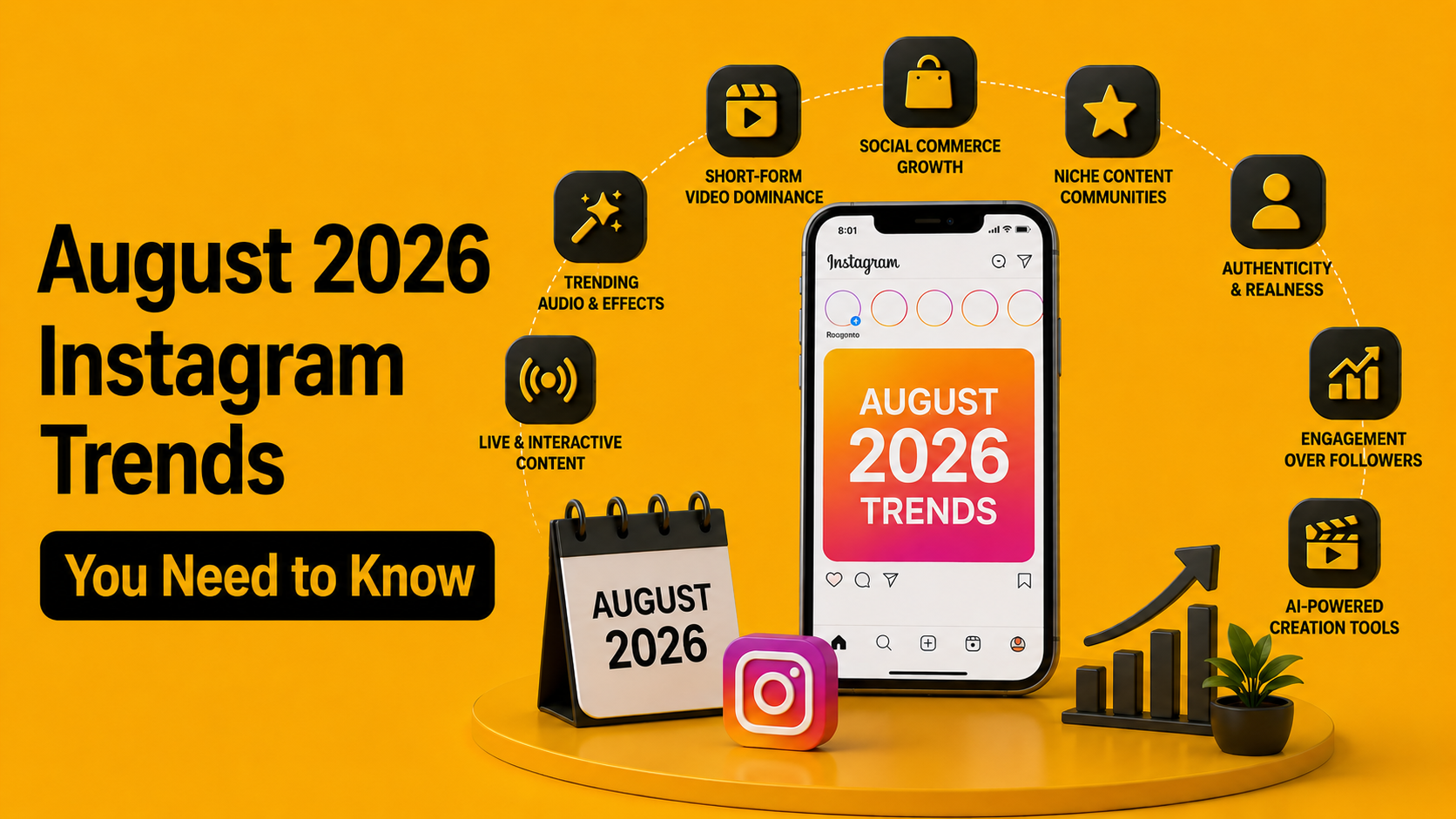
  • August 2026 Instagram Trends You Need to Know

    August 2026 Instagram Trends You Need to Know

    Instagram trends move fast. One week, everyone is posting the same audio. The next, that audio is so overused that seeing it on a brand account feels like watching someone arrive at a party three hours late.

    For marketers, the problem isn’t finding trends. It’s figuring out which ones are actually worth using.

    August 2026 has made one thing pretty clear. Instagram is leaning harder into short-form video, original content, relatable storytelling, and formats people want to share, not just content that looks polished. Reels remain a major part of how people discover content, while carousels, original audio, memes, and low-production videos are finding plenty of room in the feed.

    And the numbers back up just how big the opportunity is. Instagram has more than 2 billion monthly active users, while Meta says Instagram now has 3 billion monthly active users across the platform as of September 2025. People also reshare Reels more than 4.5 billion times every day across Meta platforms.

    So, what’s actually trending on Instagram this August?

    Let’s break it down.

    August 2026 Instagram Trends: The Quick Version

    TrendWhat’s happeningBest brand use
    Low-production ReelsSimple, single-take videos are gaining tractionFounder content, BTS, quick takes
    Absurdist memesSurreal formats are spreading quicklyRelatable brand humor
    Tribute carouselsNostalgic, emotional multi-slide posts are trendingCommunity, storytelling, milestones
    “August”Seasonal nostalgia is backSummer recaps, lifestyle content
    “And for the lady…”Products are revealed for specific audiencesProduct positioning
    “My Biggest Flex”Creators are showcasing skills and capabilitiesExpertise and service promotion
    “Let me guess…”Relatable traits drive recognitionAudience-focused content
    Trending audioPopular songs continue to fuel ReelsReach and cultural relevance
    Original contentInstagram is increasing original-content recommendationsBuild unique brand IP
    First DraftInstagram is simplifying Reel editingFaster content production

    The Biggest Instagram Trends of August 2026

    1. Low-production Reels are having a very good month

    Remember when every brand Reel needed perfect lighting, cinematic transitions, professional cameras, three people behind the camera, and roughly 47 rounds of approval?

    Yeah. Instagram seems increasingly interested in something else.

    Content that feels like content.

    One of the clearest patterns emerging this month is the rise of low-production, single-take, or minimally edited Reels. Creators are using simple setups, direct-to-camera delivery, basic lip-syncs, and quick visual jokes instead of trying to make every Reel look like a commercial.

    New Engen’s August trend report highlights this shift, including a single-take truck-driver lip-sync Reel that reportedly reached 336 million views. The same report points to documentary-style and low-production formats gaining traction alongside more polished content.

    That’s important for brands because low production doesn’t necessarily mean low effort.

    The difference is intentional simplicity.

    A founder sitting at their desk and saying, “Three things I wish I knew before launching this business,” can work better than a beautifully produced 30-second video that takes ten seconds to get to the point.

    How brands can use it

    Try:

    • A founder or employee speaking directly to camera
    • A one-take product demonstration
    • A behind-the-scenes clip with text overlays
    • A quick reaction to something happening in your industry
    • A “POV” format that doesn’t require elaborate production
    • A simple workplace moment your audience will recognize

    The goal isn’t to make your content look unfinished. It’s to make it feel native to Instagram. And that’s a useful distinction.

    1. The “Netflix Documentary” trend is turning everyday drama into prestige TV

    What happens when a completely ordinary problem gets treated like it’s the subject of a six-part Netflix docuseries?

    Apparently, Instagram wants to watch.

    The “Preparing for my Netflix Documentary” trend has been making the rounds on TikTok and Instagram Reels, with creators sitting down for a mock documentary interview, fixing their hair, adjusting a microphone, or simply staring into the camera while dramatic music plays. The joke comes from the contrast: the production feels serious, but the “documentary” is about something hilariously mundane.

    The format typically uses Duomo’s “On a Mission” as the dramatic backdrop. Creators add text such as “Preparing for my Netflix documentary about surviving the worst group chat” or turn an everyday workplace headache into a supposedly career-defining scandal.

    And brands have plenty of room to play with it.

    How brands can use it

    The trick is specificity.

    Don’t make a Reel that says “Preparing for my Netflix documentary about running a business.” That’s too broad. Try “Preparing for my Netflix documentary about the client who said ‘just one tiny revision.’”

    Or “Preparing for my Netflix documentary about the espresso machine that survived our first year.” Or “Preparing for my Netflix documentary about how our founder turned a kitchen experiment into a six-figure business.”

    The last one shows why this trend can work particularly well for brands: it can turn a real brand story into entertainment without making it feel like a case study.

    You can also use archival footage, old product photos, behind-the-scenes clips, founder footage, or even a dramatic close-up of the product after the opening shot. The trend has already been identified as a format brands can adapt, particularly for founder stories, product origins, and niche inside jokes.

    And there’s another reason I’d keep this trend in our August roundup: it’s a cross-platform format. New Engen specifically notes that the Netflix Documentary chair-sit format crossed over from TikTok and was independently gaining traction on Instagram.

    1. Nostalgia is driving the carousel comeback

    Instagram may be a video-heavy platform, but August has also been a surprisingly strong month for carousel storytelling.

    One major example is the rise of nostalgic tribute carousels using Olivia Rodrigo’s “u + me = <3” and “Stupid Song.”

    New Engen identifies both tracks as drivers of a broader tribute-carousel trend, while other August trend reports point to nostalgic photo dumps and emotionally driven carousel content gaining traction.

    The format is simple:

    A series of photos, screenshots, memories, or moments builds an emotional story across multiple slides.

    There’s no complicated production. No talking head. No elaborate hook. Just a reason to keep swiping. And that’s exactly why brands shouldn’t write carousels off as “old Instagram.”

    And the numbers suggest carousels aren’t simply hanging around; they’re becoming more useful for certain types of engagement. Metricool’s 2026 Instagram study found that brands published 24% more carousels this year, while carousels generated 9× more saves than single-image posts.

    The brand opportunity

    Nostalgia can work particularly well for:

    • Hospitality brands
    • Fashion
    • Food and beverage
    • Entertainment
    • Education
    • Local businesses
    • Consumer brands
    • Community-based organizations

    A restaurant, for example, could create:

    “10 moments from our first year that we’ll never forget.”

    A fashion brand could do:

    “The looks that defined our summer.”

    A SaaS company could even get in on it:

    “Things we used to think were normal before we automated them.”

    The key is that the carousel needs a story, not just a collection of images.

    That’s also why format choice matters. Socialinsider’s 2026 analysis found that carousels are particularly effective at driving saves, while Reels are stronger at generating shares. So the question isn’t whether Reels or carousels are “better.” It’s what action you want the content to drive.

    1. “August” is back because the internet apparently has seasons now

    Some trends are predictable.

    Taylor Swift’s “august” returning to Instagram every August is one of them.

    Buffer included the track among its leading Instagram sounds for August 2026, noting that creators are using it for summer recaps, “life lately” content, sunsets, and end-of-season moments.

    This is a good example of a seasonal recurring trend.

    Not every trend needs to be brand new. Some trends return because they are culturally associated with a specific moment. That’s useful because it gives marketers something most trends don’t:

    Predictability.

    How brands can use recurring trends

    Think beyond the obvious.

    Instead of posting “August recap,” A brand could turn the seasonal audio into “The August moments that made us stop scrolling.”

    Or: “August at [Brand Name]: 12 seconds of summer.” Or, for a service business: “What our team was up to this August.”

    The lesson isn’t “use Taylor Swift.”

    It’s to watch for recurring cultural moments that your audience already recognizes.

    1. “And for the lady…” turns product positioning into entertainment

    Another notable August format is the “And for the lady…” trend, driven by Noah Kahan’s End of August.

    Buffer identifies it as a format where creators reveal the perfect product, place, or experience for a specific type of person.

    This one is particularly interesting for marketers because it’s basically product positioning disguised as a trend.

    Instead of saying, “Our product is perfect for busy professionals.” You can show the person first and reveal the product second. That small change makes the content feel less like an advertisement.

    Example

    A coffee shop:

    “And for the lady who has three meetings before 10 a.m…”

    Cut to:

    Your largest iced coffee.

    A hotel:

    “And for the lady who said she needs a vacation but refuses to take PTO…”

    Cut to:

    Your weekend getaway package.

    A fitness brand:

    “And for the lady who wants to work out but hates working out…”

    Cut to:

    A beginner-friendly class.

    It’s a classic marketing principle wrapped in a social-native format:

    Show people that you understand them before you try to sell to them.

    1. “My Biggest Flex” is turning expertise into content

    Shakira’s “She Wolf” is another August trend worth watching.

    Creators are using the audio with the “My biggest flex” format to highlight their skills, capabilities, or different roles. Buffer lists it among August’s trending Instagram sounds.

    • For creators, it’s a fun personality trend.
    • For businesses, it can become a positioning tool.

    Instead of bragging about your company in a traditional case-study format, you can show the things your team does exceptionally well.

    For example:

    “My biggest flex is that you can hire me as your…”

    • Strategist
    • Copywriter
    • Creative director
    • Paid media nerd
    • Analytics person
    • Last-minute problem solver

    A B2B brand could even use it to show capabilities customers may not know it offers.

    Why this format matters

    People don’t always understand the full scope of a business. They see the product. They don’t necessarily see the expertise behind it.

    Trend formats like this give brands a reason to show their range without turning the Reel into a corporate brochure.

    1. “Let me guess…” content is built for relatability

    Later’s August roundup highlights another format based on “Let me guess…”, where creators identify someone’s interests, habits, or personality traits using visual clues and screenshots.

    This format taps into something social media has always been very good at: making people feel seen.

    The viewer watches and thinks, “Wait. That’s literally me.” That’s powerful because relatable content has a natural reason to be shared.

    For brands, try this:

    A coffee brand: “Let me guess. You said you’d only have one coffee today.”

    A marketing agency: “Let me guess. You have 17 tabs open and still can’t find the campaign report.”

    A gym: “Let me guess. You bought the workout clothes before deciding to actually work out.”

    The product isn’t necessarily the joke. The audience is. And that’s usually a better place to start.

    1. Trending audio is still important, but don’t build your entire strategy around it

    Let’s settle this once and for all:

    Trending audio still matters. But blindly attaching a popular sound to a Reel doesn’t make the Reel good.

    Buffer’s August roundup lists tracks ranging from Taylor Swift’s august and Noah Kahan’s End of August to Shakira’s She Wolf, Steve Lacy’s oh yeah?, Bad Bunny’s EoO, and several original sounds.

    SocialPilot’s August roundup similarly highlights August, End of August, She Wolf, oh yeah?, EoO, and other sounds as part of the month’s trend cycle.

    But there’s an important catch for brands. Not every trending sound is commercially usable.

    Later specifically warns that even some sounds labeled “original audio” aren’t technically royalty-free, and recommends that brands running sponsored content or paid ads use Meta’s commercially licensed music options when appropriate.

    So before your social team says, “This audio is trending! Post it!”

    Ask:

    • Is it appropriate for our audience?
    • Does the trend fit our brand?
    • Is the audio available for our account type?
    • Can we use it commercially?
    • Does the trend actually improve the idea?

    If the answer to number five is no, skip it.

    1. Original content is becoming more important

    Here’s one of the biggest strategic takeaways from August that has nothing to do with a specific meme.

    Originality matters.

    Meta said in January 2026 that it had increased the prevalence of original content in Instagram recommendations in the U.S. by 10 percentage points in Q4 2025, with 75% of recommendations coming from original posts at that time.

    Add Visual Chart: 75% of Instagram recommendations were coming from original posts.

    That’s a significant signal for brands.

    The social strategy of:

    Find a viral post → download → add your logo → repost

    isn’t exactly a long-term growth strategy. And while reacting to trends is still valuable, brands need to add something of their own.

    That could be:

    • A unique opinion
    • Original footage
    • A company-specific joke
    • An employee’s perspective
    • A customer story
    • Proprietary data
    • A new interpretation of an existing trend

    Think of trends as templates, not finished products. The trend gets you into the conversation. Your perspective is what gives people a reason to remember you.

    1. Instagram is making Reels easier to create

    Instagram also made an interesting product move this month.

    On August 25, Instagram introduced First Draft, a Reels feature that automatically trims selected clips into a rough-cut Reel, removing pauses and pulling together useful sections. The tool is designed to create a starting point that users can continue editing before publishing.

    Instagram’s First Draft feature is designed to turn raw clips into a rough-cut Reel, helping creators get from footage to an editable first version faster.

    And there’s a useful takeaway here:

    Instagram is lowering the production barrier. That matters because the platform isn’t asking every creator to become a professional editor.

    It’s making it easier to go from “I have footage.” to “I have something I can actually post.”

    For businesses, that’s an opportunity to create more content from material they’re already capturing.

    A sales team can record customer-event footage. A founder can record a few talking-head clips. A restaurant can capture behind-the-scenes footage throughout the week. A creative team can collect raw product footage.

    Then the editing process becomes less of a bottleneck. The bigger trend isn’t First Draft itself. It’s content velocity. And that race is already visible in publishing behavior. Metricool’s 2026 study found that the volume of Reels published increased by 35%, alongside a 24% increase in carousel publishing.

    The easier it becomes to create and edit video, the less defensible highly polished production becomes.

    Your competitive advantage shifts toward:

    ideas + speed + relevance + originality.

    1. Cross-platform trends are arriving on Instagram faster

    Another pattern worth watching is how quickly trends move between platforms.

    Later’s August roundup includes formats that have crossed over from TikTok, while New Engen specifically calls out the migration of formats such as the “Netflix Documentary” chair-sit concept onto Instagram.

    This means social teams can’t really afford to monitor Instagram in isolation anymore.

    A trend may start on TikTok. A creator may remix it on Instagram. A brand may adapt it for LinkedIn. Then the format becomes part of broader internet culture.

    But here’s where businesses can get ahead:

    Don’t wait until the trend is everywhere on Instagram.

    Watch for formats that are beginning to show up across platforms, then figure out whether there’s a brand-relevant version before the format becomes completely saturated.

    The sweet spot is recognizable but not exhausted.

    What these August Instagram trends actually tell us

    If you look at all these trends individually, they can seem random.

    A Taylor Swift song.

    A bizarre Bangladesh joke.

    A sentimental carousel.

    A single-take truck-driver Reel.

    A product reveal.

    A “My Biggest Flex” video.

    A new editing feature.

    But together, they tell a much more interesting story. Instagram is becoming less about polished content and more about recognizable ideas. People don’t necessarily need another beautifully shot video. 

    They need something they can understand quickly. Something that makes them laugh. Something that makes them feel seen. Something that gives them a reason to send it to a friend. Something that makes them stop because the first two seconds feel familiar.

    And, increasingly, something original.

    Meta’s own recommendation data supports the direction: the company reported that 75% of Instagram recommendations in the U.S. were coming from original posts after a 10-percentage-point increase in original-content prevalence during Q4 2025.

    That’s a useful shift for brands that have been treating Instagram like a digital billboard. It isn’t. It’s a recommendation engine. And recommendation engines need content people actually want to consume.

    What should brands do with Instagram trends in August 2026?

    The worst possible response to a trend report is:

    “Okay, let’s recreate all of these.” Please don’t. Instead, use a simple filter.

    1. Does the trend fit your audience?

    A viral meme isn’t automatically relevant to your customers. If your audience won’t get it, skip it.

    1. Can you add a brand-specific angle?

    If the only thing your account adds is your logo, you haven’t really adapted the trend. 

    You’ve copied it.

    1. Can you make it quickly?

    Trends have expiration dates.

    If it takes three weeks to get a Reel approved, you’re probably not trend-jumping. You’re trend-archiving.

    1. Is there a business objective?

    Not every Reel needs to sell. But it should do something. Something that builds awareness, shows personality, educates, creates engagement, drives profile visits, starts a conversation, and strengthens brand recall.

    1. Can the idea work without the trend?

    This is the big one. If the trend disappears tomorrow, would the content still make sense?

    If yes, you’ve probably created something useful. If no, you’ve created a disposable post. And sometimes that’s fine. Just know the difference. The Instagram trend to watch isn’t a sound

    If there’s one takeaway from August 2026, it’s this:

    Stop treating Instagram trends as a list of sounds. The bigger trends are behavioral.

    People want content that feels:

    • Original
    • Relatable
    • Fast
    • Easy to understand
    • Emotionally recognizable
    • Native to the platform
    • Worth sharing

    The audio is often just the wrapper. The real trend is the format underneath it.

    That’s why a brand shouldn’t ask “What song is trending?” The better question is “What kind of content are people repeatedly choosing to watch, share, save, and recreate?”

    That’s where the useful insight is.

    Final take: Don’t chase every Instagram trend. Find your version of it.

    August 2026 isn’t showing us that brands need to post more. It’s showing us that brands need to participate better.

    Use the “And for the lady…” format to sharpen your positioning.

    Use “My Biggest Flex” to show expertise.

    Use nostalgia-driven carousels to tell stories.

    Use absurdist memes when your brand voice can actually carry the joke.

    Use low-production Reels when a phone camera gets the job done.

    Use trending audio when it genuinely improves the idea, and when you have the rights to use it.

    And keep an eye on Instagram’s own product changes, because tools like First Draft are making video creation faster and easier.

    Most importantly, don’t confuse being early with being relevant.

    A trend is useful when it gives your brand a better way to communicate something your audience already cares about. Otherwise, it’s just another sound in your saved folder. And let’s be honest, you have enough of those.

  • FIFA 2026: Marketing Strategies That Changed the Game

    FIFA 2026: Marketing Strategies That Changed the Game

    As a business owner, if you think FIFA 2026 is just another World Cup, you’re looking at it from the wrong angle.

    For football fans, it’s the biggest sporting event on the planet. For marketers, it’s one of the greatest marketing case studies ever created.

    And here’s the interesting part.

    Most businesses assume that these opportunities are meant for only official sponsors such as Adidas, Coca-Cola, Visa, or Hyundai.

    The event may belong to FIFA, but the attention belongs to anyone capable of earning it. That’s why FIFA 2026 matters far beyond football.

    It’s becoming a live laboratory for digital marketing, creator collaborations, AI-driven personalization, real-time interaction, community-building, and immersive fan experiences. Each campaign from the tournament revealed how modern consumers discover brands, consume content, and make purchasing decisions.

    This guide will take a look at the marketing tactics behind this unique tournament, and most importantly, how any organization could adopt them to draw its audience.

    Understanding FIFA 2026: What Makes This Tournament Different?

    Every World Cup makes history. In Brazil 2014, the legacy was celebrating the culture of football; in Russia 2018, the tournament was expanding its geographical footprint, while in Qatar 2022, the World Cup changed the game in terms of experience for fans thanks to innovations.

    FIFA 2026 is different. The tournament is created by scale. Having 48 teams, 104 matches, 16 hosting cities, and three hosting countries, including Canada, Mexico, and the United States, FIFA 2026 became the largest FIFA World Cup in history.

    For marketers, such characteristics mean not only additional matches but also more dialogues, viral stories, creators’ content, and more chances to reach an audience.

    For the first time in history, the World Cup is held simultaneously in three countries, each providing their own market and audience. The USA boasts a huge media and advertising infrastructure, Mexico represents one of the most passionate football communities, and Canada, a rapidly growing one.

    This way, brands do not need to target just one country but are able to address different markets using the same global approach.

    The Audience Is No Longer Sitting in Front of a Television

    One of the biggest mistakes businesses make is imagining World Cup audiences the way they existed twenty years ago. Nowadays, World Cup fans engage with it on various screens simultaneously.

    While watching the game, they post memes, share reactions on X, browse Instagram, follow influencers on TikTok, track their fantasy football applications, and talk to friends. Indeed, 77% of sports fans use their second screens while viewing live sports.

    Every goal becomes not only a highlight but also the source for reaction videos, memes, podcasts, livestreaming, news articles, and user-generated content, which can keep audiences interested long after the final whistle blows.

    That’s why successful marketers today do not simply promote their products during the World Cup; they join the conversation.

    Football Has Become a Creator Economy

    Football used to belong to broadcasters. Today, creators shape how millions of fans experience the game. Some supporters never watch post-match television analysis.

    Instead, they look at YouTube breakdowns, TikTok reactions, Twitch watch-alongs, Instagram reels, or football podcasts.

    Creators aren’t competing with broadcasters anymore. They’re extending the conversation. That’s incredibly valuable for marketers.

    Instead of buying expensive television spots, brands can collaborate with niche creators whose audiences trust their opinions. The result often feels more authentic, and frequently delivers stronger engagement.

    So, FIFA understands this shift. The tournament isn’t simply broadcast anymore. It’s remixed, reacted to, discussed, clipped, and shared across thousands of independent communities.

    Behind all these creator-driven conversations lies something even more valuable than content: attention.

    Attention Is the Real Currency

    The World Cup isn’t valuable because football is popular. It’s valuable because attention has become scarce.

    Consumers scroll through thousands of marketing messages every day. Most disappear instantly. But when the World Cup begins, people willingly stop to watch. That level of voluntary attention is incredibly rare.

    Brands aren’t paying millions for logos inside stadiums. They’re paying to become part of conversations that people genuinely care about. That’s a completely different type of marketing.

    Instead of interrupting attention, they join it.

    Business Takeaway

    The biggest lesson from FIFA 2026 isn’t “go bigger.” It’s build bigger moments. Consumers don’t remember advertisements. They remember experiences.

    Businesses should stop asking, “How can we advertise more?” and start asking, “How can we create moments people actually want to talk about?” and that’s exactly what FIFA has mastered.

    Why FIFA Has Become One of the World’s Greatest Marketing Machines

    The FIFA World Cup doesn’t become the world’s biggest sporting event every four years by accident.

    Behind every sold-out stadium, viral celebration, and iconic campaign is one of the most sophisticated marketing ecosystems ever built.

    FIFA doesn’t market football. It markets anticipation.

    Long before the opening match, millions of fans are already emotionally invested. Qualification campaigns dominate headlines. Fixture announcements trend across social media. Jersey launches become fashion events. Host cities reveal countdown clocks. Sponsors release teaser campaigns months in advance.

    By the time the first whistle blows, the tournament already feels like a global celebration. This isn’t coincidence. It’s deliberate.

    FIFA Sells Emotion Before It Sells Football

    Most brands market products. FIFA markets feelings. Think about the advertisements you remember from past World Cups. Very few focus on tactics or statistics.

    Instead, they celebrate childhood dreams, national pride, family traditions, underdog stories, unity, hope, and resilience. The football simply becomes the stage where those emotions unfold.

    This approach works because people rarely buy based on information alone. They buy based on emotion and justify it with logic afterward. FIFA understands that better than almost any organization. 

    When billions of viewers watch a player celebrate a last-minute goal, they’re not just witnessing sport. They feel relief, happiness, amazement, sadness, and pride all at once.

    These emotional highs leave behind impressions with which advertisers will be able to relate, unlike any normal advertisement ever would.

    Scarcity Creates Demand

    Another reason FIFA’s marketing is so successful is that it incorporates the concept of scarcity into its strategies.

    In contrast to normal weekly sports events, the FIFA World Cup takes place only once every four years. The difference between the two generates anticipation. Scarcity increases perceived value. 

    The same principle applies to business. Brands that are constantly shouting often become background noise. Brands that know when to create anticipation often command far greater attention.

    Apple product launches, limited-edition sneaker drops, and invitation-only experiences all use this psychological principle.

    FIFA has been using it for decades.

    Community Is Stronger Than Advertising

    The World Cup isn’t consumed individually. It’s experienced collectively. Friends gather for watch parties, families wear team jerseys, and entire cities celebrate victories together.

    Even strangers become connected by a shared moment. This sense of belonging is incredibly difficult for businesses to manufacture, but it’s one of the strongest drivers of customer loyalty.

    The brands that succeed during FIFA don’t simply advertise to fans. They help fans celebrate together. That’s the difference between an audience and a community. And communities market themselves.

    Business Takeaway

    FIFA’s greatest competitive advantage isn’t football; it’s psychology.

    It creates anticipation before the event, emotion during the event, and memories that last long after the final whistle.

    Businesses that aim to achieve more effective marketing strategies must consider going beyond their product or promotional efforts. Campaigns should be designed to provide shared experiences, invite people to participate in them, and give them something worth discussing. 

    Attention can bring them customers, while emotion keeps them engaged. 

    That emotional connection didn’t happen by chance. It was powered by a digital marketing ecosystem designed to keep fans engaged before, during, and after every match.

    Digital Marketing Strategies Behind FIFA 2026

    The biggest myth about FIFA’s marketing is that it is based on billion-dollar sponsorships. Indeed, finances play an important role; however, they are not enough any longer.

    Today’s marketing works via attention, relevance, and participation. One creator can get more attention from people than one commercial shown on TV. The reaction of a fan can be more valuable than a professional advertisement. A smart message posted on social media can get millions of views in minutes.

    FIFA knows that the World Cup is no longer just a game people watch.

    Let’s examine the strategies that made FIFA 2026 one of the strongest marketing case studies in modern sports.

    1. Social-First Marketing: Winning Where Conversations Happen

    The World Cup is no longer seen; it is experienced, discussed, and shared in real time.

    Fans have flooded X, Instagram, TikTok, Reddit, and YouTube immediately following a goal being scored. While the match lasts 90 minutes, the discussion continues long after the final whistle blows.

    FIFA has realized this change and has been adapting accordingly, making its approach more and more real-time and social-first. During the 2022 FIFA World Cup, FIFA produced 3.6 billion video views, 811 million engagements, and 15 billion impressions on its social media channels, demonstrating that the way people consume the beautiful game has changed from traditional TV broadcasts to social media and bite-sized content.

    Leading brands followed the same approach. Throughout FIFA 2026, Adidas made sure to keep fans entertained with live streams of players arriving, training, going through the tunnel, partying in the locker room, and behind-the-scenes content. Instead of advertising its shoes, the company showed fans what goes on behind the lives of their favorite players, making social media an extension of the game-day experience.

    In contrast to Adidas, Coca-Cola chose to celebrate its campaign “Believing Is Magic,” where they highlighted friendship, collective wins, and unique fan experiences, not its products. Visa further enhanced the fan experience via contactless payment in the stadiums, fan engagement activities, and women’s football. The best FIFA 2026 campaigns became part of the tournament rather than interrupting it.

    Business Takeaway

    Do not use your social media pages as platforms for announcements. Consider them as a real-life conversation. Those brands that respond quickly, entertain the audience, and join trending discussions receive the most recognition.

    1. Short-Form Video Dominance: The New Highlight Reel

    FIFA 2026 is not just watched for full games, but rather seen through many short-form videos.

    Since there are 104 matches, each minute of action has a chance to become the talk of the day, and fans do not need to wait for highlights, as they can learn about what is happening on the football field using TikTok, Instagram Reels, YouTube Shorts, and even through creators’ posts.

    FIFA 2026 demonstrated how one sporting event could generate thousands of short-form videos from a single moment, giving brands a blueprint for content marketing.

    The scale of this shift was evident throughout FIFA 2026. YouTube has stated that Shorts are now receiving more than 200 billion views on a daily basis, which shows why more and more brands have been focusing on vertical videos in the competition. Nike followed suit and made sure that they released clips and other footage designed specifically for platforms like TikTok, Instagram Reels, and YouTube Shorts.

    Why This Matters

    Short-form videos suit the way audiences consume content nowadays: fast, mobile-first, and highly shareable. One moment in the game can turn into hundreds of videos posted by creators and brands, becoming viral within a couple of hours.

    Business Takeaway

    The tournament demonstrated the value of building a content engine instead of relying on a single campaign. Create videos out of every trending moment and become part of the discussion.

    1. The Creator Economy Is Changing Sports Marketing

    FIFA 2026 proved that football is no longer determined by what broadcasters do. The creators have played an important part in delivering content to fans in the form of match reactions, tactical analysis, podcasts, streams, and short-form content.

    The change has been evident even in FIFA’s approach. Having seen how effective CazéTV was in the context of Qatar 2022, FIFA extended its partnership with the platform and gave it the right to broadcast all 104 FIFA World Cup 2026 matches in Brazil, taking into account the rising influence of communities created by creators among younger fans.

    The industry’s rapid growth reflects this shift. According to Goldman Sachs, the creator economy is currently valued at more than $250 billion and is expected to surpass $480 billion in value by 2027, making creator partnerships significant in digital marketing.

    For brands, the key advantage of creators was the authenticity of their promotion. Unlike traditional campaigns where only celebrities were used to promote products, companies started working together with creators who have gained trust in certain football niches. In fact, 69% of people trust influencers’ recommendations rather than information provided by brands.

    Key Marketing Lesson

    FIFA 2026 once again proved that it is not only the number of followers that defines the influence of a person or a community. The most effective campaigns involved those creators who have earned the trust of their audience.

    1. User-Generated Content: Turning Fans into Marketers

    One of the biggest marketing wins of FIFA 2026 wasn’t created by FIFA. It was created by the fans. 

    The fans flooded social media feeds with footage from stadiums, selfies at matches, celebrations, watch parties, and travels. In effect, the tournament was a global stream of user-generated content. Each post meant growth for FIFA without the use of classic advertisements.

    The scope of involvement was highlighted through statistics. During the tournament, FIFA received 30 billion social media impressions, 1.7 billion interactions, and attracted 187 million unique visitors to FIFA.com, all of which happened thanks to the fan involvement and viral content.

    FIFA promoted participation through initiatives like #WeAre26, where supporters could showcase their experiences watching the game, celebrations, trips, and other fan rituals on various social platforms. The best responses would be posted on FIFA’s official page, making fans the ones creating digital content for the competition.

    This strategy works effectively because people tend to perceive authentic experiences as more credible. According to Stackla’s Consumer Content Report, consumers are 2.4 times more likely to believe user-generated content is authentic compared to branded content.

    Key Marketing Lesson

    FIFA 2026 demonstrated once again that the best marketing sometimes happens within the community itself. When people want to share their experience, they turn into brand ambassadors.

    Viewed individually, each strategy is powerful. Together, they explain why FIFA’s marketing ecosystem performs at such a massive scale.

    Key Lessons from FIFA’s Digital Playbook

    Across every strategy we’ve explored, one pattern becomes clear. FIFA isn’t trying to control the narrative. FIFA is giving conditions in which conversation can occur. It’s a small distinction.

    Social media lets the game go beyond the stadium. Video lets fans relive moments after the match ends. Content creators make global stories personal. Fan content multiplies the message.

    All these strategies make an ecosystem of marketing that doesn’t just depend on advertisements. It depends on participation.

    And this is possibly the most important lesson for any business to learn from FIFA 2026.

    The brand that succeeds in the coming decade won’t be the one shouting the loudest. They will be the brands with something meaningful to say.

    Community, Real-Time & Emotional Marketing: The Final Pieces of FIFA’s Marketing Playbook

    All the marketing strategies we have discussed until now have one thing in common.

    • They are dependent upon people.
    • They aren’t dependent on algorithms.
    • They aren’t dependent upon marketing budgets.
    • They aren’t dependent on celebrities either.
    • They are dependent on people.

    But capturing their attention is just the first step.

    Holding it and engaging them further is the difficult part. That’s where FIFA’s next three marketing strategies make all the difference.

    1. Community Marketing: Building a Movement, Not Just an Audience

    The FIFA World Cup has billions of viewers all over the world. But the real essence of the tournament does not lie in its popularity but in its communities.

    Enter any café while the World Cup is on, and you will see people cheering despite being strangers. Go to a sports bar, and even rival teams engage in tactical discussions like old friends.

    Open social media, and you will find thousands of fan communities engaged in debates about team formations, making predictions, creating memes, and celebrating wins.

    FIFA didn’t create all these communities. Football did. FIFA simply nurtures them. That’s an important distinction. The best brands don’t build communities from scratch. They create environments where communities can thrive.

    Official sponsors strengthened these communities by creating experiences beyond the stadium. Budweiser established fan parks and large-scale public viewings, allowing fans to celebrate among each other. Sponsorship initiatives ensured the participation of fans in engaging with the event. Rather than just branding their companies, they provided an environment where football communities could flourish.

    Community Is Marketing That Doesn’t Feel Like Marketing

    Traditional marketing asks customers to pay attention. Community marketing gives them a reason to stay. Instead of speaking to people, it encourages people to speak with each other.

    During FIFA tournaments, communities form around:

    • National teams
    • Local clubs
    • Fantasy football leagues
    • Creator fan bases
    • Watch parties
    • Football podcasts
    • Online forums
    • Discord servers
    • WhatsApp groups
    • Reddit communities

    Each one generates conversations that continue long after the final whistle. That’s free attention. And more importantly, it’s sustained attention.

    Why Communities Matter More Than Followers

    Many businesses obsess over follower counts. FIFA focuses on participation. There’s a huge difference. A page with ten million followers may receive little engagement.

    A community of ten thousand passionate fans can influence purchasing decisions every single day.

    Communities create:

    • Trust
    • Loyalty
    • Word-of-mouth referrals
    • Repeat engagement
    • User-generated content
    • Customer advocacy

    Those are outcomes advertising alone can’t buy.

    Business Takeaway

    Don’t ask, “How do we grow our followers?” Ask, “How do we bring customers together?”

    That could mean:

    • Exclusive customer groups
    • Events
    • Challenges
    • Loyalty communities
    • Facebook Groups
    • Discord servers
    • Networking meetups

    People rarely stay loyal to products. They stay loyal to communities.

    1. Real-Time Marketing: Winning the Moment

    The World Cup is unpredictable. That’s exactly why it’s a marketer’s dream. A last-minute goal. A shocking upset. An emotional celebration. A referee’s controversial decision.

    These aren’t just sporting moments. They’re marketing opportunities.

    Brands that respond quickly often receive enormous engagement, not because they spent more money, but because they joined the conversation while people were already paying attention.

    This is known as real-time marketing.

    The Internet Rewards Speed

    Imagine two brands. The first posts about a spectacular goal five minutes after it happens. The second publishes a beautifully designed campaign the next morning.

    Which one gets shared? Usually the first.

    Because relevance has an expiration date. The internet moves quickly. People want reactions while emotions are still fresh. That’s why many global brands now operate real-time content teams during major sporting events.

    Designers, copywriters, video editors, community managers, and data analysts all work together to create content within minutes.

    Oreo’s Famous Lesson Still Applies

    Although it wasn’t during the FIFA World Cup, Oreo’s iconic “You can still dunk in the dark” tweet during the 2013 Super Bowl remains one of the greatest examples of real-time marketing.

    The lesson wasn’t about cookies. It was about preparation. The brands that appear spontaneous are usually the most prepared. 

    FIFA sponsors operate the same way. They don’t wait for the tournament to begin before planning content. They prepare hundreds of creative scenarios in advance.

    Different versions, outcomes, players, and celebrations. When something happens, they publish immediately.

    Business Takeaway

    You don’t need a global event; you need awareness.

    Respond to:

    • Industry news
    • Customer achievements
    • Local events
    • Trending conversations
    • Cultural moments

    The faster your brand becomes part of relevant discussions, the more visible it becomes. Speed creates relevance and relevance creates attention.

    1. Emotional Storytelling: The Strategy Behind Every Memorable Campaign

    If someone asked you to remember your favorite World Cup advertisement, chances are you wouldn’t remember the product.

    You’d remember the feeling. That’s intentional. FIFA doesn’t sell football. Its partners don’t sell products; they sell emotions connected to football.

    Think about the themes dominating World Cup campaigns: a child dreaming of representing their country, a father watching football with his daughter, friends celebrating together, an underdog nation’s historic victory, or a player overcoming adversity.

    Very few advertisements focus on features, but almost all focus on feelings. Because emotions travel further than information.

    Emotion Makes Brands Memorable

    Psychologists have long shown that emotional experiences are remembered more vividly than purely factual ones. Marketing works the same way.

    Customers might forget:

    • Your discount.
    • Your product specifications.
    • Your slogan.

    But they’ll remember how your brand made them feel. That’s why Coca-Cola consistently focuses on togetherness, and that’s why Adidas celebrates ambition, and that’s why Visa highlights unforgettable experiences, because football simply becomes the emotional backdrop.

    This is why the largest partners of FIFA always started off with emotions before moving to the product. Adidas used its “You Got This” campaign to build self-confidence and perseverance, Nike used the Footballverse campaign to celebrate the culture of football, and Coca-Cola used emotions of being together and celebration in its campaign. In all these cases, football was the emotional background, and the product was an integral part of the story.

    Research by the Institute of Practitioners in Advertising (IPA) clearly shows that emotionally led campaigns perform better than rationally led campaigns in building brand effectiveness, making emotional storytelling one of the strongest drivers of lasting consumer loyalty.

    The Power of Shared Human Stories

    One reason FIFA resonates across cultures is that its stories are universal. Hope, failure, resilience, belonging, triumph, and heartbreak. These emotions don’t require translation.

    That’s why a fan in Argentina can celebrate alongside someone in Japan. Or someone in Nigeria can empathize with a player from Croatia.

    Great marketing works the same way. The story changes, but the emotions remain universal.

    Business Takeaway

    Before creating your next campaign, ask, “What emotion do we want people to remember?”

    Not, “What message do we want to deliver?”

    Emotion creates memory and memory creates loyalty.

    8. AI Turned Every Fan Experience into a Personal One

    AI-powered translations

    FIFA used AI to make content accessible in multiple languages, helping fans across different regions engage with the tournament more naturally.

    Personalized content

    Fans didn’t all receive the same content. Instead, platforms recommended:

    • Highlights
    • Goals
    • Favorite teams
    • Player content
    • Match recaps

    based on viewing behavior.

    AI-generated highlights

    Instead of watching an entire match, fans could instantly access

    • Goals
    • Saves
    • Key moments

    generated automatically.

    Chatbots

    Fans could instantly find

    • Fixtures
    • Tickets
    • Stadium information
    • Schedules

    without waiting for support.

    Business lesson

    The takeaway isn’t “Use AI.” It’s “Use AI to remove friction and deliver more relevant experiences.”

    Marketing Lessons Every Business Should Steal from FIFA 2026

    You don’t need FIFA’s budget to apply FIFA’s thinking. In fact, many of its most effective strategies have very little to do with money.

    FIFA 2026 highlighted ten marketing principles that businesses of any size can adopt.

    • Sell an experience, not a product – People purchase results and feelings before features.
    • Build anticipation – Campaigns become more exciting when people are looking forward to them.
    • Participate in conversations – Don’t always aim at initiating them.
    • Think mobile first – People discover brands through their phones.
    • Create moments worth sharing – Marketing becomes less expensive when customers share your story.
    • Invest in communities – Communities live longer than campaigns.
    • Collaborate with trusted creators – Credibility is more important than fame.
    • React quickly – Sometimes timing is more important than perfection.
    • Stay consistent – FIFA doesn’t change its identity every four years. It changes while staying the same. Brands should be the same.

    Final Thoughts: FIFA Is Teaching Businesses More Than Marketing

    FIFA 2026 wasn’t only one of the world’s largest sporting events. It was also one of the most significant case studies for marketers in the entire year.

    The event wasn’t only successful due to sponsorship. What really made it a great example is that it created experiences that people would want to watch, tell others about, share, and take part in.

    This is what makes a brand for any business. Brands aren’t just about promoting a product or a service; they’re about providing an experience.

    What FIFA 2026 showed us business owners is that while attention helps people get to know a brand, participation and emotions help them become loyal customers.