Author: Xavier

  • Top Most Popular Websites You Should Know in 2026

    Top Most Popular Websites You Should Know in 2026

    Some websites get visitors. Others get so many that their monthly traffic numbers look like population statistics.

    Google, YouTube, Reddit, Amazon, Facebook, and other digital giants have become part of how people search, shop, watch, communicate, and even make everyday decisions online. But what actually makes these websites so popular?

    And more importantly, what can a business learn from them?

    Let’s look at the most popular top visited websites, the numbers behind their traffic, and the digital strategies that keep people coming back.

    Key Takeaways

    • Google, YouTube, Reddit, Amazon, and other internet giants are pulling in billions of visits, but people use each one for very different reasons.
    • The websites people keep coming back to usually make life easier, whether that means finding an answer in seconds, watching something, shopping, or getting advice from other people.
    • A website can have great content and still lose visitors if it’s slow, confusing, or painful to use on a phone, so UX matters just as much as getting people through the door.
    • SEO is no longer just about chasing rankings and traffic, with AI, personalization, mobile-first experiences, and conversational search changing how people find and interact with websites.

    What Defines the Most Popular Top Visited Websites?

    There’s no single scoreboard for internet popularity.

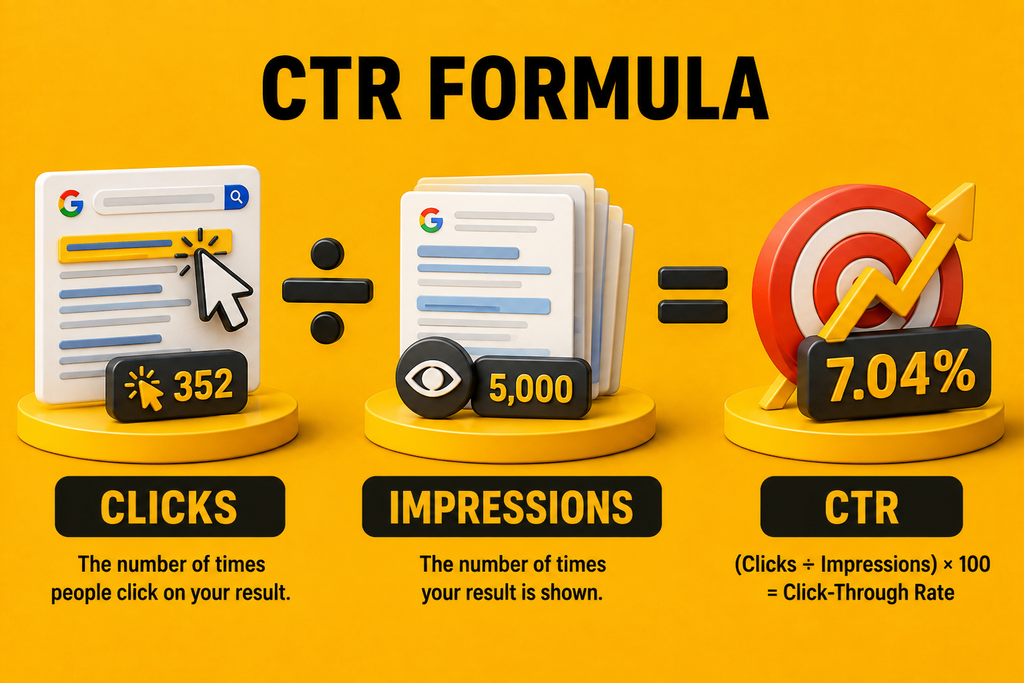
    Website traffic rankings usually consider several metrics, including monthly visits, unique visitors, traffic sources, pages per visit, engagement, session duration, and bounce rate. Looking at only one number can be misleading.

    A website might attract millions of visits but have people leave within seconds. Another might receive fewer visits but keep users browsing, clicking, comparing, and buying.

    That’s why web analytics needs context.

    According to Semrush’s U.S. Traffic Analytics data for August 2026, Google received an estimated 24.54 billion visits, while YouTube recorded 10.43 billion and Reddit reached 2.57 billion.

    And yes, those numbers are massive. But they’re estimates, not a digital headcount. Different analytics platforms use different datasets and methodologies, so traffic figures can vary between sources. The useful part is understanding the scale and the behavior behind it.

    Top Contenders: The Most Popular Websites in 2026

    Some websites get traffic. Some websites practically own their corner of the internet.

    Semrush’s August 2026 U.S. data puts Google comfortably at the top, followed by YouTube, Reddit, and Facebook.

    RankWebsiteMonthly VisitsAnnualized Visits
    1Google24.54B294.48B
    2YouTube10.43B125.16B
    3Reddit2.57B30.84B
    4Facebook2.37B28.44B
    5Amazon692.46M8.31B
    6TikTok530.34M6.36B
    7Bing496.31M5.96B
    8Walmart491.63M5.90B
    9Temu485.98M5.83B
    10Weather.com471.60M5.66B
    11LinkedIn436.60M5.24B
    12USPS396.26M4.76B

    Annualized visits are monthly estimates multiplied by 12. They are not unique annual users. Look beyond the rankings and the list gets more interesting.

    Google is where people search. YouTube captures video discovery. Amazon and Walmart capture shopping intent. Reddit brings community-driven research, while LinkedIn sits heavily in the professional and B2B space.

    So the real story isn’t simply who gets the most visits. It’s why people visit in the first place.

    Why These Websites Attract Millions Every Day

    The biggest websites have something in common. They make the thing users came to do ridiculously easy.

    Need an answer? Search Google. Want to watch something? Open YouTube. Want to compare products? Head to Amazon. Want to know whether other people have had the same problem? Reddit probably has a 47-comment thread about it already.

    That’s the secret sauce: less friction, more usefulness.

    They solve a clear problem 

    The purpose is usually obvious. Search engines help people find information. E-commerce platforms help people shop. Social networks help people connect. Streaming platforms help people find something to watch.

    Users don’t need a tutorial before using them. That’s a pretty powerful UX strategy in itself. 

    They become habits 

    The biggest websites aren’t relying on one viral campaign to bring people back. People return because the platform has become part of their routine.

    You check Google when you need something. You check social feeds when you’re bored. You open Amazon when you’re shopping. YouTube can start with “I’ll watch one video” and somehow become an hour-long documentary about something you didn’t even know existed.

    That’s repeat behavior doing the heavy lifting.

    They keep finding new reasons to be useful

    The major platforms rarely stay in one lane. Google has search, Maps, Gmail, shopping, video, cloud services, and more. 

    Amazon grew far beyond books. YouTube moved from simple video sharing into entertainment, education, product discovery, creator content, and search. More useful features mean more reasons to return.

    How Website Design and Functionality Impact Popularity

    Getting someone onto your website is one problem. Giving them a reason not to leave is another. This is where UX becomes more than a nice-looking homepage.

    Popular websites tend to make basic actions feel almost invisible. Navigation makes sense. Search works. Pages load quickly. Buttons are where users expect them to be. Content doesn’t require detective work.

    And then there’s mobile.

    According to Semrush’s August 2026 data, mobile made up approximately 68.55% of YouTube’s U.S. web traffic and 57.96% of Amazon’s.

    So if your website looks fantastic on a 27-inch monitor but becomes a tiny, slow, impossible-to-navigate mess on a phone, there’s a problem. Your customer isn’t grading your desktop design. They’re trying to complete a task. Usually while holding their phone in one hand.

    The Role of SEO and Digital Marketing in Driving Website Traffic

    Here’s the awkward part.

    Most businesses aren’t Google. People aren’t waking up every morning thinking, “You know what? I should visit this random company’s website today.” They need a reason to find you. That’s where SEO, content marketing, digital advertising, backlinks, and organic search come in.

    SEO helps your website appear when people are actively looking for something relevant to your business. Content gives those searches useful answers. Backlinks can build authority. Paid advertising can put your offer in front of the right audience faster.

    But none of this should become a race for traffic numbers alone. The goal isn’t “Get more visitors.” It’s “Get more relevant visitors.”

    A thousand people who actually need your product can be worth far more than a million people who clicked by accident. That’s the difference between traffic and useful traffic.

    Emerging Trends Affecting the Popularity of Top Websites

    The websites at the top today won’t necessarily win attention in exactly the same way tomorrow. A few changes are already reshaping how people interact with the web. AI is changing how people search Search is becoming more conversational.

    Instead of typing a few keywords and opening several pages, users can increasingly ask questions in natural language and expect a direct answer.

    That changes the job for marketers.

    Creating a page that simply targets a keyword isn’t enough. Content needs to provide useful, specific information that can satisfy the underlying question.

    Personalization is becoming normal

    People are getting used to websites that remember what they like.

    Product recommendations, customized feeds, location-based results, and personalized content can make a website feel much more relevant. Of course, there’s a fine line.

    Recommend something I might like? Great. Recommend the exact thing I bought yesterday? Maybe give the algorithm a coffee break.

    Mobile isn’t going anywhere

    Responsive design, fast loading times, readable content, simple navigation, and mobile-friendly forms aren’t bonus features anymore.

    They’re basic requirements.

    If a visitor has to pinch, zoom, wait, reload, and hunt for the menu, they’re probably not staying around to admire your brand guidelines.

    Search is becoming more conversational

    Voice search, AI assistants, visual search, and natural-language queries are changing how people phrase their searches.

    “Best Italian restaurants NYC” is one type of search. “What’s a good Italian restaurant near me that’s open late?” is another. The second one sounds much more like an actual human. Content strategies need to understand that difference.

    Understanding the Most Popular Top Visited Websites

    The biggest websites aren’t popular simply because they have enormous marketing budgets. They’ve built something people repeatedly need, enjoy, trust, or find useful. That’s the bigger lesson behind website traffic rankings.

    For businesses, these platforms offer plenty to study,  from UX and mobile optimization to SEO, personalization, content strategy, and user engagement.

    But copying Google isn’t the answer.

    You don’t need Google’s 24.54 billion monthly visits. You need the people who are actually looking for what you offer.

    So instead of asking, “How do we get more website traffic?”, start with something more useful: “Why would the right person choose to visit us?” Once you have a good answer to that, the traffic strategy gets a whole lot easier.

    FAQs

    1. Which website gets the most traffic in the U.S.?

    Google is still way out in front. Semrush estimates that Google received around 24.54 billion U.S. visits in August 2026. That’s a lot of “quick searches” that definitely weren’t supposed to turn into a 45-minute research session.

    1. Why do people keep coming back to the same websites?

    Usually, because the website makes something ridiculously easy. Google helps you find an answer, YouTube gives you something to watch, Amazon helps you shop, and Reddit gives you other people’s opinions and experiences. Once a website becomes part of someone’s routine, coming back almost becomes automatic.

    1. What can my business learn from these high-traffic websites?

    You don’t need billions of visitors to borrow their best ideas. Make your website fast, easy to navigate, useful on mobile, and genuinely helpful to the people you’re trying to reach. Then use SEO and good content to make sure those people can actually find you in the first place.
  • 5-5-5 Rule for Social Media: How It Works

    5-5-5 Rule for Social Media: How It Works

    Your social media calendar is full. Your team is posting consistently. Your designer is making graphics. Your social manager is scheduling Reels. Someone is replying to comments. So why does the account still feel… quiet?

    That’s the frustrating part of social media. Being busy doesn’t necessarily mean you’re being effective.

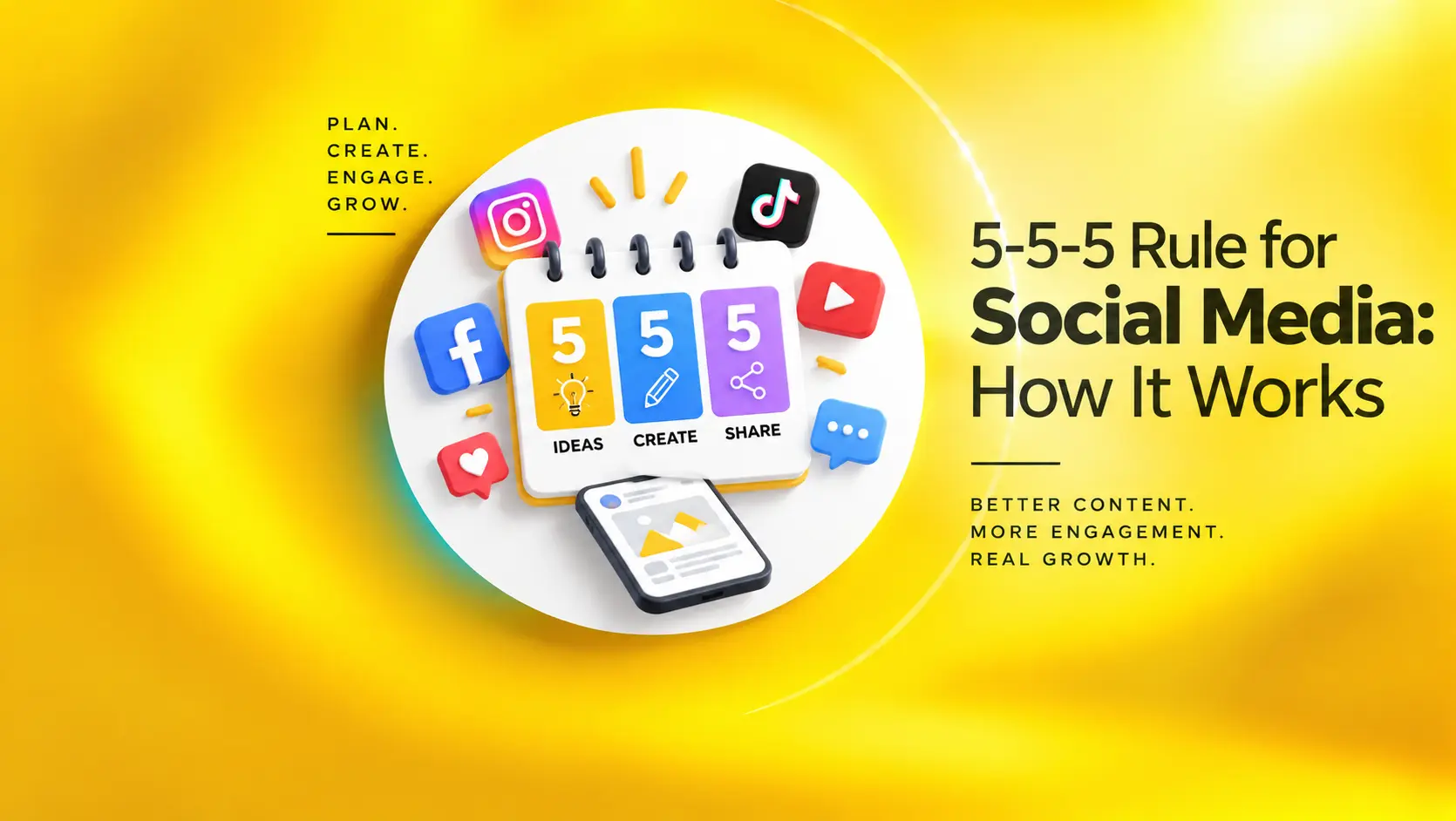
    The 5-5-5 rule for social media offers a simple way to bring some structure back into the chaos. Instead of treating social media as an endless list of posts to publish, it gives you a framework for deciding where to focus, how to engage, and what to measure.

    For a U.S. business, that’s particularly useful when your audience is spread across several platforms, and your marketing team doesn’t have unlimited time.

    And no, you don’t need to spend five hours a day on Instagram to follow it.

    Key Takeaways

    • The 5-5-5 rule can help you stop jumping between every social platform and focus your time where your audience actually hangs out.
    • It’s not just about posting more. The framework also looks at the conversations you’re having and whether people are doing anything with your content.
    • You’ll also see why things like posting times, social media graphics, platform-specific content, and analytics can make a bigger difference than simply staying “consistent.”
    • Most importantly, the goal isn’t to blindly hit the number five. It’s to build a social media routine that brings the right people in and gives your business something useful to measure.

    What Exactly Is the 5-5-5 Rule?

    Here’s where things get a little messy.

    There isn’t one official version of the 5-5-5 rule. Different social media marketers use the phrase to describe slightly different engagement routines.

    The version commonly discussed by marketers involves three areas:

    • 5 platforms or channels to consider.
    • 5 meaningful social actions.
    • 5 metrics to monitor.

    Another variation focuses specifically on engagement: interact with five posts, leave five meaningful comments, and respond to five messages or conversations.

    The important part isn’t worshipping the number five. It’s creating a repeatable social media engagement strategy. Because without a system, social media management can quickly become this “We should probably post something today.”

    Then somebody opens Canva, someone asks for a caption, everyone discovers the post is supposed to go live in 12 minutes, then Friday arrives, and nobody knows whether any of it actually worked. The 5-5-5 approach is meant to stop that cycle.

    Start With Where Your Customers Actually Spend Time

    The first mistake businesses make is assuming they need to be everywhere. They don’t.

    Pew Research Center’s 2025 survey of 5,022 U.S. adults found that 84% use YouTube, 71% use Facebook, 50% use Instagram, 37% use TikTok, and 26% use Reddit. Usage also varies considerably by age and other demographics.

    That’s useful information, but there’s an important catch. Those numbers describe the U.S. population. They don’t describe your buyer.

    A 35-year-old SaaS decision-maker isn’t necessarily using social media the same way as a 22-year-old fashion shopper. A local HVAC company doesn’t need the same channel mix as a national e-commerce brand.

    So instead of asking “Which five platforms are popular?” Ask “Which platforms give our business a realistic opportunity to reach the people we want?” That’s a much better starting point.

    You might evaluate Instagram, Facebook, LinkedIn, TikTok, and YouTube. You might end up actively investing in only two or three. That’s perfectly fine. Five is a framework, not a quota.

    Your Social Media Management Platforms Should Make This Easier

    Once you’ve chosen your channels, the operational side becomes important. 

    A social media management platform can help your team schedule posts, organize content, monitor conversations, and review performance without jumping between five different dashboards every morning. But don’t confuse centralized management with centralized content.

    You can schedule everything from one place and still adapt the actual content for each network. A LinkedIn post might be built around an industry insight. The same idea on Instagram could become a carousel. 

    On TikTok, it might become a 30-second explanation. Same message. Different packaging. That’s not wasted work. That’s distribution.

    The Second 5 Is About What Happens After You Hit Publish

    Here’s something social media teams don’t always like hearing:

    Publishing isn’t the end of the job. It’s the beginning of the conversation. If you want to use the engagement version of the 5-5-5 rule, give yourself five meaningful actions after publishing.

    That could mean:

    Answering customer questions – Someone asks about pricing, availability, or your service? Give them an actual answer.

    Joining relevant conversations – Find discussions where your expertise genuinely adds something.

    Responding to mentions – A customer tags your brand? Don’t leave them hanging.

    Commenting with substance – Instead of “Great post!”, add an example, perspective, or useful answer.

    Starting conversations – Ask your audience something worth answering. Reach out to a potential collaborator. Follow up with someone who showed genuine interest.

    Notice the word meaningful. That’s doing a lot of work here. Five thoughtful interactions are not the same as five dozen generic comments.

    Social algorithms aren’t the only reason to engage. You’re building familiarity with actual people who might eventually buy, recommend, share, or remember your business. That’s the part that often gets lost when social media becomes purely a numbers game.

    The Numbers Nobody Wants to Look At

    Let’s talk analytics.

    Most platforms will happily show you a mountain of data. Reach, impressions, likes, shares, saves, video views, profile visits, follower growth, clicks, and probably another metric you didn’t ask for. You don’t need to obsess over all of them.

    For a practical 5-5-5 system, narrow your attention to five questions.

    1. Did people see it?

    Track reach and impressions to understand distribution. If your content consistently struggles to reach people, you have a distribution or content problem worth investigating.

    1. Did they care?

    Look at engagement rate, including comments, shares, saves, and other meaningful interactions. A post that gets shared tells you something different from one that simply gets viewed.

    1. Are we attracting the right audience?

    Track follower growth, but don’t celebrate every new follower automatically. Ten thousand irrelevant followers aren’t necessarily more useful than a smaller audience that includes potential customers.

    1. Did they take the next step?

    Track click-through rate (CTR) when your social post sends people somewhere else. This is where UTM parameters become useful. They help your analytics platform identify where campaign traffic originated instead of dumping every visitor into one giant “social” bucket.

    1. Did any of this contribute to business?

    Track conversions. Depending on your company, that could mean purchases, booked calls, demo requests, newsletter sign-ups, lead forms, or another defined business action.

    This is also where social media teams should stop treating reach as the finish line.

    A post can reach 100,000 people and produce very little commercial value. Another post can reach 5,000 people and generate conversations with potential buyers. You need both the attention metric and the business metric to understand what’s really happening.

    The Great “When Should We Post?” Debate

    Someone on your team will eventually ask it. “What’s the best time to post on social media?” There are useful benchmarks, but there isn’t a universal magic hour.

    Sprout Social’s 2026 analysis examined nearly 2 billion engagements across approximately 307,000 social profiles and found broad peak engagement between 11 a.m. and 6 p.m., with Tuesdays and Wednesdays generally showing strong engagement across platforms. The study covered activity between November 27, 2025, and February 27, 2026.

    That’s a useful benchmark. It isn’t your marketing strategy. If your customers are most responsive at 7 p.m., you shouldn’t refuse to post because a benchmark says 2 p.m. is better.

    Use industry data to establish a testing window. Then use your own analytics to refine it. Test, compare, adjust, and repeat. That’s much more useful than endlessly searching Google for “best times to post on social media.”

    Your Social Media Graphics Have a Job

    Here’s another easy trap. You can spend three hours making a beautiful graphic that nobody stops to read. Good design matters. But the purpose of social media graphics isn’t to prove that your brand has a nice color palette. The graphic needs to help someone understand the point quickly.

    A strong visual usually has:

    • One obvious message
    • Clear hierarchy
    • Readable typography
    • Enough breathing room
    • Consistent brand elements
    • A reason to keep looking

    And please don’t turn every Instagram carousel into a 14-slide corporate presentation. Sometimes one strong idea is enough. Your audience has places to be.

    What Would 5-5-5 Actually Look Like?

    Imagine a U.S.-based B2B software company.

    Instead of trying to publish everywhere, the team decides that LinkedIn, YouTube, and Instagram deserve most of its attention.

    Each week, it:

    • Creates content around customer problems and industry questions.
    • Repurposes strong ideas instead of starting from zero every morning.
    • Engages with prospects, customers, and relevant industry conversations.
    • Tracks five core metrics across its social channels.
    • Reviews performance at the end of the week and adjusts the next batch of content.

    Now the social team isn’t simply asking “What should we post tomorrow?” They’re asking better questions like: Which topic earned the most qualified engagement? Which format generated clicks? Which platform brought useful traffic? Which posts created actual conversations? That’s the shift the framework is supposed to create.

    The Biggest Problem With the 5-5-5 Rule

    Ironically, it’s taking it too seriously. If you turn five into a rigid requirement, you can end up creating the exact problem the framework was meant to solve.

    Maybe your customers are concentrated on two platforms. Great. Maybe three meaningful conversations are more valuable than five empty comments. Fine. Maybe your best-performing content requires more production time, and you shouldn’t publish something just to hit a daily number. Also fine. The number is there to create discipline, not to replace judgment.

    Your social strategy still needs a clear audience, content pillars, creative direction, platform-specific execution, and measurable business goals.

    The 5-5-5 rule simply gives all of that somewhere to live.

    The Real Goal Isn’t “More Social Media”

    It’s better social media. More posts aren’t automatically better, more followers aren’t automatically better, more comments aren’t automatically better, and more platforms definitely aren’t automatically better. What matters is whether the time and money you’re putting into social media are moving the business forward.

    That’s why a good social media marketing agency doesn’t start with, “How many posts do you want every week?”

    It starts with:

    • Who are we trying to reach?
    • What should they do next?
    • Which channels make sense?
    • What content earns attention?
    • How will we know it’s working?

    The 5-5-5 rule can help answer some of those questions. But don’t let a simple framework become another box your marketing team has to tick. Use it to create a rhythm. Use your analytics to challenge it. And use your business goals to decide whether it’s actually working.

    Need a social strategy that goes beyond filling the content calendar? Xparro helps U.S. businesses bring together social media strategy, content, creative, community management, and performance data — so social media has a job to do beyond looking active.

    FAQs

    1. Is the 5-5-5 rule an official social media standard?

    No. The 5-5-5 rule is a marketing framework with several variations. Its purpose is to create a manageable structure for platform selection, engagement, and performance tracking.

    1. How many social media platforms should a business actually use?

    There is no ideal number for every business. Start with the platforms where your target customers are active and where your team can consistently create useful, platform-appropriate content.

    1. Does the 5-5-5 rule help increase engagement?

    It can create a more consistent approach to engagement, but it does not guarantee higher engagement. Results depend on audience relevance, content quality, creative execution, timing, and how genuinely the business participates in conversations.

  • IKEA Tricks You Into Buying Things You Never Planned to Buy

    IKEA Tricks You Into Buying Things You Never Planned to Buy

    You walked into IKEA for a $79 bookshelf.

    You walked out with the bookshelf, two cushions, a plant you have absolutely no idea how to keep alive, six glasses, a lamp, Swedish meatballs, and a tiny storage box whose only job is apparently to store the other things you bought at IKEA.

    And the funniest part? You probably think you made all those decisions yourself. That is what makes IKEA’s marketing so interesting. It doesn’t need to scream BUY THIS.

    Instead, IKEA builds an environment where buying feels like the natural conclusion of the experience.

    And this isn’t some tiny retail experiment. In FY2025, IKEA generated €44.6 billion in global retail sales, while its stores welcomed 915 million visitors, up from 899 million the year before. Online sales accounted for another 28% of IKEA turnover.

    In the U.S. alone, IKEA reported $5.3 billion in FY2025 sales, including $1.9 billion from e-commerce. Nearly 61 million people visited its U.S. stores, while more than 457 million visited IKEA online. Its IKEA Family loyalty program reached 25 million U.S. members, a 17% increase from the previous year.

    So, yes, the furniture is doing some work. But the marketing system around the furniture is doing considerably more.

    IKEA Doesn’t Put Products, It Puts Possibilities

    Walk through a traditional furniture store and you might see a sofa. Walk through IKEA and you see a life involving the sofa.

    The sofa isn’t sitting there looking lonely under fluorescent lights.

    It’s surrounded by a coffee table, rug, cushions, lighting, books, plants and some suspiciously perfect-looking Scandinavian person-shaped absence.

    Suddenly, you’re not evaluating a sofa. You’re imagining your living room. That’s a huge distinction in marketing.

    IKEA officially describes its showroom as a series of realistic room settings where shoppers can interact with products, sitting on sofas, opening drawers, pretending to cook, lying on beds and experiencing products as they would at home.

    This is experiential merchandising. Instead of saying “Here’s a $399 sofa.” IKEA is effectively saying “Here’s what your Tuesday night could look like if your apartment stopped looking like a storage unit.” And that’s a much easier thing to sell.

    The product becomes part of a desired lifestyle rather than an isolated object.

    This matters because people don’t always buy products based purely on their functional specifications.   They buy what those products represent.

    A desk isn’t just a desk., it’s productivity. A dining table isn’t just a table, it’s dinner parties. A wardrobe isn’t just storage, It’s the fantasy that your clothes will finally stop living on that chair.

    IKEA sells the after-picture.

    The Showroom Is Basically a Physical Content Funnel

    Here’s where IKEA gets particularly clever. Its store isn’t simply organized by product category.

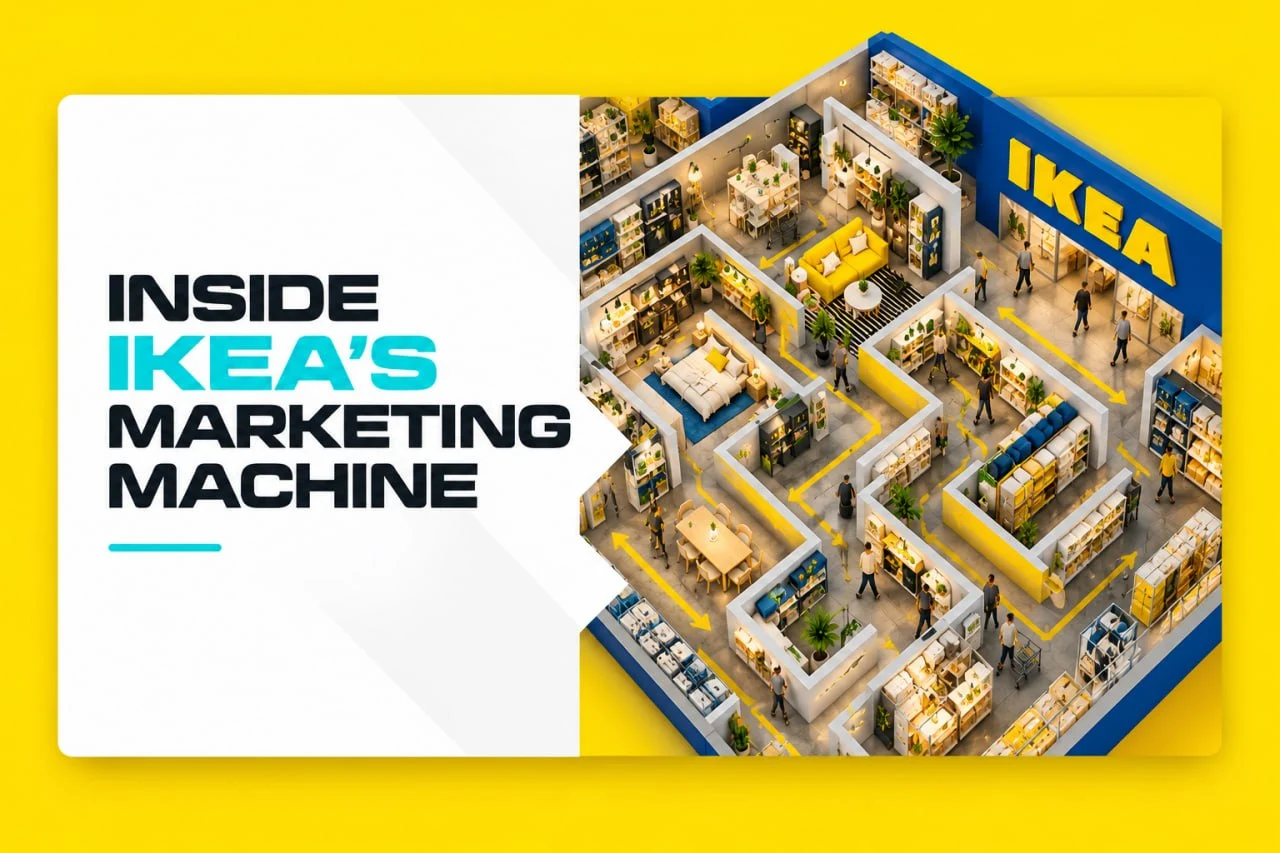
    The journey typically moves through Showroom → Market Hall → Self-Serve → Checkout. IKEA itself describes these as distinct parts of the store experience.

    That’s essentially a physical marketing funnel.

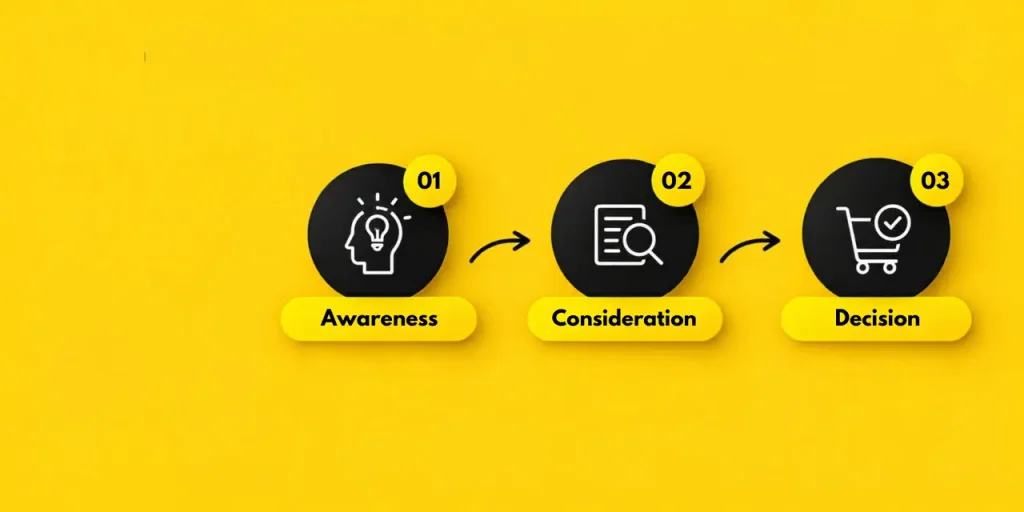
    Awareness – You enter the showroom and encounter ideas.

    Consideration – You see products in actual rooms and start imagining them in your own home.

    Intent – You remember a product number, price or location.

    Conversion – You eventually reach the self-service area and pick up the flat-pack box.

    Expansion – And then there are all those little products you’ve encountered along the way.

    The genius is that IKEA doesn’t rush you toward checkout. It gives you more opportunities to develop reasons to buy. And this is where the famous IKEA “maze” becomes more interesting. 

    The long path isn’t necessarily just about confusing you, it’s about exposure. If you came in wanting a desk, IKEA has plenty of time to show you what else could go with that desk.

    IKEA Turns Browsing Into a Series of Tiny Sales Pitches

    Think about how many decisions happen during an IKEA visit.

    You see a room, then a product, then another product that complements it, then you notice the price, then you touch it, then you imagine it at home, then you start thinking “Actually… I could use that.” That last sentence is marketing gold. Because the customer has now created the purchase rationale themselves.

    IKEA doesn’t necessarily have to persuade you that you need a product. The environment helps you persuade yourself.

    Research on store atmospherics supports this broader principle. A Journal of Retailing study found that pleasant in-store experiences were associated with shoppers spending more time in stores and spending more money than they had originally intended.

    A more recent study of 683 supermarket shoppers similarly found that sensory marketing influenced dwell time and purchasing behavior, with emotional responses mediating part of that relationship.

    IKEA’s version is more sophisticated because the sensory experience isn’t just about music, lighting or smell.

    It’s visual storytelling.

    The $5 Product Is Not Really About the $5 Product

    This is one of the easiest IKEA tactics to overlook.

    A customer might enter thinking “I need a wardrobe.” But along the journey, they encounter dozens of relatively inexpensive products. None of those products individually feels like a serious financial decision.

    And that’s exactly why they are dangerous. A $3 impulse purchase doesn’t trigger the same mental resistance as a $300 purchase. But ten tiny decisions can quietly turn into a very non-tiny receipt. 

    This is basket expansion. Instead of increasing the price of the product you originally came for, IKEA increases the number of products in your basket. And IKEA’s huge product ecosystem makes that possible.

    The customer isn’t just buying a wardrobe. They’re buying the wardrobe ecosystem.

    IKEA Makes the Customer Part of the Product Story

    Here’s where IKEA pulls off something most furniture brands would probably love to manufacture but can’t. It makes the customer work for the product. That sounds like terrible customer experience advice.

    Usually, marketers spend their lives trying to remove friction. One-click checkout. Free delivery. No-questions-asked returns. Fewer forms. Fewer steps. Less effort.

    IKEA went in a slightly different direction.

    You find the product yourself.

    You pick it up yourself.

    You take it home yourself.

    And then, armed with an Allen key and questionable confidence, you build it yourself.

    Yet that effort can actually become part of the product’s value.

    Researchers Michael Norton, Daniel Mochon and Dan Ariely famously called this the “IKEA effect” after finding that people who successfully assembled IKEA products tended to value their creations more highly. Their experiments weren’t limited to IKEA furniture either; participants assembled origami and LEGO creations, showing that the underlying effect was connected to the act of completing something yourself.

    A 2025 meta-analysis took the idea further, analysing 55 studies involving 5,454 participants and finding a significant relationship between self-assembly and increased product valuation.

    From a marketing perspective, that’s fascinating. Because IKEA isn’t simply handing customers a finished product. It’s giving them a story about the product.

    That bookshelf isn’t just something you purchased on Saturday, you built it, and you remember where it nearly went wrong, you remember which screw mysteriously remained after you finished, you probably remember the exact moment you finally stood it upright.

    And suddenly, the product has a little history attached to it. IKEA has turned assembly from an inconvenience into part of the brand experience. That’s a very different kind of customer engagement.

    IKEA Doesn’t Just Sell Furniture. It Sells Permission to Redesign Your Life

    There’s another reason IKEA’s marketing works so well. Its products rarely arrive with the emotional weight of a luxury purchase. You don’t need to convince yourself that buying a $6 storage box is a life-changing financial decision. And that matters.

    IKEA has spent decades positioning functional design as something ordinary people should be able to afford. Its famous concept revolves around offering well-designed, functional products at prices accessible to as many people as possible.

    That positioning creates an interesting psychological combination:

    Design feels aspirational.

    Price feels approachable.

    And when those two meet, the customer doesn’t necessarily feel like they’re splurging. They feel like they’re being sensible. That’s a powerful position for a retailer.

    Luxury brands often say “You deserve something special.” IKEA’s message is closer to “Why shouldn’t your everyday life look better?”

    A better kitchen doesn’t have to be a luxury project., a nicer workspace doesn’t have to mean designer furniture, a more organised bedroom doesn’t have to require a massive renovation.

    That expands the number of situations in which IKEA can enter a customer’s life.

    And once you’ve accepted the idea that good design can be affordable, suddenly upgrading the boring parts of your home doesn’t feel extravagant. It feels overdue.

    Then IKEA Gives You a Reason to Stay

    Furniture shopping isn’t exactly known for being entertaining. Nobody wakes up on Saturday morning thinking, “Can’t wait to spend four hours comparing wardrobes.”

    IKEA understood this problem early. So it turned the shopping trip into a destination. And this is where the food becomes far more important than it first appears.

    The IKEA restaurant, Bistro and Swedish Food Market aren’t merely convenient places to grab something when you’ve been wandering around for too long.

    They extend the IKEA experience beyond furniture.

    The company’s food business has become enormous. IKEA says around 680 million customers experienced its food offer globally in 2019, while its famous food balls have become one of the brand’s most recognisable products. IKEA says it has sold around 1.4 billion food balls annually since introducing meatballs in 1985.

    Think about what that does from a branding perspective. You don’t just remember the sofa, you also remember the meatballs, the cheap coffee, going there with your parents, wandering around the bedroom displays, even arguing about whether the lamp actually matches the curtains.

    The brand becomes attached to an experience, not just a product category. And experiences are much harder for competitors to copy. A furniture company can copy a minimalist coffee table.

    Copying decades of memories around meatballs, Swedish design, flat-pack furniture and Saturday shopping trips is considerably harder.

    IKEA made the store itself part of the brand.

    The Price Tag Is Doing More Marketing Than the Billboard

    IKEA’s pricing strategy deserves its own attention because affordability isn’t just a financial decision for the company. It’s part of the brand identity.

    In FY2025, IKEA said it had lowered prices by around 10% over the previous two years, with the company reporting that sales volumes and customer numbers both increased by around 3% during FY2025.

    That tells us something important about how IKEA uses price.

    The company isn’t simply trying to be cheap, it’s trying to make good design feel attainable and that is a different proposition.

    Imagine seeing a beautifully styled room where almost everything has a price attached to it.

    Instead of thinking “That whole room must cost a fortune,” you discover that the lamp is affordable. The chair is affordable, the side table is affordable, the storage is affordable, ssuddenly, the entire room feels achievable.

    This is where IKEA’s room displays and pricing strategy reinforce each other.

    The showroom creates desire.

    The price removes resistance.

    That’s much more powerful than either one operating alone.

    The $4.99 Purchase Is Doing a Bigger Job Than You Think

    There’s another clever consequence of IKEA’s pricing architecture.

    Low-priced products lower the psychological stakes of experimentation. You’re much more likely to think “I’ll just try it.” When the price is small enough, the decision doesn’t feel like a serious purchase. And that’s where basket expansion starts happening.

    You came for a wardrobe, then you see an organiser, then a laundry basket, then some hooks, then a little lamp, then something for the kitchen because, apparently, the kitchen has suddenly become part of this project too.

    None of these decisions feels particularly dramatic, and that’s the point. IKEA doesn’t necessarily have to make every additional purchase exciting. It just needs to make each one easy to justify.

    The customer’s internal conversation changes from “Do I really need this?” to “It’s only $5.”

    Multiply that behaviour across hundreds of products and millions of shoppers, and tiny decisions become a very serious retail strategy.

    IKEA Family Is Where the Shopping Trip Becomes a Relationship

    Getting someone to buy a product once is acquisition. Getting them to come back is marketing with a longer memory. IKEA Family is central to that second part.

    In the U.S., IKEA said its IKEA Family membership reached 25 million members in FY2025, representing a 17% increase from the previous year. The company also reported more than 61 million store visits and $5.3 billion in U.S. sales during the year.

    But the interesting part isn’t simply the size of the loyalty programme. It’s what IKEA is doing with it.

    In 2025, IKEA U.S. expanded its rewards programme so customers could earn points through activities across the journey, including shopping and planning, with rewards including discounts, delivery savings and free meals.

    That changes the role of loyalty. The customer isn’t only valuable when they hand over money. Their relationship with the brand can begin while they’re planning what to buy. That’s a subtle but important shift.

    IKEA is moving from “Come to our store when you need furniture.” toward “Come to us when you’re thinking about changing your home.” And that is a much larger piece of the customer’s decision-making journey.

    IKEA Customers Started Doing the Marketing for IKEA

    Here’s where the strategy gets even more interesting.

    People don’t just buy IKEA products. They modify them, combine them, hack them, redesign them, post before-and-after photos, and show off their kitchens, wardrobes, desks and tiny-apartment transformations.

    Search online for IKEA hacks and you’ll quickly discover that the internet has effectively created an unofficial IKEA content department. And IKEA gets something incredibly valuable out of that… people demonstrating what its products can become.

    The company doesn’t have to publish every possible use case itself. Customers do it. One person turns a bookshelf into storage, another turns a cabinet into a vanity, someone else creates a home office from a combination of products.

    The original product becomes the starting point for a much larger stream of content.

    This is one of the strongest forms of marketing because the brand isn’t simply saying “Look what our product can do.” A customer is saying it. That difference matters. The customer has no reason to make the product look good for IKEA. They’re showing people what they actually did with it. And suddenly a basic furniture product becomes inspiration for someone else’s purchase.

    IKEA doesn’t just sell furniture. It sells raw material for creativity.

    The Giant Blue Box Is No Longer the Whole Strategy

    For decades, the IKEA experience was built around one very specific ritual:

    Drive somewhere, enter the giant blue building, walk approximately the length of a small country, buy furniture, eat meatballs, find your car, discover that the box is significantly larger than you remembered.

    But IKEA knows consumer behaviour has changed.

    In FY2025, IKEA opened 66 new sales locations globally, including smaller formats and Plan & Order Points.

    In the U.S., IKEA added 14 new retail locations during FY2025, including smaller-format stores, while expanding Plan & Order Points. The company also reported $1.9 billion in U.S. e-commerce sales.

    That’s important strategically. The customer no longer has to complete the entire IKEA journey inside the traditional store. They can discover online, plan online, visit a smaller location, order, pick up and then return to the ecosystem when they’re ready for the next project.

    The physical store remains important.

    But IKEA is increasingly building a connected customer journey rather than a single retail journey. And that’s a much more modern marketing strategy.

    So, Does IKEA Really “Trick” You?

    Not exactly. And that’s actually the most interesting conclusion. IKEA isn’t secretly manipulating customers into buying products they don’t want.

    The customer is still making the decision.

    The clever part is that IKEA spends enormous effort designing the environment in which those decisions are made.

    It combines aspirational merchandising to create desire, accessible pricing to reduce resistance, product placement to encourage discovery, self-assembly to deepen involvement, food and store experience to create memories, loyalty marketing to encourage return visits, user-generated content to extend the brand beyond its stores, and digital and smaller-format retail to stay present throughout the buying journey.

    None of those tactics alone explains IKEA.

    Together, they create a retail system where buying feels like the natural next step which is much more powerful. And that’s the real lesson for marketers.

    The strongest brands don’t always win by shouting louder about their products.

    Sometimes they win by designing the journey so well that the customer arrives at the purchase decision almost naturally.

    IKEA doesn’t need to tell you that you need another cushion.

    It just needs to put the cushion next to the sofa, give it a beautiful room to live in, price it at $9.99, and let your brain finish the sales pitch.

    And if that doesn’t work?

    Well…

    There’s always the meatballs.

  • 10 Best PPC Companies in US for Business Growth

    10 Best PPC Companies in US for Business Growth

    Finding PPC companies in the U.S. isn’t exactly difficult. Google “PPC agency” and you’ll get enough options to make your browser question your life choices.

    The harder question is: which agency actually understands your business, your customers, and what your ad budget needs to accomplish?

    That’s where this guide comes in.

    We’ve rounded up 10 PPC agencies in the U.S. that businesses may come across while researching paid advertising partners. We’ve also broken down what each agency is known for, so you can narrow your options without spending three days opening 47 agency websites.

    Key Takeaways

    • 10 PPC companies that bring value to the table for businesses looking to improve paid advertising.
    • You’ll see why getting clicks is only part of the PPC game and why leads, sales, conversions, and revenue matter much more.
    • We break down the things worth checking before hiring a PPC agency, from keyword targeting and conversion tracking to landing pages and budget management.
    • You’ll also get practical questions to ask a PPC company so you can compare your options without getting lost in fancy marketing promises.

    10 PPC Agencies in the U.S. to Know

    1. Xparro
    Xparro

    Xparro is a performance-focused PPC agency helping U.S. businesses get more from their paid ad budgets. The idea is simple: don’t chase clicks, chase customers.

    Its PPC marketing services cover everything from Google Ads and keyword research to negative keywords, bid optimization, remarketing, conversion tracking, and performance reporting. And instead of treating PPC as a standalone channel, Xparro connects paid campaigns with SEO, content, social media, and conversion strategy.

    Good fit for: U.S. businesses that want PPC management focused on real leads, sales, and measurable growth, not vanity metrics.

    1. Disruptive Advertising
    Disruptive Advertising

    Based in Utah, Disruptive Advertising focuses heavily on paid media and performance marketing. Its services include PPC, paid social, CRO, and other acquisition-focused strategies.

    The agency is particularly associated with Google Ads and paid advertising for businesses looking to connect ad spend with measurable performance. It appears consistently across current U.S. PPC agency lists.

    Good to explore if: paid acquisition and performance marketing are your main priorities.

    1. Ignite Visibility
    Ignite Visibility

    Ignite Visibility is a full-service digital marketing agency based in California. Its services span PPC, SEO, paid media, social media, and other digital marketing channels.

    That broader service mix can be useful for companies that don’t want their paid campaigns operating on an island.

    Good to explore if: you want PPC alongside a wider digital marketing strategy.

    1. KlientBoost
    Klient Boost

    KlientBoost is known for PPC, paid media, and conversion rate optimization. That combination is worth paying attention to because getting the click is only half the job.

    If 1,000 people visit your landing page and nobody fills out the form, congratulations—you’ve successfully purchased 1,000 visits.

    Good to explore if: you want paid advertising and CRO working together.

    1. NP Digital
    NP Digital

    Founded by digital marketer Neil Patel, NP Digital works as a global performance marketing agency with a U.S. base.

    It provides solutions in paid media, as well as SEO, content, and performance marketing in general.

    Good to explore if: You are looking for a PPC service as part of an overall acquisition strategy.

    1. Power Digital
    Power Digital

    Power Digital is a performance marketing agency based in California and works in various areas including paid media, SEO, data, and more.

    This wider approach of the company makes it a good fit for companies that require something beyond a single PPC solution.

    Good to explore if: You are looking for a paid media service as part of a growth strategy in addition to other services.

    1. SmartSites
    Smart Sites

    SmartSites is a digital marketing agency based in New Jersey and offers various services, including PPC, SEO, web design, and others.

    The company pops up frequently in U.S. agency lists, especially for companies requiring a combo of PPC services and website-related services.

    1. Tinuiti
    Tinuiti

    Tinuiti is a performance marketing agency with particular expertise in eCommerce and retail media.

    Its capabilities include not just search but also advertising via Amazon and other commerce-specific ad platforms.

    Good to explore if: You run an eCommerce or retail brand that has multiple paid acquisition channels.

    1. WebFX
    WebFX

    WebFX is a large U.S.-based digital marketing agency that offers PPC as part of its offerings, which include SEO, web design, content, and other services.

    Thanks to its scale, businesses have access to more marketing capabilities than through separate agencies for each channel.

    Good to explore if: You want to integrate PPC into a digital marketing program.

    1. Wpromote
    Wpromote

    Wpromote is a U.S. performance marketing agency that operates across multiple channels, including paid media, SEO, commerce, and others.

    Wpromote is especially suited for large brands interested in a comprehensive performance marketing solution as opposed to only a PPC partnership.

    Good to explore if: You are operating a multi-channel paid media strategy.

    What Should You Actually Look for in a PPC Company?

    Okay, you’ve got your list. Now comes the part that matters more than the list itself. When comparing PPC companies, don’t get hypnotized by phrases like “360° marketing,” “cutting-edge solutions,” or “data-driven growth.”

    Every agency website says some version of that. Instead, ask how they handle the things that actually move campaign performance.

    Start With Conversion Tracking

    If an agency can’t clearly explain what counts as a conversion, that’s a problem.

    A serious PPC setup should connect Google Ads with meaningful actions like calls, purchases, qualified leads, booked appointments, or revenue and not just clicks.

    Google recommends assigning conversion values where appropriate so bidding can optimize toward business value rather than simply counting actions.

    Look at Search Intent

    “Running shoes” and “buy Nike running shoes size 10” are not the same search. One is broad. The other practically has its credit card out.

    Your PPC management company should understand that difference and build campaigns around intent, match types, audiences, locations, and negative keywords.

    Ask About Landing Pages

    Don’t blame Google for a landing page that looks like it was designed during the Obama administration. Your ad and landing page need to make sense together.

    If your ad promises a free consultation but the visitor lands on a generic homepage with six menus, three pop-ups, and no obvious CTA, you’re creating friction before the customer even gets a chance to convert.

    That’s why PPC and CRO often belong in the same conversation. Current agency comparisons also highlight CRO as an important complement to paid advertising.

    Don’t Obsess Over CPC Alone

    A $2 click isn’t automatically better than a $10 click.

    If the $2 traffic never converts and the $10 traffic consistently produces customers, the cheaper click isn’t doing you any favors.

    Look at the bigger picture:

    CPC → Conversion Rate → CPA → Revenue → ROAS

    The right metric depends on the business.

    For an eCommerce company, ROAS may be central. For B2B, qualified pipeline and customer acquisition cost may tell you much more.

    How Much Does PPC Cost?

    There’s no universal price tag.

    Your PPC budget depends on the competitiveness of your keywords, industry, geography, campaign goals, and expected conversion volume.

    And remember: agency fees and advertising spend are two different things.

    You’re paying the ad platforms for media spend. You’re paying the agency for strategy, management, optimization, testing, reporting, and expertise.

    Don’t compare two agencies solely because one has a lower management fee. Ask what you’re actually getting for it.

    Where Does Xparro Fit In?

    At Xparro, PPC isn’t treated as a glorified “boost post” button.

    What we do is formulate a paid campaign strategy based on the business objective – whether lead generation, sales, bookings, or customer acquisition.

    Some of our PPC marketing services include:

    • Google Ads campaign management
    • Keyword and competitor analysis
    • Search Intent mapping
    • Campaign structure
    • Negative keyword optimization
    • Conversion tracking
    • Remarketing
    • Bid and budget optimization
    • Landing page suggestions
    • A/B testing
    • Performance reporting

    Pretty simple, actually. Don’t just drive traffic; create a system where the traffic has somewhere to go.

    Before You Hire a Pay-Per-Click Agency, Ask These 5 Questions

    Keep this list handy when you’re on those agency calls:

    • What exactly will you track as a conversion?
    • How often will you review search terms and negative keywords?
    • Who owns the Google Ads account and campaign data?
    • How will you connect PPC results to actual revenue or qualified leads?
    • What happens if the campaign isn’t performing?

    The last question is particularly important. You don’t need an agency that promises everything will be perfect. You need one that can tell you what went wrong, why it happened, and what they’re changing next.

    The Bottom Line

    There are plenty of PPC agencies in the U.S., and many of them offer remarkably similar services.

    The difference usually comes down to strategy, specialization, tracking, communication, and how seriously they treat your money.

    So don’t hire a PPC company simply because it has a fancy dashboard or a wall full of awards. Ask harder questions, look at the numbers, understand what you’re paying for, and most importantly, make sure the agency understands that your goal isn’t more clicks. It’s more business.

    Because Google already knows how to charge you for clicks. You need someone who knows what to do with them.

    FAQs

    1. What should I look for when choosing a PPC company?

    Look at the basic things such as their process for handling keywords, conversion tracking, negative keywords, bids, landing pages, and reporting. More importantly, check whether they understand your business needs. It is not enough for a company to claim that they will give you everything; you need a company that can clearly tell you what they will do for you.

    1. How much does it cost to hire a PPC agency in the U.S.?

    There is no average cost because there are many factors involved, such as the industry, competitors, budget for ads, scale of the campaign, and level of management required. Remember that your agency fee and the cost of advertising are two separate things.

    1. Is hiring a PPC agency worth it for a small business? 

    Yes, especially in cases where the team is not able to devote time and effort to manage the campaigns correctly. There are many benefits associated with it, such as lowering wasted spend, identifying high-intent searches, improved conversion tracking, and proper management of campaigns. The real question isn’t whether PPC is expensive., it’s whether your campaigns are making your budget work hard enough.

  • 3-3-3 Rule in Marketing: What It Means & How It Works

    3-3-3 Rule in Marketing: What It Means & How It Works

    Your marketing probably doesn’t need more content. It needs better direction.

    One team is writing blogs. Another is running paid ads. Social is posting three times a week. SEO is chasing keywords. And somehow, all of them are talking to the same customer like they’ve never met. That’s where a simple framework can help.

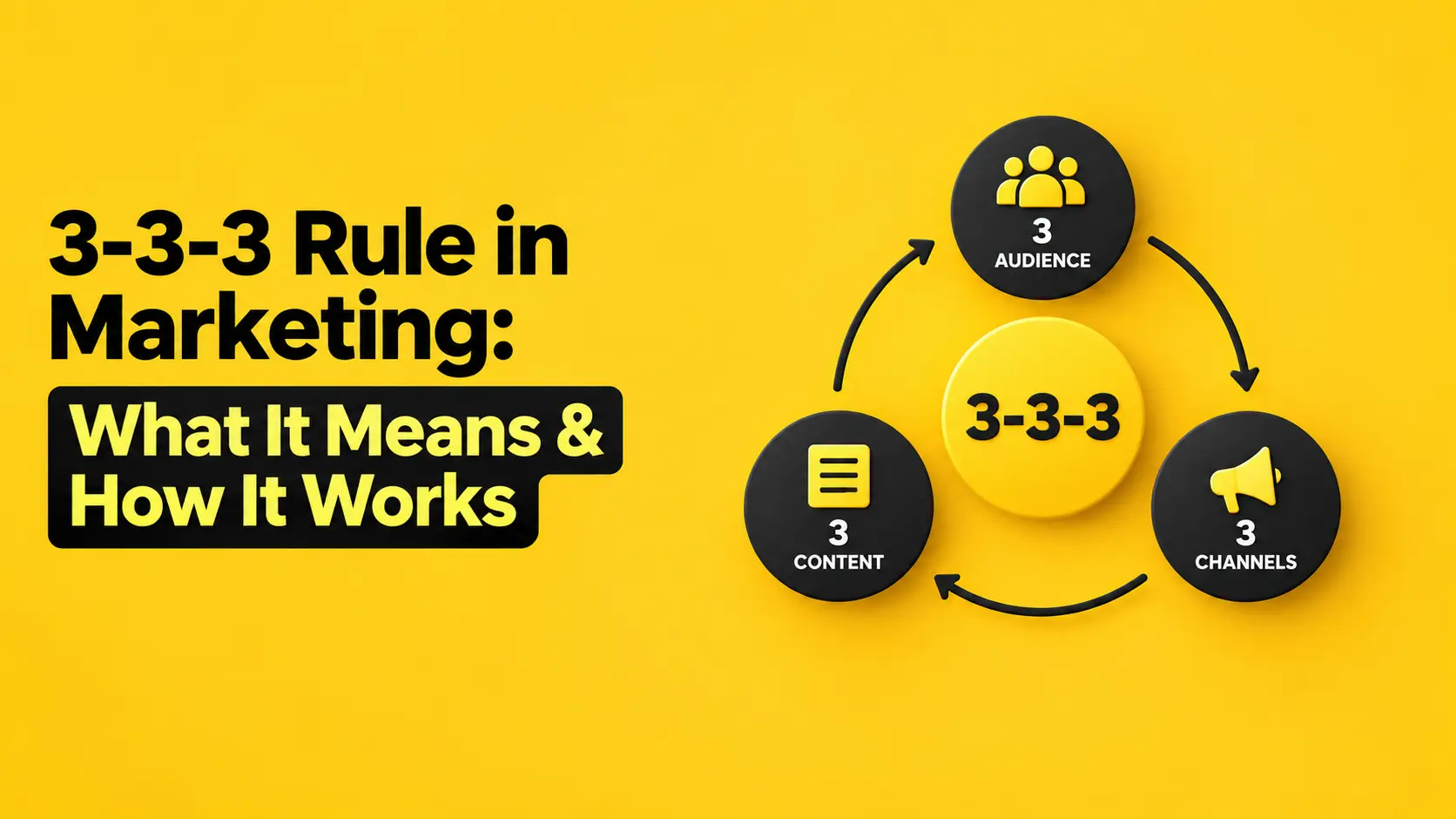
    The 3-3-3 rule in marketing gives businesses a practical way to organize their marketing and content around three content types, three distribution channels, and three stages of the buyer journey.

    It isn’t a magic formula. But it can stop your strategy from becoming a giant spreadsheet of random marketing activities.

    Key Takeaways

    • Marketing and content work better together when your SEO, social, paid campaigns, and content are all pulling toward the same goal.
    • The 3-3-3 rule keeps things simple: three content types, three distribution channels, and three stages of the buyer journey.
    • Your content creation strategy should match buyer intent, whether someone is discovering a problem, comparing solutions, or ready to buy.
    • A smarter SEO marketing plan measures what matters, from organic traffic and leads to conversions, pipeline, and revenue.

    What Is the 3-3-3 Rule in Marketing?

    The 3-3-3 approach is built around three questions:

    What should we create? Where should we distribute it? And where is the customer in their buying journey?

    The original framework breaks this into:

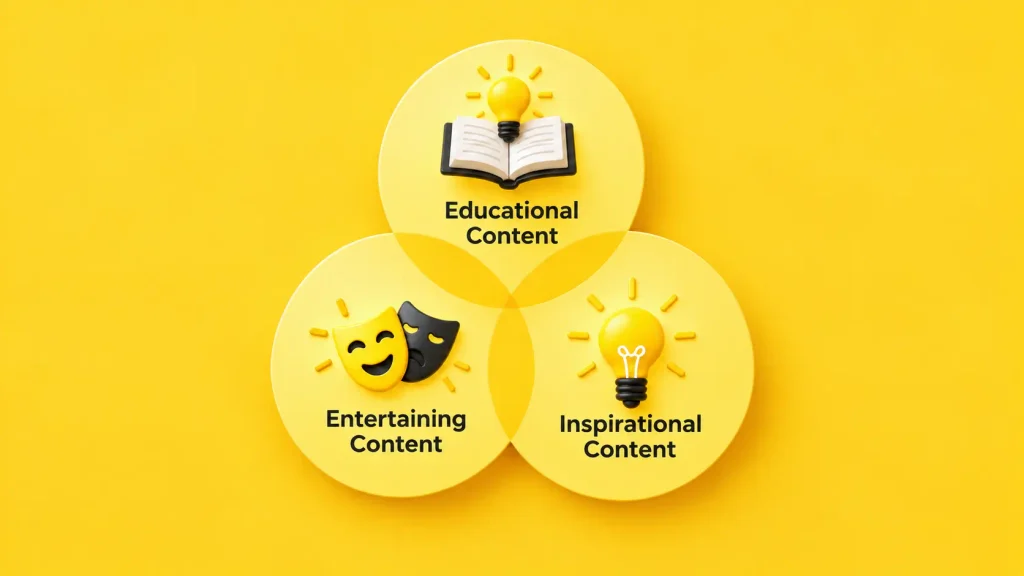
    3 content types: Educational, inspirational, and entertaining

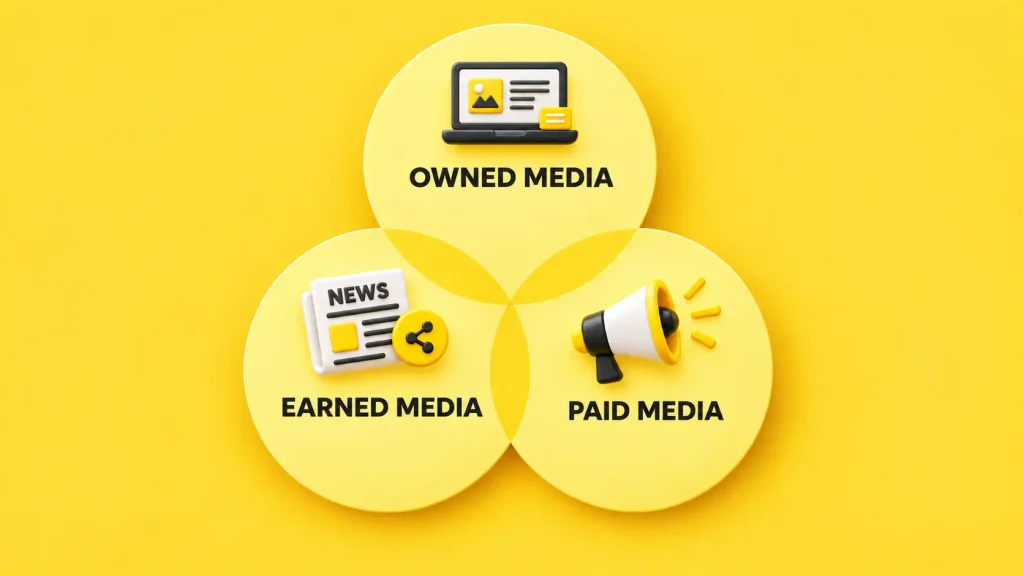
    3 distribution channels: Owned, earned, and paid media

    3 buyer stages: Awareness, consideration, and acquisition

    Put those together and you get a simple system for planning your marketing and content instead of throwing ideas at the wall and hoping one sticks.

    Start With Three Types of Content

    Not every customer wants another 1,500-word blog post.

    Some want an answer. Some want proof. Some just want something interesting enough to make them stop scrolling.

    That’s why your content creation strategy needs variety.

    Educational Content

    This answers questions and solves problems.

    Think:

    • How-to guides
    • SEO blogs
    • Industry explainers
    • Webinars
    • Tutorials
    • Research-driven articles

    For example, a cybersecurity company could publish “How Zero-Trust Architecture Works” rather than another painfully vague post titled “Why Cybersecurity Matters.”

    Educational content is particularly useful for SEO because it can target informational search intent and bring potential customers into your funnel before they’re actively shopping.

    Inspirational Content

    This is where you show people what’s possible.

    Case studies, customer stories, testimonials, transformation stories, and expert opinions belong here.

    Instead of saying, “Our SEO services deliver results,” show what changed for a client after fixing technical SEO, improving internal linking, or rebuilding its content architecture.

    Proof beats promises.

    Entertaining Content

    Yes, B2B companies are allowed to have a personality.

    Memes, short-form videos, behind-the-scenes content, clever commentary, and relatable industry posts can make your brand feel considerably less like a corporate instruction manual.

    The goal isn’t to make everything funny. It’s to make your brand worth paying attention to.

    Put Those Three Content Types on Three Channels

    Creating good content is only half the job. If nobody sees it, congratulations, you’ve created a very well-written secret.

    The 3-3-3 framework separates distribution into owned, earned, and paid media.

    3 Types of Channels

    Owned Media

    These are channels you control.

    Think:

    • Website
    • Blog
    • Email
    • Social profiles

    Your website and email list are especially valuable because you aren’t completely dependent on an algorithm deciding whether your audience gets to see your content.

    Earned Media

    This is attention you don’t directly buy.

    Reviews, backlinks, PR mentions, customer recommendations, interviews, and organic brand mentions can all contribute to credibility.

    For SEO, earned media can also support authority through relevant backlinks and third-party mentions.

    Paid Media

    This is where you pay to accelerate reach.

    Google Ads, paid social, display advertising, sponsored content, and other PPC campaigns can put your message in front of a highly targeted audience quickly.

    But don’t make the classic mistake of sending paid traffic to a generic homepage.

    If your ad promises “Reduce SaaS Customer Acquisition Costs,” the landing page should continue that conversation, not suddenly start talking about your company history.

    That’s where your marketing campaign strategy either works or falls apart.

    Match Content to the Buyer’s Journey

    A person discovering your brand for the first time isn’t looking for the same thing as someone comparing your service with a competitor.

    So why give them the same content?

    3 Types of Buyers Journey

    Awareness: “I have a problem.”

    At this point, your audience may not even know what solution they need.

    Create:

    • Educational blogs
    • Short videos
    • Industry insights
    • Social posts
    • Beginner-friendly guides

    Your job isn’t to aggressively sell. It’s to make the audience think “Wait. That’s exactly the problem we’re dealing with.”

    Consideration: “Which solution should I choose?”

    Now the buyer is researching.

    This is where comparison pages, case studies, expert guides, product demos, ROI content, and detailed service pages become useful.

    For example, someone searching “SEO agency vs in-house SEO team” isn’t casually browsing. They’re evaluating options. Your content should help them make that decision.

    Acquisition: “I’m ready. Convince me.”

    This is where the content becomes more conversion-focused.

    Use:

    • Pricing pages
    • Service pages
    • Testimonials
    • Case studies
    • Free consultations
    • Product demos
    • Strong CTAs

    Don’t make someone dig through six pages to figure out how to contact you. They’ve already done the research. Let them take the next step.

    Turn the 3-3-3 Rule Into an SEO Marketing Plan

    Here’s where the framework becomes genuinely useful. Suppose you’re an American B2B SaaS company selling project management software.

    Your three content types could be:

    • Educational: Project management guides and workflow tips
    • Inspirational: Customer success stories
    • Entertaining: Workplace memes and short videos

    Your three channels:

    • Owned: Blog, email, LinkedIn
    • Earned: Industry publications, reviews, backlinks
    • Paid: Google Ads and LinkedIn Ads

    Your three buyer stages:

    • Awareness: “How to manage remote teams”
    • Consideration: “Best project management software for remote teams”
    • Acquisition: “Project management software pricing”

    Now you have an actual content system.

    And more importantly, your keyword strategy, content calendar, social posts, email campaigns, and paid media aren’t operating independently.

    They’re supporting the same journey.

    Don’t Let the 3-3-3 Rule Become Another Marketing Chore

    Here’s the catch. Frameworks are useful until marketers start following them like commandments. You don’t need exactly three blogs, three ads, and three social posts every Tuesday because a blog told you so.

    The point is focus.

    Your strategy should answer:

    • Who are we trying to reach?
    • What does this audience need right now?
    • Which content format makes sense?
    • Which channel can reach them?
    • What action should happen next?
    • How will we know if it worked?

    Then measure the answer.

    Look beyond likes and impressions. Track organic clicks, engagement rate, conversion rate, MQLs, cost per lead, customer acquisition cost, pipeline, and revenue.

    Google also recommends creating helpful, reliable, people-first content rather than producing content simply to manipulate search rankings.

    That distinction matters. Because publishing 50 articles nobody needs isn’t a content strategy. It’s just 50 articles.

    The Bottom Line

    The best marketing and content strategies aren’t necessarily the ones with the biggest content calendars. They’re the ones where everything has a reason to exist.

    Use the 3-3-3 framework as your starting point:

    3 content types → 3 distribution channels → 3 buyer stages.

    Then layer your SEO marketing plan, content creation strategy, and marketing campaign strategy on top of it. Educate people when they’re learning. Build trust when they’re comparing. Make conversion easy when they’re ready. And yes, throw in a funny LinkedIn post once in a while.

    Your audience will appreciate the proof that there are actual humans behind the brand.

    If your content, SEO, paid media, and social campaigns are all working separately, Xparro can bring them together into one strategy built around visibility, engagement, and measurable growth.

    FAQs

    1. What is the 3-3-3 rule in marketing?

    The 3-3-3 rule is a simple way to organize your marketing around three content types, three distribution channels, and three stages of the customer journey.

    1. How does the 3-3-3 rule help with content creation?

    It stops your content calendar from becoming a random collection of blogs and social posts. You can create content based on what people need and where they are in the buying process.

    1. Can the 3-3-3 rule be used in an SEO marketing plan?

    Absolutely. You can use it to connect search intent, content topics, distribution channels, and conversion goals, so your SEO isn’t just chasing traffic, but attracting people who may actually become customers.

  • Apple Convinced Millions to Queue Overnight for Something They Already Owned

    Apple Convinced Millions to Queue Overnight for Something They Already Owned

    There are few things people hate more than waiting in line. Unless the line is outside an Apple Store. Then, apparently waiting 14 hours in the cold becomes a personality trait.

    When the original iPhone went on sale in the U.S. on June 29, 2007, people didn’t simply show up, buy one, and go home. They camped outside stores. They brought lawn chairs, sleeping bags, and umbrellas. Some waited through thunderstorms. At Apple’s Fifth Avenue store in New York, hundreds of people gathered around the entrance. Across the country, the launch looked less like an electronics sale and more like a concert.

    And here’s the part that makes the story interesting from a marketing perspective. Apple had somehow made the queue itself part of the product. The really impressive trick came later.

    Because once the iPhone became successful, Apple didn’t need customers to discover an entirely new device every year.

    It needed them to believe that the phone they already owned was worth replacing. That is a much harder marketing problem.

    Apple turned the annual upgrade into a ritual

    Apple Didn’t Invent the iPhone Launch Queue. It Made the Queue Valuable.

    The original iPhone was genuinely new.

    In 2007, Apple was entering a mobile-phone market dominated by companies such as Nokia, Motorola and BlackBerry. The product combined a phone, an iPod and an internet device, and Apple priced the 4GB model at $499 and the 8GB model at $599. So people had a legitimate reason to be curious.

    But Apple didn’t launch it like an ordinary consumer-electronics product.

    All 164 U.S. Apple Stores stayed open until midnight. Apple announced the exact 6 p.m. launch time. Customers could buy up to two phones. The company also positioned its stores as places where people could physically experience the product, receive Genius Bar support, and attend free workshops.

    That was important.

    Apple wasn’t simply saying “Here’s a phone. Buy it.” It was saying “Something is happening at 6 p.m.” That’s a completely different psychological frame.

    The launch became an event. And events have audiences.

    The Queue Became Free Advertising

    Think about what a traditional product launch normally requires. Advertising, billboards, television, influencers, press releases, and paid social. Then look at an Apple Store on launch day. A line of hundreds of people is already doing the advertising for you.

    A journalist doesn’t need to write:

    “Consumers appear interested in Apple’s new product.”

    They can simply photograph 1,000 people standing outside an Apple Store. The photograph becomes the headline. That happened almost immediately with the iPhone.

    Contemporary coverage documented huge lines across U.S. stores, including hundreds of people at individual locations. At Apple’s Fifth Avenue store during the 2013 iPhone 5s/5c launch, the line reportedly reached 1,417 people by 8 a.m., compared with 549 for the iPhone 3G at the same location in 2008.

    And the media didn’t have to be persuaded very hard. The crowd was the story. That’s an extraordinarily efficient marketing asset.

    Apple created something that looked like earned media but behaved like advertising. And unlike a billboard, the advertisement moved. It appeared on television, in newspapers, on technology websites, appeared in photographs, and later, it appeared on YouTube, Instagram, TikTok, and X.

    The customers were literally standing inside Apple’s marketing campaign.

    Then Apple Discovered Something Even More Useful

    The queue didn’t only create awareness. It created social proof. This is where the strategy gets much more interesting.

    Imagine you’re undecided about buying a $599 smartphone. You see one person buying it and think it’s interesting. You see ten people buying it and think maybe there’s something special about it. You see hundreds of people camping outside the store overnight to buy it, and now the question subtly changes.

    Instead of asking “Is this phone worth buying?” You start asking “What do all these people know that I don’t?” That’s social proof in action.

    And Apple didn’t have to say, “People really want this.”

    The crowd said it for them.

    In fact, contemporary reporting found that not everyone in the original queues was even there purely because they wanted the phone. Wired’s survey of the first 50 people in line at an Apple Store in San Francisco found that 32 said they were there because of their enthusiasm for Apple, while 13 planned to resell the phone. Some were there for business purposes, and even one person’s position in line had reportedly been offered for sale.

    That detail is fascinating. Because it shows that once the queue became culturally valuable, other people started exploiting Apple’s marketing machine for their own benefit.

    Apple didn’t have to pay them. They showed up anyway.

    Apple Turned Scarcity Into Theatre

    There is another piece of the puzzle. Scarcity.

    Scarcity makes products feel more valuable because availability becomes part of the story. Apple repeatedly created launch situations where supply appeared constrained, or demand exceeded initial availability.

    For the iPhone 5 in 2012, Apple sold more than 5 million units in the first three days and explicitly said demand exceeded its initial supply.

    Two years later, the iPhone 6 and 6 Plus sold more than 10 million units in their first three days, with Apple again saying it could have sold more had supply been greater.

    And here’s where scarcity becomes more than inventory management. A product that is difficult to get becomes something people talk about.

    “It’s sold out.”

    “There’s a two-week wait.”

    “Stores are packed.”

    “The Pro Max is impossible to find.”

    Suddenly the shortage itself becomes a distribution channel for attention.

    Of course, not every shortage is necessarily a deliberate marketing tactic. Apple’s supply chain is enormous, and launch demand can genuinely exceed forecasts. But from a consumer-psychology perspective, the effect is similar: limited availability can intensify urgency.

    And Apple had another advantage. It didn’t need consumers to believe the iPhone would disappear forever. It only needed them to believe that getting it first mattered.

    That’s a much cheaper proposition.

    The Most Brilliant Part

    This is where the case study moves beyond launch hype. The real marketing challenge isn’t selling the first iPhone. It’s selling the second iPhone to someone who already owns the first one. Then the third. Then the fourth. 

    And suddenly the competition isn’t another smartphone. It’s the customer’s existing smartphone.

    CIRP’s research has repeatedly highlighted how long iPhone users keep their devices. In 2024, more than one-third of new U.S. iPhone buyers had owned their previous phone for three years or longer.

    Counterpoint’s 2025 research across the U.S., China, the UK and India found that Pro iPhone users replaced their phones after an average of 2.75 years, compared with 3.15 years for non-Pro users.

    So Apple isn’t operating in a market where everyone automatically needs a new phone every September. It has to create a reason to upgrade. And this is where Apple’s annual launch cycle becomes incredibly useful.

    Every year brings:

    A new chip.

    A new camera.

    A new material.

    A new color.

    A new button.

    A new display.

    A new AI feature.

    A new design detail.

    Sometimes a genuinely meaningful hardware change. Sometimes a relatively small one. But marketing doesn’t necessarily require the entire product to become new. It requires the reason to upgrade to become new.

    That’s a subtle distinction.

    Apple Sells the Gap Between “Works Fine” and “I Want the New One”

    This might be the most overlooked part of Apple’s strategy. A smartphone doesn’t have to stop working for someone to replace it. That’s a terrible situation for marketers.

    Traditional replacement marketing has an obvious trigger:

    Old product breaks → customer buys new product.

    Apple’s category works differently.

    The phone can still work perfectly, the camera can still take good pictures, the battery can still survive most of the day, the apps still work, the screen still turns on, and there is no emergency.

    So Apple has to market desire rather than necessity. And product launches are perfect for that.

    The message isn’t:

    “Your current iPhone is useless.” It’s closer to “Look what your current iPhone doesn’t have.” That’s a far more sophisticated upgrade strategy.

    Apple Doesn’t Just Sell the Phone. It Sells the Ecosystem Around It.

    Here’s where the annual upgrade gets even more powerful.

    An iPhone isn’t an isolated purchase anymore. It’s connected to AirPods, Apple Watch, Mac, iPad, iCloud, Apple Music, Apple Pay, the App Store, and countless apps and services that people use every day.

    Apple reported that its installed base surpassed 2.2 billion active devices in early 2024. By December 2025, Apple said that figure had crossed 2.5 billion active devices.

    That number matters because Apple’s marketing isn’t simply convincing someone to buy another phone. It is maintaining a relationship with an enormous installed base. And the ecosystem makes switching more complicated.

    Kantar’s Worldpanel research found that 97% of iPhone owners who also owned multiple Apple devices remained loyal to iPhone when upgrading, seven percentage points higher than people who owned only an iPhone.

    That’s the quiet engine behind the flashy launch. The queue gets attention. The ecosystem helps keep the customer.

    The Apple Store Wasn’t Just a Store

    This is another part marketers often overlook. Apple understood early that the physical store could become part of the brand experience.

    When the original iPhone launched, Apple explicitly described its retail stores as places created for customers to “touch and experience” the product.

    That’s not accidental wording. Apple wasn’t treating retail as a warehouse with a cash register.

    The store was the stage, the product was the star, the employees were part of the experience, the queue was the audience, and the launch moment was the show. Even the entrance mattered.

    When the first iPhone buyers entered stores in 2007, Apple employees reportedly clapped and celebrated customers as they came inside. CNN described the atmosphere at the Soho store as resembling a rock concert, with cheering, fist-pumping, and camera flashes.

    Think about how unusual that is. Most retailers try to make purchasing frictionless. Apple sometimes made the purchase feel ceremonial. You weren’t just picking up electronics; you were participating in an event.

    The Customer Didn’t Just Buy the Product. They Bought the Story.

    This is where Apple’s launch strategy becomes almost ridiculously good at generating content.

    Someone waits eight hours, someone posts a picture, someone interviews them, someone asks why they’re there, someone uploads the unboxing, someone records the first boot, someone compares the camera, someone posts the new color, someone shows the Apple Store crowd.

    And someone else watches all of it and thinks:

    “Maybe I should get one.”

    That’s a marketing loop.

    Launch → crowd → coverage → social conversation → curiosity → demand → more crowds.

    The customer becomes the media, the media becomes the advertising, the advertising creates more customers, and the customers create more media.

    Apple doesn’t need to manufacture every piece of content when the launch itself is content.

    But Here’s the Twist: The Queue Wasn’t Always About Scarcity

    This is where the “Apple created artificial scarcity” explanation becomes too simplistic. There were plenty of instances where people could order iPhones online or purchase them through carriers.

    By 2023, Apple was actively making pre-orders easier, offering delivery and pickup options and allowing customers to prepare their orders before pre-order time.

    By the iPhone 16 launch in 2024, Counterpoint researchers observing U.S. stores reported that inventory was relatively healthy and that more walk-in customers could purchase devices.

    Yet people still showed up. That’s the giveaway. The queue had become bigger than the inventory problem. People weren’t necessarily standing there because there was no other way to buy an iPhone. They were standing there because being there was part of the experience. That’s an enormous difference.

    Apple Turned “First” Into a Product Feature

    Think about the psychology of being first.

    First person in line.

    First customer in the store.

    First person in your office with the new camera.

    First person to post the unboxing.

    First person to show the new color.

    None of these things improve the processor. But they improve social status. The product becomes a badge. This is especially powerful for technology because technology has always carried an element of identity.

    You’re not only saying “I own this.” You’re also saying “I am the kind of person who owns this.”

    And Apple has spent decades building an identity around design, creativity, premium technology, and cultural relevance.

    The iPhone therefore doesn’t have to win every feature comparison. It has to remain culturally desirable. That’s a different marketing battlefield.

    Apple Has Evidence That the Loyalty Machine Still Works

    Apple’s own financial commentary consistently points to high customer satisfaction and loyalty alongside its growing installed base.

    CIRP’s research estimated iPhone loyalty at 89% for the 12 months ending June 2025.

    Bloomberg Intelligence’s 2023 survey of more than 1,600 U.S. smartphone users put Apple loyalty at 93%, compared with 80% for Android. The same research found that only 62% of respondents owned a phone released within the previous three years, highlighting the tension between strong loyalty and slower upgrade cycles.

    That tension is important.

    Because Apple’s challenge isn’t simply “Can we make people love the iPhone?” Clearly, many do. The harder question is “Can we make someone who already loves their iPhone want another one?”

    That’s where annual launches, trade-ins, financing, new features, ecosystem integration, and retail theatre all work together.

    The Marketing Lesson Isn’t “Create Hype”

    That’s too easy. Every brand wants hype. The interesting lesson is how Apple turned hype into a repeatable system.

    The original 2007 launch created the ritual; subsequent launches reinforced it; the stores gave the ritual a physical location; the media amplified it; customers documented it; scarcity increased urgency; new features created upgrade reasons; the ecosystem increased switching costs; trade-ins reduced the psychological pain of paying full price.

    And the next launch arrived before the previous one had completely disappeared from cultural memory.

    That’s not one campaign. That’s a marketing architecture.

    The Queue Was the Advertisement

    Apple didn’t need millions of people to queue overnight because Apple had no other way to sell an iPhone.

    It had websites, carriers, pre-orders, online delivery, retail partners, financing, and even trade-ins. The queue solved a completely different problem. It made demand visible. And visible demand creates perceived value.

    A person sitting alone at home with a new iPhone is a customer. A thousand people standing outside an Apple Store is a headline. That distinction is everything.

    The genius wasn’t convincing someone to wait eight hours for a phone. The genius was making eight hours of waiting look like proof that the phone was worth wanting. And once customers started treating launch day like an annual ritual, Apple had a marketing event that customers willingly staged themselves.

    The phone changed every year. The marketing machine didn’t have to.

    What Marketers Can Learn From Apple

    Not the queues. Please don’t make people camp outside your office for your SaaS update.

    The transferable ideas are much more useful:

    Turn a product launch into an event – People remember events more vividly than ordinary transactions.

    Make demand visible – Social proof works differently when customers can actually see other people choosing the product.

    Give customers a reason to upgrade, not just a reason to buy – Existing customers are a completely different marketing problem from new prospects.

    Make the buying experience part of the brand – Apple understood that the store, employees, launch moment, and unboxing could all become part of the product story.

    Build a system, not a campaign – The real advantage is the interaction between product, PR, retail, community, ecosystem, and customer loyalty.

    Let customers become your distribution channel – The best part of Apple’s launch marketing was that customers, journalists, creators,s and even resellers helped spread the story.

    The Real Apple Marketing Trick

    Apple didn’t convince people that their old iPhone was garbage. That would have been a terrible strategy.

    Instead, it created a yearly moment where “the phone I own” quietly became “the phone I owned before this one.”

    That distinction is worth billions.

    Because when a product is genuinely necessary, you market its usefulness. When a product is already good enough, you have to market possibility, identity, experience, and desire. Apple mastered the second category. And somewhere along the way, the queue stopped being an obstacle between the customer and the product.

    The queue became the product launch, the launch became the marketing, and the marketing became the reason people wanted to be there in the first place, which is how Apple got millions of people to advertise a product… while standing in line to buy it.

  • SEO 2026: Strategies to Boost Rankings & Traffic

    SEO 2026: Strategies to Boost Rankings & Traffic

    SEO has changed a lot in the last decade. And no, we’re not talking about another Google algorithm update that makes everyone refresh Search Console every five minutes.

    Search itself has changed.

    People ask longer, more specific questions. Google can summarize answers with AI. Users can research products, compare options, and dig through follow-up questions without leaving the search experience.

    So if your SEO strategy still revolves around “pick a keyword, write 1,500 words, add some links, and hope for page one,” it’s probably time for a rethink.

    Here’s what actually changed in SEO 2026 and what marketers should do about it.

    Key Takeaways

    • Search is no longer just 10 blue links. AI Overviews and AI Mode are changing how users discover information.
    • Search intent matters more than exact-match keywords. Google is getting better at understanding context, entities, and meaning.
    • Traffic isn’t the only metric worth watching. Visibility, qualified visits, conversions, brand searches, and AI visibility matter too.
    • Generic content is getting cheaper and less useful. AI can produce content at scale, so expertise and original information are becoming bigger differentiators.
    • Technical SEO still matters. Crawlability, indexability, structured data, internal linking, and Core Web Vitals haven’t magically disappeared.

    Search Has Moved Beyond the Blue Links

    For years, Google was essentially a giant directory. Type something in. Get a list of websites. Pick one. Done.

    Now Google can generate an answer, summarize several sources, suggest follow-up questions, and help users explore a topic without sending them straight to a website.

    Google says AI Mode uses a process called “query fan-out,” where a complex query is broken into multiple related searches to explore different aspects of the topic before generating an answer.

    That’s a major shift for SEO.

    Compare these two searches:

    “best CRM software”

    versus

    “What’s the best CRM for a 20-person B2B sales team that needs strong reporting without the complexity of Salesforce?”

    The second query tells Google much more about the user’s situation and intent. That’s where SEO is heading: fewer vague searches, more context-rich questions. And marketers need content that can answer those questions not just pages that happen to contain the right keyword.

    Keywords Still Matter. Just Not Like They Used To.

    Let’s clear something up. Keywords aren’t dead.

    Google still recommends using the words people search for in important areas of a page, including titles, headings, alt text, and link text. What’s changed is the obsession with exact wording.

    A page targeting “enterprise SEO services” doesn’t need to repeat that phrase every few sentences. That’s not optimization. That’s a cry for help.

    Instead, the page should naturally demonstrate expertise around related concepts such as:

    • Enterprise site architecture
    • Technical SEO
    • Crawl budget
    • Internal linking
    • International SEO
    • JavaScript rendering
    • SEO reporting
    • Content governance

    Google increasingly understands the relationship between these concepts.

    So instead of asking, “How many times should I use this keyword?”, ask, “Does this page completely answer what the searcher came here to solve?” That’s a much better SEO question.

    Long-Tail Searches Are Getting More Interesting

    People don’t always search like robots anymore.

    Pew Research analyzed 68,879 Google searches from U.S. users and found that AI-generated summaries appeared in around 18% of searches. The likelihood jumped from 8% for one- or two-word searches to 53% for searches containing 10 or more words. Question-based searches produced AI summaries about 60% of the time.

    That’s worth paying attention to.

    Someone looking for running shoes might search “best running shoes,” But someone closer to making a purchase might search: “best running shoes for flat feet for someone running five miles every day.” The second query has actual context.

    For marketers, that means creating content around:

    • Specific problems
    • Comparisons
    • “Best for” scenarios
    • Product alternatives
    • How-to questions
    • Troubleshooting
    • Buying objections
    • Industry-specific use cases

    Your sales team probably hears these questions all day. Start stealing their questions. They’re basically doing your keyword research for free.

    The Click Isn’t the Whole Story Anymore

    Here’s an uncomfortable change in SEO: some searches don’t need a click. If Google answers the question directly, the user might never visit your website.

    Pew found that users clicked a traditional search result just 8% of the time when an AI summary appeared, compared with 15% when there wasn’t one.

    That doesn’t mean organic traffic suddenly became useless.

    It means marketers need a bigger scoreboard.

    Along with rankings and sessions, look at:

    • Organic impressions
    • Qualified traffic
    • Leads and sales
    • Assisted conversions
    • Brand searches
    • Engagement
    • AI search visibility
    • Mentions or citations in AI-generated results

    A page getting 50,000 visits but generating no business isn’t exactly an SEO victory lap. Meanwhile, a smaller amount of highly relevant traffic can be incredibly valuable.

    Content Is Everywhere. Good Content Isn’t.

    This is probably one of the biggest changes in SEO.

    Creating content used to take time. Now AI can produce a blog post before you’ve decided what you’re having for lunch.

    That means content itself isn’t much of a competitive advantage anymore.

    Google’s guidance doesn’t say AI-generated content is automatically bad. The focus is on whether content is helpful, reliable, original, and created for people rather than primarily to manipulate rankings.

    That’s the important bit.

    AI can help marketers with:

    • Research
    • Outlines
    • Content briefs
    • Editing
    • Summaries
    • Data analysis
    • Content updates

    But it can’t magically give a generic article first-hand experience. That’s where businesses need to lean harder into:

    Original research. Expert opinions. Customer examples. First-hand experience. Real data.

    If five competitors publish the same “10 SEO Tips” article, publishing the sixth one with slightly different adjectives isn’t exactly a winning strategy. Give readers something they can’t get from 50 other tabs.

    Technical SEO Still Has a Job

    Every few years, someone declares technical SEO dead. Technical SEO remains very much alive. Before Google, or an AI search feature, can understand your content, your site still needs to be crawlable, renderable, and indexable.

    Google also states that pages generally need to be indexed and eligible to appear in normal Search before they can be used as supporting links in AI Overviews and AI Mode. There isn’t a separate set of “secret AI SEO” technical requirements.

    The boring stuff still counts:

    • Crawlability
    • Indexability
    • Canonical tags
    • XML sitemaps
    • Internal links
    • JavaScript rendering
    • Structured data
    • HTTPS
    • Mobile usability
    • Core Web Vitals

    Google recommends an LCP of 2.5 seconds or less, INP below 200 milliseconds, and CLS below 0.1 for a good Core Web Vitals experience. So no, you can’t fix a messy website by sprinkling AI into the content calendar.

    Authority Is Bigger Than Backlinks

    Backlinks still matter. But counting links like Pokémon isn’t a complete SEO strategy. Modern search increasingly needs to understand whether a source is trustworthy for a particular topic.

    That makes things like these increasingly valuable:

    • Original research
    • Expert contributions
    • Industry mentions
    • High-quality backlinks
    • Case studies
    • Reviews
    • Strong brand presence
    • Demonstrated subject-matter expertise

    Think about it.

    Would you trust a random website publishing a generic cybersecurity article, or a cybersecurity company publishing original threat research, benchmarks, and implementation guides?

    Exactly. Authority isn’t something you claim on an About page. Your entire online presence has to demonstrate it.

    SEO and Marketing Can’t Work in Separate Rooms

    This may be one of the biggest SEO changes for marketing teams. SEO isn’t just an organic search team’s job anymore.

    • PR can generate brand mentions.
    • Original research can attract backlinks.
    • Social content can build awareness.
    • Customer reviews can reinforce trust.
    • Strong product pages can capture commercial intent.
    • A useful YouTube video can answer part of a search journey.

    All of these things can influence how people discover and evaluate a brand.

    So instead of asking “What keyword should we rank for?” Marketing teams should start asking “What information should our brand become known for?” That’s a much more useful question.

    What Marketers Should Do in SEO 2026

    If your current SEO strategy is mostly a list of keywords and monthly rankings, start making a few changes.

    Build around intent, not just volume

    Map content to informational, commercial, navigational, and transactional intent. Then dig into the questions and objections behind each one.

    Publish less generic content

    You don’t need another 2,000-word article saying that “SEO is important in today’s digital landscape.”

    Bring something to the table: data, experience, expert commentary, examples, research, or a genuinely useful tool.

    Optimize for traditional and AI search

    Don’t chase mysterious “AI hacks.” Google says its existing SEO fundamentals apply to AI Overviews and AI Mode too. Make your content useful, structured, technically accessible, and credible.

    Measure business impact

    Rankings are useful. Revenue is better.

    Connect organic performance to leads, sales, signups, pipeline, and other outcomes that actually matter to the business.

    Invest in authority

    Publish research. Earn legitimate mentions. Showcase experts. Create genuinely useful resources. The goal isn’t to make your website look authoritative.

    It’s to become authoritative.

    The Bottom Line

    So, how has SEO changed? Quite a bit, but perhaps not in the way the endless “SEO is dead” headlines suggest.

    Keywords still matter. Content still matters. Links still matter. Technical SEO still matters. What’s changed is the level of sophistication around them.

    Search engines understand context better. Users ask more detailed questions. AI is changing how answers are presented. And generic content is becoming ridiculously easy to produce.

    That makes one thing increasingly valuable… Being genuinely useful. The brands that win in SEO 2026 won’t necessarily be the ones publishing the most content or chasing every new algorithm rumor.

    They’ll be the ones that understand their audience, answer real questions, demonstrate expertise, and give search engines and people a reason to trust them.

    And thankfully, that strategy doesn’t require publishing 47 “Ultimate Guides” before lunch.

  • How to Find Trending Topics to Grow Your Audience

    How to Find Trending Topics to Grow Your Audience

    Ever spent hours writing a blog, hit publish, and then watched the traffic numbers sit there as they have absolutely no idea who you are?

    Your writing may not be the problem. Your topic might be.

    Content created based on trending topics has a higher chance of catching your audience’s attention since the topics are already being searched for, talked about, and shared. But before diving straight into finding out which topics are hot right now, there are some aspects of doing research on trending topics that need to be considered.

    Let’s get into the basics first.

    Key Takeaways

    • Find rising searches, related queries, and emerging topics using Google Trends.
    • Discover new conversations, questions, and trends via social media and Reddit.
    • Verify trending keywords through search volume, intent, competition, and relevance to business.
    • Create content based on trends by identifying niches, offering unique insight, and generating content when demand is growing.

    What Are Trending Topics?

    Trending topics are subjects getting more attention than usual over a specific period.

    Increased visibility may include:

    • Sudden spike in Google searches
    • Rise in social media conversations
    • Increased number of news articles covering the topic
    • More discussions on Reddit
    • Increase in the number of video views
    • New questions about a certain topic
    • Increased searches for keywords related to the topic

    Some trends appear unexpectedly. Others build slowly over weeks or months.

    For example, tax filing trends every year, but a new tax rule can suddenly create a wave of specific searches. That’s the important distinction. You’re not simply looking for popular topics. You’re looking for topics where interest is increasing.

    How to Find Trending Topics Online

    You don’t need 14 monitors or five subscriptions. A few reliable tools can give you useful signals.

    1. Start With Google Trends
    Google Trends

    If you’re wondering how to find trending topics online, Google Trends should be one of your first stops. It shows how search interest changes over time and lets you compare topics and search terms. You can explore interest over time, regions, related topics, and rising searches.

    The Rising section is especially useful because it highlights queries experiencing significant growth. Google says searches marked “Breakout” have grown by more than 5,000%. That’s not exactly a gentle nudge. That’s the internet yelling, “LOOK AT THIS.”

    Here’s the smarter way to use it.

    Don’t search only for your exact target keyword.

    Let’s say you create content for a fitness brand. Instead of searching only for “fitness,” try “strength training,” “home workouts,” “protein intake,” or “running recovery.” Then check the related queries. You might discover that “fitness” is stable while “strength training for beginners” is suddenly gaining attention. That’s a much more specific content opportunity.

    Compare seven days, 30 days, 90 days, 12 months, and five years. A topic can look huge over five years while actually declining today.

    And remember: not every spike is a trend. Sometimes it’s just Thanksgiving being Thanksgiving.

    1. Check Google’s Trending Now

    Want to know what’s trending right now?

    Google Trends’ Trending Now section is designed for that. It tracks trending searches across more than 100 countries and regions and lets you explore recent trends across short time periods. This can help with breaking news, industry developments, events, reactive content, and commentary. But don’t turn every trending search into a blog.

    A celebrity breakup might be trending. That doesn’t mean your B2B cybersecurity company needs a 1,500-word article about it. Trending doesn’t automatically mean relevant.

    Always ask: “Does my audience actually care about this?” If not, let the internet have its moment.

    How to Find Top Trending Keywords

    A trending topic and a trending keyword aren’t quite the same thing. A topic is the broader idea. A keyword is the specific phrase someone types into a search engine.

    For example:

    Topic: Artificial intelligence

    Potential keywords:

    • AI tools for businesses
    • AI marketing tools
    • AI search optimization
    • AI productivity tools
    • AI content detection

    Google Trends can help you identify related searches and rising queries. Take promising keywords into your preferred SEO tool.

    Look at:

    • Search volume
    • Keyword difficulty
    • Search intent
    • Cost per click
    • SERP competition
    • Traffic potential

    This is where trend research becomes useful for SEO.

    You’re no longer asking “What’s popular?” You’re asking “Which keywords around this growing topic are worth targeting?” That’s the better question.

    How to Find Social Media Trends

    Google tells you what people are searching for. Social media can tell you what people are talking about. And sometimes, those conversations start before search demand catches up.

    If you’re trying to figure out how to find social media trends, start with the platforms where your audience actually spends time.

    According to Pew Research Center in 2025, 84% of American adults use YouTube, 71% use Facebook, 50% use Instagram, 37% use TikTok, and 26% use Reddit.

    Choose social media that matters to your audience.

    TikTok

    TikTok Creative Center allows discovering the most popular hashtags, videos, music, creators, and other trend signals.

    It’s possible to look for industry-related trends and trends per time period, rather than spending two hours scrolling and calling it market research.

    What to look for:

    • Questions asked repeatedly
    • New phrases being used
    • Popular content format
    • Product mentions
    • Repeated complaints
    • Industry talks

    Reddit

    Reddit can become quite helpful in finding real problems to solve. Visit relevant subreddits and look for questions that keep appearing. If several people are asking different versions of the same question, you’ve probably found a content opportunity.

    Don’t focus only on upvotes. Look for patterns. One viral post can disappear tomorrow. A recurring problem can become a reliable content topic.

    Follow Industry News

    Not every trend starts with a Google search. A new regulation, product launch, algorithm update, technology announcement, or major industry event can create an entire wave of searches afterward.

    That’s why trend research should also include industry publications, news sites, competitor blogs, trade publications, LinkedIn, YouTube, podcasts, and company announcements. You’re looking for new developments entering the conversation.

    For example, if a major search engine announces a significant change, don’t wait three months until everyone has published:

    “Everything You Need to Know About Google’s Latest Update”

    Look at the questions people are asking immediately. That’s where timely content has an opportunity to win.

    Use Trend Discovery Tools

    Tools such as Exploding Topics can help identify subjects that are gaining momentum. These tools are useful when you’re looking for emerging trends rather than topics that are already everywhere. Think of it as finding the party before everyone starts posting pictures from it.

    Combine trend-discovery tools with Google Trends to validate whether an emerging subject has meaningful search interest. The important word is validate. Use multiple signals before deciding that a trend deserves your time.

    How to Find Trending Topics for a Blog

    Finding a trend is easy. Finding a good blog topic from that trend is where things get interesting.

    Use this five-step process.

    Step 1: Start With Your Industry

    Begin with topics your business already understands.

    For an SEO company:

    SEO → AI search → AI Overviews → AI search visibility

    For a SaaS company:

    Productivity → remote work → AI productivity tools

    Start with relevance, not virality.

    Step 2: Find Growing Subtopics

    Use Google Trends, social media, Reddit, news, and trend platforms.

    Look for rising searches, new questions, emerging terminology, new products, growing complaints, and industry debates.

    You’re looking for the smaller wave forming around the bigger topic.

    Step 3: Validate Search Demand

    A topic might be exploding on TikTok but have almost no meaningful search demand. That might make an excellent social post.

    But if you’re spending hours creating an SEO-focused article, check its search potential first. 

    Look at search volume, search trend, search intent, keyword difficulty, and SERP competition. Don’t build a 2,000-word article around a keyword searched by approximately your cousin and three bots.

    Step 4: Check Business Relevance

    Ask one simple question:

    “If this article ranks, do I actually want these people visiting my website?”

    If the answer is no, reconsider the topic. Traffic is nice. Relevant traffic is much nicer.

    Step 5: Find the Content Gap

    Search the topic yourself and study the current results.

    Then ask:

    • What’s missing?
    • Are the examples outdated?
    • Is the information too generic?
    • Are important questions unanswered?
    • Can you provide original data?
    • Can you explain the topic better?

    Google recommends creating people-first content that provides original information, research, analysis, or meaningful value rather than simply rewriting what already exists.

    In other words, don’t just be first. Be useful.

    A Simple 30-Minute Trend Research Routine

    You don’t need to spend all morning hunting for the next big thing.

    Try this:

    • 10 minutes: Check Google Trends and Trending Now
    • 5 minutes: Search through social sites
    • 5 minutes: Go through Reddit or industry-specific forums
    • 5 minutes: Scan industry news
    • 5 minutes: Confirm your best ideas using keyword research

    Keep your ideas in a simple spreadsheet with columns for topic, source, growth, relevance, competition, and content angle.

    Now you’re not collecting random ideas. You’re building a content opportunity list.

    Don’t Chase Every Trend

    A topic trending today doesn’t automatically deserve a blog tomorrow.

    Before jumping on a trend, ask:

    • Is it relevant? Does your audience care?
    • Is interest growing? Are search, social, or news signals increasing?
    • Can you compete? Are you early enough to have an opportunity?
    • Can you add something useful? Do you have expertise, data, examples, or analysis?

    If you can’t answer “yes” to at least three, skip it. Your calendar will survive.

    The Bottom Line

    Finding trending topics isn’t about endlessly scrolling social media and hoping inspiration smacks you in the face.

    It’s about watching where attention is moving.

    Use Google Trends to understand search behavior. Scan social media to find discussions early on. Check out Reddit to get actual questions and concerns. Follow industry news for new trends. Afterward, validate your ideas by checking the search demand, competition, audience relevance, and business intentions.

    Above all else, do not mistake viral for valuable. The best trending topic for your business is where growing audience interest meets your expertise. That’s the sweet spot.

    And yes, it’s usually more useful than publishing your 47th article titled “10 Tips to Improve Your Marketing.”

    FAQs

    1. How do I find trending topics online?

    Go to Google Trends first, then have a look at social media, Reddit, and industry blogs. Find those topics which are becoming popular, not those which are already everywhere.

    1. How do I know if a trending topic is worth blogging about?

    Think about three points: Is my audience interested in this topic? Is their interest increasing? Do I have something valuable to add? Yes? Well, you have found a great topic.

    1. How can I find trending topics for my blog before they become too competitive?

    See early indicators such as a rising number of Google searches, repeating questions on Reddit, growing social buzz, and new industry developments. Spot trends early rather than waiting till everybody writes about it.

  • 7 Best AI Online Rank Tracking Tools in 2026

    7 Best AI Online Rank Tracking Tools in 2026

    You rank well on Google. Then someone asks ChatGPT for the best companies in your industry… and your brand is nowhere to be found. That’s the problem with relying only on traditional rank tracking now. Search has changed, and your SEO reporting needs to catch up.

    Google’s AI Overviews alone reached more than 1.5 billion monthly users in Q1 2025. And people are also turning to ChatGPT, Gemini, Perplexity, and other AI tools to research products, compare services, and decide what to buy.

    So, yes, you still need to track your Google rankings. But you should also know what AI is saying about your brand. That’s where AI online rank tracking tools come in.

    Key Takeaways

    • AI rank tracking shows whether ChatGPT, Gemini, and Google AI mention, recommend, or cite your brand.
    • Compare 7 AI and traditional rank tracking tools based on features, AI coverage, and use cases.
    • Learn which metrics matter, from AI mentions and citations to competitor visibility and share of voice.
    • Find out how to start tracking AI rankings and whether Gemini deserves a place in your SEO strategy.

    What Is AI Rank Tracking?

    Traditional rank tracking is pretty straightforward. You enter a keyword, and the tool tells you where your page appears in Google. AI search doesn’t work quite that neatly.

    Ask ChatGPT, “What are the best accounting software options for a small business?” and you won’t get a numbered list of 100 blue links. You’ll get an answer with brands, explanations, and sometimes citations to websites.

    AI rank tracking tools monitor those answers.

    Depending on the platform, you can track things like:

    • How often your brand is mentioned
    • How often your website is cited
    • Which competitors appear alongside you
    • Your share of voice
    • How AI describes your brand
    • Which pages are being cited

    Coalition Technologies tested several AI rank tracking platforms using about 2,700 prompts across ChatGPT, Perplexity, Google AI Overviews, and Google AI Mode.

    So this isn’t just another shiny “AI SEO” label slapped onto an old rank tracker. There’s a real shift happening in how visibility is measured.

    7 Best AI Online Rank Tracking Tools

    1. Semrush- Best Overall

    If you’re already using Semrush for SEO, this is probably the easiest place to start.

    You can keep tracking your traditional Google rankings while also monitoring AI visibility. Semrush’s AI features cover areas including Google AI Overviews, Google AI Mode, ChatGPT, and Gemini.

    That’s useful because you don’t want your SEO team jumping between five different dashboards just to answer one question.

    Best for: SEO teams, agencies, and businesses that want traditional SEO and AI tracking together.

    Why pick it: It’s an easy transition if Semrush is already part of your workflow.

    Our take: Probably the safest all-round choice for teams that don’t want to overcomplicate their SEO stack.

    1. Ahrefs Brand Radar – Best for Seeing Who Gets Cited

    Ahrefs has taken its usual “let’s give SEO people more data” approach to AI search. Its Brand Radar tracks visibility across ChatGPT, Gemini, Perplexity, Copilot, and Google AI Overviews.

    What makes this particularly useful is the focus on mentions and citations.

    Because here’s something worth remembering: Getting mentioned is nice, but getting cited as a source is better.

    If an AI answer repeatedly uses one of your articles to support its recommendation, that’s a pretty useful signal about the content you’re producing.

    Ahrefs also helps you compare your visibility with competitors and investigate the prompts behind AI results.

    Best for: SEO teams, content marketers, and competitor research.

    Our take: Great if you’re less interested in a single “AI visibility score” and more interested in figuring out why one brand keeps getting cited while another doesn’t.

    1. Rankscale – Best AI Rank Tracker for LLMs

    Rankscale is built around AI search tracking rather than treating it as a tiny add-on.

    Coalition Technologies tested it across approximately 2,700 prompts and reported near-100% accuracy for brand mention and citation detection in its evaluation. The testing covered ChatGPT, Perplexity, AI Overviews, and AI Mode.

    It also tracks several AI platforms, including ChatGPT, Gemini, Claude, Copilot, Grok, Perplexity, Google AI Overviews, and AI Mode. That’s a lot of coverage.

    And that’s exactly why it’s more appealing to agencies and larger SEO teams than someone who just wants to check whether their company appeared in ChatGPT twice this month.

    Best for: Agencies, enterprise SEO teams, and serious LLM monitoring.

    Our take: One of the better options if you want to get deep into prompts, citations, competitors, and sentiment.

    1. Peec AI – Best for Prompt Tracking

    Peec AI puts a lot of emphasis on what people are actually asking AI.

    It supports prompt-level monitoring, competitor analysis, source attribution, and tracking across multiple AI platforms. And prompt tracking matters.

    Your customer might Google “best CRM software,” But ask ChatGPT “What CRM would you recommend for a 50-person SaaS company with a small sales team?”

    Same general topic. Completely different search behavior. That’s the kind of difference AI-focused tracking needs to capture.

    Best for: AI SEO teams, agencies, and brands focusing on conversational search.

    Our take: Worth considering if your SEO strategy is moving beyond keywords and into real-world customer questions.

    1. Profound – Best for Enterprise Teams

    Profound is built for companies that have a lot going on.

    We’re talking large prompt sets, multiple markets, multiple AI platforms, and teams that actually need to turn AI visibility data into reports and workflows.

    Its platform includes Answer Engine Insights, Prompt Volumes, and Agent Analytics, along with enterprise features such as SSO and SOC 2.

    For a small business, that may be more than you need. For a large brand trying to understand AI visibility across markets, it makes considerably more sense.

    Best for: Enterprise SEO and marketing teams.

    Our take: Powerful, but don’t buy an enterprise hammer to fix a two-page website.

    1. Nightwatch – Best Hybrid Option

    Maybe you aren’t ready to build a whole new AI SEO workflow. Fair enough.

    Nightwatch is worth considering because it combines traditional keyword rank tracking with AI and LLM visibility capabilities. Coalition Technologies included it among the platforms that bridge conventional SEO tracking and newer AI monitoring.

    That makes it a practical option if you still care heavily about Google rankings but want to start watching what happens in AI search.

    Best for: Agencies and SEO teams making the move toward AI tracking.

    Our take: A good middle ground if you don’t want to completely overhaul your existing SEO process.

    1. SEOptimer – Best for Simple SEO Rank Tracking

    SEOptimer isn’t as AI-focused as some of the tools above. And that’s okay.

    Its Keyword Ranking Tool tracks keyword positions, search volume, estimated traffic, competition, and ranking URLs. It also supports location-based tracking across more than 70 countries.

    Why include a traditional rank tracker in an AI-focused list?

    Because Google isn’t going anywhere. AI visibility should complement your SEO reporting, not replace it. You still need to know whether your important keywords are climbing, falling, or sitting stubbornly on page two.

    Best for: Small businesses, agencies, and teams focused mainly on traditional SEO.

    Our take: A straightforward option if you want solid rank tracking without building an unnecessarily complicated setup.

    What Should You Actually Track?

    This is where people can easily go overboard. You don’t need to track every possible question someone could ask an AI. Start with the questions that could actually make you money.

    Say you run a cybersecurity company.

    Instead of tracking hundreds of random prompts, start with things like:

    • Best cybersecurity software for small businesses
    • Best endpoint security platforms
    • Cybersecurity tools for Microsoft 365
    • Best cybersecurity companies in the US
    • Alternatives to [competitor]
    • How much does cybersecurity software cost?

    Then watch what happens.

    MetricWhat you’re looking for
    Mention rateHow often AI talks about your brand
    Citation rateHow often your website is used as a source
    Recommendation rateHow often you’re suggested
    Share of voiceHow you compare with competitors
    SentimentWhether AI describes you positively or negatively
    Cited pagesWhich content is earning visibility

    That’s much more useful than staring at a giant “AI score” and hoping it goes up.

    And it’s why AI Overviews SEO rank tracking tools are becoming useful for SEO teams. They help connect the dots between the search query, the AI-generated answer, the sources being cited, and the competitors getting visibility.

    How to Pick the Best AI Rank Tracker Tool

    Before you pull out the company card, check a few things. Does it track the AI platforms you care about?

    At minimum, consider:

    • Google AI Overviews
    • Google AI Mode
    • Claude
    • ChatGPT
    • Gemini

    You don’t necessarily need all of them. You need the ones your audience actually uses.

    Can you track your own prompts?

    This is important. 

    A tool giving you a broad visibility estimate is useful for benchmarking. But custom prompts tell you what’s happening with your customers and your commercial topics.

    Does it track citations?

    Look beyond mentions.

    If AI keeps mentioning your brand but cites someone else’s content, that’s a very different situation from AI repeatedly using your website as a source.

    Can you see competitors?

    Always compare.

    A 40% visibility rate sounds fantastic until you discover your competitor has 70%. AI search is competitive too.

    Does it store historical data?

    AI answers change. Sometimes quickly.

    Ahrefs found a 70% probability that an AI Overview changes between observations, while cited content had an average lifespan of around 2.15 days in its research.

    That means today’s AI answer isn’t necessarily tomorrow’s answer. Historical tracking helps you spot those changes instead of treating every result as permanent.

    What About ChatGPT Rank Tracking Tools?

    Here’s the trick: you cannot use the traditional “rank #3” when it comes to ChatGPT.

    That means you have to think of something else for ChatGPT rank tracking tools to measure.

    Things like:

    • Brand mentions
    • Recommendations
    • Citations
    • Competitor mentions
    • Prompt-level visibility
    • Sentiment
    • URL sources

    And then analyze the patterns. When ChatGPT keeps recommending your competitors whenever someone asks about solutions in your industry, that’s something you should look into.

    The Bottom Line

    SEO hasn’t suddenly become irrelevant because people started asking AI questions.

    You still need strong technical SEO, useful content, backlinks, topical authority, and a website that deserves to rank.

    But there’s another layer now. It is vital that you understand whether AI technologies mention your company, suggest your product, and utilize your material as their sources.

    For comprehensive SEO settings, Semrush will be a good choice. Ahrefs will do well for visibility and citation analysis. RankScale and Peec AI would work better for LLM monitoring. Profound is geared toward enterprise teams, while Nightwatch offers a useful bridge between traditional and AI rank tracking.

    And whichever tool you choose, don’t obsess over one shiny AI visibility number.

    Ask the questions that actually matter, like: Are we showing up? Who is showing up instead? Why are they being cited? And what can we do about it? Because ranking #1 on Google is still great.

    But if your customers are asking AI for the answer, you want your brand to be part of that answer too.

    FAQ

    What is the fastest way to start tracking rank in AI?

    Don’t start by tracking thousands of prompts. Start with 20-50 high-value prompts related to your products, services, competitors, and commercial topics.

    Track them across the AI platforms that matter to your audience and record your starting point for mentions, citations, recommendations, and competitor visibility. Once you understand those patterns, expand.

    Is Gemini rank tracking worth prioritizing right now?

    Yes, but it depends on your audience.

    If your customers spend a lot of time in Google Search and Google’s AI ecosystem, Gemini and AI Overviews should be on your radar.

    If your audience uses ChatGPT heavily for product research, ChatGPT may deserve more attention. Don’t chase every AI platform just because it’s popular. Track where your customers are.

  • What Is CTR? Meaning, Formula & How to Improve It

    What Is CTR? Meaning, Formula & How to Improve It

    You can get 10,000 ad impressions and still wonder, “Why is nobody clicking?” That’s where CTR comes in.

    CTR, or click-through rate, tells you what percentage of people who saw your ad actually clicked it. It’s one of the quickest ways to judge whether your ad, keyword targeting, and audience are working together, or simply taking up space on the SERP.

    But there’s a catch: a “good” CTR isn’t one universal number.
    A 3% CTR might be disappointing for one campaign and excellent for another.

    So, what is CTR, how do you calculate it, and what should your business actually aim for? Let’s break it down.

    Key Takeaways

    • CTR measures ad engagement: The CTR formula is (Clicks ÷ Impressions) × 100, showing how often people click after seeing your ad.
    • There’s no universal “good CTR”: A strong CTR depends on your industry, advertising channel, keywords, audience, and search intent.
    • Search and display CTRs are different: Search ads typically have higher CTRs because users already have intent, while display ads reach people who may not be actively searching.
    • Don’t optimize for clicks alone: A high CTR means little if those clicks don’t generate conversions, qualified leads, revenue, or a strong ROAS.

    What Is CTR?

    CTR stands for Click-through rate. This is the ratio of impressions to clicks, which means when your Google ad is seen 1,000 times and 50 people clicked on it, the CTR will be 5%.

    As per Google, CTR is the number of clicks made against the number of times the ad appears. It uses CTR to help advertisers understand how relevant and appealing their ads are to users.

    CTR is applied in many areas of digital marketing like:

    • Google search ads
    • Google display ads
    • Social media ads
    • Email marketing campaigns
    • Organic search engine listings
    • Other online campaigns

    The important thing to note here is what is being measured. A search ad and a display banner have completely different jobs, so comparing their CTRs directly is like comparing a pickup truck to a bicycle because both have wheels.

    CTR Formula: How to Calculate Click-Through Rate

    The CTR formula is straightforward:

    CTR = (Clicks ÷ Impressions) × 100

    CTR Formula

    For example:

    Your ad receives:

    200 clicks

    5,000 impressions

    Your CTR would be:

    (200 ÷ 5,000) × 100 = 4%

    So, your CTR is 4%.

    Google uses the same basic calculation for advertising CTR.

    You usually won’t need to calculate it manually. Platforms such as Google Ads automatically report CTR for campaigns, ad groups, keywords, and individual ads.

    Why impressions matter

    An impression simply means your ad was shown. A click means someone interacted with it. CTR connects those two numbers and gives you a percentage that answers a useful question:

    “Of the people who saw this, how many were interested enough to click?”

    That makes CTR particularly useful when you’re diagnosing ad performance.

    Why Does CTR Matter?

    CTR gives you an early signal about whether your advertising message matches what people are looking for.

    A low CTR may point out issues with:

    • Keyword targeting
    • User intention
    • Ad message
    • Headline
    • Offers
    • Audience targeting
    • Ad placement
    • Customer expectation

    For instance, say you offer emergency plumbing services, targeting the keyword “24-hour plumber near me.”

    An ad that says:

    “Professional Plumbing Services | Find Out More”

    Surely is not urgent enough.

    Compare that with:

    “24/7 Emergency Plumber | Same-Day Service | Call Now”

    The second ad directly addresses the user’s likely intent. That’s the point of CTR optimization: not getting random clicks, but getting the right people to click.

    Google also notes that CTR can contribute to expected CTR, which is one component of Ad Rank. More relevant keywords and ads can therefore play an important role in paid-search performance.

    What Is a Good CTR?

    Here comes the answer marketers love to hate:

    It depends.

    There isn’t one industry standard click-through rate that works for every business, keyword, audience, and advertising network.

    A branded search campaign might generate a very high CTR because the user already knows the company. A broad, non-branded keyword can naturally have a much lower CTR. The advertising format matters, too.

    For example, people searching Google for “best HVAC company near me” already have a reason to click.

    Someone reading an article and casually seeing a banner for an HVAC company? Different situation entirely.

    That’s why search CTR and display advertising rates should be evaluated separately.

    Average CTR for Google Search Ads

    Current benchmark data gives you a useful starting point.

    WordStream’s 2026 PPC benchmarks analyzed more than 13,000 U.S.-based campaigns running from April 2025 through March 2026. Across industries, the average Google Ads search CTR was 6.64%.

    That means roughly 6 to 7 clicks for every 100 impressions, on average. But industry differences are significant.

    Some 2026 search CTR benchmarks include:

    IndustryAverage Search CTR
    Arts & Entertainment13.10%
    Sports & Recreation9.19%
    Shopping, Collectibles & Gifts8.92%
    Real Estate8.43%
    Finance & Insurance8.33%
    Travel8.73%
    Health & Fitness7.18%
    Business Services5.65%
    Legal Services5.97%
    Dental Services5.44%

    These figures come from WordStream’s 2025 benchmark dataset, while its newer 2026 report puts the overall search average at 6.64%.

    So if you’re running a legal campaign with a 6% CTR, that’s a very different story from a campaign in an industry where 9% or 10% is common.

    Your industry benchmark is more useful than a random “good CTR” number you found on Google.

    What About Display Advertising Rates?

    Display ads are a completely different animal.

    Unlike search advertising, display advertising typically reaches people while they’re browsing websites, reading content, watching videos, or using apps. They may not be actively looking for what you’re selling.

    That’s why display CTRs are usually much lower.

    Older industry benchmarks cited by WebFX put average CTR at 0.46% for display advertising and 3.17% for search advertising. WebFX’s industry table also shows display CTR varying considerably by sector, for example, around 1.08% for real estate and 0.39% for technology.

    The lesson isn’t that display advertising is “bad.” 

    It’s that display ads have a different objective and user context. Search ads capture existing intent. Display ads often create or reinforce awareness before someone has decided to search. So don’t look at a 0.5% display CTR and panic. Look at what happened after the click, too.

    Is a Higher CTR Always Better?

    No.

    And this is where CTR gets misunderstood. A high CTR can be great, but only if those clicks are valuable. Imagine two campaigns.

    Campaign A

    100,000 impressions

    8,000 clicks

    8% CTR

    0.5% conversion rate

    Campaign B

    100,000 impressions

    4,000 clicks

    4% CTR

    5% conversion rate

    Campaign A looks fantastic if you’re staring only at CTR. But Campaign B generates far more conversions.

    That’s why you should evaluate CTR alongside metrics such as:

    • Conversion rate
    • Cost per click (CPC)
    • Cost per acquisition (CPA)
    • Return on ad spend (ROAS)
    • Revenue
    • Lead quality

    A campaign can have a spectacular CTR and still be terrible for your business if the clicks don’t turn into customers.

    In fact, WebFX notes that a higher CTR is valuable when it also supports stronger conversion performance.

    What Can Cause a Low CTR?

    If your CTR is below your industry benchmark, don’t immediately rewrite everything.

    Start with the basics.

    1. Your keywords don’t match intent

    Someone searching “buy running shoes online” has commercial intent. Someone searching “how to clean running shoes” probably isn’t ready to buy.

    If your ad targets both with the same message, your CTR and eventually your conversion rate can suffer.

    1. Your ad copy is generic

    “High-Quality Products. Great Service. Shop Now.” Congratulations. You sound like approximately 47,000 other advertisers.

    Instead, highlight something specific:

    • Free shipping
    • Same-day service
    • Pricing
    • Discounts
    • Location
    • Warranty
    • Availability
    • A clear differentiator
    1. Your offer isn’t competitive

    Sometimes the copy isn’t the problem.

    If competitors advertise “Free Consultation” and you’re offering “Contact Us for More Information,” the problem isn’t exactly mysterious.

    1. You’re targeting the wrong audience

    A perfectly written ad shown to the wrong audience will still flop.

    Review your location targeting, demographics, audiences, keyword match types, and search terms.

    1. Your ad doesn’t match the landing page

    CTR gets people through the door. Your landing page needs to convince them they walked into the right building.

    If the ad promises “$99 Emergency Plumbing,” but the landing page says nothing about $99 pricing, users are likely to bounce.

    How to Improve CTR

    Improving CTR isn’t about stuffing more keywords into your headline and hoping Google rewards you with a parade.

    Focus on relevance.

    Use the exact language your audience searches

    Review your search-term data and identify phrases that consistently generate clicks and conversions.

    Then use those insights in your headlines and descriptions.

    Match the ad to search intent

    Separate campaigns or ad groups based on meaningful intent differences.

    Someone searching “commercial insurance quote” should see a different message from someone searching “what is commercial insurance.”

    Test your headlines

    Run multiple variations.

    Test:

    • Benefit-focused headlines
    • Price-focused headlines
    • Location-specific headlines
    • Problem/solution messaging
    • Strong calls to action
    • Specific offers

    Don’t decide the winner after two days and 37 impressions. Give the data enough time to become useful.

    Improve your targeting

    CTR often improves when your ads are shown to people who actually have a reason to care.

    Google itself recommends strong keyword and ad relevance as a way to improve clicks and CTR.

    Watch CTR with conversion data

    This is the big one.

    If CTR rises but conversions fall, you may have optimized for curiosity instead of intent.

    That’s not a victory. That’s a more efficient way to attract the wrong people.

    What Is a Good CTR for My Industry?

    Use this three-step approach:

    1. Find your channel benchmark.

    Search and display advertising have different CTR expectations.

    1. Compare against your industry.

    A 3% CTR isn’t automatically good or bad. Compare it with businesses competing for similar audiences and keywords.

    1. Compare against your own historical performance.

    If your CTR was 3.5% last quarter and is now 5.2% while conversion rate and CPA are also improving, that’s meaningful progress, even if another website says “good CTR” starts at 6%.

    Benchmarks provide context. Your own performance data provides the verdict.

    The Bottom Line

    CTR is useful. But at the end of the day, it’s just one number.

    You don’t need thousands of people clicking your ads if none of them is actually interested in what you sell. What you really want are the right clicks, the ones that turn into leads, sales, and real business. That’s where Xparro can help.

    We look beyond the CTR and dig into what’s actually driving results, from targeting the right audience and tightening your ad copy to improving keyword relevance and making sure your landing page delivers what the ad promised.

    Because getting people to click is only half the job. Getting them to stay, convert, and come back? That’s the part that matters.

    Frequently Asked Questions

    What is a good CTR?

    There is no specific number that you can refer to. What constitutes a good CTR largely depends on your industry, the platform where you run ads, your campaign type, your ad targeting and the intent behind the users’ search.

    What is the average CTR for Google Search ads?

    The average Google Search Ads CTR according to the current 2026 benchmark by WordStream is 6.64%. However, the industry varies widely, and therefore you should take this average as an overall benchmark without trying to hit it like a nail on the head.

    Is a higher CTR always better?

    No. A high CTR will only be beneficial to you in case the clicks you receive are relevant to your campaigns and are helping you generate sales or leads.

    What is a good CTR for my industry?

    You first have to find out the benchmark of your industry, and then you can measure it against your own past results. The benchmarks differ greatly by industry; for example, search CTR benchmarks currently stand at around 5% for some industries, while others reach up to 13% in the Arts & Entertainment industry.