Author: Xavier

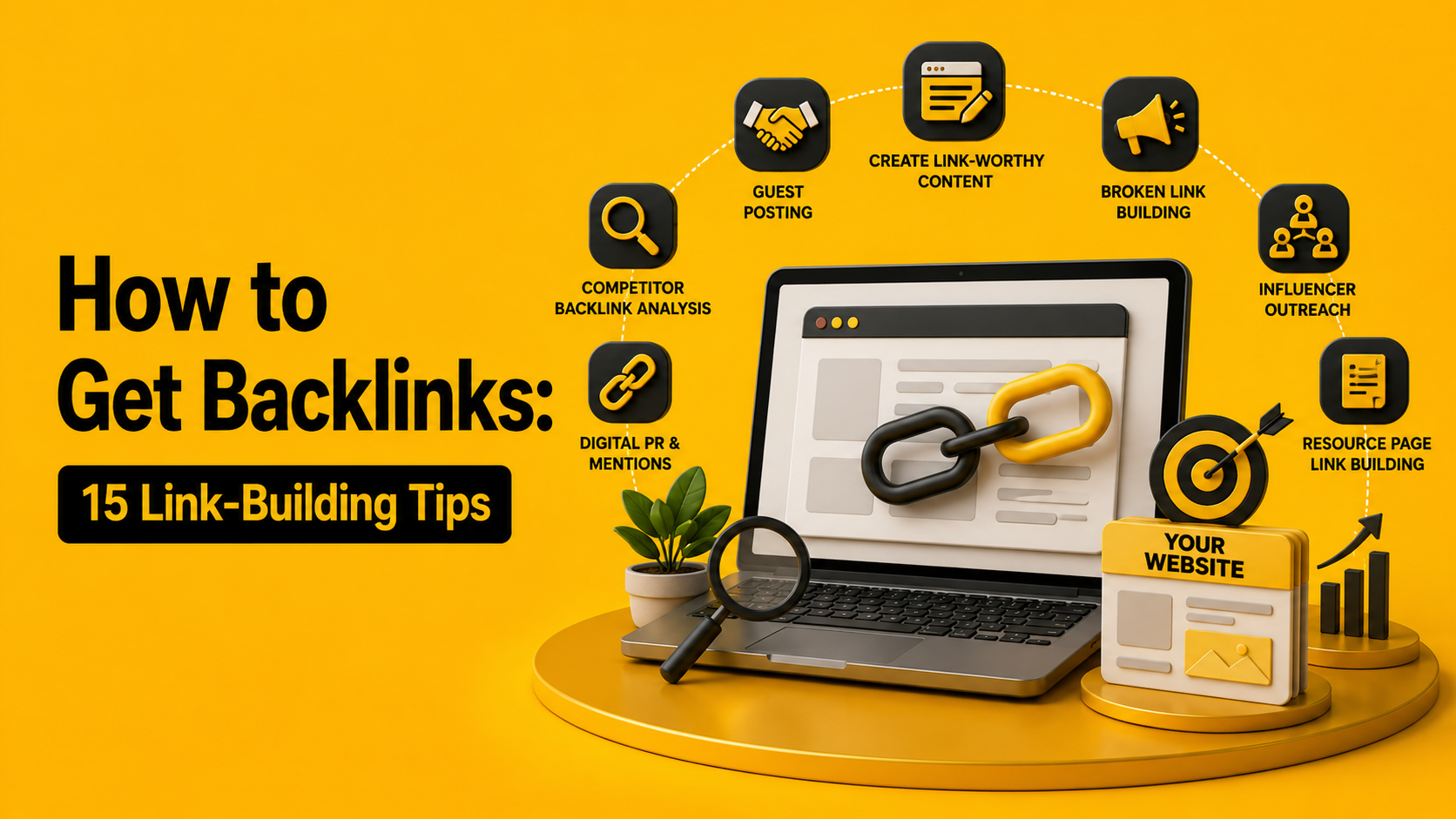
  • How to Get Backlinks: 15 Link-Building Tips

    How to Get Backlinks: 15 Link-Building Tips

    Have you ever published a fantastic blog only to watch it disappear into Google’s version of a black hole? You are not alone, because even though millions of pages are indexed every single day, but not many make it to page one.

    That is not because the pages do not contain good information, but more so because they do not have the authority that comes with it.

    Google does not only assess your written content; rather, it assesses whose trust is put in the written content. That is where the backlinking comes in.

    This guide will cover everything about backlinks and will take a look at the actual strategies that marketers, SEO agencies, and SaaS companies use to get high-quality backlinks.

    Let’s start with the basics before diving into the tactics that actually work.

    What Are Backlinks?

    A backlink is a hyperlink from another website pointing to yours. In other words, each backlink is a recommendation. Whenever a reputable website adds a link to your content, search engines perceive it as an indicator of your page being valuable.

    But all votes are equal in no way.

    Backlinks from Forbes or HubSpot have much more effect on ranking positions compared to tens of low-quality, spammy links from poor directories.

    So, SEO in the modern world is less about getting tons of links and more about getting the right ones.

    Why Are Backlinks Still Important for SEO?

    Even after hundreds of updates, backlinks remain one of the key ranking signals used by Google.

    The Google ranking algorithms consider a variety of signals while evaluating content quality, and authoritative links remain an essential part of building authority.

    The importance of backlinks lies in their ability to:

    • Improve keyword rankings
    • Increase Domain Authority (or Domain Rating)
    • Get pages indexed faster
    • Establish topical authority
    • ive referral traffic
    • Build EEAT (Experience, Expertise, Authoritativeness, Trustworthiness)

    Consider two blogs covering the same topic. They are both written in a good manner, both load fast and both cover search intent.

    But the deciding factor becomes authority, and backlinks are one of the clearest indicators of authority.

    What Makes a Quality Backlink?

    One good backlink can outperform fifty mediocre ones. This is what differentiates quality links from those that aren’t worthwhile.

    Authority

    Backlinks from authoritative sites have a lot more power to rank your site higher on search engines.

    For instance, a backlink from a leading publication in the industry has much more power than one from a new website with no organic traffic.

    Relevance

    The surrounding text matters.

    If you have a digital marketing company, it makes sense for you to have a backlink from an SEO site rather than a cooking blog.

    Google is now assessing the topic-based relationship between websites more often.

    Natural Placement

    Links placed naturally within quality content are always stronger compared to links that are inserted into footers, sidebars, or author bios.

    Natural links show authenticity compared to unnatural links.

    Traffic Potential

    Not all links help with SEO ranking. There are some links that actually bring visitors in addition to improving SEO ranking.

    Such backlinks tend to be very powerful.

    Anchor Text

    Anchor text helps Google understand what the backlinked page is all about.

    For example, instead of ‘Click here’ use ‘Learn how to get backlinks for your site’.

    How Google Evaluates Backlinks

    Google has become very advanced in detecting artificial patterns of backlinks.

    Modern algorithms analyze:

    • Topical relevance
    • Velocity of links
    • Variation of anchor text
    • Editorial context
    • Spam characteristics
    • Site quality
    • User engagement

    What this means is that purchasing thousands of backlinks not only fails to help, it can actually hurt your position.

    The current best practice is getting links you would have received regardless of Google.

    How to Get Backlinks: Proven Strategies That Work

    Let’s move beyond theory.

    Here are some practical methods used by successful SEO agencies and large corporations.

    1. Publish Original Research

    Unique data is the ultimate backlink magnet on the web.

    Every day journalists, bloggers, scientists, and marketers need to find trustworthy statistics to prove their points.

    But don’t recycle what others already published. Make your own original research.

    Possible ideas for the unique data you can gather:

    • Industry surveys
    • Behavioral studies
    • Your SEO experiments
    • Marketing trends
    • AI usage
    • Insights into consumers’ minds

    Imagine that your agency has researched 500 websites and found out that pages with less than two seconds loading speed get 27% more conversions.

    It is a piece of data nobody else possesses. References to your research will naturally generate

    1. Create Linkable Assets

    All pages don’t deserve backlinks. There are some formats that automatically generate links because they are helpful. These are known as linkable assets.

    Some examples are:

    • Ultimate Guides
    • Statistics pages for the industry
    • Calculators
    • Estimator tools
    • Templates
    • Checklists
    • Comparison charts
    • Infographics
    • Frameworks

    Consider Hubspot. A number of the most successful pages on Hubspot are not sales pages but resources. Writers link because of the solutions they provide.

    Always ask yourself, “Would someone else refer to this page instead of creating it?” If the answer is yes, then you have created a linkable asset.

    1. Build Statistics Pages

    The statistics pages keep earning backlinks year after year. The reason behind this is the need for data from writers.

    Instead of going through a number of sites, they link to one comprehensive page for all their requirements.

    For example:

    SEO Statistics 2026

    Some of the sections are:

    • Organic search statistics
    • AI Search Adoption
    • Local SEO growth statistics
    • Voice search statistics
    • Mobile stats
    • Conversion rates

    Keep updating this page each year. Over time, it becomes a backlink-generating machine.

    1. Use Digital PR Instead of Traditional Link Building

    Cold e-mailing random bloggers asking for backlinks doesn’t work anymore. Digital PR works much better.

    This method consists of creating stories that media outlets would actually like to cover.

    Such stories include:

    • Original research
    • Industry trends forecasts
    • Unusual achievements of a company
    • Market trends reports
    • Surveys
    • Expert opinions

    Media outlets need sources to support their stories.

    And if your content helps them tell a story, then linking to it becomes a natural thing to do. Instead of asking someone to link to you, create something worth covering.

    1. Turn Case Studies Into Link Magnets

    Results always speak louder than words.

    So don’t say,

    “Our SEO approach improved traffic.”

    Show it.

    The case study must include:

    • Problem
    • SEO approach
    • Technical details of the SEO process
    • Timeframe
    • Result
    • Lessons learned

    Example:

    “How We Gained 214% Organic Traffic Growth in 8 Months Without Paying for Backlinks.”

    This kind of content will appeal to bloggers and other industry publications that search for credible examples.

    1. Reclaim Unlinked Brand Mentions

    Sometimes people already mention your brand but forget to link. This is one of the simplest backlink strategies there is.

    With tools such as Google Alerts, Ahrefs, or Semrush, search for brand mentions within:

    • Your company
    • Your CEO
    • Your products
    • In-house frameworks
    • Studies or research reports

    Wherever an article mentions your organization but fails to provide any kind of link, reach out via email asking:

    “Just wanted to say thank you for the mention of our study. Is it possible to include a link to the full report?”

    Since they have mentioned your brand already, chances of success with this strategy will always be much higher than with cold outreach.

    1. Guest Posting Done Right

    Guest posting hasn’t died, it just wasn’t being done properly.

    Guest posting that involves publishing poor quality articles across a host of websites purely for backlinks was exactly the type of strategy that Google discouraged.

    Instead, try to seek out sites that are reputable within your industry.

    An ideal guest post should:

    • Help solve a reader’s issue
    • Provide insights, data, and experience that the site lacks
    • Mention your website when necessary, not constantly
    • Not be recycled content

    One well-placed guest article on a respected industry website can outperform dozens of links from low-quality blogs.

    Even better, it builds both backlinks and brand credibility.

    1. Leverage Broken Link Building

    Broken link building has been around for years, but it still works when done strategically.

    The concept is simple:

    Find broken links on authoritative websites, create (or identify) content that matches the original intent, and suggest your page as a replacement.

    Website owners appreciate it because you’re helping improve their user experience.

    Here’s the process:

    • Find broken links using tools like Ahrefs, Semrush, or Screaming Frog.
    • Analyze what the dead page originally covered.
    • Create a better, updated version of that content.
    • Reach out to the website owner with a polite email explaining the issue and offering your resource.

    Your email shouldn’t sound like a sales pitch. It should sound like you’re helping them maintain a high-quality website.

    1. Analyze Your Competitors’ Backlinks

    One of the fastest ways to discover backlinks quickly is as simple as analyzing where your competitors get their backlinks.

    SEO tools like Ahrefs, Semrush, and Moz give you an opportunity to analyze backlink profiles of your competitors in no time.

    Check for:

    • Industry blogs with links to multiple competitors
    • Resource pages
    • Guest posting opportunities
    • Directories of businesses
    • Industry associations
    • Newspaper mentions
    • Case studies referencing the brand

    When multiple competitors managed to earn backlinks from one particular website, it most likely means that website will also accept quality content on your topic.

    It’s not a question of imitating your competition, rather, it’s a matter of finding opportunities they’ve already proven to be successful.

    1. Create Free Tools That Solve Real Problems

    It’s natural to link to tools that ease people’s job.

    Consider how many times marketers promote:

    • ROI calculator
    • SEO audit tool
    • Keyword generator
    • Website speed checker
    • UTM builder

    Those resources keep getting more and more backlinks years after publication.

    Even a simple calculator may turn into something valuable when it solves a specific issue.

    Here are just a few examples of free tools a digital marketing agency can offer:

    • PPC budget calculator
    • SEO ROI calculator
    • Website Cost Estimator
    • Content Calendar Generator

    Interactive tools often outperform standard blog posts because they provide immediate value.

    1. Build Resource-Worthy Content

    Resource pages are found on many websites which suggest articles and other sources that can prove valuable.

    They include:

    • Universities’ websites
    • Governmental sites
    • Trade organizations
    • Professional organizations
    • Marketing communities

    What you need to do is create resource worthy of being suggested.

    Examples of backlink-worthy resources are:

    • Beginner tutorials
    • Industry-specific glossaries
    • Templates for downloading
    • Checklists
    • Researches
    • Educational material

    After publishing your material, contact relevant websites with a suggestion of how you can help their readers with your content.

    If your content is really worth it, links will come as a result.

    1. Become a Trusted Source for Journalists

    Journalists are always looking for experts willing to share their opinion on different topics.

    If you become such an expert, chances are high that you will start receiving backlinks from credible media sources.

    Answer quickly to requests to comment on:

    • SEO trends
    • Digital marketing
    • AI integration
    • Customer psychology
    • Development of small businesses
    • Statistics of industries

    Quotes based on experience and facts have much bigger chances of getting published. And that’s not about promotion, it’s about authority.

    1. Appear on Podcasts and Industry Webinars

    Not every backlink comes from written content.

    Podcast guest appearances will usually have links to your website, social media pages, or resource pages within the episode description.

    Aside from being great for SEO, appearing on podcasts helps build your personal and brand authority.

    Share:

    • Original experiences
    • Insights into the industry
    • Success stories
    • Frameworks
    • Lessons learned

    The more valuable the information, the more likely the listener is to link to—and visit—your website.

    1. Build Relationships Before You Need Backlinks

    The most valuable backlinks tend to come from existing relationships.

    Rather than reaching out to strangers whenever you need a backlink:

    • Connect with industry influencers on LinkedIn.
    • Comment on blogs.
    • Share others’ research.
    • Participate in webinars and other events.
    • Work together on content.

    If your authority is well-known already, backlinks will come naturally.

    Networking might seem counterintuitive as an SEO tactic, but it is definitely one of the most sustainable ways to build online authority.

    1. Keep Publishing Content Worth Linking To

    Businesses work on creating backlinks without paying attention to the quality of their content. It is impossible to get backlinks through an outreach campaign for poor-quality content.

    Before making any post public, ask yourself:

    • Does this answer the search intent completely?
    • Is there original data or experience?
    • Would I bookmark this page?
    • Does it offer something competitors don’t?

    Quality content makes all other strategies for backlinking easier. Good content reduces the difficulty level of earning links because people really want to link to it.

    Common Backlink Mistakes That Hurt SEO

    Not every backlink helps your rankings. There are practices that could have the opposite effect.

    Here are some of the most popular ones:

    Buying Cheap Backlinks

    Never trust anyone who tries to sell you “1,000 backlinks for $99.” Links from low-quality sites won’t bring any value and could harm your brand’s reputation.

    Ignoring Relevance

    A link from an irrelevant site outside your field doesn’t help SEO as much. Relevancy is as important as domain authority.

    Over-Optimizing Anchor Text

    An anchor text containing the same keyword all the time looks like manipulation.

    Always keep a balance between:

    • Branded anchor texts
    • Generic anchors
    • Keywords
    • URL anchors
    • Relying on Quantity Only

    Ten quality backlinks will do better than a hundred poor-quality links. Quantity never beats quality.

    Forgetting Internal Links

    While backlinks transfer authority to the destination page, internal linking allows you to redistribute it across your whole website.

    Having proper internal linking structure increases the worth of every single backlink.

    A 90-Day SEO Backlinks Strategy

    Are you searching for ways to acquire backlinks without going down the path of quick fixes? Consistency is the way to go.

    Here is what you need to do:

    Month 1: Build Assets

    • Publish two pillar guides.
    • Create one statistics page.
    • Build a downloadable checklist/template.
    • Improve your internal links.

    Month 2: Start Outreach

    • Look for competitor backlink chances.
    • Contact relevant resource pages.
    • Submit pitches for guest posts.
    • Claim lost brand mentions.

    Month 3: Grow Authority

    • Publish a unique case study.
    • Begin a digital PR campaign.
    • Add your insights to the journalists.
    • Get your content featured on LinkedIn and newsletters.

    In three months, you’ll lay out the groundwork for future success rather than focusing on backlinking hacks.

    Why Your SEO Backlinks Strategy Should Focus on Value

    Backlinks aren’t rewards for asking, they’re rewards for helping. The websites with the most powerful backlinks aren’t contacting thousands of people every day. They’re producing high-quality content that everyone wants to cite.

    An efficient SEO backlinks strategy requires a combination of outstanding content, effective promotion, relationship building, and technical SEO.

    When all of these things work together, backlinks are simply the result of these actions, not the goal itself.

    This is the key difference between a temporary ranking boost and sustained search visibility.

    Build High-Authority Backlinks with Xparro

    Knowing how to earn backlinks is one thing. Doing it effectively in order to scale your business is quite another.

    Xparro doesn’t use any outdated techniques or shady practices when it comes to creating backlink strategies. We always develop and implement only such backlink strategies that meet the standards of Google and provide sustainable growth.

    These strategies include:

    • Backlink audits and analysis
    • Competitor link-gap analysis
    • Digital PR campaigns
    • Creating high-value content
    • Guest blogging
    • Technical SEO
    • Internal linking
    • Creating content that will help you increase your authority

    Each and every backlink we acquire serves a specific purpose, to enhance your visibility and build up topical authority.

    Conclusion

    If you’ve been searching for how to gain backlinks to your website, keep one thing in mind: There are no easy fixes that will give you lasting results.

    The most valuable backlinks can only be gained by creating amazing content, addressing real issues, and establishing yourself as an expert in your niche.

    Always strive for quality rather than quantity. Build partnerships instead of just gathering backlinks. Create content that is worth citing.

    Your search engine rankings may vary, but your authority level will grow gradually.

    And when your website becomes the ultimate source for your industry, then you don’t need to go hunting for backlinks anymore, you’ll start earning them.
  • How to Grow on Social Media: Proven Tips for 2026

    How to Grow on Social Media: Proven Tips for 2026

    If your social media feels like you’re talking into a void, you’re not the only one.

    A lot of businesses keep posting and spend time creating content, but feel they get nothing out of it. Sometimes one post goes viral, while another goes unnoticed; after some time, it gets very frustrating. However, it is rarely because social media has stopped working for the company. The reason is that many brands continue to use outdated methods in a completely new environment.

    Nowadays, social media does not work as a broadcasting tool anymore. Social media is now a discovery platform. Users go to social media to learn something new, compare, research, and make decisions about which brands they can trust. It means that successful brands in social media are not necessarily those that are very active and loud. Successful brands are those that publish useful content.

    In order to succeed on social media without spending time on irrelevant posts and false engagement, you need a more targeted approach to your actions.

    Stop Measuring Success by Follower Count

    One of the biggest mistakes businesses make is thinking follower count is the main sign of success.

    Why wouldn’t we assume it? We can clearly see our followers. But does this mean they are good for our business? Not always. In some cases, having 5,000 engaged followers would be worth more than 100,000 followers who do not show any interest in what the brand offers. The latter means nothing, while the former will lead to success.

    What would you choose: 100,000 followers, who use your content just because they want to get entertained, or 8,000 followers, who are potential buyers, decision-makers, and regular users of your services? The latter option is always more beneficial.

    This is why a successful business pays much attention to engagement metrics. Reach will show how reachable your content is. Engagement rate proves its popularity. Saves and shares mean the content is valuable enough. Website clicks and qualified leads prove that the content is good for your business.

    Followers matter, but they are not everything. The key goal is to attract interested users, who later can become your customers and advocates.

    Start with Strategy, Not Content

    A lot of brands make the mistake of opening Canva before they open a strategy document.

    As a result, it is likely that all of the posted content is randomly selected. It could be anything from one day to another, one day, there is some inspirational quote, another day, some product promotional image, another day, something trendy that is unrelated to their audience. Even if each individual piece seems good by itself, the feed as a whole appears to be messy. People have no idea what the company represents or why they should follow it.

    Think about:

    • Who is your target audience?
    • What problems are you solving?
    • Which platforms deserve your attention?
    • What motivates your audience?
    • What objections prevent them from buying?
    • What action should they take after consuming your content?

    It becomes much easier to generate meaningful content when you clearly define your audience. Good social media growth always begins with clarity rather than creativity.

    Define Your Content Pillars

    Once you know your audience, the next step is to define your content pillars.

    Content pillars are key topics that your brand discusses repeatedly. They allow you to keep the content targeted but avoid redundancy. Rather than publishing any content at random, you concentrate on a few topics of relevance to your audience.

    For instance, the content pillars for a digital marketing agency may include:

    • SEO 
    • Paid advertising
    • Website optimization
    • Artificial intelligence in marketing 
    • Case studies

    The content pillars of a healthcare brand may be:

    • Wellness tips
    • Patient education
    • Elderly care
    • Service announcements

    Content pillars of a fintech brand may be:

    • Finance education
    • Safety
    • Product advice
    • Trends in the industry

    The key advantage of content pillars is evident. It allows your brand to become more recognizable. When people realize the kind of value they can expect from your brand, they will follow and engage with you.

    Choose the Right Platforms

    Another common mistake is trying to be active everywhere.

    It may sound exciting, but in reality, it will only bring fatigue and poor results. Each channel has its specific style, unique user habits, and its own advantages. You don’t have to dominate all channels. You just have to be present in those places where your audience spends their time.

    • LinkedIn – Perfect for sharing professional information, gaining authority, and building a reputation in the business environment.
    • Instagram – Helps you to become a visual storyteller and build a brand personality.
    • TikTok – The channel of quick discovery and fun content.
    • Pinterest – Works similarly to a search engine for ideas and inspiration. 
    • YouTube – Works for you if you want to educate people and drive traffic constantly.

    So instead of asking which platform is currently popular, try to answer the following question: “Where do my customers make decisions?”

    Understand What Algorithms Reward

    Algorithms are often blamed for poor performance, but they are really just trying to keep people on the platform. So, algorithms find any piece of content that will attract attention and engage users. 

    Algorithms prioritize:

    • Watch time
    • Share rate
    • Save rate
    • Comments
    • Click-through rate (CTR)
    • Repeat views
    • Meaningful engagement

    That is why small brands often outrank larger ones. It is pointless to have many followers if there is no engagement. At the same time, if your account produces useful and relevant content, its reach will be much higher than that of a larger brand.

    The bottom line is straightforward. The platform tries to show each user the content they may like.

    Create Strong Hooks

    Most people decide very quickly whether to keep watching or keep scrolling.

    This is why the first line or frame is of such crucial importance for the success of your post. If the beginning is poor, the reader is unlikely to make it to the part where the main idea is revealed. When the beginning makes people curious, the audience will spend some time reading.

    The hook does not necessarily have to be exciting or extravagant. All it takes is to make a person interested in the following sentence. Such a sentence might involve questioning a popular opinion, making a surprising observation, or even a comparison.

    For instance, instead of saying “Today we are discussing social media growth”, you might state “Most companies use social media incorrectly and prevent themselves from growing”. The latter sentence is more appealing as it introduces a contradiction.

    This is the goal of any hook.

    Make Content Worth Sharing

    Some content gets likes. Some content gets shared. The second type usually matters more.

    When users bookmark a post, it means they find value in it. 

    Content gets shared when it:

    • Solves a common problem
    • Saves people time
    • Removes confusion
    • Helps people make better decisions
    • Offers unique insights or perspectives

    The posts that get shared the most have several characteristics. First, they help solve the most common problems of their audiences. Secondly, they save people’s time. Thirdly, they eliminate possible mistakes and confusion. Fourthly, they help people make better decisions.

    If the content is something a user would recommend to their friends or colleagues and say, “This is very helpful,” then you are doing great.

    Balance Value and Promotion

    It is hard for people to stay interested if every post sounds like an advertisement.

    This is not to say that you shouldn’t market your services or products at all; rather, it’s simply recommended that marketing be included in an overall mix. There is a golden rule called “80/20” where 80% of your content would inform, entertain, motivate, or provide solutions to problems, and only 20% of your content would involve promotion of your product or service.

    The point here is that consumers typically feel the need to trust a brand before purchasing any products or services offered by it. Thus, constant advertisements would not make any sense for them because they have no reason to continue interacting with you.

    Turn Your Profile Into a Landing Page

    Your social profile is often the first real impression people get of your business.

    When people see that they like your post, the next logical step will be to go to your profile. They look at it for just a few seconds and make a decision, either they follow you or go back to their social life. This is why your profile should be clear and informative from the very beginning.

    Your profile should answer:

    • Who are you?
    • What do you do?
    • Why should people trust you?
    • What should they do next?

    This is not where you can use any vague statements. Your bio saying something like “Helping businesses grow” looks good, but it says very little. A more specific statement, “Helping B2B businesses generate qualified leads through SEO and performance marketing,” will give a lot more information.

    Clear is usually better than clever.

    Treat Engagement Like a Conversation

    Social media is not a billboard. It is a two-way conversation.

    This means that how you respond to what others are saying is as important as how you say things. The simple act of responding to other people’s comments, queries, or private messages could go a long way toward building your reach and connecting with people.

    You should also make your caption posts more interactive by posing open-ended questions and encouraging discussion. You should participate in discussions related to your field rather than always talking about yourself.

    When your followers feel that they are being heard, they will engage with you.

    Use Analytics to Improve Over Time

    Guessing is expensive. Analytics are not.

    In order to continue growing sustainably, one must analyze what works. However, do not base your analysis on likes and followers only. There is more to analytics than that.

    • Reach – Tells you if your content is found by people.
    • Engagement rate – Shows if people actually pay attention.
    • Watch time and audience retention – Reveal how much people spend watching your content.
    • Click-through rate – Helps to understand if the call-to-action was clear enough.
    • Conversion rate – Shows if social media efforts benefit the business.

    The main point here is not to ask yourself if your post performed well, but why it performed well. Was it due to the topic, hook, format, timing, or angle used? Understanding this will allow one to duplicate successful actions rather than guessing.

    Repurpose What Already Works

    You do not need to create something new for every single post.

    Some of the cleverest brands even invest much effort into repurposing their best pieces. One blog post might transform into a carousel, a video, a quote card, an email newsletter, a thread, and a checklist. Thus, you will get the greatest benefit from the same piece of content.

    It makes sense since no one sees all of your posts. Having a clear message, it makes sense to present it in different forms so that other people can digest it according to their preferences.

    It is not about being repetitive. It is about promoting your best ideas to the fullest extent possible.

    Build Followers Who Can Become Customers

    Not all followers are equal.

    An increasing number of followers becomes relevant only if they can possibly be interested in what your company is doing. This is why successful brands do not focus on quantity but rather on quality. Every follower must be able to potentially become your customer, a referrer, or a brand evangelist.

    And once you target the right people through your actions, your content becomes more practical and valuable, your interactions become more genuine, and your conversion rate becomes more possible.

    This is how true growth happens.

    Guide People Through the Funnel

    Social media works best when it supports the customer journey.

    • Awareness – Educational posts, tips, industry insights
    • Consideration – Case studies, testimonials, comparisons
    • Conversion – Demos, consultations, downloadable resources
    • Retention – Customer success stories, newsletters, exclusive content 

    Calls to action, demonstrations, consultations, and downloadable assets could be used at the conversion stage. Once they made their purchase, retention content could be used further.

    Alignment of content types with the phases of the customer journey makes content seem more relevant and effective.

    Avoid the Mistakes That Slow Growth

    Some mistakes are obvious. Others quietly hold your account back.

    Common mistakes include:

    • Posting without a strategy
    • Following every trend
    • Buying followers
    • Ignoring analytics
    • Forgetting social SEO
    • Posting inconsistently
    • Over-promoting products

    Social media platforms are becoming more like search engines. This is why keywords are more important than most brands think. Even how you say what you want to say in captions or on-screen texts matters.

    Conclusion

    Growing on social media is not about posting nonstop or chasing every viral trend.

    It is about knowing your audience, providing valuable content to them, and measuring growth in a smart way. The growing brands are those that remain helpful, consistent, and trusted.

    If your content helps people with something, allows them to make better decisions, or become more confident, they will definitely keep it, share it, follow you, and, of course, purchase something from you.

    Followers can increase your numbers, but trust increases your business.

  • SEO Site Migration Explained :Steps & Tips

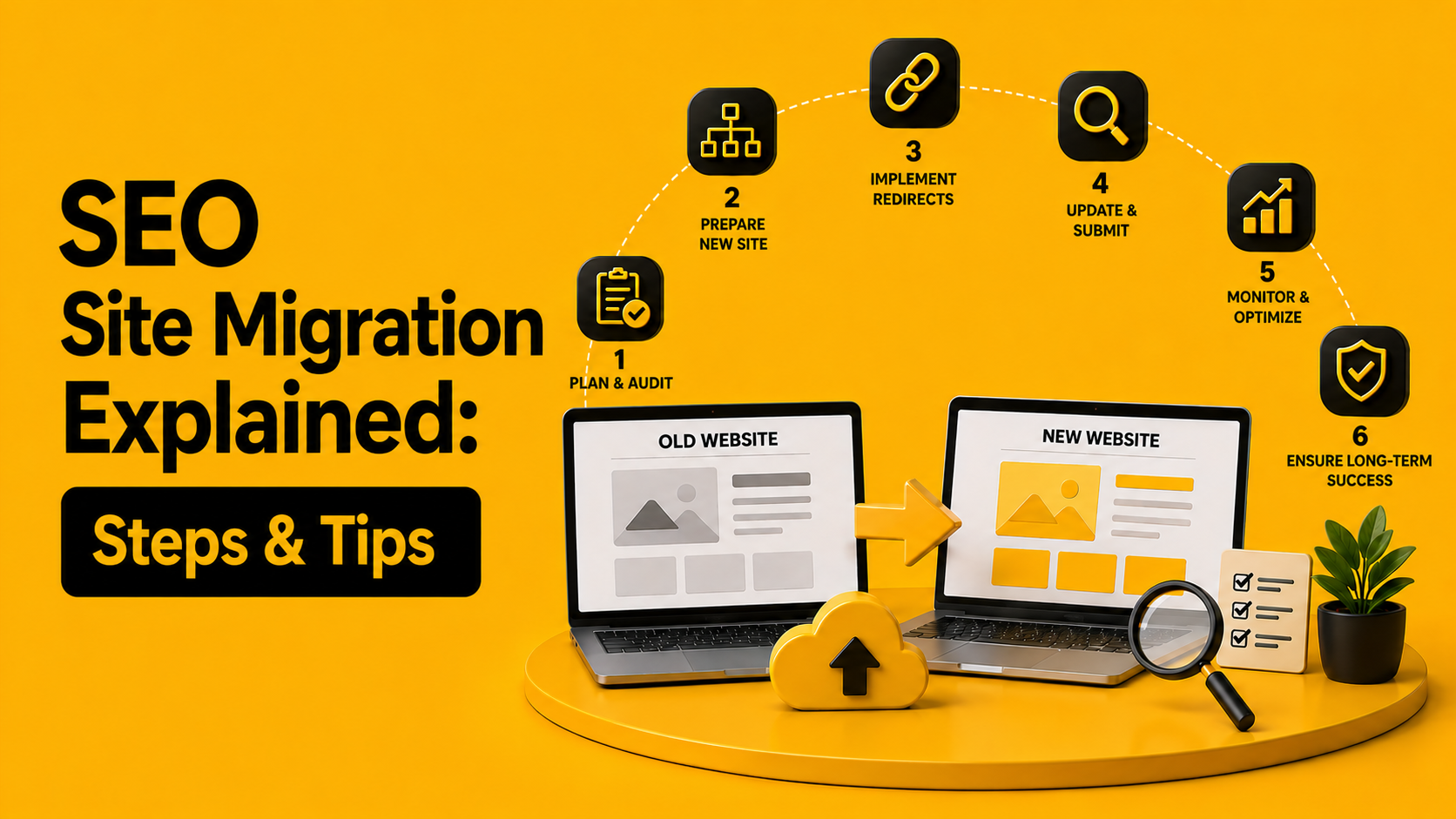
    SEO Site Migration Explained :Steps & Tips

    Launching a new website feels exciting.

    Having your organic traffic evaporate the following week? Not so much.

    Every year, companies redesign websites, move to a different domain, change CMS systems, change hosting services, or update their URLs. However, very few companies pay attention to an important part of the process, SEO site migration .

    Google doesn’t know that your brand new website is an improvement of your previous website; from Google’s point of view, you’ve just moved your house, but without any forwarding information.

    The outcome?

    Organic traffic drops by 20 – 70%, ranking instantly disappears, indexed pages become unavailable, loss of income, and months of SEO efforts are lost.

    Good thing it’s not too late.There is a solution for all of the above.

    Let’s break down exactly how.

    What Is SEO Migration?

    SEO migration is an effort to secure your site’s natural search visibility amid major technical or structural changes.

    As opposed to conventional website migration, SEO migration guarantees search engines will still make sense of your website after the migration.

    SEO migration can be necessitated by the following changes:

    • Domain migration
    • HTTPS migration
    • CMS migration
    • Website redesign
    • URL restructuring
    • Platform migration
    • Server migration
    • International website expansion
    • Website consolidation
    • Mobile-first design

    Simply put:

    Website migration is the alteration of your website. SEO site migration guarantees that Google doesn’t lose its memory about your website.

    Why Do You Need to Consider SEO in a Website Migration?

    Imagine moving your business to a new office.

    Change the furniture, paint the walls, add better lighting, but fail to communicate your new location to customers.

    This is what happens if you don’t include SEO during website migration.

    The search engines use hundreds of signals, including:

    • URLs
    • Internal links
    • Canonical
    • XML sitemap
    • Crawling paths
    • Redirects
    • Metadata
    • Schema
    • Content hierarchy

    Modifying these without adequate planning messes up Google’s understanding of your website.

    As shown by numerous industry research reports, inadequate migrations may take 3-12 months to recover from, whereas successful migrations typically restore performance in 4-8 weeks.

    SEO is not something that needs to be done “after you’ve launched your site.” It needs to be done before you even write a single line of code.

    What Happens If You Don’t Include SEO in Your Website Migration Strategy?

    Here’s what usually happens.

    Rankings Crash

    Google finds dozens, or even hundreds of broken links.

    The absence of redirects results in the loss of the authority accumulated over the years by those pages.

    Organic Traffic Drops

    No more traffic from search engines, because there are no more pages to be shown:

    • 404 errors
    • Soft 404
    • Redirect Loops
    • Inconsistent Canonicalization

    It will fall very quickly.

    Backlink Authority Gets Lost

    Think of having earned backlinks from such resources as Forbes, HubSpot, TechCrunch.

    If those pages become dead links without any redirect, then you will lose their authority.

    Crawl Budget Gets Wasted

    Googlebot starts crawling:

    • Redirect Loops
    • Broken Links
    • Duplicate Pages
    • Parameter Pages

    Rather than finding new and valuable pages.

    Revenue Suffers

    In the case of eCommerce sites, each rank drop results in:

    • Less traffic
    • Lower conversion rate
    • Sales drop

    SEO errors are not only technical issues.

    They are business issues.

    Types of SEO Site Migration

    Each migration process is different.

    Knowing the type of migration will help choose the correct SEO strategy.

    Domain Migration

    Changing:

    exampleold.com

    to

    examplenew.com

    Requires:

    • Domain-level redirects
    • Search Console updates
    • Brand citation updates
    • Backlink monitoring

    HTTPS Migration

    Moving from HTTP to HTTPS.

    While very popular, wrong migration will lead to duplicate content indexing problems.

    CMS Migration

    Examples:

    • WordPress → Shopify
    • Drupal → WordPress
    • Magento → Shopify
    • Wix → WordPress

    These often affect:

    • URLs
    • Metadata
    • Templates
    • Schema
    • Internal linking

    Website Redesign

    Design changes often introduce:

    • Content removal
    • Navigation changes
    • Page hierarchy shifts

    Google notices these changes too.

    URL Structure Migration

    Changing:

    /services/seo

    to

    /seo-services

    Seems harmless?

    Unless thousands of URLs are changed at once.

    The Complete SEO Migration Strategy

    Successful migrations follow three phases:

    • Before migration
    • During migration
    • After migration

    Skipping any stage increases your risks.

    Phase 1: Pre-Migration

    The first step where successful migrations win.

    1. Crawl Your Existing Website

    Make an inventory.

    Common tools include:

    • Screaming Frog
    • Sitebulb
    • Ahrefs
    • Semrush

    Extract:

    • URLs
    • Titles
    • Meta descriptions
    • Canonicals
    • Status codes
    • H1 tags
    • Internal links
    • Images
    • Structured data

    This will become your benchmark.

    1. Export Current Rankings

    Export existing keyword positions.

    List:

    • Top landing pages
    • Ranking keywords
    • Featured snippets
    • Local rankings

    You can’t do anything without this baseline.

    1. Create a Backup

    Always migrate with backups.

    Backup:

    • Database
    • Website files
    • Redirect rules
    • XML sitemaps
    • Robots.txt
    • Analytics data
    1. Benchmark SEO Performance

    List down:

    • Organic sessions
    • Conversions
    • Indexed pages
    • Crawl errors
    • Core Web Vitals
    • Page speed
    • Domain authority
    • Backlinks

    These metrics will be compared later.

    1. Map Every URL

    This will be the crucial stage.

    All old URLs need mapping to new locations.

    Old URL

    ↓

    New URL

    With no exceptions.

    1. Highlight High-Value Pages

    Identify pages that generate:

    • Revenue
    • Leads
    • Organic traffic
    • Backlinks

    Protect these first.

    Phase 2: Website Migration SEO Checklist

    Here’s the website migration SEO checklist professionals use.

    1. Implement 301 Redirects

    Do not use:

    • Homepage redirects
    • 302 redirects
    • JavaScript redirects

    Use 301 redirects.

    Redirect pages to their nearest equivalents.

    1. Preserve Metadata

    Maintain:

    • Page titles
    • Meta descriptions
    • H1 tags
    • Alt attributes

    Doing it all at once confuses search engines.

    1. Keep Content Consistent

    Making big changes during migration increases volatility.

    Redesign first. Then rewrite.

    1. Maintain Internal Linking

    Internal links pass authority.

    Check:

    • Broken links
    • Redirected links
    • Orphan pages
    • Navigation
    1. Update Canonical Tags

    The canonical tag must link to the new URL.

    Not the old website.

    1. Generate a Fresh XML Sitemap

    Pages to Include:

    • Indexable pages
    • Canonical URLs
    • 200 status pages

    Pages To Exclude:

    • Redirects
    • Noindex pages
    • Errors
    1. Update Robots.txt

    Be careful of accidental blocks:

    Disallow: /

    It’s more common that you might imagine. Especially following staging deployments.

    1. Validate Structured Data

    Verify:

    • Organization schema
    • Product schema
    • FAQ schema
    • Breadcrumb schema
    • Article schema

    Run through the Rich Results Test on Google.

    1. Improve Core Web Vitals

    This is a great opportunity to improve your:

    • Largest Contentful Paint (LCP)
    • Interaction to Next Paint (INP)
    • Cumulative Layout Shift (CLS)

    Google will reward improved user experience.

    1. Optimize Images

    Compress:

    • PNG
    • JPEG
    • WebP

    Enable:

    • Lazy loading
    • Responsive images
    • Alt text

    Phase 3: After Migration

    Launch day is just the starting point. The real work begins now.

    1. Submit the New Sitemap

    Submits the new XML sitemap in Google Search Console.

    1. Monitor Indexing

    Monitor:

    • Indexed pages
    • Excluded pages
    • Crawled but not indexed
    • Duplicate pages

    Once a day for the first month.

    1. Monitor Redirects

    Check for:

    • Chains
    • Loops
    • Invalid redirects

    Even one extra redirect may delay crawling.

    1. Watch Google Search Console

    Monitor:

    • Coverage
    • Page indexing
    • Manual actions
    • Core Web Vitals
    • Enhancements
    • Monitor Rankings

    Some temporary fluctuations are to be expected. Any sharp drop-offs need to be looked at.

    1. Check Analytics

    Watch:

    • Organic traffic
    • Bounce rate
    • Conversion rate
    • Revenue
    • Goal completions

    The success of the migration is not only defined by the rankings but rather by business performance.

    SEO Migration Checklist

    Below is a simplified SEO migration checklist that you may follow prior to the launch.

    Planning

    • Crawl current website
    • Export URLs
    • Note rankings
    • Benchmark traffic
    • Backup website
    • Perform backlink audit
    • Determine prioritized pages

    Technical

    • 301 redirects
    • Canonicalization
    • XML sitemap
    • Robots.txt file
    • SSL verification
    • Structured data
    • Page speed optimization
    • Mobile optimization
    • Internal linking
    • Meta tags

    Post-launch

    • Submit sitemap
    • Indexing status monitoring
    • Redirects check
    • Analytics verification
    • Google Search Console verification
    • Rankings tracking
    • Crawl issues fixing
    • Traffic monitoring

    Common SEO Migration Mistakes

    Even experienced teams make these mistakes.

    Redirecting Everything to the Homepage

    Google dislikes irrelevant redirects.

    Every page deserves a matching destination.

    Changing URLs and Content Simultaneously

    Too many variables make troubleshooting impossible.

    Ignoring Internal Links

    Thousands of internal links still pointing to redirected pages waste crawl budget.

    Update them.

    Forgetting Noindex Tags

    Staging websites often contain:

    <meta name=”robots” content=”noindex”>

    Launching with this tag can remove an entire website from search.

    Yes, it still happens.

    Blocking Google

    A forgotten robots.txt rule can silently destroy visibility.

    Removing High-Performing Pages

    Just because marketing no longer likes a page doesn’t mean Google agrees.

    Check performance before deleting anything.

    Ignoring Mobile Experience

    Google indexes the mobile version first.

    Desktop perfection means little if mobile performance suffers.

    How Long Does SEO Recovery Take After Migration?

    Recovery depends on:

    • Website size
    • Crawl frequency
    • Redirect quality
    • Authority
    • Migration complexity

    Typical timeline:

    TimeExpected Outcome
    Week 1Crawling begins
    Weeks 2-4Rankings fluctuate
    Month 2Most pages stabilize
    Months 3-6Full recovery for larger sites

    Large enterprise websites may take longer. Patience and continuous monitoring matter.

    Essential Tools for SEO Site Migration

    A successful migration depends on visibility into technical performance. These tools help you identify issues before and after launch.

    ToolPrimary Purpose
    Google Search ConsoleIndexing, coverage, sitemap submission, performance monitoring
    Google Analytics 4Organic traffic, conversions, engagement tracking
    Screaming Frog SEO SpiderFull website crawl, redirect validation, metadata audit
    SitebulbTechnical SEO visualization and crawl analysis
    AhrefsBacklink analysis, keyword tracking, link equity monitoring
    SemrushPosition tracking, site audits, competitive insights
    Google PageSpeed InsightsCore Web Vitals and page performance analysis
    Rich Results TestStructured data validation

    Using these tools together gives you a complete picture of how search engines experience your new website.

    Why Professional SEO Site Migration Matters

    Website migration isn’t just a developer’s task.

    Developers focus on functionality. Designers focus on aesthetics. Marketing focuses on branding. SEO focuses on ensuring customers can still find you.

    A successful migration requires collaboration between all teams, guided by a structured SEO framework.

    Without it, even a technically flawless website can lose years of accumulated search authority.

    Move Your Website Without Sacrificing Organic Growth

    A website migration should be an opportunity, not a setback.

    Whether you’re moving to a new CMS, redesigning your site, changing domains, or restructuring URLs, a well-planned SEO site migration ensures your rankings, traffic, and revenue remain protected throughout the transition.

    At Xparro, we combine technical SEO expertise with data-driven migration planning to minimize risk and maximize long-term organic performance. From comprehensive URL mapping and redirect implementation to crawl audits, indexation monitoring, and post-launch optimization, our team manages every stage with precision.

    If your business is planning a website migration, don’t leave your organic visibility to chance. Partner with Xparro to execute a migration strategy that preserves your search equity, protects your revenue, and positions your new website for sustainable growth.

  • What Is a Website Wireframe? Definition & Benefits

    What Is a Website Wireframe? Definition & Benefits

    Imagine spending $30,000 developing a website, only to realize after launch that customers can’t find the “Contact Us” button.

    Ouch.

    Believe it or not, it happens quite often.

    As per several user experience researches, solving usability issues after web development may cost 100 times higher compared to fixing the issues at the time of design. This is precisely why professional designers do not immediately open Photoshop or Figma to design beautiful pages.

    They first create something much more humble, but crucial for the process.

    A website wireframe.

    Consider this as an architectural plan of your website. Just as architects draw plans before the construction starts, web designers should make a wireframe prior to writing any codes.

    No matter if it’s an online store, SaaS, legal website, healthcare website or B2B lead generation website that you want to develop, understanding what is a website wireframe may help you avoid numerous redesigns and countless unnecessary development costs.

    Here’s why.

    What Is a Website Wireframe?

    To understand what wireframe is, let’s start with the definition.

    Website wireframe is a blueprint that shows the structure, hierarchy, navigation, and functionality of the web page without paying attention to its colors, images, typography, and branding.

    The following questions need answering by the use of wireframes:

    • Where to place the navigation menu?
    • How are people going to navigate around the site?
    • What elements require more focus?
    • How to position CTAs?
    • How many sections should be on the homepage?
    • What information needs to appear above the fold?

    In contrast to the visual design, website wireframe concentrates on usability and user experience.

    This concept may be considered as:

    Bones instead of skin.

    And if you feel hungry at this moment, It is burger without toppings, there is a bun, there is a patty, the structure works fine and the cheese? we’ll think about it later.

    What Is a Wireframe for a Website?

    Many people confuse wireframes with mockups or prototypes. Not the same things.

    A wireframe for a website is just the skeleton that defines:

    • How content is arranged
    • User flow
    • Navigation
    • The layout hierarchy
    • Functional parts
    • Interactive elements

    Here’s a quick comparison:

    WireframeMockupPrototype
    Layout onlyVisual designInteractive experience
    Black & whiteColors & brandingClickable
    UX planningUI designUser testing
    Fast to buildModerate effortHigh effort
    Focuses on functionalityFocuses on aestheticsFocuses on interactions

    All good websites normally go through this process:

    Concept → Wireframe → Mockup → Prototype → Development → Testing → Deployment

    Skipping the wireframe stage is like trying to make a cake without a recipe. Sometimes you make a desert. Sometimes you end up with concrete.

    Why Businesses Should Never Skip Wireframing

    Website redesigns are expensive. Developer time is costly. Meetings with stakeholders are costly.

    Post-launch code changes? Cost even more. By spotting usability problems early, wireframing saves money.

    Some of the questions it answers include:

    • Is the homepage too cluttered?
    • Are CTAs clearly displayed?
    • Is the navigation user-friendly?
    • Does the information structure work?
    • Are tasks easy to perform for visitors?

    It only takes a few minutes to spot these problems on a wireframe.

    It could take weeks to spot them after coding.

    The Importance of Wireframes

    Wireframes are important not because they help to draw boxes on a screen.

    They ensure alignment between:

    • Business goals
    • Customer expectations
    • UX designers
    • UI designers
    • Developers
    • Marketers
    • SEO experts
    • Content strategists

    With no wireframes: Marketing needs more banners. Sales need more CTAs. Developers need simple pages. Executives need everything “above the fold.” Congratulations. You’ve successfully designed Times Square.

    Benefits of Wireframing

    The advantages of wireframing influence practically all phases of website development.

    Improves User Experience

    Wireframing emphasizes usability.

    Designers concentrate on:

    • Navigation
    • Accessibility
    • Readability
    • Information hierarchy
    • User journey

    Instead of considering:

    “Does it look good?”

    They consider:

    “Can the user complete their task?”

    It makes a huge difference.

    Reduces Development Costs

    Modifying the layout in Figma can be done in seconds.

    Editing coded pages would entail:

    • Changes to front-end
    • Changes to back-end
    • QA testing
    • Testing browser compatibility

    Minor adjustments turn into costly technical work.

    Wireframing helps avoid this.

    Accelerates Design Approval

    Clients usually have trouble reviewing colored mockups since they get caught up with fonts and colors.

    Wireframes eliminate that distraction.

    Feedback is:

    • Move CTA
    • Add testimonials
    • Streamline navigation

    Instead of:

    “I don’t like this shade of blue.”

    Improves SEO Planning

    Planning for good SEO begins way before any writing takes place.

    Wireframes will show where:

    • H1 heading should be placed
    • The hierarchy of headings
    • Sections of content
    • Areas for internal linking
    • Locations for schema markup
    • Navigation levels

    SEO team can optimize the architecture before developers start coding.

    Supports Conversion Optimization

    High-performing websites aren’t just created randomly.

    Wireframes enable conversion rate optimization experts to design:

    • Forms
    • Trust badges
    • Testimonials
    • Price tables
    • Calls-to-action
    • Social proof

    Each one has its place.

    Enhances Mobile Responsiveness

    Modern websites are designed mobile first.

    Wireframes give insight into:

    • Mobile responsiveness
    • Breakpoints
    • Mobile navigation
    • Thumb-friendly buttons
    • Prioritizing content

    Before even starting the development process.

    Types of Website Wireframes

    Wireframes don’t have the same appearance. They can be classified in three major types.

    1. Low-Fidelity Wireframes

    This is a rough sketch.

    Properties:

    • Hand drawn
    • Blocks
    • Placeholders
    • No colors
    • Minimal information

    Ideal for brain storming.

    1. Mid-Fidelity Wireframe

    This contains:

    • Proper spacing
    • Navigation bar
    • Buttons
    • Content layout
    • Grid systems

    All agencies create mid fidelity wireframes before jumping into UI designs.

    1. High Fidelity Wireframe

    This looks like an actual website.

    It contains:

    • Actual content
    • Proper spacing
    • Interactive elements
    • Proper Layouts

    Although this is a wireframe it is quite close to actual designs.

    What Does a Website Wireframe Include?

    The professional website wireframe typically consists of:

    • Header
    • Logo
    • Navigation
    • Search
    • CTA button
    • Hero Section
    • Main headline
    • Supporting copy
    • Primary CTA
    • Illustration placeholder
    • Content Blocks

    Well-structured elements like:

    • Headings
    • Paragraphs
    • Cards
    • Icons
    • Lists
    • Forms
    • Contact form
    • Newsletter subscription
    • Quote Request
    • Demo
    • Testimonials

    Placeholder blocks include:

    • Customer reviews
    • Ratings
    • Logos
    • Footer
    • Navigation
    • Privacy policy
    • Contact information

    Website Wireframing Process

    This is how the experienced UX designers create wireframes.

    Step 1: Research Users

    Get to know:

    • Audience
    • Problems
    • Goals
    • Search intent

    Without researching users, you’ll be designing for yourself.

    Which is not a lucrative customer base.

    Step 2: Create User Flows

    Determine:

    Homepage

    ↓

    Services

    ↓

    Pricing

    ↓

    Contact

    ↓

    Lead Submission

    Simple. Predictable. Efficient.

    Step 3: Prioritize Content

    Ask:

    What content should users see first?

    Example:

    • Value proposition
    • CTA
    • Social proof
    • Feature list
    • Pricing

    Not all paragraphs should be front-page news.

    Step 4: Sketch Layouts

    Build multiple layout concepts.

    Compare them.

    Strip away unneeded elements.

    Step 5: Validate With Stakeholders

    Get buy-in before going into UI design. Making changes at this stage is cheap.

    Making changes at the next stage… Not so much.

    Website Wireframe Best Practices

    Keep It Simple

    Don’t create distractions.

    Wireframes aren’t about being beautiful. They’re about being useful.

    Focus on User Goals

    Each page should ask:

    “What’s the user trying to do?”

    And not:

    “What are we trying to say?”

    Maintain Visual Hierarchy

    By using:

    • Size
    • Position
    • Whitespace
    • Grouping

    Control where the viewer looks.

    Design for Mobile First

    Over 50% of website traffic is now on mobile devices. Mobile designs shouldn’t be an afterthought.

    Plan CTAs Carefully

    Every key page needs:

    • Primary CTA
    • Secondary CTA
    • Conversion path

    No scavenger hunts.

    Common Website Wireframing Mistakes

    Designing Instead of Planning

    Colors come much too soon. First comes structure. Then comes beauty.

    Neglecting Content

    Lorem Ipsum does not hide problems with layout. As often as possible, include realistic content.

    Overstuffing Pages

    Everyone involved wants yet another section. Not the user. Whitespace helps with readability.

    Neglecting Accessibility

    Planning includes:

    • Keyboard navigation
    • Screen readers
    • Color contrast
    • Readable spacing

    Accessibility is planned in wireframes.

    Neglecting SEO

    Planning includes:

    • Heading hierarchy
    • Content blocks
    • Internal links
    • Crawl paths

    SEO starts well in advance of development.

    Popular Website Wireframing Tools

    Figma

    Industry standard.

    Best for:

    • Collaboration
    • Design systems
    • UX
    • Adobe XD

    Good for UI design and prototyping.

    Balsamiq

    Good for low fidelity wireframes.

    • Fast.
    • Simple.
    • No distractions.

    Sketch

    Popular among macOS designers.

    • Good plugins.

    Axure RP

    Advanced interactions and enterprise UX projects.

    Wireframes vs Mockups vs Prototypes

    FeatureWireframeMockupPrototype
    LayoutYesYesYes
    ColorsNoYesYes
    TypographyMinimalCompleteComplete
    InteractionsNoLimitedFull
    User TestingBasicLimitedExtensive
    DevelopmentReadyPartiallyNearly Yes

    How Wireframing Improves Website Conversions

    Top-notch websites do not put their buttons by chance. They steer their visitors in certain directions on purpose.

    Better wireframes result in:

    • Better click-through rate
    • Better form fills out
    • Easy navigation
    • More scroll depth
    • More time spent
    • Better lead generation
    • Conversions

    Conversion starts with a painless experience.

    Real-World Example

    Let’s imagine two SaaS businesses.

    Business A

    Immediately starts development process.

    After launching the website:

    • Visitors cannot find pricing information.
    • Too few demo requests.
    • Difficult navigation.
    • 70% bounce rate.

    3 months pass, a full redesign is done.

    Business B

    Designs wireframes first.

    • Navigation testing.
    • Rises call to action.
    • Simplifies forms.
    • Includes more testimonials.
    • Launches only once.

    More conversions. Less money wasted.

    Guess who falls asleep easier at night?

    (A hint – it’s definitely not the business that pays twice for developer work.)

    When Should You Create a Website Wireframe?

    At all times.

    In particular, when:

    • Creating a new website
    • Re-designing your website
    • Launching an eCommerce website
    • Developing SaaS
    • Creating landing pages
    • Optimizing conversions
    • Growing your website architecture

    Wireframes should exist before visual design begins.

    Website Wireframes and SEO: Why Search Rankings Start Before Design

    Many businesses assume SEO begins after a website is built. In reality, SEO starts with the wireframe.

    The perfect wireframe lays down the base for creating a website which is easy to understand for search engines and is organized in such a way that it will help search engines to find out everything related to the website.

    1. Build a Logical Site Architecture

    Search engines appreciate sites that have a logical structure.

    Using wireframes, one can determine:

    • Navigation menu
    • Parent and child pages
    • Opportunities for internal linking
    • User journey paths

    The logical structure will help search engines easily crawl through the website.

    2. Plan Content Around Search Intent

    Each page has a unique user question that it must answer.

    While wireframing, you can decide upon:

    • Primary keywords per page
    • Secondary content blocks
    • FAQ sections
    • Calls-to-actions
    • Internal link suggestions

    It will help to avoid any keyword cannibalization, and each page will serve its unique SEO purpose.

    3. Optimize Heading Structure

    Wireframes allow designers and content creators to build the headings structure before writing any content.

    For instance:

    • One H1 for your page’s main topic
    • Several H2s for secondary topics
    • Several H3s for supporting content

    Headings hierarchy will improve page readability for users and SEO understanding of page content.

    4. Improve User Experience Metrics

    Nowadays Google takes into account various user engagement signals, like:

    • Time on page
    • Bounce rates
    • Navigation simplicity
    • Mobile usability
    • User page engagement

    Wireframes help in improving those metrics through proper page design and layout.

    5. Prepare for Technical SEO

    A careful website wireframe will include not only design-related information but also:

    • Breadcrumb navigation planning
    • Location of schema markup
    • Footer links positioning
    • XML sitemap construction
    • Internal link optimization
    • Responsive design features

    Pre-planning of all these components will help avoid potential difficulties and build a solid SEO foundation.

    How Xparro Builds High-Converting Websites

    At Xparro, we believe exceptional websites are engineered, not improvised.

    From the very beginning of every website project, our team follows a specific wireframing process which is aimed to match business goals, user behavior, and technical needs prior to the actual development process. 

    Our process does not allow us to move straight to visual design because, prior to that, UX experts have to map out the user journey, build an information architecture, develop conversion pathways and plan page structure for SEO and accessibility.

    The wireframing process at Xparro implies the following steps:

    • User research and persona mapping
    • Information architecture building
    • Mobile-first UX approach
    • SEO-friendly page structure
    • CRO planning
    • CTA placement
    • Navigation optimization
    • Developer ready wireframes

    This collaborative process reduces revisions, accelerates development, and ensures every website is built on a solid strategic foundation, resulting in faster launches, better user experiences, and stronger business outcomes.

    Final Thoughts

    If you’ve ever wondered what is a website wireframe, the simplest answer is this.

    It’s the smart strategy that turns the best website ideas into intuitive, effective sites.

    Wireframes help to eliminate guesswork, facilitate collaboration, decrease development expenses, build a solid foundation for future SEO optimization, and provide a better user experience way before any coding takes place.

    In today’s digital world, where companies need to stand out from their competitors and build sites that can generate leads and conversions, there is no room for assumptions during website development process.

    No matter whether you run a new startup company or have an enterprise-level site, and even if you just optimize a landing page, wireframing is the wisest investment you can make. Wireframes help you solve usability issues beforehand, focus on the right things and give every page a purpose.

    The best websites aren’t designed accidentally – they’re designed deliberately. And a good design always starts with a good wireframe.

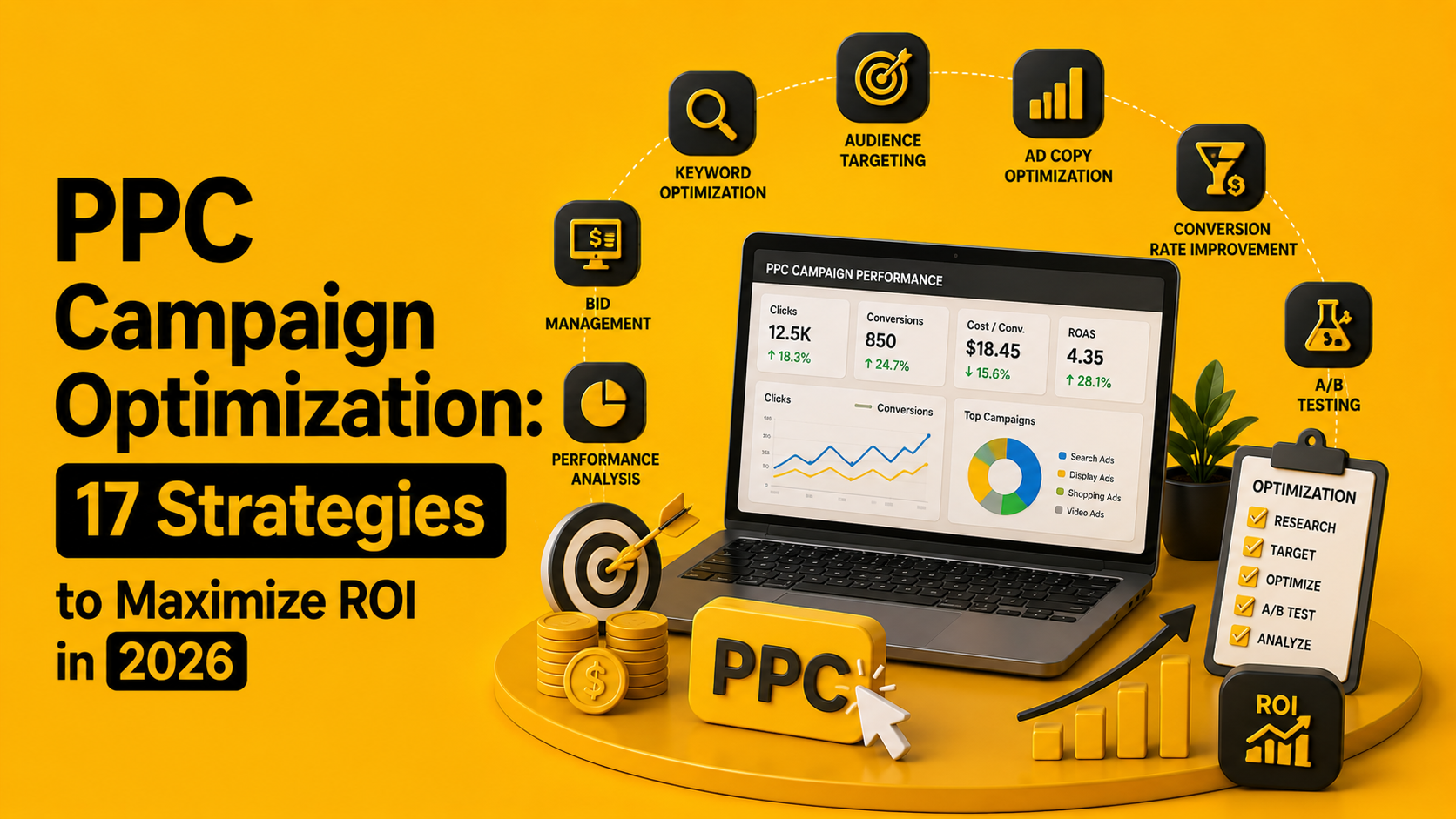
  • PPC Campaign Optimization: 17 Strategies to Maximize ROI in 2026

    PPC Campaign Optimization: 17 Strategies to Maximize ROI in 2026

    Imagine paying $20 every time someone walks into your store… only for them to ask where the restroom is and leave.

    That’s exactly what happens when your PPC campaigns aren’t optimized.

    American businesses lose 15%-30% of their Google Ads budget due to bad targeting, irrelevant keywords, ineffective landing pages, and low-quality traffic. And what makes the situation worse? Most marketers believe that they need to spend more money to make everything right.

    It doesn’t work like this.

    The winners don’t spend more; they simply spend better.

    Regardless of whether you use Google Ads, Microsoft Ads, YouTube ads, or Performance Max campaigns, the line between profit and loss is the optimization of PPC campaigns.

    In our guide, we will tell you all about how to optimize PPC campaigns, improve Quality Score, reduce Cost Per Acquisition, increase Click-Through Rate, and get a better return on advertising spending.

    Let’s save your advertising budget from Google spending it on people who look for something free.

    What Is PPC Campaign Optimization?

    PPC campaign optimization is an ongoing effort to optimize every part of a Pay-Per-Click campaign in order to maximize conversions and minimize costs.

    Rather than just placing an ad and hoping for the best, optimization entails making improvements based on data in relation to:

    • Keyword targeting
    • Search intent alignment
    • Ad copy
    • Quality Score
    • Bidding strategies
    • Audience segmentation
    • Landing pages
    • Conversion tracking
    • Budget allocation
    • Device targeting
    • Geographic targeting
    • Ad extensions

    Consider PPC to be like Formula 1 racing. Success is not determined by how big your engine is. It’s about optimizing hundreds of small details until every dollar counts.

    Why PPC Optimization Matters More Than Ever

    Google Ads is getting more and more competitive.

    In many industries:

    • CPC is still growing year over year.
    • AI bidding shifts the playing field.
    • Search intent becomes more complicated.
    • Expectations are to have a personalized experience.
    • Privacy changes cut down audience data.

    Without optimization:

    • Cost Per Click grows
    • Conversion rate drops
    • Quality score declines
    • Impression share reduces
    • ROAS declines

    Companies that always optimize their campaigns tend to beat the competition even with a smaller budget.

    The PPC Formula That Actually Drives Profit

    Successful PPC isn’t just:

    Traffic → Sales

    It’s:

    Relevant Keywords

          ↓

    Higher Quality Score

          ↓

    Lower CPC

          ↓

    Better CTR

          ↓

    Higher Conversion Rate

          ↓

    Lower CPA

          ↓

    Higher ROAS

    Every optimization compounds.

    Make improvements by 10% in five different factors, and you’ll see the results.

    17 PPC Campaign Optimization Strategies That Actually Work

    1. Audit Your Search Intent Before Touching Keywords

    AdWords users keyword-optimize. Smart AdWords users optimize their intent.

    Someone searching:

    “What is CRM?” is researching.

    Someone searching:

    “Best CRM software for manufacturing companies” is buying.

    Keyword types include:

    • Informational
    • Guides
    • Tips
    • Definitions
    • Commercial
    • Best
    • Compare
    • Reviews
    • Transactional
    • Buy
    • Pricing
    • Demo
    • Quote
    • Book

    High-intent keywords should get the majority of your budget.

    2. Build Smaller, Highly Relevant Ad Groups

    What’s the biggest mistake when running PPC campaigns? Piling 100 keywords into one ad group.

    Better to:

    Structure:

    Campaign

     → Ad Group

     → 5 to 15 closely related keywords

    Example:

    • Ad Group:
    • Google Ads Management

    Keywords:

    • Google Ads agency
    • PPC management company
    • Google Ads experts
    • Google Ads services

    This will make your ads extremely relevant. Google likes relevant ads.

    3. Eliminate Wasted Spend with Negative Keywords

    Use negative keywords to avoid unnecessary searches.

    Without them, your ads can appear for:

    • Free
    • Jobs
    • Salary
    • Tutorial
    • Course
    • PDF
    • DIY
    • Cheap

    If you sell premium software.

    Someone searching:

    “Free accounting software” must not click on your ads.

    Check the regular Search Terms Report.

    4. Improve Your Quality Score

    The following are affected by Quality Score:

    • CPC
    • Ad Rank
    • Impression Share

    Depending upon:

    CTR (Expected)

    Is the click-through rate high?

    Relevancy of Ad

    Is the ad relevant to the keyword?

    Landing Page Experience

    Does the landing page meet the needs of users?

    If your Quality Score is higher, then:

    • Cost is reduced
    • Ranks well
    • Gives more impressions

    Just improving Quality Score from 5 to 8 reduces CPC.

    5. Write Ads That Sound Human

    These are typical ads:

    Best Digital Marketing Company

    This one is better: More Qualified Leads Needed? Not Just More Clicks.

    Our PPC experts maximize every penny spent on bringing in dollars. 

    See the difference? 

    Features > Jargon.

    6. Use Dynamic Keyword Insertion Carefully

    Dynamic Keyword Insertion (DKI) can improve relevance.

    For instance, instead of:

    Best Marketing Agency

    Google will show:

    Best PPC Campaign Optimization Agency

    And this usually increases CTR. However, use it wisely. Bad headlines lower credibility.

    7. Optimize Landing Pages, Not Just Ads

    The ad is responsible for clicks. The landing page is responsible for conversion.

    High-converting landing pages have the following elements:

    • Headline
    • CTA button
    • Loading speed
    • Proof
    • Customer reviews
    • Trust badges
    • Short forms
    • Mobile-friendly design

    Even a good ad will not help a bad landing page.

    8. Improve Mobile Experience

    Over half of the paid search traffic comes from mobile users.

    So ask yourself:

    Can the user:

    • Read your page easily?
    • Submit the form quickly?
    • Call with one click?
    • Load the page within three seconds?

    If not, you’re paying for frustrated users.

    9. Segment Audiences Instead of Treating Everyone the Same

    Each group needs different messages.

    Examples:

    First-Time Visitors  → Provide education.

    Repeat Visitors  → Provide proof.

    Older Customers  → Provide upgrades.

    Cart Abandoners  → Provide urgency. 

    Segmenting your audience is critical to conversions.

    10. Test Everything (Seriously, Everything)

    Assume nothing. Always test.

    Test A/B tests for:

    • Headlines
    • Description
    • CTA buttons
    • Images
    • Landing pages
    • Forms
    • Offers
    • Pricing
    • Colors
    • Ad Extensions

    Small improvements add up over time.

    11. Choose the Right Bidding Strategy

    Your PPC strategy should align with campaign goals, not guesswork.

    Google Ads offers several bidding options:

    GoalRecommended Bidding Strategy
    Website TrafficMaximize Clicks
    Lead GenerationMaximize Conversions
    Revenue GrowthTarget ROAS
    Cost EfficiencyTarget CPA
    Brand VisibilityTarget Impression Share

    Avoid switching between different bidding approaches all the time; Google’s Smart Bidding needs time to learn based on enough conversion data. The frequent changes will restart this process and negatively influence the results.

    12. Use Audience Signals Alongside Keywords

    Nowadays, PPC advertising uses targeting of both keywords and audiences.

    Include these segments in your campaigns:

    • In-market audiences
    • Affinity audiences
    • Customer Match
    • Remarketing lists
    • Similar audiences (if possible)
    • Demographic targeting

    For instance:

    Not just keywords “CRM software” but also people who have been recently searching for business software.

    Such an approach gives you better intentions and higher conversion rates.

    13. Monitor Key PPC Metrics Beyond Clicks

    Clicks do not earn you money. Revenue does.

    Focus on metrics that influence profitability:

    MetricWhy It Matters
    CTRMeasures ad relevance
    Conversion RateShows landing page effectiveness
    CPACost to acquire one customer
    ROASRevenue generated from ad spend
    CPCCost efficiency
    Impression ShareLost visibility against competitors
    Quality ScorePredicts ad performance
    Lifetime Value (LTV)Long-term profitability

    A campaign with fewer clicks but greater ROAS may be more valuable than one with huge traffic and low conversions.

    14. Schedule Ads Based on Performance

    Your audience performance differs throughout the day.

    To understand your performance by:

    • Time of day
    • Day of week
    • Season
    • Holiday
    • Business hours

    Increase your bid if Tuesdays always perform better than other days. On the contrary, lower the bid if the time of day results in poor performance to save on budget.

    Ad schedule is an easy technique to enhance performance with no need for extra budget.

    15. Optimize Geographic Targeting

    Market performance varies from one place to another.

    Geographical performance breakdown can be done according to:

    • States
    • Cities
    • ZIP codes
    • Metropolitan areas
    • Radius targeting

    For instance,

    If you notice that Texas delivers leads at half the cost of California, put more budget towards Texas. This type of geographical targeting is highly beneficial for service-oriented companies.

    16. Use Automation, But Don’t Let It Drive Blindfolded

    Clean data makes automation effective.

    Use:

    • Smart Bidding
    • Automated Rules
    • Performance Max Campaigns
    • Responsive Search Ads
    • Scripting for reporting
    • Budget alerts

    But be careful about accepting automated suggestions.

    Not all suggestions from Google are made to help you make money. Some are made to get you to do more stuff within your campaigns.

    Automation needs to be helping your marketing, not doing your job for you.

    17. Build a Continuous Optimization Process

    What’s the most common error made by companies?

    Optimizing only once.

    PPC marketing is about constantly improving things.

    Have a weekly optimization checklist:

    • Review Search Terms Report
    • Add negative keywords
    • Pause underperforming ads
    • Refresh ad copy
    • Analyze Quality Score changes
    • Check landing page speed
    • Review conversion tracking
    • Adjust bids
    • Compare device performance
    • Monitor audience performance

    Optimization isn’t a project, it’s an ongoing system.

    Common PPC Mistakes That Drain Your Budget

    Even seasoned advertisers still make expensive mistakes.

    Do not make these typical mistakes:

    Targeting Broad Match Without Control

    Broad Match can help you get more traffic, but without negative keywords and audience signals, most traffic will be irrelevant.

    Ignoring Conversion Tracking

    Without accurate conversion tracking, there’s nothing to optimize.

    Sending Paid Traffic to the Homepage

    The homepage requires the user to look around. Dedicated landing pages do not distract and increase conversions.

    Chasing Vanity Metrics

    Lots of impressions and clicks sound great.

    But if they do not turn into leads and money, they are just useless numbers.

    Setting and Forgetting Campaigns

    Google Ads is not a crockpot. Not changing your campaigns for many months is almost a surefire way to get poor results.

    Advanced PPC Campaign Strategy for Better ROI

    After learning all the basics, take a look at advanced strategies.

    Layer First-Party Data

    Use customer relationship management (CRM) data through Customer Match to target:

    • Existing customers
    • Valuable leads
    • Returning customers
    • Optimize With Value-Based Bidding

    Don’t optimize for conversion only, but for the highest lifetime value customers.

    Align PPC with SEO

    The organic search results provide insights into performing keywords to invest in the paid campaign. Similarly, the search term report in PPC campaigns provides insights into future SEO efforts.

    Optimize the Entire Funnel

    Your ads shouldn’t be limited to just getting clicks.

    Optimize every stage:

    Awareness → Consideration → Conversion → Retention

    Companies that optimize all stages of the customer’s journey beat companies that focus only on attracting traffic.

    How to Optimize PPC for Better ROI: A Simple Framework

    Here is a process for optimizing your PPC campaign for higher ROI:

    • Audit campaign strategy and objectives.
    • Analyze search intent and keyword relevance.
    • Cut unnecessary expenses through negative keywords.
    • Increase Quality Score by creating relevant ads and landing pages.
    • Constantly test the ad copy.
    • Adjust bidding strategy based on conversion objectives.
    • Improve landing page loading speed and UX.
    • Use audience segmentation.
    • Check CPA, ROAS, and conversion value weekly.
    • Repeat the process every month.

    The optimization process is never completed.

    Why Businesses Trust Xparro for PPC Campaign Optimization

    At Xparro, we don’t believe in “set it and forget it” advertising.

    Our team develops data-driven PPC campaigns that optimize their performance with the help of analytics, automation, and a conversion-focused approach.

    We use:

    • Detailed PPC campaigns’ audits
    • Analysis of keyword intent
    • Competitive benchmarking
    • AI-based bid management
    • Optimization of landing pages
    • Conversion rate optimization
    • Integration of GA4 & CRM
    • Dashboards with real-time analytics
    • Ongoing A/B testing
    • Transparency in reports: only KPIs that impact your revenue

    Be it e-commerce stores, lead generation in the B2B market, or expansion of a brand across the country – we make sure that every advertising dollar works on growing your business.

    Key Points About PPC Campaign Optimization

    How do you optimize PPC campaigns?

    To optimize your PPC campaigns:

    • Refine keyword targeting
    • Include negative keywords
    • Boost Quality Score
    • Test ad copy
    • Landing page optimization
    • Refine bidding strategies
    • Conversion tracking
    • Audience behavior analysis

    How can I improve PPC performance?

    Make your PPC work better through higher intent keywords, improving the Quality Score, better landing page experience, audience segmentation, using Smart Bidding properly, and constant testing of ads/offers.

    How do you optimize PPC for better ROI?

    To optimize your PPC for better ROI:

    • Avoid wasted ad spend
    • Boost conversion rate
    • Enhance Quality Score
    • Bidding strategies optimization
    • Audience targeting
    • ROAS tracking instead of click-throughs
    • Constant testing of campaigns and landing pages

    What is the best PPC campaign strategy?

    The best PPC campaign strategy is based on audience research, high-intent keywords, good ad copy, conversion-oriented landing pages, automated bidding, and regular campaign performance optimization.

    Final Thoughts

    Winning in PPC isn’t about outspending competitors.

    It’s about out-optimizing them.

    Each of the above-mentioned changes, be it in the selection of keywords, Quality Score, landing page quality, or bidding strategy, will create a snowball effect.

    Companies that see their PPC campaign as a developing system always surpass companies that aim to achieve immediate results.

    If you are spending lots of money on your campaigns but not getting the revenue, something needs to change. Since the most successful PPC campaigns do not just attract traffic; they attract the right traffic at the right price.

  • How to Drive Traffic to Your Website: Proven Tips

    How to Drive Traffic to Your Website: Proven Tips

    You’ve built a website. The design looks great. The pages load fast. The content is polished. And yet your traffic dashboard looks like a ghost town.

    You are not alone. Countless businesses create their websites, hoping traffic will just start coming from nowhere. But this is not how the internet works. In 2026, traffic generation for websites will mean a clear plan that includes SEO, content marketing, AI visibility, distribution through social media, paid acquisition, and conversion optimization.

    The good thing about this is that it does not require millions of dollars for marketing. It only requires the right sources for traffic, correct implementation, and enough time.

    This guide explains how to get traffic on your website in simple terms based on data.

    Why Website Traffic Matters More Than Ever

    Traffic isn’t just a vanity metric.

    More qualified traffic means:

    • More leads
    • More selling opportunities
    • More visibility for your brand
    • More data on your customers
    • More money

    As per research conducted in the industry, the companies that frequently publish optimized content receive a lot more organic traffic and leads than those that do not.

    But there’s a twist. All traffic is not equal.

    What would you like:

    100,000 visitors? Or 5,000 highly qualified visitors who are ready to purchase from you?

    You would definitely pick the second one. Increasing traffic is not the purpose. Increasing qualified traffic is the goal.

    Start With Search Intent Before Anything Else

    All businesses make this mistake. They write content based on keywords. Intelligent marketers write content based on intent.

    There are four types of intent for all searches:

    Informational Intent

    People are looking for answers.

    Examples:

    • What is technical SEO?
    • How does Google indexing work?
    • How to increase the speed of your website?

    Navigational Intent

    They already know the brand name.

    Examples:

    • Xparro SEO services
    • Hubspot CRM
    • Shopify pricing

    Commercial Intent

    They are comparing the options.

    Examples:

    • Best SEO firms in the USA
    • Ahrefs vs Semrush
    • Marketing automation tools comparison

    Transactional Intent

    They are prepared to purchase.

    Examples:

    • Hire an SEO agency
    • Purchase CRM software
    • Website audit service

    The best converting traffic generally comes through commercial and transactional keywords.

    But 90% of companies write informative content.

    It is just like running a restaurant and providing only appetizers.

    Build a Search-First Content Engine

    Content is still one of the most scalable sources of traffic. But the approach “write blogs and hope for the best” is outdated.

    The modern content marketing strategy needs:

    Topic Clusters

    Not only write any posts, but also organize them into clusters.

    Example:

    Pillar Page:

    SEO Services

    Additional Articles:

    • Technical SEO Audit
    • Local SEO Optimization
    • Link Building Tactics
    • Keyword Research Strategy
    • Core Web Vitals Optimization

    It builds semantic relevance.

    Google knows what you are an expert in. Rankings improve faster. Traffic compounds over time.

    Cover the Entire Buyer Journey

    Top Funnel

    • Guides
    • Industry news
    • Beginner material

    Middle Funnel

    • Comparisons
    • Examples
    • Frameworks

    Bottom Funnel

    • Services pages
    • Pricing pages
    • Demo pages

    Most sites have an abundance of top funnel material and lack material to convert customers.

    Dominate Google AI Overviews

    Traditional SEO is not enough anymore. Google AI Overviews provide the answers to many queries right in the search results page. If your content is not referenced by AI algorithms, you will be missing out on exposure.

    Tips to increase AI Overviews:

    Answer Questions Immediately

    Don’t do:

    Too long introductions with stories.

    Do:

    Answers within the first 50 words.

    Use Structured Formatting

    AI algorithms love:

    • Lists
    • Tables
    • Numbers
    • Definitions
    • Processes

    Demonstrate Experience

    Google favors:

    • Original insights
    • Examples from the real world
    • Case studies
    • Commentaries by experts

    Content made only for the search engines will be overlooked.

    Add Entity Signals

    Refer to:

    • Tools
    • Technologies
    • Frameworks
    • People
    • Brands

    It helps to establish topic authority.

    The future is reserved for those who optimize for people and AI algorithms.

    Win Technical SEO Before Competitors Do

    While many organizations allocate substantial budgets for their content while overlooking important technical factors that can negatively impact their rankings.

    This is like pouring water into the bucket through which there is already a hole.

    Work on:

    Core Web Vitals

    Track:

    • Largest Contentful Paint (LCP)
    • Interaction to Next Paint (INP)
    • Cumulative Layout Shift (CLS)

    Bad results decrease the user experience and affect organic performance.

    Crawl Efficiency

    Make sure you have:

    • A working XML sitemap
    • An optimized robots.txt file
    • Broken links are removed
    • Redirect chains are solved

    Indexing Management

    Look for:

    • Indexed pages
    • Duplicate pages
    • Canonical tags
    • Noindex tags

    Many sites unintentionally disallow their pages to be indexed by search engines.

    Structured Data

    Add schema to:

    • Articles
    • Frequently Asked Questions (FAQs)
    • Products
    • Reviews
    • Organizations

    Schema improves search visibility and increases click-through rates.

    Capture Featured Snippets and SERP Features

    Being ranked #1 is no longer enough.

    Search results now include:

    • AI Summary
    • Featured snippets
    • People Also Ask blocks
    • Video sliders
    • Local pack
    • Image pack

    Most of the time, these SERP features drive more traffic than standard rankings.

    For featured snippets, create:

    Create Definition Sections

    “For example,

    What is technical SEO?”

    And write a short answer containing 40-60 words.

    Use Question-Based Headings

    • “How does website indexing work?”
    • “Why is page speed crucial?”
    • “Why do rankings fall?”

    Include Lists and Tables

    They are used by Google as featured snippets.

    The easier your content is to extract, the better your chances of getting featured.

    Turn LinkedIn Into a Traffic Machine

    LinkedIn may be the most underutilized traffic source for B2B brands. Most organizations write posts that nobody cares about.

    Instead,

    Publish Contrarian Opinions

    Like,

    “Traffic isn’t the issue you have; the conversion rate is.”

    This drives engagement.

    Repurpose Blog Content

    Take one blog post and turn it into:

    • Carousel posts
    • Videos
    • Polls
    • Text posts
    • Thought leadership series

    A single blog post can be turned into 10-20 pieces of content.

    Use Curiosity Gaps

    Instead of saying,

    “Read our blog on SEO.”

    Say,

    “Companies struggle to maintain rankings because of this technical reason. This is how you solve it.”

    Curiosity drives clicks. Not boring company posts.

    Use Programmatic SEO for Scalable Growth

    Programmatic SEO allows you to create hundreds or thousands of landing pages catering to long tail keywords.

    Example Keywords:

    • SEO services in Chicago
    • SEO services in Dallas
    • SEO services in Austin

    Or:

    • CRM software for healthcare
    • CRM software for law firms
    • CRM software for real estate

    Pros:

    • Coverage of numerous keywords
    • Growth of organic traffic
    • Reduced costs of creating content

    But there’s a catch. Nothin’ but thin pages will not help you. The page needs to add value.

    Build Authority Through Digital PR

    Backlinks are one of the top signals used by Google for ranking websites. But paying for links might be harmful. Digital PR is the answer.

    Some ways are:

    Publish Original Research

    Journalists love stats.

    Write an industry report using:

    • Survey results
    • Insights from customers
    • Analysis of the market

    Create Data Studies

    Examples:

    • AI adoption trends
    • Benchmark marketing performance
    • Specific industry reports

    Provide Expert Commentary

    Respond to media inquiries.

    Provide insights. Get links through natural mention. A single quality backlink can outperform dozens of low-quality links.

    Leverage Video SEO Before Everyone Else Does

    Video consumption is growing rapidly. And Google is becoming more and more video-centric.

    Use videos to:

    • Educate
    • Demos
    • Analyze industry
    • Do case studies

    Optimize:

    • Video titles
    • Video descriptions
    • Video transcripts
    • Video chapters
    • Video thumbnails

    Embed videos in your blog articles.

    It will increase:

    • Engagement rate
    • Time on page
    • Visibility in search engines

    Moreover, the same video may be used on several platforms.

    Invest in Paid Traffic Strategically

    Growth through organic channels will take time.

    Paying for traffic will accelerate it. The trick is to pay for traffic wisely.

    Google Search Ads

    Good fit for:

    • High intent keywords
    • Service-oriented businesses
    • Lead gen campaigns

    LinkedIn Ads

    Perfect for:

    • B2B
    • Decision makers
    • Enterprise-level campaigns

    Meta Ads

    Suitable for:

    • Retargeting campaigns
    • Brand awareness
    • Nurturing leads

    Retargeting Campaigns

    Most of the time, people do not convert on the first visit. That is where retargeting comes in. With a much lower cost per lead.

    The smartest companies leverage SEO and paid media together rather than competing with them.

    Optimize for Click-Through Rate (CTR)

    Ranking does not automatically mean clicks. Your search listing needs to be unique.

    Increase your CTR with:

    Strong Title Tags

    Bad – SEO Guide

    Good – Technical SEO Checklist: 25 Fixes That Will Improve Your Rankings

    Compelling Meta Descriptions

    Highlight the benefits. Not keyword stuffing.

    Emotional Triggers

    Samples:

    • Proven
    • Step-by-Step
    • Complete
    • Data-Backed
    • Beginner-Friendly

    Higher CTR usually translates to more organic traffic, even when your ranking stays the same. This is free traffic. Everybody loves free traffic.

    Build an Email Traffic Flywheel

    Most companies spend countless resources trying to attract visitors.

    Very few concentrate on retaining them.

    Email still represents one of the most profitable marketing methods.

    Make:

    Lead Magnets

    Samples:

    • Templates
    • Checklists
    • Reports in your industry
    • Calculators

    Email Sequences

    Engage your subscribers with:

    • Educational materials
    • Case studies
    • Product updates
    • Offer

    Newsletter Delivery

    Each piece of content needs to be delivered to your subscribers.

    This way, you get instant traffic signals.

    And unlike social media, where your audience could vanish overnight because of some algorithm change, your subscribers are still yours.

    Use Analytics Like a Growth Marketer

    You can’t fix what you can’t measure.

    Measure:

    Traffic Metrics

    • Sessions
    • Visits
    • Referral traffic sources
    • Engagement rate

    SEO Metrics

    • Ranking
    • Impressions
    • Click-through rates
    • Indexed pages

    Conversion Metrics

    • Leads
    • Revenue
    • Cost per acquisition
    • Customer lifetime value

    Behavioral Metrics

    • Heatmap
    • Scroll Depth
    • Session Recordings

    Software such as GA4, Search Console, Microsoft Clarity, and Looker Studio offer data points to discover growth.

    Data must drive your decisions. Not gut feeling.

    The Traffic Strategy Most Businesses Should Follow in 2026

    Here is how to get started:

    Phase 1: Foundation

    • SEO audit
    • Analytics
    • Conversion tracking
    • Optimization for speed

    Phase 2: Organic Growth

    • Keyword research
    • Topic clusters
    • Creating content
    • Internal linking

    Phase 3: Authority Building

    • Digital PR
    • Link building
    • Collaboration within the industry

    Phase 4: Distribution

    • Promotion on LinkedIn
    • Email marketing
    • Video content

    Phase 5: Acceleration

    • Paid search
    • Retargeting
    • Conversion optimization

    Most businesses skip straight to Phase 5.

    It explains why their advertising budget gets depleted quicker than the office donuts at work on a Monday morning.

    Conclusion

    Learning how to drive traffic to your website isn’t about finding a secret hack. It is about developing multiple traffic sources that play together.

    The fastest-growing websites are leveraging technical SEO, high-intent content, AI Overview optimization, digital PR, social distribution, e-mail marketing, and paid acquisition

    Every tactic supports the other tactics. Traffic becomes consistent. Lead generation becomes scalable. Growth no longer relies on chance. Those who win in 2026 will not be looking for hacks. They will be building systems.

    If you want to have consistent website traffic, begin with search intent, develop high-value content, optimize for AI searches, and distribute aggressively. Because on the internet, it pays to get visibility. But consistency is more valuable.

  • 15 Senior Living Marketing Strategy Tips for 2026

    15 Senior Living Marketing Strategy Tips for 2026

    The senior living industry has changed. Families don’t choose communities the way they did five years ago. And if your marketing strategy still relies on brochures, referrals, and hoping people find your website, you’re probably leaving occupancy, and revenue, on the table.

    Imagine spending thousands on advertising only to receive inquiries from people who aren’t ready to move, don’t fit your community, or disappear after the first call.

    Frustrating, right?

    Meanwhile, another senior living community across town is filling tours, nurturing families through long decision-making cycles, and maintaining waiting lists.

    What’s their secret?

    They understand that today’s buyers aren’t just seniors. They’re adult children, caregivers, spouses, healthcare professionals, and sometimes even grandchildren acting as researchers. That means your senior living marketing strategy must speak to multiple audiences simultaneously.

    The good news? You don’t need a massive budget to win. You need the right strategy. And this is precisely what our guide will discuss.

    Why Senior Living Marketing Is Different from Traditional Marketing

    Let’s be honest.

    Nobody wakes up on a Tuesday morning and says:

    “Honey, let’s go shopping for assisted living communities today!”

    The decision is emotional. It’s often stressful. Sometimes it follows a health scare, hospital discharge, or family crisis.

    Unlike buying a new car or choosing a restaurant, selecting a senior living community involves:

    • Trust
    • Security
    • Health care concerns
    • Dynamics within the family
    • Financial planning
    • Emotional preparedness

    This is why effective marketing programs for senior living centers emphasize education over selling. The communities that understand this create relationships long before move-in day.

    Understanding the Modern Senior Living Buyer Journey

    Before launching campaigns, you need to understand how families make decisions.

    The journey usually looks something like this:

    Stage 1: Awareness

    A family notices:

    • Mom is becoming forgetful
    • Dad is struggling with mobility
    • Daily tasks are becoming difficult

    At this point, they’re searching:

    • “When is it time for assisted living?”
    • “Signs my parent needs senior care”
    • “Independent living vs assisted living”

    They’re not looking for your community yet. They’re looking for answers.

    Stage 2: Research

    Here comes the comparison shopping.

    Questions to be answered are:

    • What services are offered?
    • How much will it cost?
    • What amenities are important?
    • Where are the highly-rated communities located?

    Stage 3: Evaluation

    At this point, families narrow their choices.

    They:

    • Read online reviews
    • Watch video testimonials
    • Take tours
    • Compare costs
    • Consult with an advisor

    And now your marketing becomes differentiating.

    Stage 4: Decision

    Trust becomes the deciding factor.

    The community that makes families feel safe and confident often wins.

    Not necessarily the cheapest one. Not even the closest one. The most trusted one.

    The Foundation of Every Successful Senior Living Marketing Strategy

    Before discussing tactics, let’s discuss the foundation.

    Many communities chase leads without fixing the basics. It’s like pouring water into a bucket with holes. Your marketing foundation should include:

    A Professional Website

    Your website isn’t an online brochure. It’s your top salesperson.

    It must be:

    • Fast-loading
    • Mobile-friendly
    • Have clear CTAs
    • Be full of community photos
    • Feature stories of residents
    • Make it easy to schedule tours

    Families can assess your credibility in seconds. If your website looks outdated, they may assume your community is too.

    Strong Brand Positioning

    Many communities sound identical.

    They all say:

    • Caring staff
    • Comfortable living
    • Exceptional service
    • Resident-focused care

    That’s nice. But it’s also what everyone says.

    Ask yourself:

    Why should families choose you?

    Do you have:

    • Luxurious amenities
    • Memory care services
    • Resort-style living
    • Religious services
    • Focus on wellness

    Be different.

    Marketing Ideas for Senior Living That Actually Generate Results

    Let’s get into some actual tactics.

    Here are marketing strategies that have proven successful at filling up senior living communities.

    1. Create Helpful Educational Content

    Families spend weeks or months researching before contacting communities. Meet them early.

    Create blog content around questions such as:

    • When should seniors move to assisted living?
    • What are the signs of cognitive decline?
    • How much does senior living cost?
    • How to talk to parents about senior care

    Educational content builds trust before sales conversations begin.

    And trust drives tours.

    2. Invest in Local SEO

    Most families search locally.

    Examples include:

    • Assisted living near me
    • Senior living in Dallas
    • Memory care community in Tampa

    Your Google visibility matters.

    Optimize:

    • Google Business Profile
    • Location pages
    • Local keywords
    • Community listings
    • Reviews

    Local SEO can attract high-quality traffic.

    3. Turn Resident Stories into Marketing Gold

    Real stories outperform polished sales messages. Every. Single. Time. Families want proof.

    Share:

    • Resident success stories
    • Family testimonials
    • Lifestyle transformations
    • Community experiences

    People trust people more than advertisements. Always have. Always will.

    4. Build a Video-First Strategy

    Let’s face it. Nobody wants to read a 50-page brochure anymore. Video helps families experience your community before they visit.

    Make:

    • Virtual tours
    • Introductions of staff members
    • Interviews with your residents
    • Events coverage
    • “Day in the life” videos

    Videos eliminate uncertainty.

    5. Use Facebook Advertising Strategically

    Unlike common belief, Facebook is not just about posting vacation pictures and debating whether pineapple goes on pizza.

    Facebook ads are extremely effective for marketing senior care communities.

    Why?

    Because adult children, the primary decision-makers, spend significant time on Facebook.

    Target:

    • Adults aged 45-65
    • Caregivers
    • Local audiences
    • Healthcare interests

    Promote:

    • Educational guides
    • Community tours
    • Events
    • Webinars

    6. Offer Downloadable Resources

    Lead magnets work exceptionally well in senior living.

    Examples include:

    • Free Guides
    • Assisted Living Cost Guide
    • Senior Care Planning Checklist
    • Family Caregiver Handbook
    • Downsizing Guide for Seniors

    Families exchange contact information because the resource provides immediate value.

    You gain qualified leads. Everyone wins.

    7. Host Educational Events

    Events allow building authority and generating leads.

    Popular topics include:

    • Aging and wellness
    • Financial planning
    • Estate planning
    • Memory care education
    • Caregiver support

    You become more than a community. You become a trusted resource.

    Marketing to Senior Living Communities Requires Emotional Intelligence

    One major mistake marketers make? 

    They focus only on features. Families care more about outcomes.

    Instead of saying: “Private dining room available.”

    Say: “Celebrate your family events without ever having to leave the community.”

    Rather than: “24/7 staff.”

    You should be saying: “Peace of mind that there is always help available.”

    Sell the outcome. Not the feature.

    8. Build an Email Nurture Campaign

    Most leads won’t convert immediately.

    That’s normal.

    A decision may take:

    • 30 days
    • 90 days
    • 6 months
    • Longer

    Without nurturing, many prospects disappear.

    So build an email campaign which:

    • Educates
    • Reassures
    • Answers any questions
    • Showcases successes
    • Offers tours

    Stay visible until they’re ready.

    9. Strengthen Your Online Reputation

    Reviews heavily influence decisions. Families read them. A lot. Encourage satisfied residents and families to leave reviews. Respond professionally to all feedback.

    Positive reviews improve:

    • Trust
    • Local SEO
    • Conversion rates

    A five-star reputation can become your strongest marketing asset.

    10. Develop Healthcare Referral Partnerships

    Lots of move-ins come through referrals.

    Create relationships with:

    • Hospitals
    • Doctors
    • Physical rehabilitation centers
    • Home healthcare organizations
    • Social service organizations

    Referrals may be the best source for your occupancy rate.

    11. Use Retargeting Campaigns

    Most website visitors leave without converting.

    That doesn’t mean they’re uninterested. They’re thinking. Researching. Comparing.

    Retargeting ads help bring them back. These campaigns often produce some of the highest ROI in digital marketing.

    How to Turn Senior Living Leads Into Scheduled Tours

    Generating leads is only half the battle.

    Many senior living communities celebrate when they receive a form submission, only to discover that most inquiries never become tours.

    The reality is that occupancy growth depends less on lead volume and more on lead conversion.

    A community generating 50 leads and converting 20% into tours will outperform a community generating 150 leads with a 3% conversion rate.

    That’s why every senior living marketing strategy should include a structured lead nurturing process.

    Respond Within Five Minutes

    The first community to respond often wins.

    When a daughter submits an inquiry about assisted living for her father, she’s usually contacting multiple communities at the same time.

    If your team waits until the next day to call, another community may have already scheduled a tour.

    Speed matters.

    Automate workflows to instantly:

    • Send a confirmation email
    • Provide some information
    • Notify the sales team
    • Schedule a follow-up call

    The faster the response, the higher the likelihood of conversion.

    Use Multiple Follow-Up Channels

    Most prospects won’t answer the first call.

    That doesn’t mean they’re uninterested.

    Families are often:

    • Managing caregiving responsibilities
    • Discussing options with siblings
    • Researching costs
    • Comparing communities

    Use a combination of:

    • Phone calls
    • Email sequences
    • SMS reminders
    • Retargeting ads

    to stay visible throughout the decision-making process.

    Focus on Booking Tours, Not Selling Rooms

    One of the biggest mistakes sales teams make is trying to close too early.

    Families are not ready to commit after their first inquiry.

    Instead, focus on the next logical step:

    A community tour.

    Tours allow prospects to:

    • Experience the environment
    • Meet staff members
    • See amenities firsthand
    • Build emotional confidence

    The goal of your marketing should be to move prospects from inquiry to tour as efficiently as possible.

    Automate Long-Term Lead Nurturing

    Not every prospect is ready today. Some families may not make a move for six months or even a year. Without nurturing, these opportunities disappear.

    Create automated email campaigns that provide:

    • Caregiving resources
    • Senior living guides
    • Resident success stories
    • Wellness tips
    • Community updates

    This keeps your community top of mind until the family is ready to take action.

    Measure Your Tour Conversion Rate

    Most communities track leads. Fewer track tours. The best operators track both.

    Monitor metrics such as:

    • Lead-to-tour rate
    • Tour-to-move-in rate
    • Average response time
    • Cost per tour
    • Cost per move-in

    These numbers reveal whether your marketing is generating genuine occupancy opportunities or simply producing inquiries.

    Because in senior living marketing, tours are the bridge between awareness and move-ins.

    The communities that consistently fill tours are usually the communities that consistently fill rooms.

    The Role of Content Marketing in Senior Care Marketing

    Content marketing isn’t just about publishing blogs. Content marketing is creating a trusted brand.

    Consider:

    Which of the following companies would you rather purchase services from?

    Company A

    “Schedule a tour today!”

    Company B

    “We have assisted hundreds of families in navigating senior care with ease.”

    The answer is obvious. Authority creates trust. Trust creates tours. Tours create move-ins.

    12. Create Topic Clusters around Senior Living

    Instead of randomly writing articles, create topic clusters.

    Example:

    Main Topic

    Guide to Senior Living

    Articles within cluster:

    • Understanding Independent Living
    • Assisted Living Costs
    • Memory Care Information
    • Downsizing
    • Senior Wellness Programs

    SEO will benefit and assist the family during their buying journey.

    13. Make Effective Use of Social Media Storytelling

    Social media is not about uploading generic holiday images.

    Families crave authenticity.

    Include:

    • Resident events
    • Communal events
    • Staff interviews
    • Wellness programs
    • Volunteer activities

    Showcase what happens within the community. No need for any marketing talk here.

    14. Use Data to Improve Marketing Performance

    The best marketers don’t guess. They measure.

    Track:

    • Website traffic
    • Lead sources
    • Cost per lead
    • Tour bookings
    • Move-in conversions
    • Email engagement

    Marketing without analytics is like driving blindfolded. Technically possible. Highly discouraged.

    15. Create a Resident Ambassador Program

    Happy residents can become powerful advocates.

    Encourage residents and families to:

    • Participate in videos
    • Attend open houses
    • Share testimonials
    • Refer friends

    Word-of-mouth remains one of the strongest drivers of occupancy. Especially in senior living.

    Common Senior Living Marketing Mistakes to Avoid

    Even great communities commit these errors.

    • Focusing on Occupancy – Occupancy is the goal. Trust is what drives occupancy. Start by building trust.
    • Overlooking Mobile Optimization – Most searches start on a phone. Poor optimization leads to missed opportunities.
    • Using Generic Language – All communities care. Show how you’re unique.
    • Missing Follow-Up – Many visits take more than one contact. It pays to be persistent.
    • Downplaying Content Marketing – Families need advice. Content provides it.

    Educating beats just advertising.

    Future Trends Shaping Marketing Strategies for Senior Living

    The senior living industry moves fast. Leading seniors housing communities understand the need to embrace:

    Artificial Intelligence

    AI enables better personalization of communication, automation of follow-ups, and lead qualification.

    Virtual Reality Tours

    Families are getting used to having immersive experiences before visiting the place physically.

    Voice Search Optimization

    Queries such as:

    • “Best assisted living near me”
    • “Seniors housing community nearby”

    are growing.

    Personalized Marketing

    One-size-fits-all marketing campaigns are becoming ineffective. Families are expecting personalized approaches.

    Reputation-Guided Growth

    Reviews, testimonials, and community reputation signals will remain a decisive factor.

    How Xparro helps Senior Living Communities Grow

    Developing the right marketing system for a senior living facility goes beyond advertising and blog posting.

    It takes:

    • Strategic SEO
    • Conversion-oriented websites
    • Content marketing
    • Local search optimization
    • Lead nurturing
    • Performance analytics
    • Reputation management

    At Xparro, we assist senior living communities in developing marketing systems that bring in qualified leads, drive tours, and increase occupancy rates.

    We help attract the right families, build trust through the whole process, and convert digital presence into sales. Because empty rooms don’t bring any income. But strategic marketing can.

    Final Thoughts

    Not all successful communities are necessarily new, big, or fancy. They are those who can effectively communicate trust. Families of today do a lot of homework before making any decision.

    They compare options. They read reviews. They watch videos. They consume content.

    And they choose communities that make them feel confident about one of the most important decisions they’ll ever make.

    A powerful senior living marketing strategy doesn’t push people toward a sale.

    It guides them toward a solution. Focus on education. Invest in trust. Create meaningful connections. And occupancy growth will follow.

    Because in senior living, marketing isn’t really about marketing. It’s about how you help families in dire need.

  • Top AI Marketing Tools for Marketers in 2026

    Top AI Marketing Tools for Marketers in 2026

    Let’s be honest.

    Marketing in 2026 is like doing tricks with flaming swords while riding a unicycle.

    You’re supposed to generate content, manage social media, optimize SEO, conduct ad campaigns, analyze data, personalize the customer experience, respond to leads, and somehow make room for planning and strategy development.

    The result?

    Most marketers today struggle with getting things done, rather than helping their companies grow.

    This is precisely why marketing tools powered by AI became a must-have instead of a nice-to-have. With the proper choice of AI tools, you can automate boring and repetitive tasks, get insights faster, improve the performance of your marketing campaigns, and deliver more with the same number of people in the team.

    But there is a catch: all software companies call themselves “AI-powered.” Some of them really change the game in marketing. Others are regular software dressed up as AI.

    Here’s how to navigate through the market of AI marketing tools and choose the best products for your needs.

    Why AI Marketing Tools Are Dominating Marketing in 2026

    Marketing is too complex to be performed manually.

    The modern companies perform many activities such as:

    • Multichannel advertising
    • Use of social media channels
    • Performing SEO
    • Email marketing
    • Creating a customer journey
    • Content creation
    • Data analytics
    • Using CRM

    How AI can help:

    • Automate tasks
    • Predict customer behavior
    • Personalize content
    • Improve targeting
    • Create creative content
    • Campaign optimization in real time
    • Analysis of large data sets in an instant

    Instead of replacing marketers, AI will take out routine activities that allow marketers to concentrate on strategy and creativity.

    This is why businesses using AI-based marketing tools have a competitive edge.

    The Hidden Cost of Not Using AI in Marketing

    AI is still seen as a “nice-to-have” technology by many organizations. This is turning out to be an expensive blunder.

    On a daily basis, marketers use up numerous hours doing things that could easily have been done in minutes with AI:

    • Scheduling social media posts
    • Analyzing campaign performance
    • Segmenting audiences
    • Creating ad variations
    • Generating reports

    The issue is not just the lost hours. There’s an opportunity cost associated with this.

    When one marketing team is using three days on report preparation, the other marketing team is using AI to gain insights in seconds and spending the three days launching campaigns.

    Herein lies the competitive advantage.

    Firms that deploy AI technology are:

    • Launching campaigns faster
    • Testing more creative variations
    • Personalizing customer experiences at scale
    • Improving conversion rates
    • Reducing customer acquisition costs

    In a highly competitive industry, speed makes the difference. The issue is not whether companies should use AI, but how fast.

    Expand Existing Section

    What makes a Good AI Marketing Tool?

    Add:

    Quality of Outputs

    All AI tools are not the same.

    Some create output that comes off as robotic and generic. Some create output that needs little editing.

    Before choosing an AI marketing tool, marketers must assess its:

    • Accuracy
    • Creativity
    • Contextual understanding
    • Consistency of voice with the brand’s
    • Learning abilities

    An AI tool that will save you ten minutes but take you two hours to edit isn’t saving you any time.

    Security and Compliance

    Security is just as crucial for corporations and compliance-based industries as functionality.

    Enterprises need to make sure their AI systems offer:

    • Data security features
    • User permissions
    • Support for compliance
    • Secure integrations

    As AI becomes an integral part of the business process, trust becomes a key competitive feature.

    What Makes a Great AI Marketing Tool?

    Instead of purchasing one more subscription to which you will forget to unsubscribe, assess the tools based on:

    Ease of Use

    If it takes three weeks of learning to create a marketing campaign using your new tool, it is hardly going to save time.

    Automation Capabilities

    The best AI tools automate everything.

    Data Intelligence

    Is it able to detect information that you won’t be able to?

    Integration Options

    It needs to integrate seamlessly with your CRM, analytics, advertising, and content creation platforms.

    Scalability

    Will it continue working as efficiently once your company grows in size by 100%?

    Potential ROI

    Every good tool should help in achieving one of the following goals:

    • Increasing profits
    • Improving efficiency
    • Reducing acquisition costs

    Best AI Marketing Tools for Content Creation

    Content continues to be one of the largest investments in marketing, but it also takes up a lot of your time.

    These AI tools for marketers will speed up the content creation process without compromising its quality.

    1. Claude

    Claude is a renowned AI writing assistant that is highly capable in terms of researching, writing, a nd strategic planning.

    Marketers utilize it for:

    • Blog post writing 
    • Content briefing 
    • Competitive analysis 
    • Brand message crafting
    • Content strategy development

    Best For

    Content marketers, SEO specialists, agencies, and B2B marketers.

    Why It Matters

    Claude has proven to be an effective writing assistant in developing well-researched and structured content.

    1. ChatGPT

    ChatGPT is the equivalent of the Swiss Army knife of marketing.

    It is used by marketers for:

    • Creating blog outlines
    • Writing ad copy
    • Creating email campaigns
    • Creating product descriptions
    • Creating landing pages
    • Ideating content
    • Audience research

    Best For

    • Content marketers
    • SEO professionals
    • Copywriters
    • Agencies

    Why Does it Matter? 

    Rather than wasting hours staring at a blank page, marketers can produce drafts within minutes.

    Just remember:

    AI produces drafts. People create great marketing.

    1. Jasper

    Jasper was created specially for marketing teams.

    Its features include:

    • Customizing brand voice
    • Creating campaigns
    • Creating SEO-based content
    • Marketing workflows
    • Collaboration

    Best For:

    Businesses are generating large amounts of content.

    Strength:

    Consistency in messaging on different platforms.

    1. Copy.ai

    Copy.ai is mainly focused on marketing and sales copywriting.

    Some common applications are:

    • Prospecting emails
    • Social media content
    • Website copywriting
    • Sales campaigns

    Why Marketers Use It

    Fast and easy content creation process without a lot of prompts.

    Best AI Tools for SEO and Organic Growth

    SEO has evolved greatly due to the rise of AI-powered search experiences.

    The following tools will help marketers remain relevant.

    1. Surfer SEO

    Surfer combines content optimization with AI recommendations.

    Features:

    • Content scoring
    • SERP analysis
    • Keyword optimization
    • Competitor analysis

    Best For

    Businesses that prioritize organic performance.

    Key Advantage

    Lowers the amount of guesswork in on-page SEO.

    1. Semrush AI Toolkit

    Semrush keeps progressing to become an AI-driven marketing solution.

    Features include:

    • Keyword analysis
    • Competitive analysis
    • Content suggestions
    • Traffic analysis
    • AI insights

    Why It’s Useful

    Gives you a full view of your search environment.

    1. Clearscope

    Clearscope helps marketers to produce content in line with search intent.

    Best For:

    • Large enterprise content teams
    • SEO agencies
    • Publishers

    Strength

    Boosts content quality instead of just adding more keywords.

    Because Google favors helpful content, not keyword stuffing of 2012.

    Best AI Marketing Tools for Social Media Management

    Social media never sleeps. Unfortunately, marketers do need to sleep. That’s where these tools come into play.

    1. Sprout Social AI

    AI is used by Sprout Social to make social media operations easy.

    Includes:

    • Content recommendations
    • Audience analytics
    • Sentiment analysis
    • Performance reports

    Best For

    Brands with multiple social media channels.

    1. Hootsuite AI

    The AI tools of Hootsuite assist marketers to:

    • Create posts
    • Schedule content
    • Analyze performance
    • Best Time For Publishing

    Advantage

    Less need for manual management of social media.

    1. Predis.ai

    Predis.ai is an AI tool to generate social media content.

    Includes:

    • AI-generated creatives
    • AI-generated captions
    • Reels
    • AI-generated ads concepts

    Best For

    Agencies and small businesses for fast content generation.

    Best AI Tools for Digital Advertising

    AI has made digital advertising more data-driven. AI has been able to optimize campaigns in less time than any manual management.

    1. Google Performance Max

    With the use of Google’s AI, Performance Max optimizes:

    • Search campaigns
    • Display campaigns
    • Shopping ads
    • YouTube ads

    Benefits

    • Automated bidding
    • Audience targeting
    • Budget allocation

    Why It Is Best?

    It is an automatic learning tool that changes its strategy based on performance.

    1. Meta Advantage+

    Meta’s AI-advertising suite makes digital campaigns easy.

    It has these capabilities:

    • Audience Discovery
    • Creative Optimization
    • Placement Optimization
    • Budget Optimization

    Suitable For

    Ad Campaigns on Facebook and Instagram.

    1. AdCreative.ai

    AdCreative.ai specializes in creating ad creatives.

    Features:

    • AI-created ad design
    • Visual focus on conversion
    • Creative scoring
    • A/B testing

    Biggest Advantage

    It reduces the time needed for creative design.

    Best AI-Powered Marketing Tools for Email Marketing

    Email marketing is one of the best ROI marketing tools. AI increases effectiveness further.

    1. HubSpot AI

    The marketing platform uses AI across its entire system.

    Features include:

    • Email generation
    • Lead scoring
    • Workflow automation
    • Customer insights

    Why Marketers Choose It

    Everything lives within a single platform.

    1. Mailchimp AI

    Mailchimp uses AI to assist marketers in:

    • Generate email copy
    • Predict customer behavior
    • Optimize send times
    • Personalize campaigns

    Best for

    Small and mid-size companies

    Best AI Marketing Tools for Analytics and Insights

    Data is useless without any analysis of it.

    The tools below help convert data into insights.

    1. Tableau AI

    The platform offers analytics and insights based on artificial intelligence.

    Advantages

    • Automatic reports
    • Predictive analytics
    • Visualization of data
    • Forecasting

    Best for

    Large datasets in marketing.

    1.  Microsoft Power BI with Copilot

    The AI capabilities in Power BI make analytics easier than ever. Marketers can query in plain English and get real-time responses.

    Example:

    Rather than creating an overly complex report, you can simply ask:

    “What campaigns provided the best ROI last quarter?”

    The system takes care of the rest.

    Best AI Marketing Tool for Customer Journey Optimization

    1. Salesforce Marketing Cloud AI

    Salesforce applies AI to customer interactions in large numbers.

    Features Include:

    • Predictive personalization
    • Customer journey maps
    • Lead scoring
    • Behavioral analysis

    Why Is It Unique?

    It offers highly personalized experiences across several touchpoints.

    How AI Marketing Tools Are Transforming Every Stage of the Customer Journey

    There is an assumption that AI tools can only be applied for content creation purposes. However, AI is having an impact on all phases of the customer journey.

    Awareness Stage

    At the very first stage, AI helps marketers:

    • Find trending topics
    • Determine audience interests
    • Come up with ideas for creating content
    • Develop SEO strategies

    Thus, companies manage to draw more traffic.

    Consideration Stage

    While evaluating their options, buyers will benefit from:

    • Personalized email campaigns
    • Dynamic websites
    • Recommendations based on prediction
    • Audience segmentation

    Nowadays, people expect brands to know what they need before they do.

    Decision Stage

    Once buyers are ready to make purchases, AI can help by:

    • Determining lead scores
    • Forecasting purchasing intention
    • Adjusting ad targeting strategies
    • Tailoring special offers

    This way, sales and marketing teams will be able to concentrate on valuable deals.

    Retention Stage

    The journey is not over at this stage.

    Through AI, companies will be able to:

    • Analyze customer behavior
    • Optimize loyalty programs
    • Communicate personally with customers
    • Forecast customer churn

    Retaining old customers is much more cost-effective than finding new ones.

    How to Choose the Right AI Marketing Tool

    One of the most common blunders companies commit is subscribing to all of the emerging AI platforms. Just because you have more tools doesn’t necessarily mean you’re going to be a better marketer.

    First, determine where your major bottleneck lies.

    For Poor Content Creation

    Think about using:

    • ChatGPT
    • Jasper
    • Copy.ai

    If SEO Is Underperforming

    Think about using:

    • Surfer SEO
    • Semrush
    • Clearscope

    If Social Media Is Overwhelming

    Think about using:

    • Sprout Social
    • Hootsuite
    • Predis.ai

    If Advertising Costs Are Rising

    Think about using:

    • Performance Max
    • Meta Advantage+
    • AdCreative.ai

    If Analytics Feels Confusing

    Think about using:

    • Tableau
    • Power BI

    Sometimes the optimal approach includes a few complementary tools rather than multiple redundant subscription plans.

    Common AI Marketing Mistakes to Avoid

    Despite being highly advanced in nature, even the best AI solutions in digital marketing are unable to salvage a poor strategy.

    These are some mistakes you should avoid:

    Treating AI as a Replacement for Strategy

    AI can implement. However, it cannot strategize for your business.

    Publishing AI Content Without Human Review

    AI-generated content will immediately be identified by your customers.

    Ignoring Brand Voice

    Consistency is essential.

    Automating Everything

    Not all customer interactions can be automated.

    Chasing Every New Tool

    The market of AI solutions in marketing evolves weekly. Be outcome-oriented rather than technology-oriented.

    The Future of AI Marketing Tools

    In the future, the following capabilities might be included in AI marketing tools:

    • Campaign management
    • Content creation
    • Personalization
    • Customer journey management
    • Market forecasting

    Marketing departments will spend more time thinking strategically and less time executing. Organizations adopting AI now are likely to outperform the competition tomorrow.

    Building Your AI Marketing Stack Without Wasting Money

    Here lies the major mistake that a lot of businesses make. They subscribe to all popular AI platforms that appear on LinkedIn.

    Now they are spending money on:

    • Five content tools
    • Three analytics tools
    • Four social media tools
    • Multiple CRM platforms

    And the majority of these tools perform similar tasks. Thus, it would be wiser to form your efficient AI stack.

    For Small Businesses

    It may contain the following components:

    • ChatGPT as a content creator
    • Surfer SEO as a content optimizer
    • Mailchimp AI as an email marketing tool

    With these three components, you will cover the most essential marketing needs.

    For Growing Businesses

    Having scaled the marketing process, a business may include the following tools:

    • HubSpot AI
    • AdCreative.ai
    • Sprout Social

    For Enterprise Organizations

    In case we speak about large-scale teams, the list may include:

    • Salesforce Marketing Cloud AI
    • Tableau AI
    • Semrush Enterprise

    Again, it is not about the number of tools. It is about the workflow efficiency. Sometimes less is more inthe case of efficient use of fewer tools.

    AI Doesn’t Replace Great Marketers, It Amplifies Them

    The rise of AI marketing tools isn’t about replacing marketers.

    The goal is to automate mundane tasks for them to concentrate on strategic and creative activities.

    Top AI-powered marketing tools increase productivity, make better decisions, and boost the performance of marketing activities via all available channels.

    If you start considering AI-powered tools for marketers or searching for the best AI marketing tools 2026 will offer, the right choice means addressing your business problems, not merely sticking to trends.

    AI ultimately does not generate successful marketing strategies. Good marketers do.

  • SERP Volatility: Causes & How to Track It

    SERP Volatility: Causes & How to Track It

    Your Rankings Dropped Overnight? Welcome to SERP Volatility.

    You wake up, log in to Google Search Console, and see that your No. 3 ranking page is now at No. 11.

    Panic mode activated.

    Before you go ahead and assign blame to your SEO company, your copywriter, or Google’s mysterious algorithms, hold your horses. There is a chance that what you are witnessing is just SERP volatility.

    Rankings on search engines change all the time due to new updates from Google, better competition, automated page summaries, and changes in users’ behavior. One day, you celebrate being ranked on the first page. Another day, you ask yourself if your website got deleted from the face of the Internet.

    The positive news? Every single ranking drop is not necessarily a tragedy.

    Knowing about SERP volatility will help you recognize ranking changes that require no action from you.

    Let’s break it down.

    What Is SERP Volatility?

    SERP volatility is a term used to describe the rate of change of occurrences within the Search Engine Results Pages.

    In other words:

    How “jittery” Google search rankings are at any moment in time.

    If SERP volatility is low, ranking stays more or less consistent.

    When SERP volatility is high, websites go up and down rapidly through the ranks.

    Google rankings are similar to the stock market. Some days are tranquil. On other days, everything is as if all traders drank six cups of coffee at once.

    This is what SERP volatility means.

    Why Does SERP Volatility Matter?

    Many firms believe that their ranking will be consistent when they hit page one. However, they have a different view about this at Google.

    SERP volatility may influence:

    • Organic traffic
    • Lead generation
    • E-commerce sales
    • Visibility
    • Conversion rates
    • Marketing projections

    You could:

    • React excessively to natural ranking changes
    • Ignore huge algorithm updates
    • Ignore new competition
    • Miss important SERP features

    And all due to the lack of SERP volatility tracking.

    What Causes SERP Fluctuations?

    A number of things cause SERP fluctuations. Here are some of the main ones.

    1. Google Algorithm Updates

    This is an easy guess. Google introduces hundreds of changes every year,r including:

    • Core Update
    • Spam Update
    • Helpful Content Update
    • Product Review Update
    • AI Search improvements

    Some of these updates only affect certain industries. Others completely change the internet for all of us.

    An algorithm update could be the cause of sudden changes in your rankings for several different keywords.

    2. Competitors Are Improving Their SEO

    Occasionally, Google isn’t the problem. Your competitors just got better at SEO than you.

    Perhaps they:

    • Published higher-quality content
    • Generated better backlinks
    • Increased their website speed
    • Improved their user experience
    • Implemented structured data

    SEO is not a competition with Google.

    It’s a competition with everybody else who wants to rank for the same keyword.

    3. Search Intent Changes

    Google is always analyzing what people really mean to find.

    For instance:

    The search for “best CRM software” could have returned comparison pieces last year.

    Nowadays, Google may prefer:

    • Review pages
    • Video content
    • AI Overviews
    • Landing pages for products

    With any changes in search intent, the rankings usually get updated dramatically.

    4. New SERP Features

    Google is always introducing new features that transform the way search results look.

    Such features include:

    • AI Overviews
    • Featured Snippets
    • People Also Ask
    • Knowledge Panel
    • Local Pack
    • Image Pack
    • Video Carousel

    Your rankings might remain the same even though traffic falls with the appearance of new SERP features.

    5. Seasonal Search Trends

    Some industries have an inherent tendency toward ranking instability.

    Industries in question are:

    • Tax software around tax time
    • E-commerce around holidays
    • Tourism websites around vacation time
    • Fitness programs in January

    Seasonality can influence both rankings and user behavior.

    What Is SERP Tracking?

    The following question is often asked by many marketers: What is SERP tracking?

    SERP tracking can be defined as the practice of tracking rankings for your website on search engine result pages for target keywords.

    Instead of manually checking your site rankings each morning as a nervous day trader, SERP tracking tools will help you track:

    • Keywords’ positions
    • Ranking changes
    • Movements from your competitors
    • SERP features
    • Trends in your site’s search visibility

    Imagine it to be your fitness tracker, but for your SEO performance. You wouldn’t measure yourself once and expect not to get fat anymore, would you? The same goes for rankings.

    Signs You’re Experiencing SERP Volatility

    Not all drops in rankings indicate volatility. The following are the common indications:

    Rankings Move Daily

    Ranking positions of your website keep changing every few days, regardless of any changes on your website.

    Competitors Constantly Rotate

    Different sites occupy the top 10 spots every week.

    Traffic Swings Dramatically

    Traffic levels change drastically without any changes in content performance.

    Multiple Keywords Shift Simultaneously

    Rankings either fall or go up at the same time.

    Industry-Wide Changes Occur

    SEO professionals observe changes in

    SERP Volatility vs SEO Problems

    One of the biggest mistakes businesses make is confusing volatility with actual SEO issues.

    Let’s compare.

    SERP VolatilitySEO Problems
    Temporary ranking changesLong-term ranking decline
    Industry-wide movementWebsite-specific issues
    Multiple sites affectedOnly your site was affected
    Rankings recover naturallyRankings continue dropping
    Often tied to updatesCaused by technical or content issues

    If rankings recover within days or weeks, volatility is often the reason. If declines persist for months, a deeper SEO investigation is necessary.

    The Best SERP Volatility Tracker Tools

    Tracking volatility is great at eliminating any guesswork. Here is a list of some of the best SERP volatility tracker tools.

    Semrush Sensor

    One of the most widely used tools for tracking volatility.

    Features include:

    • Daily volatility scores
    • Industry-based tracking
    • Device-based tracking
    • Geography-based tracking

    It shows volatility levels in a weather-like manner.

    Since apparently SEO needed its very own weather report.

    MozCast

    MozCast presents the turbulence in rankings on Google through weather reports.

    The higher the temperature, the more volatile search rankings are.

    Advantages include:

    • Clear presentation of data
    • Trends in history
    • Up-to-date information

    Excellent tool for detecting any abnormal movement in the SERP.

    Algoroo

    Algoroo is a tool used to track changes in rankings through a large number of keywords.

    Useful for:

    • Detecting changes from algorithms
    • Ranking turbulence
    • Historic comparison

    AccuRanker

    AccuRanker provides detailed keyword tracking coupled with volatility monitoring.

    It enables companies to:

    • Track ranking fluctuations
    • Compare their competitors
    • SERP analysis

    Ideal for organizations managing large keyword portfolios.

    Advanced Web Ranking

    An efficient approach for businesses that want to conduct SERP analysis more deeply.

    The features offered by the service include:

    • Volatility reports
    • Competitor research
    • Historical rankings information
    • Search feature analysis

    SERP Volatility Tools Every SEO Team Should Use

    In addition to volatility reports, there are other tools that can be used to diagnose changes in ranking.

    Google Search Console

    Useful for:

    • Click-throughs
    • Impressions
    • Positions
    • Indexing

    As well as being absolutely free. Which is quite unusual for an SEO tool.

    Ahrefs

    Perfect for:

    • Keyword tracking
    • Competitor tracking
    • Backlink tracking
    • Content gaps analysis

    Semrush

    Can track your:

    • Position
    • SERP features
    • Competitor’s activity
    • Visibility

    Screaming Frog

    It will help to discover technical mistakes that could affect your ranking.

    Including:

    • Link breakage
    • Redirect chains
    • Duplicate content
    • Crawling problems

    How to Track SERP Features

    A lot of businesses care about nothing but rankings. That’s wrong. Google search results contain many SERP features that affect visibility.

    So, let’s figure out how to track SERP features.

    Step 1: Identify Target Keywords

    Look for keywords that bring:

    • Traffic
    • Leads
    • Conversions
    • Brand visibility

    You should analyze not only main but long-tail keywords too.

    Step 2: Monitor Existing SERP Features

    Find out which features are displayed with your keywords.

    There are such:

    • Featured Snippets
    • AI Summary
    • Local Packs
    • Videos
    • FAQs
    • Images

    Every keyword generates its own SERP layout.

    Step 3: Use SERP Tracking Software

    Almost any platform now tracks automatically:

    • Featured snippets
    • Local packs
    • Video ranking
    • Shopping features
    • Knowledge panels

    That gives you insights beyond standard ranking.

    Step 4: Track Competitor Ownership

    Find out which competitors own SERP features.

    Ask yourself questions like:

    • Who owns the featured snippet?
    • Who appears in People Also Ask?
    • Which videos rank?

    These insights reveal optimization opportunities.

    How to Capture SERP Features

    Monitoring is only part of the problem. The key thing is knowing how to get SERP features.

    Let us see some ways that work.

    Optimize for Featured Snippets

    Google may take answers from webpages to populate featured snippets.

    Tips:

    • Answer the question
    • Add H2 and H3 tags
    • List items
    • Define concepts concisely

    Clear answers are something that Google likes. And we like it too. Everyone wins.

    Structure Content Strategically

    Use:

    • Bulleted points
    • Table formats
    • FAQ sections
    • Step-by-step guide

    Structured content increases the chances of featuring.

    Implement Schema Markup

    It will help Google to understand your content better.

    Effective schemas include:

    • FAQ schema
    • Product schema
    • Review schema
    • Organization schema
    • Article schema

    Structured data increases the possibility of SERP features.

    Create Video Content

    Google takes videos that appear in carousels quite seriously.

    Use:

    • How-to videos
    • Product demonstration
    • Explainer videos
    • Insightful industry videos

    A properly implemented video strategy may significantly boost search visibility.

    Create Local SEO Signals

    If you run a local business, then consider:

    • Google My Business optimization
    • Reviews collection
    • NAP consistency
    • Local content creation

    It will help with local packs.

    How Google AI Is Increasing SERP Volatility

    The rise of AI search experiences has introduced a new layer of unpredictability.

    Google AI-based results influence:

    • Click-through rates
    • Organic ranking positions
    • Structure of SERPs
    • User flows

    AI Overviews can alter:

    • Visibility of websites on the web
    • Interaction with searches
    • Effective content formats

    With the development of AI search technology, it is highly probable that volatility will increase, not decrease.

    Future SEO is not about reaching high rankings. It is about getting visibility where Google displays information.

    What Should You Do When Rankings Suddenly Drop?

    Do not freak out.

    Use this approach:

    Check Volatility Trackers

    Figure out whether your industry is moving.

    If all websites are dropping, it is definitely volatility.

    Check Google Search Console For:

    • Indexation problems
    • Manual action
    • Trends in traffic
    • Changes in page performance

    Analyze Competitors

    Figure Out:

    • Did competitors improve content?
    • Are new sites entering results?
    • Have SERP features changed?

    Audit Your Website

    Inspect:

    • Site Speed
    • Technical SEO
    • Internal Linking
    • Content Freshness

    Do Not Act Immediately

    There are a lot of websites that harm themselves because of their excessive reactions.

    Do not make these steps:

    • Website rewrites
    • Removing content
    • URLs changes
    • Emergency website redesigns

    Give rankings time to stabilize before making major decisions.

    How Smart Businesses Stay Ahead of SERP Volatility

    Successful brands aren’t fixated on their daily rankings. Instead, they concentrate on their SEO foundations.

    Such foundations include:

    Publishing Helpful Content

    Useful content solves a problem. Not just satisfy algorithms.

    Building Authority

    Online authority is gained through:

    • Goodbacklinkss
    • Expert content
    • Branding signals

    Diversification of Traffic Channels

    Don’t solely depend on Google.

    Work on:

    • Email marketing
    • Social media marketing
    • Pay-per-click advertising
    • Referrals

    Consistent Monitoring of Trends

    Data-driven actions always beat impulse ones hands down.

    Monitoring SERP Changes Consistently

    Data-driven decisions outperform emotional reactions every time. The businesses that track trends early usually recover faster from volatility.

    Conclusion

    SERP volatility is not a bug in Google’s system; it’s a feature of modern search.

    Rankings will always change because of algorithmic changes, better content by rivals, the evolution of search intent, and the appearance of new SERP features.

    Rather than stressing about every change, you should look at the bigger picture. Utilize trusted SERP volatility metrics, make an investment in SERP tracking, analyze SERP features, and keep working on improving your content and UX.

    The companies that do well at SEO are not those that can escape volatility. They are the companies that understand it, embrace it, and capitalize on it to beat their competitors.

    In today’s search environment, it is not enough to rank well. One has to survive volatility regardless.

  • How to Rank in Google AI Overviews (2026 Playbook)

    How to Rank in Google AI Overviews (2026 Playbook)

    You invested many months into optimizing your content. You were ranking on page one. Finally, you started seeing traffic.

    Until Google introduced AI Overviews, where all of a sudden, people would get their answers without visiting your website at all.

    Painful, right?

    Well, here’s the deal. You can forget about traditional SEO techniques because Google’s AI Overviews have completely altered the way people look for information, compare products, and make their decisions. Rather than displaying 10 blue links on SERPs, Google now displays AI-driven summaries based on the information gathered from various sources.

    The good news?

    Websites included in AI Overviews receive tremendous exposure, increased authority, and brand awareness despite not receiving clicks right away.

    The problem? Determining how to rank in Google AI Overviews when there is no such thing as a clear playbook.

    In this guide, I’ll explain exactly which techniques, technical optimizations, content structures, and authority signals are necessary in order to be cited by Google’s AI-driven answers.

    Why? Because in 2026, ranking #1 is no longer the goal. Being cited by Google’s AI is.

    What Are Google AI Overviews?

    Google AI Overviews are AI-powered summaries shown on top of search results for many informational and commercial queries.

    Rather than making users click through multiple pages, Google leverages its Gemini-based systems to:

    • Analyze high-ranking content
    • Extract relevant information
    • Synthesize answers
    • Present a summarized response

    Imagine Google has read 20 websites and created a “best of” answer.

    The AI Overview usually includes:

    • Summaries
    • Product recommendations
    • Comparison information
    • How-tos
    • Statistics
    • Insights by experts
    • Sources

    If your content is used as a source, then your brand will be included in the Google answer. This is why marketers are trying hard to figure out how to rank in AI Overview results.

    Why AI Overviews Matter More Than Traditional Rankings

    Many SEO specialists are obsessed with rankings. Google cares about answers. The difference between them.

    Sometimes, a page that ranks #7 will be referenced in the AI Overview and not a page that ranks #2.

    Why?

    Because AI algorithms value:

    • Informational quality
    • Relevance to the topic
    • Clarity of the answer
    • Authority of the sources
    • Contextual completeness of information

    And not just rankings.

    AI Overview: Visibility Benefits

    Brand Authority

    Once Google references your content, people will inherently trust your brand.

    More SERP Real Estate

    Your brand can appear in many different ways:

    • AI Overview
    • Organic result
    • Featured snippet
    • Knowledge panel

    Higher Assisted Conversions

    Users often research products multiple times before making a purchase.

    Even when they don’t click on the link initially, exposure to the brand still impacts their purchasing decision.

    Future-Proof SEO

    AI search is not a fleeting trend. It is where the search engines are headed.

    How Google Selects Content for AI Overviews

    Google does not select content at random. AI systems analyze multiple criteria all at once.

    Signals for Content Quality

    Google considers content to be:

    • Comprehensive coverage
    • Clear explanations
    • Updated information
    • Accurate facts
    • Expert insights

    Google will ignore thin content. AI likes content that actually helps solve people’s problems.

    Entity Recognition

    Google’s Knowledge Graph plays a major role.

    The search engine recognizes:

    • Brands
    • People
    • Products
    • Technologies
    • Concepts

    The stronger your entity relationships are, the better Google will understand your content.

    Example:

    Rather than constantly repeating:

    “SEO helps to get better rankings.”

    Try writing:

    “Technical SEO enhances crawling, indexing efficiency, and Core Web Vitals.”

    Entities help you build a stronger context.

    Topical Authority

    Google favors websites that show knowledge about complete topics more and more. Writing one article doesn’t turn you into an authority, but writing twenty interconnected articles can.

    Examples are:

    • AI SEO Guide
    • AI Search Optimization
    • Generative Engine Optimization
    • AI Crawling
    • AI Ranking Factors

    Google understands the topical depth. This is exactly what any AI wants to see.

    How to Rank in Google AI Overviews

    Let’s get into the actionable strategies.

    1. Write Content That Answers Questions Immediately

    AI loves straightforward answers. Most sites hide them behind 500 words of fluff. Google hates this.

    Bad Example

    “What is AI Overview?”

    6 paragraphs of storytelling later…

    Gives you an answer.

    Better Example:

    What is Google AI Overview?

    AI Overview for Google is an AI-generated search result that gives you an answer to your query using multiple information sources. And then go on expanding. This will improve AI extraction greatly.

    2. Build Query-Based Content Architecture

    A single page needs to answer multiple queries.

    AI systems often extract information from sites with content architecture based on topic clusters.

    Example:

    For your main keyword

    “How to rank in Google AI Overviews”

    Have sections on

    • What is AI Overview?
    • Ranking Factors
    • Content Structure
    • Schema Markup
    • EEAT
    • Technical SEO
    • Measurement

    This creates semantic completeness.

    3. Use Semantic SEO Instead of Keyword Stuffing

    Keyword stuffing can be viewed as an SEO version of screaming. AI likes Google to have context.

    Incorporate relevant entities:

    For AI Overview Content

    Some relevant semantic terms:

    • Generative search
    • Gemini
    • Language models
    • Search Generative Experience
    • Retrieval systems
    • Entity optimization
    • Knowledge Graph
    • Natural Language Processing
    • Information Gain

    Use of these keywords increases topical relevance.

    4. Optimize for Information Gain

    AI doesn’t care about reused content. It cares about unique value. This principle is referred to as Information Gain.

    Consider these questions:

    “What unique information does this article bring to the table compared to others?”

    Examples:

    • New frameworks
    • Case studies
    • Benchmarking data
    • Results from testing
    • Opinions of experts
    • Own research

    If your article is similar to everyone else’s, AI has no reason to cite you.

    Strategies for Optimizing Content for Google AI Overviews

    Let’s go deeper. Structure your answer using blocks of information. The following elements help the AI models grab content more easily.

    • Definitions
    • Process explanations
    • Tables
    • Comparisons
    • Bullet points
    • Statistics

    No need to create walls of text. Who does that?

    Create Content Using the Inverted Pyramid Method

    This approach was developed by journalists decades ago.

    Start with:

    • Answer
    • Context
    • Supporting details
    • Insights

    This layout fits perfectly with AI extraction patterns.

    Include Expert Commentary

    Google’s systems are increasingly becoming more advanced at evaluating expertise.

    Not:

    “SEO is important”

    But:

    “Sites with great entity relationship, schema implementation, and topical authority tend to be featured in the AI-generated search results”

    Specificity beats vague advice any day of the week.

    Optimize for Retrieval, Not Just Rankings

    One of the key changes that happened in AI-driven search is the way Google works; it retrieves specific snippets from different sources in order to produce an answer. In other words, your content should be easily retrievable, understandable, and cited by the AI systems.

    For that reason, create sections that provide a clear and concise answer to the particular question without a lengthy introduction. AI likes to have a point in place without unnecessary details.

    Use:

    • Descriptive headings
    • Lists
    • Numbered steps
    • Concise paragraphs

    All those formatting techniques will make it easier for the AI systems to identify important data and increase the probability of selection of your content as the main one for AI Overviews.

    Speaking about the content itself, remember to provide context along with just stating the fact. For example, if you want to inform your readers that Core Web Vitals affect rankings, show them the connection between fast loading time and the user experience.

    Moreover, make sure there are no ambiguities in your content. Be precise and define all the terms, concepts, and entities that are discussed in your piece.

    Optimize Website for AI Overviews Using E-E-A-T

    Showcase your expertise by adding:

    • Original screenshots
    • Case studies
    • Examples
    • Tests

    Only someone with first-hand experience can do that.

    Strengthen Your Author Profile

    Include:

    • Author bio
    • Author’s certification
    • Industry expertise
    • LinkedIn profile
    • Author’s publications

    Google wants to know the author behind the content.

    Build Strong Citation Signals

    References:

    • Studies by industry
    • Government data
    • Scholarly research
    • Official documents

    Citations make your content valuable to AI algorithms.

    Technical SEO Factors That Influence AI Overview Visibility

    Many marketers focus only on content. Big mistake. Technical SEO remains critical.

    Improve Crawlability

    Google can’t use content it can’t access.

    Audit:

    • Robots.txt
    • XML sitemaps
    • Internal linking
    • Redirect chains

    Make crawling effortless.

    Optimize Core Web Vitals

    Key metrics:

    Largest Contentful Paint (LCP)

    Target:

    Under 2.5 seconds

    Interaction to Next Paint (INP)

    Target:

    Below 200 milliseconds

    Cumulative Layout Shift (CLS)

    Target:

    Below 0.1

    Fast sites send stronger quality signals.

    Strengthen Internal Linking

    Internal links help Google understand:

    • Topic relationships
    • Content hierarchy
    • Entity connections

    Create topic clusters rather than isolated pages. Think web, not island.

    Schema Markup and AI Overview Rankings

    A schema helps machines comprehend the content. AI loves structured information.

    Implementation:

    • Article Schema
    • FAQ Schema
    • Organization Schema
    • Author Schema
    • Product Schema
    • HowTo Schema
    • Review Schema

    Schema provides machine-readable context. And AI thrives on context.

    How to Improve Visibility in Google AI Overviews With Entity SEO

    Entity SEO is becoming one of the most important ranking factors. Yet, most marketers overlook it. It’s their loss, not yours.

    What Is an Entity?

    An entity is:

    • Person
    • Company
    • Product
    • Location
    • Concept

    Entities are stored in the Knowledge Graph by Google. The clearer the connections between your entities for Google, the better.

    Improve Brand Entity Signals

    Consistently mention your brand through:

    • Website
    • LinkedIn
    • Industry directories
    • Media coverage
    • Podcasts
    • Contributions

    Entity signals increase entity recognition.

    Entity-Rich Language

    Not “marketing software,” but rather:

    “HubSpot CRM, Salesforce Marketing Cloud, and Marketo automation platforms.”

    Specific entities create stronger semantic relationships.

    Create AI-Friendly Content Formats

    Certain content formats tend to outperform others.

    Comparison Pages

    Examples:

    • HubSpot vs Salesforce
    • SEO vs PPC
    • GA4 vs Adobe Analytics

    AI Overviews regularly refer to comparison pages.

    Step-by-Step Guides

    Content in instructional formats tends to do extremely well.

    Example:

    “How to Optimize Content for AI Overviews in 8 Steps”

    Google loves how-to content.

    Definition Content

    • Simple.
    • Clear.
    • Accurate.

    Definitions are one of the easiest content formats for AI extraction.

    Data-Driven Research Pages

    Original data is the best kind of data.

    Create:

    • Industry surveys
    • Benchmarks
    • Trend reports
    • Performance studies

    The more unique your data, the more citations you’ll get from both human and AI sources.

    Measuring AI Overview Performance

    Regular SEO metrics are no longer sufficient.

    Measure:

    Branded Search Growth

    When AI picks up on your brand, your branded search volume increases.

    Impression Growth

    Watch Google Search Console. Impressions can increase before clicks.

    Citation Tracking

    Use:

    • Semrush
    • Ahrefs
    • Authoritas
    • ZipTie
    • Profound

    All of which are starting to incorporate AI visibility tracking.

    Assisted Conversions

    AI-affected users often convert later.

    Measure:

    • Multi-touch attribution
    • Assisted conversions
    • View-through attribution

    Every win is not going to be a last-click conversion.

    Common Mistakes That Prevent AI Overview Rankings

    Writing Generic Content

    If ChatGPT can create your blog post within 30 seconds, it’s not going to get any links from Google.

    Ignoring Technical SEO

    Great content on an unoptimized website hardly ever beats the competition.

    Publishing Without Topical Authority

    One article doesn’t build trust. Clusters do. No Structured Formatting. Messy content is harder for AI systems to process.

    Weak EEAT Signals

    • No author.
    • No sources.
    • No expertise.
    • No visibility.
    • No rankings.

    The Future of AI Overview

    Search is evolving from keyword matching to answer generation.

    Google increasingly evaluates:

    • Context
    • Expertise
    • Entity relationships
    • Information gain
    • User satisfaction

    The websites that win won’t necessarily be the ones publishing the most content. They’ll be the ones publishing the most useful content.

    The future belongs to brands that become trusted knowledge sources rather than keyword factories.

    Final Thoughts

    Learning how to rank in Google AI Overviews requires a shift in mindset. Stop optimizing solely for rankings. Start optimizing for extraction, citation, authority, and usefulness.

    What is common about sites that appear in AI Overviews:

    • Strong topical authority
    • Entity-based SEO
    • Technical excellence
    • Proper content structure
    • Expertise
    • Gained knowledge and information

    If your website is useful for Google to create better answers, Google will have reasons to include your content in its responses.

    When Google’s AI starts citing your brand, you won’t be fighting for traffic anymore.

    You will become a part of the answer.

    Ready to Optimize Your Website for AI Search?

    Xparro assists businesses in creating AI-based SEO strategies that take into account more than just ranking optimization. From entity optimization and technical SEO to topical authority strategy and AI Overview visibility, we assist companies in creating the presence needed to win the future of search.

    Because the next battle for search traffic isn’t page one.

    It’s becoming the source Google’s AI trusts.