Category: SEO

  • Viral Marketing Strategies: 7 Ideas to Grow Your Brand

    Viral Marketing Strategies: 7 Ideas to Grow Your Brand

    Remember that one video everyone seemed to be sharing last week? You probably saw it on Instagram, then TikTok, and eventually someone dropped it into your office group chat. That’s how viral content works. It travels, sometimes faster than the brand behind it can keep up.

    Now, imagine that kind of attention landing on your business.

    Sounds great, right? Except there’s a catch. Plenty of brands spend money creating content, hiring creators, and running social campaigns, only to watch their posts disappear into the endless social media scroll.

    The problem isn’t always the content. Sometimes, it’s the strategy behind it.

    Good viral marketing strategies give people a reason to talk about your brand. They make sharing feel natural rather than something a company has to beg for. And when done right, all that attention can lead to something much more valuable than likes: actual customers.

    Let’s get into what works.

    What Is Viral Marketing, Really?

    Viral marketing is pretty much digital word-of-mouth on a much bigger scale. A brand creates something people want to share, and those shares introduce it to new audiences.

    It could be a hilarious video, an unexpected product launch, a clever challenge, or even a customer story that strikes a nerve.

    The ALS Ice Bucket Challenge is a classic example. People poured buckets of ice water over themselves, challenged their friends, and posted the videos online. It was simple, a little ridiculous, and incredibly effective. The campaign raised more than $115 million for the ALS Association in 2014.

    Notice something? People weren’t sharing traditional advertisements. They were participating in an experience.

    That’s the part brands need to understand.

    7 Viral Marketing Strategies Worth Trying

    1. Make Something People Would Actually Send to Their Friends

    Let’s be honest. Nobody is forwarding a beautifully designed promotional graphic just because your logo looks good.

    People share content because it makes them laugh, reminds them of someone, teaches them something, or gives them a reason to join a conversation.

    A food delivery brand, for example, could create a video about the five stages of waiting for your food delivery. A SaaS company could poke fun at the 47 browser tabs every office employee has open.

    These aren’t complicated ideas. They’re familiar situations presented in an entertaining way.

    Try creating:

    • Relatable workplace or everyday-life videos.
    • Funny customer situations.
    • Unexpected product demonstrations.
    • Quick tips people will want to save.
    • Opinions that encourage healthy debate.

    Before publishing, ask yourself one thing: Would someone share this even if my brand name wasn’t attached to it?

    If the answer is yes, you’re probably onto something.

    1. Stop Jumping on Every Trend You See

    A trending audio clip appears. Your social media manager spots it. Suddenly, everyone wants a version of it by lunchtime.

    We’ve all seen this happen.

    Trends can absolutely help brands reach new audiences, but copying something simply because it’s popular can backfire. Sprout Social’s 2025 research found that 93% of consumers believe brands should keep up with online culture. At the same time, a third find it embarrassing when brands jump on viral trends.

    That’s quite a contradiction, isn’t it?

    The solution is to pick trends that make sense for your audience. A cybersecurity company could use a trending meme to explain common online scams. A clothing brand could recreate a popular video format to showcase styling ideas.

    Same trend. Different execution. Much better relevance.

    Keep an eye on TikTok, Instagram Reels, Reddit discussions, and emerging internet conversations. But don’t turn your brand account into a collection of trends with no connection to what you actually sell.

    1. Bring Smaller Creators Into the Picture

    Here’s something worth considering before spending a fortune on a celebrity endorsement.

    A creator with 15,000 highly engaged followers might bring more relevant customers to your business than someone with two million followers who barely connects with their audience.

    Micro-influencers often build communities around specific interests. Think fitness coaches, home decor enthusiasts, skincare creators, tech reviewers, or personal finance educators.

    For example, a home improvement brand could work with five DIY creators. Each creator could demonstrate the same product in a different setting, giving the campaign several creative angles.

    Don’t hand everyone an identical script, though. People follow creators because they like their personalities. Let them sound like themselves.

    Track referral clicks, discount code usage, engagement, and conversions. Follower count alone won’t tell you whether the partnership was worth the money.

    1. Give Your Audience a Reason to Join In

    People enjoy watching entertaining content. But they also like being part of it.

    That’s why challenges, contests, branded hashtags, and user-generated content can work so well.

    Think about a coffee brand asking customers to share their weirdest coffee combinations. Some will post seriously. Others will come up with something absolutely questionable. Either way, the brand gets people talking.

    You could also try:

    • A 7-day customer challenge.
    • A before-and-after photo contest.
    • A funny branded hashtag.
    • A community voting campaign.
    • A customer transformation series.

    The important part is keeping participation simple.

    Don’t ask people to create a full documentary about using your product. A short video, photo, or comment should be enough to get involved.

    1. Tell Stories That Don’t Feel Like Advertisements

    People don’t necessarily want another brand telling them how amazing its products are.

    They want something interesting to watch.

    Take a small business that started in someone’s garage. Instead of posting another graphic about product quality, it could share the actual journey: the first failed launch, the terrible packaging decisions, the first big customer order, and everything in between.

    That story gives people something to connect with.

    Humor, nostalgia, surprise, and emotional storytelling can all encourage sharing. But there’s no need to manufacture a dramatic backstory for every product. Sometimes, a genuinely funny customer interaction is enough.

    Make the audience feel something. Don’t spend the entire video trying to sell something.

    1. Make Sharing Worth the Effort

    Sometimes, the problem isn’t your content. It’s what happens after someone likes it.

    Referral marketing is one of the more practical viral marketing tactics because it gives customers a reason to introduce other people to your business.

    Dropbox famously used this approach by offering additional storage to users who referred friends. The invited users received extra storage, too. Both sides benefited.

    Could your business do something similar?

    A subscription service could offer account credits for successful referrals. An e-commerce store could give customers a discount when their friends make a purchase. A software company could offer additional features or usage credits.

    Keep the reward relevant to your product. And make the referral process ridiculously easy.

    Nobody wants to fill out a lengthy form just to recommend a brand to a friend.

    1. Don’t Let Viral Traffic Walk Away

    Here’s where the business side of viral marketing comes in.

    Imagine your video gets 800,000 views. Your notifications are going crazy, your follower count jumps, and everyone in the office is celebrating.

    Then you check your sales dashboard. Nothing much happened.

    This is what happens when brands focus on visibility but forget about conversion. Attention is useful, but it needs somewhere to go.

    Build a simple customer journey around your campaign:

    Social media content → Relevant landing page → Lead capture or product discovery → Follow-up → Conversion

    Use UTM parameters to identify campaign traffic in Google Analytics 4. Set up conversion events, monitor landing-page behavior, and use retargeting to reconnect with interested visitors.

    Don’t make people hunt for your product after watching your video. Give them a clear next step.

    How Do You Know If Your Viral Marketing Strategy Is Working?

    Views are exciting. But they don’t tell the whole story.

    A campaign with 100,000 views and a steady stream of qualified leads may be doing a much better job than one with five million views and no meaningful business results.

    Keep an eye on these metrics:

    MetricWhat to Look For
    Share rateAre people passing your content along?
    Engagement rateAre people commenting, saving, and interacting?
    Referral trafficAre shares bringing visitors to your website?
    Conversion rateAre visitors becoming leads or customers?
    Customer acquisition costHow much does acquiring a customer cost?
    Campaign ROIIs the campaign generating a worthwhile return?

    Set your KPIs before launching. Otherwise, it’s easy to end up celebrating a number that doesn’t actually matter to your business.

    A Few Viral Marketing Mistakes That Can Cost You

    Not every campaign will take off. That’s normal. But some mistakes make failure much more likely.

    • Forcing trends: If a trend has nothing to do with your brand, leave it alone.
    • Ignoring your audience: A campaign designed for Gen Z may not work for a B2B audience. Know who you’re speaking to.
    • Making everything promotional: People don’t want every interaction to end with a sales pitch.
    • Buying engagement: Fake followers won’t become loyal customers. Shocking, we know.
    • Ignoring the aftermath: If your campaign gets attention, be ready to respond to comments, messages, and customer inquiries.
    • Measuring only views: Reach is one part of the picture, not the final result.

    Make Your Brand Worth Talking About With Xparro

    You don’t need a celebrity endorsement, a massive advertising budget, or a million-dollar production team to create a campaign people remember.

    You need a good understanding of your audience, an idea worth sharing, and a strategy that connects attention to business results.

    At Xparro, we combine creative content, social media marketing, influencer partnerships, and performance-driven campaigns to help brands get noticed for the right reasons.

    Because going viral is fun. Turning that attention into brand recognition, qualified leads, and paying customers? That’s where the real win is.

    Ready to give people something worth talking about? Let’s build your next campaign with Xparro.
  • Local Search Optimization: Tips to Boost Online Visibility

    Local Search Optimization: Tips to Boost Online Visibility

    Imagine running a pretty decent pizza place in Brooklyn. Your food is good, your prices aren’t ridiculous, and people who visit seem happy enough to come back.

    But there’s a problem. Someone three blocks away searches for “best pizza near me” and finds four other restaurants before they find yours. One of them has hundreds of reviews. Another has beautiful food photos. The third has a Google listing that actually looks alive.

    And you? You’re somewhere on page two.

    That’s why local search optimization deserves more attention. It helps businesses show up when people nearby are looking for the exact products or services they offer. And these aren’t random visitors killing time online. Many of them are looking to spend money.

    Your Next Customer Might Already Be Searching for You

    People don’t always plan their purchases days in advance. Sometimes they need a plumber because the kitchen sink has decided to flood. Sometimes they want a haircut before the weekend. And sometimes they’re simply hungry and unwilling to drive across town for a decent burger.

    They search. They compare a few options. They make a choice.

    BrightLocal’s 2026 Consumer Search Behavior research found that 84% of US consumers had searched online for a local business in the previous three months. It also reported that 73% started their most recent local business search on a mobile device.

    That’s a pretty big audience to ignore.

    The same research found that 75% of consumers make their local business decision within 30 minutes. So, while you’re busy wondering whether your website needs a redesign, someone nearby could already be choosing between you and your competitor.

    Local SEO puts you in that conversation. Whether customers find you through Google Maps, organic search results, or other discovery platforms, your online presence needs to give them enough confidence to take the next step.

    7 Things Your Business Should Be Doing to Improve Local Search Visibility

    1. Give Your Google Business Profile Some Attention.

    When was the last time you opened your Google Business Profile and checked what customers actually see?

    Not when you created it. Not when you uploaded your logo. Today.

    Your profile might be showing an old phone number, incorrect business hours, or photos that look like they were taken on a flip phone. Meanwhile, your competitor has recent pictures, detailed services, and customer reviews coming in every week.

    A little maintenance can go a long way.

    Start with your primary business category. A roofing contractor shouldn’t simply choose “contractor” if a more specific category accurately describes the business. Add relevant secondary categories, too.

    Then check your description, services, contact information, opening hours, and website link. Upload genuine photos. If you have seasonal hours, update those before customers turn up to a locked door.

    Google looks at relevance, distance, and prominence when deciding which local businesses to show. Distance isn’t something you can change. The relevance and prominence of your business are areas where you can put in the work.

    1. Your Business Has One Identity. Your Listings Should Reflect That.

    Here’s a small problem that can become surprisingly annoying.

    Your website lists your business as ABC Plumbing LLC. Your Yelp profile says ABC Plumbing Services. An old directory has a phone number you stopped using last summer.

    A customer finds all three. Which one should they trust?

    This is why NAP consistency matters. NAP stands for Name, Address, and Phone Number. Your important business listings should contain accurate, matching information.

    Go through Google, Yelp, Bing Places, Apple Business Connect, and relevant industry directories. Check the details rather than assuming everything is correct.

    Did you move offices? Change your phone number? Update your business name? Make sure those changes reach your online listings, too.

    And no, you don’t need to spend your entire afternoon submitting your business to 150 random directories. A few relevant, trustworthy listings are a much better starting point.

    1. Stop Chasing Broad Keywords That Don’t Bring You Customers

    Let’s take two searches:

    “Electrician”

    “Emergency electrician in Dallas”

    The first could come from someone researching electrical work, studying for an exam, or looking for a job. The second gives you a much clearer idea of what the person needs.

    That’s the difference between broad search traffic and location-specific buying intent.

    Your keyword research should reflect the way people actually look for services. Try combinations such as:

    • Service and city: HVAC repair in Phoenix.
    • Service and neighborhood: Dentist in Downtown Chicago.
    • Urgent requirement: 24-hour plumber in Austin.
    • Commercial intent: Affordable roofing contractor in Tampa.
    • Specific service: Water heater installation in Denver.

    Google Keyword Planner, Semrush, and Google Search Console can help you find search terms worth targeting.

    Pay attention to search intent, too. Someone looking for “how much does roof replacement cost in Florida” might not be ready to book today, but they could become a customer after understanding their options.

    You can create content for both types of searches. Just don’t cram location names into every sentence. Nobody wants to read a page that sounds like a GPS having a breakdown.

    1. One Location Page Isn’t Enough When You Serve Multiple Areas

    A business operating across several cities needs to explain that clearly.

    Take a roofing company serving Tampa, Clearwater, and St. Petersburg. If its website has one generic roofing page, visitors from those different areas might struggle to find relevant service information.

    Dedicated location pages can help. But there’s a catch.

    Changing “Tampa” to “Clearwater” in the same paragraph and publishing another page isn’t going to impress anyone.

    Give each location page something worth reading. Mention the services available in that area, include genuine project examples, add relevant testimonials, and explain how customers can get in touch.

    A Florida roofing company, for instance, could discuss roof inspections after severe weather, the types of roofing materials it offers, and relevant local building requirements.

    Don’t invent local projects or pretend to have an office in a city where you don’t operate. Be honest about your service areas.

    A useful location page should answer the questions someone in that area would actually have. If it does that, it’s already doing more than a page stuffed with city names.

    1. A Five-Star Rating Is Nice. Recent, Genuine Reviews Are Better.

    Imagine you’re looking for a dentist. One clinic has a handful of reviews from three years ago. Another has recent feedback from patients talking about the staff, appointment experience, and quality of care.

    Which one would you investigate first?

    Reviews give potential customers a glimpse of what dealing with your business might actually be like. They can also help your business build online prominence.

    You don’t have to make the process complicated. After completing a project or serving a customer, send a polite follow-up with a direct link to your review page.

    Then actually respond to the reviews.

    Thank people for positive feedback. If someone complains, resist the temptation to write a five-paragraph defence of your business. Acknowledge the concern, respond professionally, and offer to resolve the issue privately where appropriate.

    And please, don’t buy reviews. A suspicious collection of perfect ratings can do more harm than good.

    1. Don’t Make People Work to Contact You

    Getting your website onto the first page of Google is great. Getting visitors to leave because they can’t find your phone number? Not so great.

    This happens more often than businesses realise.

    A customer visits your website on their phone. The page takes forever to load. They try to find your services, but the navigation is confusing. Eventually, they give up and open another search result.

    You’ve just lost a potential enquiry.

    Check your mobile experience. Your phone number should be easy to tap. Your contact form shouldn’t ask for information you don’t need. Your service pages should explain what you offer without making visitors dig through five different sections.

    There’s some technical housekeeping to do here, too.

    Use responsive layouts, compress oversized images, maintain HTTPS, and monitor page performance. You should also implement LocalBusiness schema markup to help search engines understand your business details.

    Schema can describe information such as your business name, address, telephone number, opening hours, and business type. Google provides documentation for implementing this structured data, and you can validate it using its Rich Results Test.

    Just don’t expect schema markup to magically push your website to the top of Google. It’s one part of a much larger SEO effort.

    1. People Are Discovering Businesses Outside Google, Too

    Google is important. Nobody’s arguing with that.

    But customers don’t necessarily stick to one platform when researching a business. They might find a restaurant through Instagram, check its reviews on Yelp, and then search for directions on Google Maps.

    AI-powered search tools are becoming another part of that discovery process.

    This means your local presence shouldn’t depend entirely on one platform. Keep your social profiles active, share genuine examples of your work, and make sure your business information is easy to understand wherever customers find you.

    For instance, a home renovation company could share before-and-after photos, explain common renovation mistakes, and answer questions about project costs. A restaurant could post its latest menu, introduce its chef, or show what a busy Friday night looks like.

    It’s not about posting three times a day just to stay visible. It’s about giving people useful reasons to remember your business.

    Is Your Local SEO Actually Bringing in Customers?

    Let’s get one thing straight. A higher Google ranking is not the same as a successful SEO campaign.

    You could rank for several local keywords and still receive very few enquiries. That’s why looking at rankings alone doesn’t tell you the whole story.

    Keep an eye on these metrics:

    What to TrackWhy It Matters
    Google Business Profile viewsShows how often people discover your profile
    Calls and direction requestsIndicates whether people are taking action
    Local keyword rankingsHelps measure location-based search visibility
    Organic trafficShows how many people reach your website through search
    Form submissionsTracks incoming business enquiries
    Conversion rateShows how effectively visitors become leads

    Google Business Profile Performance, Search Console, and Google Analytics 4 are useful tools for monitoring these numbers.

    Also, look at what happens after someone visits your website. Are they calling? Filling out a form? Booking an appointment?

    If traffic is increasing but enquiries aren’t, don’t immediately assume you need more backlinks or another round of keyword optimization. The problem might be your website, your offer, your reviews, or simply how difficult you’ve made it for people to contact you.

    Fix the actual problem.

    Good Local SEO Should Do More Than Make Your Business Look Popular

    Having a business that ranks on Google is nice. Having a business that gets enquiries from people who are actually looking for your services is much better.

    That’s what local search optimization should work towards.

    You don’t need to appear in every city across the country. You need to become easier to find in the places where you genuinely do business. Get your listings right, build useful location pages, encourage honest reviews, and make sure your website gives visitors a clear next step.

    And don’t treat local SEO as a one-week project. Search visibility takes consistent work, regular updates, and a willingness to fix things when they’re not working.

    At Xparro, we help businesses build SEO strategies around visibility, relevant traffic, and real growth. If your competitors are getting discovered by customers in your service area while your business is being overlooked, it might be time to change that.

    Let’s get your business noticed for the right reasons.

  • Outsource SEO Services: Benefits and Key Strategies

    Outsource SEO Services: Benefits and Key Strategies

    You’ve spent money on SEO. There are blogs on your website, keywords in your content, and probably a few reports showing how your rankings have moved. But the leads? Not quite where you expected them to be. So, what’s missing?

    It could be your SEO strategy. It could be a technical issue nobody has bothered to fix. Or maybe your marketing team simply doesn’t have enough hands to manage everything.

    This is where outsource SEO services become worth considering. Instead of trying to do everything internally, you bring in people who know what they’re doing. No lengthy recruitment process. No need to build an entire department.

    Of course, outsourcing SEO isn’t magic. Pick the wrong agency, and you’ll just have another monthly invoice to worry about.

    Let’s talk about how to get it right.

    Key Takeaways

    • Outsourcing SEO lets you bring in people who know the work without going through the headache of hiring an entire team.
    • You don’t have to hand over everything. Get help with the SEO tasks your team can’t keep up with or doesn’t have the expertise to handle.
    • Not every SEO agency is worth your money, so take a good look at its past work, approach, and the results it has delivered.
    • Better rankings are nice, but what really matters is whether your SEO efforts bring the right people to your website and turn them into customers.

    What Is SEO Outsourcing?

    SEO outsourcing is pretty straightforward. You hire an external agency, consultant, or specialist to manage your website’s SEO activities. That’s it.

    You don’t necessarily hand over your entire marketing operation. You can outsource just the areas where your team needs help.

    For instance, your content team might be perfectly capable of writing blogs but have no idea how to deal with indexing issues, crawl errors, or a messy backlink profile. Instead of hiring a full-time technical SEO specialist, you can bring in an external team.

    Commonly outsourced SEO tasks include:

    • Keyword research and competitor analysis.
    • Technical SEO audits and implementation.
    • On-page optimization and content updates.
    • SEO blog writing and content strategy.
    • Link building and digital PR.
    • Local SEO and Google Business Profile management.
    • Organic traffic and conversion tracking.

    You get the expertise you need without having to manage every role internally.

    Why Are Businesses Choosing to Outsource SEO?

    Here’s something worth considering: SEO isn’t one person’s job anymore.

    A website could have excellent content and still struggle because of poor site architecture. It might have a technically sound foundation but barely any authoritative backlinks. Fixing one problem doesn’t necessarily fix the others.

    And expecting a small marketing team to handle all of this? That’s a lot to ask.

    There are a few reasons businesses turn to external SEO teams.

    1. You Need Specialists, Not Someone Who Does a Little Bit of Everything

    There’s a difference between knowing basic SEO and knowing how to run an actual campaign.

    Technical SEO involves crawling, indexing, JavaScript rendering, structured data, and Core Web Vitals. Content SEO deals with search intent, keyword mapping, topical authority, and internal linking. Off-page SEO has its own challenges.

    One person might be good at two or three of these things. Finding someone who can handle everything exceptionally well is another story.

    Outsourcing gives you access to specialists without hiring them all individually.

    1. Hiring an SEO Team Can Get Expensive

    An in-house team sounds great until you start calculating the costs.

    You’ve got salaries, recruitment, employee benefits, training, and SEO software subscriptions. Tools like Ahrefs, Semrush, and Screaming Frog add to the bill.

    And that’s before you’ve even started implementing the strategy.

    With SEO outsourcing, you can choose the level of support you need. Maybe that’s complete campaign management. Maybe it’s just technical SEO or link building.

    Either way, you have more control over where the money goes.

    1. Your Team Has Other Things to Do

    Your marketing team already has campaigns to launch, landing pages to improve, social media calendars to manage, and about 15 other things happening at once.

    Adding an entire SEO operation to that list isn’t always sensible.

    An external team can take care of the specialized work while your internal employees focus on their existing responsibilities.

    It’s not about replacing your team. It’s about giving them some breathing room.

    Which SEO Services Should You Outsource?

    This depends entirely on what’s happening with your website. Don’t buy a complete SEO package just because an agency offers one.

    Here’s where external support can make a real difference.

    Technical SEO

    Sometimes, your website has good content but search engines aren’t accessing it properly. That’s a technical problem, not a content problem.

    An SEO specialist can investigate:

    • Crawlability and indexability issues.
    • XML sitemaps and robots.txt.
    • Duplicate URLs and canonical tags.
    • Core Web Vitals and page speed.
    • Schema markup and structured data.
    • Redirect chains and broken links.

    For ecommerce websites and large SaaS platforms, these issues can become particularly difficult to manage internally.

    On-Page SEO

    You might already have a page targeting an important keyword. But does it actually answer what people are searching for?

    That’s where on-page optimization comes in.

    An outsourced team can improve title tags, meta descriptions, headings, internal links, content structure, and keyword placement.

    Take a company selling accounting software in the U.S. It wants to rank for “accounting software for small businesses.”

    Simply repeating that phrase throughout the homepage won’t do much. The business needs a useful page that matches the search intent and gives visitors a reason to explore the product.

    SEO Content Writing

    Let’s be honest. Nobody needs another blog that repeats the same five points found in every competing article.

    Good SEO content needs research, a clear angle, useful information, and an understanding of what the reader actually wants.

    An outsourced content team can handle keyword research, competitor analysis, content briefs, blog writing, topic clusters, and updating older articles.

    The focus should be on creating content that attracts the right visitors, not just filling up your website’s blog section.

    Link Building

    Getting backlinks is one thing. Getting useful backlinks is another.

    An external team can identify relevant websites, conduct outreach, support digital PR campaigns, and find opportunities to earn editorial links.

    Be careful with agencies selling hundreds of backlinks as part of a monthly package. A large backlink count doesn’t automatically translate into better rankings.

    Relevance and quality matter.

    Local SEO

    If your business serves customers in particular U.S. cities, local SEO shouldn’t be an afterthought.

    An agency can help optimize your Google Business Profile, build location-specific landing pages, manage local citations, and monitor local keyword rankings.

    For businesses such as law firms, contractors, real estate agencies, and healthcare providers, this can be particularly valuable.

    How to Outsource SEO Without Regretting It Later

    Finding an agency is easy. Finding one that won’t leave you wondering where your monthly budget went is the real challenge.

    Before choosing a provider, take a closer look at these things.

    1. Figure Out What’s Wrong With Your Current SEO

    Don’t walk into an agency meeting saying, “We need better rankings.”

    What does that actually mean?

    Are important pages missing from Google’s index? Is organic traffic declining? Are competitors getting more backlinks? Are visitors landing on your website but leaving without converting?

    The more clearly you understand the problem, the easier it becomes to find the right specialist.

    1. Ask Them to Show Their Work

    Every agency has a nice-looking website. Most will also tell you they’re results-driven.

    Ask for proof.

    Look at their case studies, previous campaigns, technical audit samples, and experience with businesses similar to yours.

    More importantly, ask what they actually did to achieve those results. A ranking screenshot without context doesn’t tell you much.

    1. Get the Deliverables Straight

    Never assume that two agencies offering SEO management are providing the same service.

    One might include technical fixes, content optimization, and link building. Another might send you a keyword report and a few blog posts.

    Ask for a clear breakdown of the work, timelines, responsibilities, and reporting process.

    1. Look Beyond Keyword Rankings

    Ranking first for a keyword is exciting. But if nobody clicks the result or converts after visiting your website, what have you really gained?

    Track organic sessions, search impressions, click-through rates, referring domains, and organic conversions.

    Use Google Search Console and Google Analytics 4 to understand whether your SEO campaign is contributing to actual business growth.

    1. Make Sure You Can Communicate With Them

    You shouldn’t have to send five emails just to find out what happened to your website that month.

    Agree on reporting schedules, campaign reviews, and communication channels before signing the contract.

    Also, keep ownership of your website, analytics accounts, and Google Search Console. Your SEO agency should have access to your business assets, not ownership of them.

    SEO Agency, Freelancer, or In-House Team?

    Still deciding how to outsource SEO? Here’s the short version.

    OptionMakes sense whenThe catch
    SEO agencyYou need multiple SEO servicesUsually costs more
    FreelancerYou need help with specific tasksLimited capacity
    In-house teamSEO needs daily attentionHiring and operating costs

    A growing business that needs technical SEO, content, and link building might benefit from an agency. A smaller company that only needs keyword research or occasional content optimization could work with a freelancer.

    And if SEO is a major part of your business operations, an internal team might be worth building. There’s no prize for choosing the most expensive option. Choose what actually solves your problem.

    Watch Out for These SEO Outsourcing Red Flags

    A few things should make you pause before signing an agreement:

    • Guaranteed rankings: No agency can control Google’s algorithm.
    • Massive backlink promises: More links don’t automatically mean better links.
    • Unusually cheap packages: Find out how the work is actually being delivered.
    • Vague reporting: You deserve to know where your money is going.
    • Identical strategies for every client: Your business isn’t your competitor’s business.

    If an agency promises to put you on Google’s first page in 30 days, ask how. And pay close attention to the answer.

    Looking for an SEO Partner? Let’s Talk.

    You don’t need to spend your entire marketing budget building an SEO department. But you do need people who understand what your website needs and know how to get the work done.

    At Xparro, we help businesses improve their organic visibility through technical SEO, content strategy, on-page optimization, and link building.

    Whether you’re starting from scratch or trying to fix an SEO campaign that hasn’t delivered, we’ll help you figure out where to focus.

    Let’s get your website the attention it deserves. Talk to Xparro about outsourcing your SEO.

    FAQs

    What does it mean to outsource SEO?

    It means hiring an external agency or specialist to handle your website’s SEO instead of managing everything in-house.

    How much do SEO outsourcing services cost?

    It depends on the work involved, your website, and the agency you choose. Some charge monthly, while others offer project-based pricing.

    Is outsourcing SEO worth it?

    If your team lacks the time or expertise to manage SEO, absolutely. You get specialist support without hiring an entire department.

  • Best 10 SEO Companies for Business Growth in USA 2026

    Best 10 SEO Companies for Business Growth in USA 2026

    The trouble with searching for SEO companies is that most businesses don’t need more promises. They need someone to figure out why their website isn’t performing, what needs to change, and where their marketing budget will make the biggest difference.

    Maybe your website gets barely any organic traffic. Perhaps people visit but never enquire. Or your competitors seem to show up everywhere while your business struggles to get noticed.

    Each situation calls for a different approach. And no, hiring the most expensive agency doesn’t automatically solve it.

    We’ve shortlisted 10 SEO companies worth researching in 2026, including what they specialize in and the kind of business that might benefit from working with them.

    Key Takeaways

    • There’s no single best SEO company for every business. It really comes down to what you need, what you can spend, and where you want your business to go.
    • Some SEO agencies focus on local search, while others are better suited to e-commerce, technical SEO, lead generation, or getting your brand noticed in AI search results.
    • Before choosing an agency, look beyond the promises. Check its past work, pricing, reporting, and whether it understands what your business is trying to achieve.
    • The list covers different agencies, including Xparro, so you can compare your options and find one that makes sense for your business.

    The Best Seo Companies at a Glance

    AgencyWhat Makes it Worth Considering
    XparroSEO integrated with content and website strategy
    WebFXRevenue tracking and integrated digital marketing
    SmartSitesSEO, PPC, and website services
    SeoProfyInternational and multilingual SEO
    SearchbloomOrganic search and conversion optimization
    VictoriousSpecialist SEO services
    Ignite VisibilityMulti-channel marketing support
    HigherVisibilityLocal, franchise, and ecommerce SEO
    ThriveBroas digital marketing capabilities
    Straight NorthLead generation

    This isn’t a definitive ranking from best to worst. A business looking for local leads has little reason to choose an enterprise-focused agency simply because its name appears at the top of a list. The useful question is which company fits your needs.

    10 SEO Companies Worth Looking Into

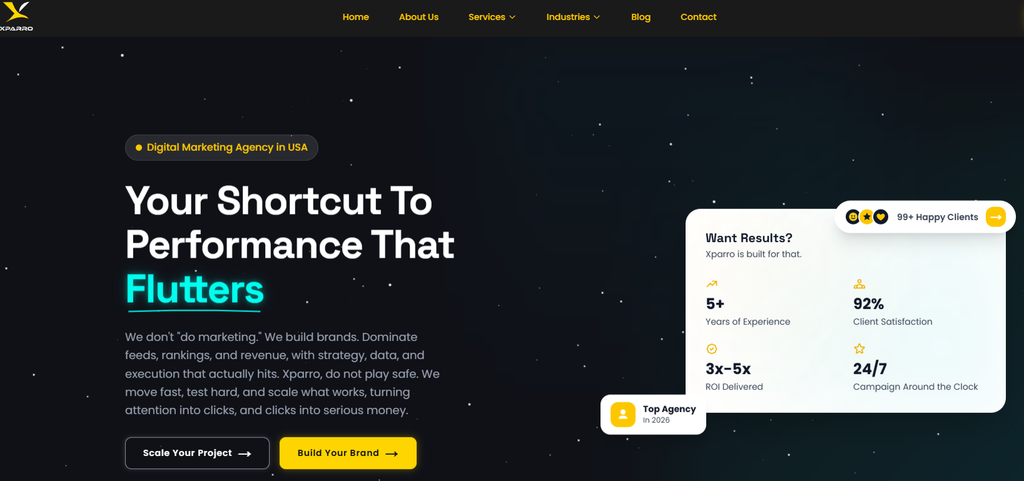
    1. Xparro
    Xparro USA

    For businesses that want SEO to make sense alongside their wider marketing.

    SEO needs to reflect what your audience is searching for, what your competitors are doing, and what happens after someone reaches your website. If those pieces aren’t connected, it’s easy to spend months producing content without making much progress towards your actual business goals.

    Xparro approaches digital marketing with that wider picture in mind. For businesses targeting the US and UK markets, the work can involve aligning SEO with content marketing, website development, search intent, and the customer journey.

    The starting point should be your business, not a ready-made package. Which pages need attention? What are potential customers looking for? Are there useful search opportunities your competitors haven’t addressed? And does your website make it easy for visitors to understand what you offer?

    Those questions help shape a strategy that has a reason behind every activity.

    If you’re looking for an agency to discuss how SEO fits into your broader digital marketing plans, explore Xparro’s services.

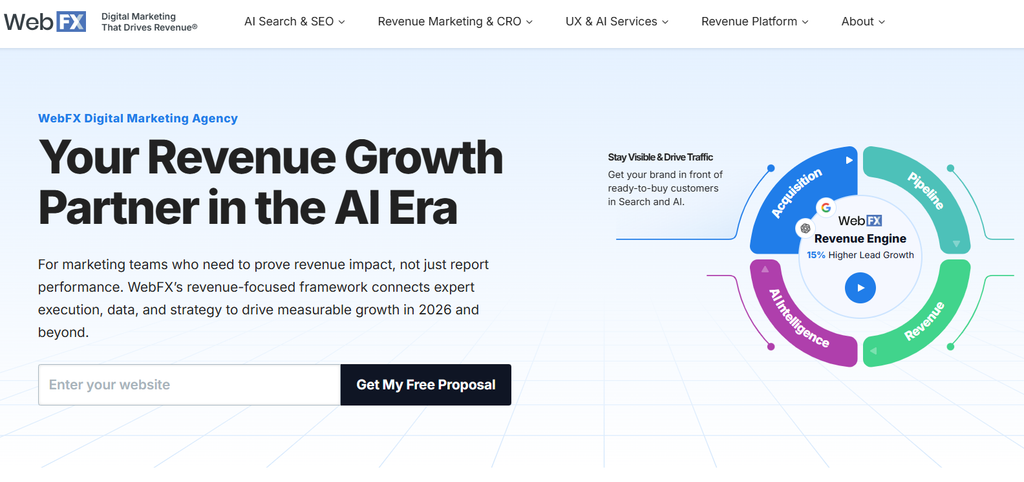
    2. WebFX

    WebFX

    A potential fit for businesses that care about revenue, not just traffic.

    WebFX has been in the digital marketing industry since 1995. Its services cover SEO, content marketing, paid media, web design, and conversion rate optimization.

    One area worth examining is its emphasis on tracking marketing performance through its technology platforms. For a business spending money across several channels, understanding where leads and sales originate can help make future budget decisions.

    Think about it: your organic traffic increases, but your sales remain flat. You don’t need another report celebrating the traffic increase. You need to understand what’s happening between the search result and the sale.

    That’s the kind of question a revenue-focused SEO campaign should help answer.

    3. SmartSites

    SmartSites

    Worth a look if your business needs SEO and paid advertising.

    SmartSites combines SEO with PPC, website design, and other digital marketing services. It works with small and midsized businesses across industries such as healthcare, automotive, legal services, and ecommerce.

    The appeal is fairly straightforward. You can work on long-term organic visibility while paid campaigns help bring in visitors in the meantime.

    But having both services available doesn’t guarantee that they’ll work well together. Ask how the agency decides which keywords belong in organic campaigns, where paid advertising makes more sense, and how the two channels contribute to your goals.

    4. SeoProfy

    SeoProfy

    A stronger candidate for businesses targeting multiple markets.

    SeoProfy offers technical SEO, content optimization, link building, international SEO, and AI search visibility services. Its multilingual experience makes it worth researching if your business plans to reach customers in multiple countries.

    If international growth is on your agenda, ask how the agency approaches local keyword research, content localization, and the technical requirements of multilingual websites.

    5. SearchBloom

    Search Bloom

    For businesses trying to get more out of the traffic they already attract.

    Searchbloom offers SEO, paid search, conversion rate optimization, and website services. That combination makes it relevant to businesses that need to look beyond rankings and examine how their website performs.

    More visitors won’t fix a confusing landing page. That’s worth remembering before increasing your marketing spend.

    6. Victorious

    Victorious

    For businesses that want SEO to receive focused attention.

    Victorious focuses on organic search, with services covering technical SEO, keyword research, content, link building, and answer engine optimization.

    One thing I’d ask before hiring any specialist agency is how its recommendations get implemented. An audit can identify dozens of issues, but those findings won’t improve your website if nobody makes the necessary changes.

    7. Ignite Visibility

    Ignite Visibility

    For brands managing several marketing channels or locations.

    Running marketing campaigns across multiple locations can become a coordination problem. One location might perform well organically while another depends heavily on paid ads. Your team needs to understand those differences rather than treating every market identically.

    Ignite Visibility offers SEO, paid media, content marketing, email marketing, social media, and conversion optimization.

    Its broader services may suit franchises and businesses that need several marketing activities managed together.

    Before making a decision, ask how the agency handles location-specific strategies and reports results across individual markets. The details matter more than the number of services listed on its website.

    8. Higher Visibility

    Higher Visibility

    For local businesses, franchises, and ecommerce companies.

    A business serving customers in one city doesn’t necessarily need nationwide visibility. It needs to show up when relevant customers in its area are looking for its services.

    HigherVisibility offers local SEO, franchise SEO, ecommerce SEO, PPC, and website services. That makes it worth considering for businesses whose visibility depends on location or a large product catalogue.

    Local SEO can involve everything from Google Business Profile optimization to location pages and relevant website content. The work needs to reflect how people search in the areas you serve.

    9. Thrive Internet Marketing Agency

    Thrive Internet Marketing Agency

    For businesses looking to manage several digital marketing services together.

    Some companies have a clear marketing budget but very little time to coordinate multiple providers. They need to decide what gets done first, who handles each task, and whether the different campaigns are working towards the same goal.

    Thrive offers SEO, PPC, content marketing, social media, website services, and local search optimization. It also provides services focused on AI search visibility.

    A broad service offering can be useful, but don’t pay for services you don’t need. Ask the agency to explain which activities deserve priority and what can wait.

    10. Straight North

    Straight North

    For companies that depend on qualified enquiries.

    A thousand website visitors mean very little if none of them are potential customers.

    Straight North focuses on lead generation and offers SEO alongside paid advertising, web design, and development. That makes it relevant for businesses where enquiries, calls, and sales opportunities matter more than traffic volume alone.

    This is particularly important in B2B marketing, where a prospective customer may spend weeks researching options before contacting a sales team.

    Your SEO strategy should help people find useful information at different stages of that process, not simply push every visitor towards an immediate purchase.

    What should you check before hiring an SEO agency?

    You’ve found a few promising companies. Before booking calls with all of them, get clear about what you need.

    Start with the problem, not the package. If your website has technical issues, publishing more blogs may not be the first priority. If it attracts visitors who never enquire, you may need to examine your content and landing pages. Ask the agency how it will investigate the problem before recommending a solution.

    Look closely at case studies. A traffic increase sounds impressive until you discover that it brought visitors who had no interest in buying. Ask about the starting point, the campaign duration, the work completed, and whether the results came from SEO alone or several marketing channels.

    Get the costs in writing. Find out what’s included in the monthly fee, which services cost extra, who implements website changes, and what happens if you end the contract. Two agencies charging the same amount may be offering very different amounts of work.

    Meet the people doing the work. The person selling the service might not be the person managing your campaign. Ask who will handle strategy, technical SEO, and content, and how the team will keep you informed.

    Ask how they approach AI search. Visibility in AI-generated answers is attracting attention, but be wary of anyone guaranteeing citations or promising instant results. Ask how the agency measures progress and how its recommendations fit into a broader SEO strategy.

    How much do SEO companies in the USA charge?

    SEO pricing depends on the work involved. A local business targeting a few service keywords won’t need the same resources as an ecommerce brand with thousands of product pages.

    Your quote may depend on competition, website condition, content requirements, technical implementation, and whether the campaign targets a local, national, or international audience.

    Rather than choosing a provider based on price alone, ask what the proposed budget covers. How much work will be completed each month? Which problems will be addressed first? What results will the agency track?

    Be cautious about guaranteed rankings, too. No agency controls Google’s algorithm, and a fixed deadline for reaching a particular position is not a reliable basis for choosing a provider.

    The Bottom Line

    You don’t need to hire an agency simply because it calls itself one of the top SEO companies in the country.

    You need to understand what your website needs, what the agency proposes to do about it, and how you’ll judge whether the work is paying off.

    Compare the evidence. Ask about the details. Be wary of promises that sound too easy. And remember what you’re actually paying for: not a collection of ranking reports, but a strategy that helps the right people find your business.

    If you’re ready to look at SEO as part of a bigger growth plan, Xparro can help you explore your options.

    FAQs

    How do I find the best SEO company in USA for my business?

    Identify your goals first, then compare relevant case studies, proposed deliverables, reporting practices, and costs. Ask how the agency plans to address your specific problems rather than accepting a standard package without explanation.

    Are top SEO agencies worth the investment?

    They can be, provided the strategy supports your business goals. Look at qualified traffic, leads, conversions, and revenue where measurable. A recognizable name or impressive ranking report isn’t enough on its own.

    How long does SEO take to show results?

    Some improvements may appear within a few months, but meaningful growth often takes longer. Competition, website condition, campaign scope, and implementation speed all affect the timeline.

  • What Is Search Engine Positioning? A Simple Guide

    What Is Search Engine Positioning? A Simple Guide

    You know that annoying SEO situation where your page ranks on page two for a keyword you really want? It’s close enough to give you hope. Far enough down that almost nobody sees it. That’s where search engine positioning matters.

    Instead of treating SEO as one giant checklist, positioning looks at individual pages and asks a much more useful question: Why isn’t this page ranking higher, and what can we change?

    What Is Search Engine Positioning?

    So, what is search engine positioning?

    Simply put, it’s the process of improving a webpage’s position in search results for specific queries.

    Say your software company has a landing page ranking #9 for “project management software for small business.” You already have some visibility. But there’s a pretty big difference between being #9 and being #3.

    That gap is where positioning work happens.

    SEO positioning is not a replacement for SEO. SEO is the bigger umbrella covering everything from technical optimization and content to links, site architecture, and user experience.

    Positioning is more focused. You take a page that already has potential and work on the things holding it back. And yes, those positions matter.

    A Backlinko analysis of more than four million Google search results found that the first organic result received an average 27.6% click-through rate, while the first three results accounted for 54.4% of clicks. 

    The study isn’t a current 2026 benchmark, but it clearly shows why moving upward in the SERP can be valuable.

    Why Does Search Engine Positioning Matter?

    Because “we rank on Google” isn’t really a business goal. Ranking for the right searches is.

    Imagine you run a U.S.-based accounting firm.

    Ranking for “accounting” would look impressive on a report. But ranking for something like “tax accountant for small business in Texas” could be far more useful because the searcher has a much clearer need.

    This is the part of search engine positioning that often gets overlooked.

    You’re not trying to push every page to position #1 for every possible keyword. You’re trying to put the right page in front of the right person at the right point in their search.

    Better positioning can mean:

    • More qualified organic traffic
    • Greater visibility against competitors
    • More clicks from high-intent searches
    • More opportunities for leads and sales
    • Stronger visibility for important products or services

    The ranking is the visible part. The business result underneath it is what actually matters.

    Search Engine Positioning vs SEO

    Here’s where things can get confusing. SEO is the whole operation. Search engine positioning is one part of it.

    SEO might involve:

    • Technical SEO
    • Keyword research
    • Content strategy
    • Link building
    • Site architecture
    • Structured data
    • Page experience
    • Internal linking

    Search engine positioning gets much more specific.

    Let’s say your service page ranks #8 for “PPC agency for SaaS companies.” You don’t necessarily need to build an entirely new website or publish 30 more blogs.

    First, look at the page.

    Does it actually answer what SaaS companies want to know? Is the service clear? Does it demonstrate expertise? Is the content stronger than what’s ranking above it? Are there relevant internal links pointing toward it? Is the page technically sound?

    That’s positioning. You’re not starting from scratch. You’re figuring out why the page isn’t winning yet.

    How to Improve Site Position in Google

    There isn’t a secret “rank me higher” button hiding inside Google Search Console. Sadly. But there are several things you can do when a page is already showing signs of potential.

    1. Find Your Almost-Winners

    Start with pages that are already ranking somewhere between positions 4 and 20 for valuable queries. These are interesting because Google already understands the page well enough to show it.

    Open Google Search Console and look at:

    Performance → Search results → Queries

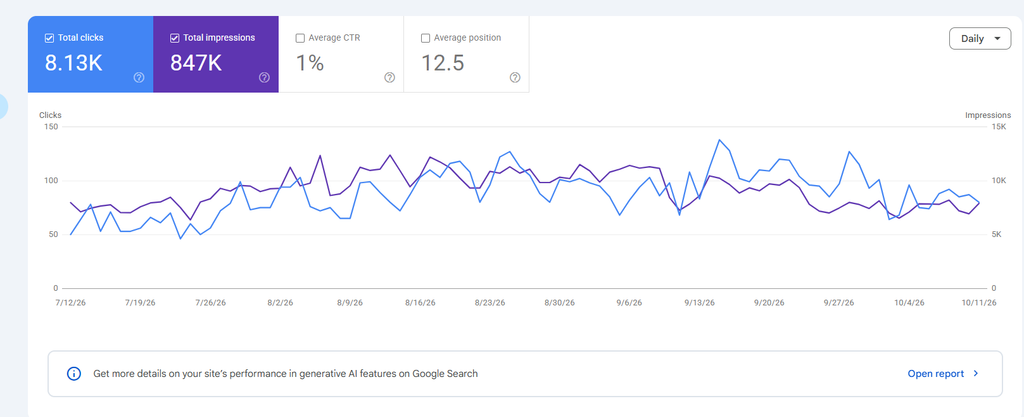
    Image: Screenshot of the GSC Performance report showing Clicks, Impressions, CTR and Average Position. 

    GSC Performance Report

    Then check which pages are getting plenty of impressions but aren’t generating enough clicks.

    Google Search Console lets you analyze clicks, impressions, CTR, and average position at the search-performance level.

    A page getting 20,000 impressions and barely any clicks deserves attention. So does a valuable commercial page sitting at position 11. Don’t automatically rewrite everything. Find the pages that have something to work with.

    1. Look at the SERP Before Touching the Page

    This sounds obvious. It isn’t done nearly enough. Search your target query and actually study what’s ranking.

    If Google is showing comparison pages, a generic service page probably isn’t going to have an easy time. If the SERP is dominated by product pages, publishing another 2,000-word educational article may not solve the problem either.

    Look at:

    • Search intent
    • Content format
    • Topics covered
    • Page depth
    • SERP features
    • Competitor positioning
    • Questions being answered

    Then ask:

    “What does the searcher get from the top results that my page doesn’t provide?” That’s a much better starting point than stuffing the keyword into another heading.

    Image

    1. Improve the Information, Not the Word Count

    One of the easiest SEO traps is believing that longer automatically means better. It doesn’t. Google itself says there is no preferred word count for its ranking systems.

    So don’t turn a useful 1,200-word article into a bloated 3,500-word monster just because a competitor has 3,487 words.

    Instead, look for gaps.

    Maybe competitors don’t include current pricing information.

    Maybe their examples are weak.

    Maybe nobody has original data.

    Maybe the explanations are full of jargon.

    Maybe your page answers the main question but completely ignores the follow-up questions people naturally have.

    Fix those things. Useful beats long.

    1. Give Google and Users Better Internal Connections

    Internal linking isn’t exciting. Your SEO spreadsheet might disagree, but that’s the truth. Still, it matters.

    If your website has a strong page about SEO services, you can naturally connect it to relevant pages about technical SEO, local SEO, content marketing, or SEO audits.

    Those links help users move through your website and give search engines additional context about how your pages relate to each other.

    The trick is relevance. Don’t add 14 internal links to a paragraph because you discovered the hyperlink button. Link where it actually helps. And use anchor text that tells people what they’re clicking.

    1. Don’t Ignore Technical SEO

    Sometimes the page isn’t failing because the writing is bad. Sometimes the website is simply making life harder than it needs to be.

    Check the basics:

    • Is the page indexable?
    • Is the canonical correct?
    • Does it work properly on mobile?
    • Are there broken links?
    • Is the page painfully slow?
    • Are redirects causing problems?
    • Are important pages accidentally blocked?
    • Does the page have usability issues?

    Google’s page experience guidance recommends paying attention to Core Web Vitals, mobile usability, HTTPS, intrusive elements, and the overall experience users get from a page.

    Great content can’t do much if users land on a page and immediately regret it.

    1. Build Supporting Content Around Important Pages

    One page shouldn’t have to carry your entire SEO strategy on its back.

    If you’re targeting “PPC services for SaaS companies,” you can build related content around topics such as:

    • SaaS PPC strategy
    • Google Ads for SaaS
    • PPC landing page optimization
    • SaaS conversion tracking
    • PPC vs. SEO for SaaS
    • SaaS Google Ads benchmarks

    Then connect those pages naturally.

    Over time, you’re building a network of useful content around the subject rather than hoping one landing page magically becomes an authority overnight.

    How Do You Measure Search Engine Positioning?

    This is where you need to resist the temptation to stare at rankings all day. A ranking is useful. It just isn’t the entire story.

    Track:

    • Average position: Where your pages generally appear for relevant searches.
    • Impressions: How often your page appears in search results.
    • CTR: How frequently searchers click your result.
    • Organic clicks: The actual visits generated from search.

    Image: A simple dashboard containing:

    Average Position | Impressions | CTR | Organic Clicks

    Then underneath:

    Rankings → Traffic → Leads → Revenue

    Google Search Console provides these metrics through its Search results performance report.

    But there’s another metric that matters even more:

    What happened after the click?

    If a page moves from #12 to #5 and brings in more qualified leads, that’s a meaningful improvement. If it moves from #12 to #5 and attracts thousands of people who have absolutely no interest in your product?

    Cool screenshot. Not necessarily a great business result.

    The Real Goal of Search Engine Positioning

    Search engine positioning isn’t about chasing the #1 spot just so someone can put a screenshot of it in a monthly SEO report.

    It’s about making valuable pages more competitive for searches that can actually contribute to your business. So if your page is sitting at #13, don’t immediately panic and publish another article.

    Look at the pages above you.

    • Study the SERP.
    • Find the gaps.
    • Improve the page.
    • Strengthen its internal connections.
    • Fix the technical issues.

    Then measure what changes. Because the better SEO question isn’t “How do I rank higher?” It’s “What would make this page the better result?”

    That’s the question that can move a page from page two to page one and turn search visibility into something your business can actually use.

    Want your existing pages to work harder? Xparro helps businesses turn SEO positioning into a strategy built around visibility, qualified traffic, and conversions, not just better-looking ranking reports.

    FAQs

    1. What is search engine positioning?

    Search engine positioning is basically about getting your web pages to show up higher for the searches that matter to your business. Better positions can mean more visibility, clicks, and potential customers.

    1. How can I improve my site position on Google?

    Start with pages that are already ranking but could do better. Check the search intent, improve the content, strengthen internal links, fix technical SEO issues, and look at what the pages above you are doing differently.

    1. Is search engine positioning the same as SEO?

    Not quite. SEO covers the bigger picture of improving your website’s search visibility. Search engine positioning is more focused on moving specific pages higher for specific searches.

  • Internal Linking in SEO: A Complete Guide

    Internal Linking in SEO: A Complete Guide

    Publishing a great blog and leaving it sitting there by itself is a little like opening a store in the middle of nowhere and forgetting to put up a road.

    People might eventually find it. Google might too. But you’re making both work harder than they need to.

    That’s where SEO internal linking comes in.

    A good internal linking strategy connects related pages, helps search engines understand your website, and gives visitors an easy next step instead of sending them back to Google every time they finish reading something.

    And no, it doesn’t mean stuffing links into every paragraph until your article looks like a Wikipedia page on caffeine.

    Key Takeaways

    • Internal links keep your website from feeling like a bunch of unrelated pages by creating clear paths between content that actually belongs together.
    • A good linking strategy brings your blogs, service pages, guides, and other important content into the same conversation instead of letting them sit around doing their own thing.
    • Things like natural anchor text, relevant page connections, site structure, and orphan pages can make a surprisingly big difference to how well those connections work.
    • A solid internal linking audit helps clean up the mess too, from broken links and buried pages to valuable content that isn’t getting enough internal attention.

    What Is Internal Linking in SEO?

    An internal link is simply a link from one page on your website to another page on the same website.

    That sounds almost too basic to be an SEO topic. But the interesting part isn’t the link itself. It’s why you’re creating the connection.

    Say you run a digital marketing website.

    You have a page about SEO services, a guide about on-page SEO, another article about technical SEO, and a blog explaining SEO audits.

    Instead of treating those pages as separate pieces of content, you can connect them.

    Someone reading about SEO audits might need technical SEO next. Someone reading about on-page SEO might be considering professional SEO services.

    Those connections create a clearer path through your website.

    Google also uses links to discover pages and understand the relationship between different pieces of content. Google describes links as a critical way its systems find new URLs across the web.

    So yes, that little blue link is doing more work than it looks like.

    Why Are Internal Links Important for SEO?

    Let’s make this practical.

    Imagine Google lands on your website and finds 200 pages. Some are connected beautifully. Others are floating around with barely any links pointing toward them.

    Which pages do you think are easier to understand?

    Your internal linking structure gives search engines clues about your website’s architecture, the relationships between topics, and which pages are worth exploring next.

    They Help Search Engines Discover Content

    Googlebot follows links. That means internal links can provide a pathway to pages that might otherwise be difficult to discover.

    This becomes particularly useful when you publish new content. Don’t just hit Publish and walk away. Find a few older, relevant pages and link to the new one. You’ve just created a path to it.

    They Give Context to Your Pages

    Here’s something people often overlook. The words surrounding a link matter.

    If you write Learn more about SEO, that’s reasonably clear, but ” Learn how to improve your on-page SEO with title tags, internal links, headings, and content optimization is much more informative.

    The second version gives both the reader and search engines a better idea of what they’re going to find.

    Google recommends using descriptive, concise, and relevant anchor text rather than vague phrases such as “click here.”

    They Spread Authority Around Your Website

    Let’s say one of your blog posts has picked up backlinks from several reputable websites. That page has earned some authority.

    Relevant internal links can create pathways from that page toward other useful content on your site. This doesn’t mean you can take one popular blog and magically make every service page rank. Sadly, SEO has not unlocked that cheat code.

    The destination page still needs to be genuinely useful, relevant, and technically sound. But strong internal connections can help you make better use of the authority and traffic you’ve already earned.

    They Make Your Website Easier to Navigate

    This part has nothing to do with algorithms. It’s simply about being helpful.

    Someone finishes reading your article about PPC. They’re now wondering how to measure whether their campaigns are actually making money. If you’ve already written a useful guide about conversion tracking, why make them hunt for it? Give them the link.

    That’s good UX. And good UX is rarely a bad thing.

    How to Build an Internal Linking Strategy

    This is where you stop randomly adding links and start thinking about the website as a system.

    1. Start With the Pages That Matter

    Before touching your blog archive, figure out which pages actually matter to the business.

    Usually, these are things like:

    • Service pages
    • Product pages
    • Category pages
    • Important landing pages
    • High-value commercial content

    Let’s say you want your SEO services page to receive more contextual internal links. That’s your destination. Now you can work backward. Which existing pages naturally talk about SEO? Those are your opportunities.

    1. Build Connections Between Related Topics

    Think in clusters rather than individual posts.

    For example:

    SEO Services

    ↓

    Technical SEO

    ↓

    Website Crawlability

    ↓

    Internal Linking

    ↓

    SEO Audit

    Those pages don’t need to link to each other five times. They simply need sensible connections.

    A visitor reading about crawlability may want to understand internal links next. Someone reading about internal links might want a broader SEO audit.

    That’s how a useful internal linking strategy starts taking shape.

    1. Stop Writing Terrible Anchor Text

    Let’s retire from “Click here.” Please… Your anchor text should give people an idea of what’s waiting on the other side.

    Instead of “Click here to learn more,” try “Explore our technical SEO services.” Or “Read our guide to on-page SEO techniques.” 

    There’s another important detail here. Don’t force the exact same keyword into every internal link. If your target page is about “SEO services,” you don’t need 50 links all saying “SEO services.”

    Use natural variations where they make sense.

    Google specifically recommends descriptive and relevant anchor text while warning against excessive keyword stuffing.

    1. Link From Pages That Already Make Sense

    Here’s a simple rule:

    If the link feels forced to a human reader, it probably shouldn’t be there.

    You shouldn’t suddenly mention “social media marketing” in a paragraph about website crawlability just because you need another internal link.

    That’s not strategy. That’s SEO panic. Look for genuine contextual opportunities instead.

    An article about SEO audits can naturally link to technical SEO. A technical SEO guide can naturally link to crawlability. A page about local SEO can naturally link to Google Business Profile optimization. The connection should make sense without needing an explanation.

    1. Don’t Forget Your Older Content

    This is one of the easiest opportunities to miss. 

    You publish a new article. Then you move on to the next one. Meanwhile, your website already contains 50 older articles that could naturally link to it. 

    Go back, find relevant pages, and add links. This is particularly useful when you’ve been publishing content for years, and your website has accumulated a serious amount of material.

    Your old content isn’t dead weight. It can become your internal-linking network.

    What About Orphan Pages?

    Now we get to one of those wonderfully boring SEO problems that can quietly hurt a website. Orphan pages.

    These are pages that don’t have meaningful internal links pointing toward them. The page exists, the URL works, the content might even be excellent, but there’s barely any pathway leading to it.

    During an internal linking audit, look for important pages with few or zero internal inbound links.

    Pay particular attention to:

    • Service pages
    • Product pages
    • High-converting landing pages
    • Important guides
    • Recently published content

    If a page matters to the business, it shouldn’t be hiding in the basement.

    How Many Internal Links Should You Add?

    Here’s the answer people usually don’t want:

    There isn’t a magic number. You won’t find an SEO fairy handing out rankings because you added exactly seven links to your blog. The right number depends on the page.

    A 500-word article covering one narrow topic probably doesn’t need dozens of contextual links. A 3,000-word pillar guide covering an entire subject might naturally contain many more.

    The important question isn’t “Did I add enough links?” Ask, “Did I connect this page to the other pages a reader would genuinely find useful?”

    That’s a much better benchmark.

    For context, the 2025 HTTP Archive Web Almanac found a median of 43 internal links on desktop pages and 39 on mobile. But that includes sitewide links such as navigation and other elements, so it shouldn’t be interpreted as a recommended number of contextual links per article.

    In other words, don’t take that number and start adding 43 links to your next blog.

    Internal Linking Mistakes That Keep Showing Up

    Linking for the sake of linking

    Every link should have a reason. If there isn’t one, leave it out.

    Using the same anchor everywhere

    Exact-match anchor repetition can make your content feel unnatural. Write for humans first.

    Ignoring important pages

    If your homepage and five random blogs have dozens of internal links but your highest-value service page has three, something is off.

    Linking to irrelevant content

    Just because two pages share the word “marketing” doesn’t mean they belong together.

    Context matters.

    Leaving broken links behind

    A page gets deleted. Someone forgets about the links pointing to it.

    Suddenly you’ve got a bunch of tiny dead ends scattered across the website. During an audit, check for broken internal links, unnecessary redirects, and outdated destinations.

    A Simple Internal Linking Audit You Can Actually Do

    You don’t need to spend three weeks staring at a spreadsheet. Start with a crawl using a tool such as Screaming Frog, Semrush, or Ahrefs. Then look for these things:

    1. Find your important pages

    Identify the pages that drive leads, sales, or meaningful organic traffic.

    1. Check internal inbound links.

    See how many relevant pages point toward them.

    1. Find orphan pages.

    Look for valuable URLs with little or no internal linking support.

    1. Check click depth.

    Pages buried unnecessarily deep in your site’s architecture deserve a closer look.

    1. Review anchor text.

    Replace vague anchors with descriptive, natural language where appropriate.

    1. Look for linking opportunities.

    Search older content for places where newer or commercially important pages could be linked naturally.

    1. Clean up broken links.

    Fix 404s, outdated URLs, and unnecessary redirect chains.

    That’s already enough to uncover some useful opportunities.

    Final Thoughts

    Internal linking isn’t the most eye-appealing part of SEO.  There are no flashy screenshots. No “we increased traffic by 347%” headline. No dramatic before-and-after graph. It’s mostly about making your website make sense.

    Your pages should connect. Your important content should be discoverable. Your visitors should have somewhere useful to go next. And Google should be able to understand how all those pages fit together.

    That’s the real job of SEO internal linking.

    Don’t think of internal links as little SEO votes you sprinkle across your website. Think of them as roads.

    Build the right roads between the right pages, and your entire website becomes easier to explore, easier to understand, and much easier to manage.

    That’s a linking strategy worth having.

    At Xparro, we look at internal linking as part of the bigger SEO picture—not as a box to tick during content publishing. The goal is to connect search intent, content, and commercial pages in a way that makes sense for both users and search engines.

    Because good SEO isn’t just about creating more pages, it’s about making the pages you already have work together.

  • SEO 2026: Strategies to Boost Rankings & Traffic

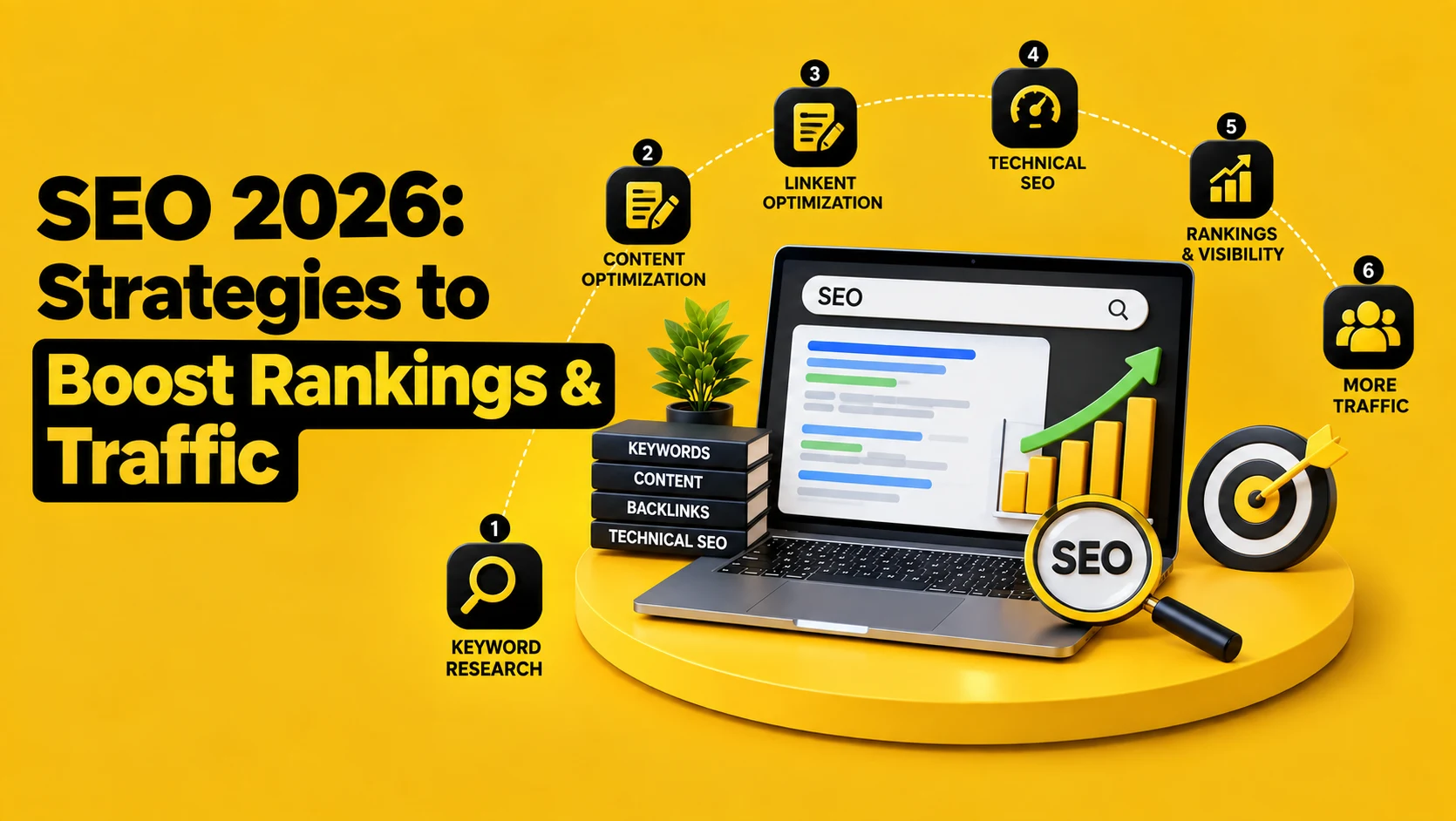
    SEO 2026: Strategies to Boost Rankings & Traffic

    SEO has changed a lot in the last decade. And no, we’re not talking about another Google algorithm update that makes everyone refresh Search Console every five minutes.

    Search itself has changed.

    People ask longer, more specific questions. Google can summarize answers with AI. Users can research products, compare options, and dig through follow-up questions without leaving the search experience.

    So if your SEO strategy still revolves around “pick a keyword, write 1,500 words, add some links, and hope for page one,” it’s probably time for a rethink.

    Here’s what actually changed in SEO 2026 and what marketers should do about it.

    Key Takeaways

    • Search is no longer just 10 blue links. AI Overviews and AI Mode are changing how users discover information.
    • Search intent matters more than exact-match keywords. Google is getting better at understanding context, entities, and meaning.
    • Traffic isn’t the only metric worth watching. Visibility, qualified visits, conversions, brand searches, and AI visibility matter too.
    • Generic content is getting cheaper and less useful. AI can produce content at scale, so expertise and original information are becoming bigger differentiators.
    • Technical SEO still matters. Crawlability, indexability, structured data, internal linking, and Core Web Vitals haven’t magically disappeared.

    Search Has Moved Beyond the Blue Links

    For years, Google was essentially a giant directory. Type something in. Get a list of websites. Pick one. Done.

    Now Google can generate an answer, summarize several sources, suggest follow-up questions, and help users explore a topic without sending them straight to a website.

    Google says AI Mode uses a process called “query fan-out,” where a complex query is broken into multiple related searches to explore different aspects of the topic before generating an answer.

    That’s a major shift for SEO.

    Compare these two searches:

    “best CRM software”

    versus

    “What’s the best CRM for a 20-person B2B sales team that needs strong reporting without the complexity of Salesforce?”

    The second query tells Google much more about the user’s situation and intent. That’s where SEO is heading: fewer vague searches, more context-rich questions. And marketers need content that can answer those questions not just pages that happen to contain the right keyword.

    Keywords Still Matter. Just Not Like They Used To.

    Let’s clear something up. Keywords aren’t dead.

    Google still recommends using the words people search for in important areas of a page, including titles, headings, alt text, and link text. What’s changed is the obsession with exact wording.

    A page targeting “enterprise SEO services” doesn’t need to repeat that phrase every few sentences. That’s not optimization. That’s a cry for help.

    Instead, the page should naturally demonstrate expertise around related concepts such as:

    • Enterprise site architecture
    • Technical SEO
    • Crawl budget
    • Internal linking
    • International SEO
    • JavaScript rendering
    • SEO reporting
    • Content governance

    Google increasingly understands the relationship between these concepts.

    So instead of asking, “How many times should I use this keyword?”, ask, “Does this page completely answer what the searcher came here to solve?” That’s a much better SEO question.

    Long-Tail Searches Are Getting More Interesting

    People don’t always search like robots anymore.

    Pew Research analyzed 68,879 Google searches from U.S. users and found that AI-generated summaries appeared in around 18% of searches. The likelihood jumped from 8% for one- or two-word searches to 53% for searches containing 10 or more words. Question-based searches produced AI summaries about 60% of the time.

    That’s worth paying attention to.

    Someone looking for running shoes might search “best running shoes,” But someone closer to making a purchase might search: “best running shoes for flat feet for someone running five miles every day.” The second query has actual context.

    For marketers, that means creating content around:

    • Specific problems
    • Comparisons
    • “Best for” scenarios
    • Product alternatives
    • How-to questions
    • Troubleshooting
    • Buying objections
    • Industry-specific use cases

    Your sales team probably hears these questions all day. Start stealing their questions. They’re basically doing your keyword research for free.

    The Click Isn’t the Whole Story Anymore

    Here’s an uncomfortable change in SEO: some searches don’t need a click. If Google answers the question directly, the user might never visit your website.

    Pew found that users clicked a traditional search result just 8% of the time when an AI summary appeared, compared with 15% when there wasn’t one.

    That doesn’t mean organic traffic suddenly became useless.

    It means marketers need a bigger scoreboard.

    Along with rankings and sessions, look at:

    • Organic impressions
    • Qualified traffic
    • Leads and sales
    • Assisted conversions
    • Brand searches
    • Engagement
    • AI search visibility
    • Mentions or citations in AI-generated results

    A page getting 50,000 visits but generating no business isn’t exactly an SEO victory lap. Meanwhile, a smaller amount of highly relevant traffic can be incredibly valuable.

    Content Is Everywhere. Good Content Isn’t.

    This is probably one of the biggest changes in SEO.

    Creating content used to take time. Now AI can produce a blog post before you’ve decided what you’re having for lunch.

    That means content itself isn’t much of a competitive advantage anymore.

    Google’s guidance doesn’t say AI-generated content is automatically bad. The focus is on whether content is helpful, reliable, original, and created for people rather than primarily to manipulate rankings.

    That’s the important bit.

    AI can help marketers with:

    • Research
    • Outlines
    • Content briefs
    • Editing
    • Summaries
    • Data analysis
    • Content updates

    But it can’t magically give a generic article first-hand experience. That’s where businesses need to lean harder into:

    Original research. Expert opinions. Customer examples. First-hand experience. Real data.

    If five competitors publish the same “10 SEO Tips” article, publishing the sixth one with slightly different adjectives isn’t exactly a winning strategy. Give readers something they can’t get from 50 other tabs.

    Technical SEO Still Has a Job

    Every few years, someone declares technical SEO dead. Technical SEO remains very much alive. Before Google, or an AI search feature, can understand your content, your site still needs to be crawlable, renderable, and indexable.

    Google also states that pages generally need to be indexed and eligible to appear in normal Search before they can be used as supporting links in AI Overviews and AI Mode. There isn’t a separate set of “secret AI SEO” technical requirements.

    The boring stuff still counts:

    • Crawlability
    • Indexability
    • Canonical tags
    • XML sitemaps
    • Internal links
    • JavaScript rendering
    • Structured data
    • HTTPS
    • Mobile usability
    • Core Web Vitals

    Google recommends an LCP of 2.5 seconds or less, INP below 200 milliseconds, and CLS below 0.1 for a good Core Web Vitals experience. So no, you can’t fix a messy website by sprinkling AI into the content calendar.

    Authority Is Bigger Than Backlinks

    Backlinks still matter. But counting links like Pokémon isn’t a complete SEO strategy. Modern search increasingly needs to understand whether a source is trustworthy for a particular topic.

    That makes things like these increasingly valuable:

    • Original research
    • Expert contributions
    • Industry mentions
    • High-quality backlinks
    • Case studies
    • Reviews
    • Strong brand presence
    • Demonstrated subject-matter expertise

    Think about it.

    Would you trust a random website publishing a generic cybersecurity article, or a cybersecurity company publishing original threat research, benchmarks, and implementation guides?

    Exactly. Authority isn’t something you claim on an About page. Your entire online presence has to demonstrate it.

    SEO and Marketing Can’t Work in Separate Rooms

    This may be one of the biggest SEO changes for marketing teams. SEO isn’t just an organic search team’s job anymore.

    • PR can generate brand mentions.
    • Original research can attract backlinks.
    • Social content can build awareness.
    • Customer reviews can reinforce trust.
    • Strong product pages can capture commercial intent.
    • A useful YouTube video can answer part of a search journey.

    All of these things can influence how people discover and evaluate a brand.

    So instead of asking “What keyword should we rank for?” Marketing teams should start asking “What information should our brand become known for?” That’s a much more useful question.

    What Marketers Should Do in SEO 2026

    If your current SEO strategy is mostly a list of keywords and monthly rankings, start making a few changes.

    Build around intent, not just volume

    Map content to informational, commercial, navigational, and transactional intent. Then dig into the questions and objections behind each one.

    Publish less generic content

    You don’t need another 2,000-word article saying that “SEO is important in today’s digital landscape.”

    Bring something to the table: data, experience, expert commentary, examples, research, or a genuinely useful tool.

    Optimize for traditional and AI search

    Don’t chase mysterious “AI hacks.” Google says its existing SEO fundamentals apply to AI Overviews and AI Mode too. Make your content useful, structured, technically accessible, and credible.

    Measure business impact

    Rankings are useful. Revenue is better.

    Connect organic performance to leads, sales, signups, pipeline, and other outcomes that actually matter to the business.

    Invest in authority

    Publish research. Earn legitimate mentions. Showcase experts. Create genuinely useful resources. The goal isn’t to make your website look authoritative.

    It’s to become authoritative.

    The Bottom Line

    So, how has SEO changed? Quite a bit, but perhaps not in the way the endless “SEO is dead” headlines suggest.

    Keywords still matter. Content still matters. Links still matter. Technical SEO still matters. What’s changed is the level of sophistication around them.

    Search engines understand context better. Users ask more detailed questions. AI is changing how answers are presented. And generic content is becoming ridiculously easy to produce.

    That makes one thing increasingly valuable… Being genuinely useful. The brands that win in SEO 2026 won’t necessarily be the ones publishing the most content or chasing every new algorithm rumor.

    They’ll be the ones that understand their audience, answer real questions, demonstrate expertise, and give search engines and people a reason to trust them.

    And thankfully, that strategy doesn’t require publishing 47 “Ultimate Guides” before lunch.

  • 7 Best AI Online Rank Tracking Tools in 2026

    7 Best AI Online Rank Tracking Tools in 2026

    You rank well on Google. Then someone asks ChatGPT for the best companies in your industry… and your brand is nowhere to be found. That’s the problem with relying only on traditional rank tracking now. Search has changed, and your SEO reporting needs to catch up.

    Google’s AI Overviews alone reached more than 1.5 billion monthly users in Q1 2025. And people are also turning to ChatGPT, Gemini, Perplexity, and other AI tools to research products, compare services, and decide what to buy.

    So, yes, you still need to track your Google rankings. But you should also know what AI is saying about your brand. That’s where AI online rank tracking tools come in.

    Key Takeaways

    • AI rank tracking shows whether ChatGPT, Gemini, and Google AI mention, recommend, or cite your brand.
    • Compare 7 AI and traditional rank tracking tools based on features, AI coverage, and use cases.
    • Learn which metrics matter, from AI mentions and citations to competitor visibility and share of voice.
    • Find out how to start tracking AI rankings and whether Gemini deserves a place in your SEO strategy.

    What Is AI Rank Tracking?

    Traditional rank tracking is pretty straightforward. You enter a keyword, and the tool tells you where your page appears in Google. AI search doesn’t work quite that neatly.

    Ask ChatGPT, “What are the best accounting software options for a small business?” and you won’t get a numbered list of 100 blue links. You’ll get an answer with brands, explanations, and sometimes citations to websites.

    AI rank tracking tools monitor those answers.

    Depending on the platform, you can track things like:

    • How often your brand is mentioned
    • How often your website is cited
    • Which competitors appear alongside you
    • Your share of voice
    • How AI describes your brand
    • Which pages are being cited

    Coalition Technologies tested several AI rank tracking platforms using about 2,700 prompts across ChatGPT, Perplexity, Google AI Overviews, and Google AI Mode.

    So this isn’t just another shiny “AI SEO” label slapped onto an old rank tracker. There’s a real shift happening in how visibility is measured.

    7 Best AI Online Rank Tracking Tools

    1. Semrush- Best Overall

    If you’re already using Semrush for SEO, this is probably the easiest place to start.

    You can keep tracking your traditional Google rankings while also monitoring AI visibility. Semrush’s AI features cover areas including Google AI Overviews, Google AI Mode, ChatGPT, and Gemini.

    That’s useful because you don’t want your SEO team jumping between five different dashboards just to answer one question.

    Best for: SEO teams, agencies, and businesses that want traditional SEO and AI tracking together.

    Why pick it: It’s an easy transition if Semrush is already part of your workflow.

    Our take: Probably the safest all-round choice for teams that don’t want to overcomplicate their SEO stack.

    1. Ahrefs Brand Radar – Best for Seeing Who Gets Cited

    Ahrefs has taken its usual “let’s give SEO people more data” approach to AI search. Its Brand Radar tracks visibility across ChatGPT, Gemini, Perplexity, Copilot, and Google AI Overviews.

    What makes this particularly useful is the focus on mentions and citations.

    Because here’s something worth remembering: Getting mentioned is nice, but getting cited as a source is better.

    If an AI answer repeatedly uses one of your articles to support its recommendation, that’s a pretty useful signal about the content you’re producing.

    Ahrefs also helps you compare your visibility with competitors and investigate the prompts behind AI results.

    Best for: SEO teams, content marketers, and competitor research.

    Our take: Great if you’re less interested in a single “AI visibility score” and more interested in figuring out why one brand keeps getting cited while another doesn’t.

    1. Rankscale – Best AI Rank Tracker for LLMs

    Rankscale is built around AI search tracking rather than treating it as a tiny add-on.

    Coalition Technologies tested it across approximately 2,700 prompts and reported near-100% accuracy for brand mention and citation detection in its evaluation. The testing covered ChatGPT, Perplexity, AI Overviews, and AI Mode.

    It also tracks several AI platforms, including ChatGPT, Gemini, Claude, Copilot, Grok, Perplexity, Google AI Overviews, and AI Mode. That’s a lot of coverage.

    And that’s exactly why it’s more appealing to agencies and larger SEO teams than someone who just wants to check whether their company appeared in ChatGPT twice this month.

    Best for: Agencies, enterprise SEO teams, and serious LLM monitoring.

    Our take: One of the better options if you want to get deep into prompts, citations, competitors, and sentiment.

    1. Peec AI – Best for Prompt Tracking

    Peec AI puts a lot of emphasis on what people are actually asking AI.

    It supports prompt-level monitoring, competitor analysis, source attribution, and tracking across multiple AI platforms. And prompt tracking matters.

    Your customer might Google “best CRM software,” But ask ChatGPT “What CRM would you recommend for a 50-person SaaS company with a small sales team?”

    Same general topic. Completely different search behavior. That’s the kind of difference AI-focused tracking needs to capture.

    Best for: AI SEO teams, agencies, and brands focusing on conversational search.

    Our take: Worth considering if your SEO strategy is moving beyond keywords and into real-world customer questions.

    1. Profound – Best for Enterprise Teams

    Profound is built for companies that have a lot going on.

    We’re talking large prompt sets, multiple markets, multiple AI platforms, and teams that actually need to turn AI visibility data into reports and workflows.

    Its platform includes Answer Engine Insights, Prompt Volumes, and Agent Analytics, along with enterprise features such as SSO and SOC 2.

    For a small business, that may be more than you need. For a large brand trying to understand AI visibility across markets, it makes considerably more sense.

    Best for: Enterprise SEO and marketing teams.

    Our take: Powerful, but don’t buy an enterprise hammer to fix a two-page website.

    1. Nightwatch – Best Hybrid Option

    Maybe you aren’t ready to build a whole new AI SEO workflow. Fair enough.

    Nightwatch is worth considering because it combines traditional keyword rank tracking with AI and LLM visibility capabilities. Coalition Technologies included it among the platforms that bridge conventional SEO tracking and newer AI monitoring.

    That makes it a practical option if you still care heavily about Google rankings but want to start watching what happens in AI search.

    Best for: Agencies and SEO teams making the move toward AI tracking.

    Our take: A good middle ground if you don’t want to completely overhaul your existing SEO process.

    1. SEOptimer – Best for Simple SEO Rank Tracking

    SEOptimer isn’t as AI-focused as some of the tools above. And that’s okay.

    Its Keyword Ranking Tool tracks keyword positions, search volume, estimated traffic, competition, and ranking URLs. It also supports location-based tracking across more than 70 countries.

    Why include a traditional rank tracker in an AI-focused list?

    Because Google isn’t going anywhere. AI visibility should complement your SEO reporting, not replace it. You still need to know whether your important keywords are climbing, falling, or sitting stubbornly on page two.

    Best for: Small businesses, agencies, and teams focused mainly on traditional SEO.

    Our take: A straightforward option if you want solid rank tracking without building an unnecessarily complicated setup.

    What Should You Actually Track?

    This is where people can easily go overboard. You don’t need to track every possible question someone could ask an AI. Start with the questions that could actually make you money.

    Say you run a cybersecurity company.

    Instead of tracking hundreds of random prompts, start with things like:

    • Best cybersecurity software for small businesses
    • Best endpoint security platforms
    • Cybersecurity tools for Microsoft 365
    • Best cybersecurity companies in the US
    • Alternatives to [competitor]
    • How much does cybersecurity software cost?

    Then watch what happens.

    MetricWhat you’re looking for
    Mention rateHow often AI talks about your brand
    Citation rateHow often your website is used as a source
    Recommendation rateHow often you’re suggested
    Share of voiceHow you compare with competitors
    SentimentWhether AI describes you positively or negatively
    Cited pagesWhich content is earning visibility

    That’s much more useful than staring at a giant “AI score” and hoping it goes up.

    And it’s why AI Overviews SEO rank tracking tools are becoming useful for SEO teams. They help connect the dots between the search query, the AI-generated answer, the sources being cited, and the competitors getting visibility.

    How to Pick the Best AI Rank Tracker Tool

    Before you pull out the company card, check a few things. Does it track the AI platforms you care about?

    At minimum, consider:

    • Google AI Overviews
    • Google AI Mode
    • Claude
    • ChatGPT
    • Gemini

    You don’t necessarily need all of them. You need the ones your audience actually uses.

    Can you track your own prompts?

    This is important. 

    A tool giving you a broad visibility estimate is useful for benchmarking. But custom prompts tell you what’s happening with your customers and your commercial topics.

    Does it track citations?

    Look beyond mentions.

    If AI keeps mentioning your brand but cites someone else’s content, that’s a very different situation from AI repeatedly using your website as a source.

    Can you see competitors?

    Always compare.

    A 40% visibility rate sounds fantastic until you discover your competitor has 70%. AI search is competitive too.

    Does it store historical data?

    AI answers change. Sometimes quickly.

    Ahrefs found a 70% probability that an AI Overview changes between observations, while cited content had an average lifespan of around 2.15 days in its research.

    That means today’s AI answer isn’t necessarily tomorrow’s answer. Historical tracking helps you spot those changes instead of treating every result as permanent.

    What About ChatGPT Rank Tracking Tools?

    Here’s the trick: you cannot use the traditional “rank #3” when it comes to ChatGPT.

    That means you have to think of something else for ChatGPT rank tracking tools to measure.

    Things like:

    • Brand mentions
    • Recommendations
    • Citations
    • Competitor mentions
    • Prompt-level visibility
    • Sentiment
    • URL sources

    And then analyze the patterns. When ChatGPT keeps recommending your competitors whenever someone asks about solutions in your industry, that’s something you should look into.

    The Bottom Line

    SEO hasn’t suddenly become irrelevant because people started asking AI questions.

    You still need strong technical SEO, useful content, backlinks, topical authority, and a website that deserves to rank.

    But there’s another layer now. It is vital that you understand whether AI technologies mention your company, suggest your product, and utilize your material as their sources.

    For comprehensive SEO settings, Semrush will be a good choice. Ahrefs will do well for visibility and citation analysis. RankScale and Peec AI would work better for LLM monitoring. Profound is geared toward enterprise teams, while Nightwatch offers a useful bridge between traditional and AI rank tracking.

    And whichever tool you choose, don’t obsess over one shiny AI visibility number.

    Ask the questions that actually matter, like: Are we showing up? Who is showing up instead? Why are they being cited? And what can we do about it? Because ranking #1 on Google is still great.

    But if your customers are asking AI for the answer, you want your brand to be part of that answer too.

    FAQ

    What is the fastest way to start tracking rank in AI?

    Don’t start by tracking thousands of prompts. Start with 20-50 high-value prompts related to your products, services, competitors, and commercial topics.

    Track them across the AI platforms that matter to your audience and record your starting point for mentions, citations, recommendations, and competitor visibility. Once you understand those patterns, expand.

    Is Gemini rank tracking worth prioritizing right now?

    Yes, but it depends on your audience.

    If your customers spend a lot of time in Google Search and Google’s AI ecosystem, Gemini and AI Overviews should be on your radar.

    If your audience uses ChatGPT heavily for product research, ChatGPT may deserve more attention. Don’t chase every AI platform just because it’s popular. Track where your customers are.

  • What Is CTR? Meaning, Formula & How to Improve It

    What Is CTR? Meaning, Formula & How to Improve It

    You can get 10,000 ad impressions and still wonder, “Why is nobody clicking?” That’s where CTR comes in.

    CTR, or click-through rate, tells you what percentage of people who saw your ad actually clicked it. It’s one of the quickest ways to judge whether your ad, keyword targeting, and audience are working together, or simply taking up space on the SERP.

    But there’s a catch: a “good” CTR isn’t one universal number.
    A 3% CTR might be disappointing for one campaign and excellent for another.

    So, what is CTR, how do you calculate it, and what should your business actually aim for? Let’s break it down.

    Key Takeaways

    • CTR measures ad engagement: The CTR formula is (Clicks ÷ Impressions) × 100, showing how often people click after seeing your ad.
    • There’s no universal “good CTR”: A strong CTR depends on your industry, advertising channel, keywords, audience, and search intent.
    • Search and display CTRs are different: Search ads typically have higher CTRs because users already have intent, while display ads reach people who may not be actively searching.
    • Don’t optimize for clicks alone: A high CTR means little if those clicks don’t generate conversions, qualified leads, revenue, or a strong ROAS.

    What Is CTR?

    CTR stands for Click-through rate. This is the ratio of impressions to clicks, which means when your Google ad is seen 1,000 times and 50 people clicked on it, the CTR will be 5%.

    As per Google, CTR is the number of clicks made against the number of times the ad appears. It uses CTR to help advertisers understand how relevant and appealing their ads are to users.

    CTR is applied in many areas of digital marketing like:

    • Google search ads
    • Google display ads
    • Social media ads
    • Email marketing campaigns
    • Organic search engine listings
    • Other online campaigns

    The important thing to note here is what is being measured. A search ad and a display banner have completely different jobs, so comparing their CTRs directly is like comparing a pickup truck to a bicycle because both have wheels.

    CTR Formula: How to Calculate Click-Through Rate

    The CTR formula is straightforward:

    CTR = (Clicks ÷ Impressions) × 100

    CTR Formula

    For example:

    Your ad receives:

    200 clicks

    5,000 impressions

    Your CTR would be:

    (200 ÷ 5,000) × 100 = 4%

    So, your CTR is 4%.

    Google uses the same basic calculation for advertising CTR.

    You usually won’t need to calculate it manually. Platforms such as Google Ads automatically report CTR for campaigns, ad groups, keywords, and individual ads.

    Why impressions matter

    An impression simply means your ad was shown. A click means someone interacted with it. CTR connects those two numbers and gives you a percentage that answers a useful question:

    “Of the people who saw this, how many were interested enough to click?”

    That makes CTR particularly useful when you’re diagnosing ad performance.

    Why Does CTR Matter?

    CTR gives you an early signal about whether your advertising message matches what people are looking for.

    A low CTR may point out issues with:

    • Keyword targeting
    • User intention
    • Ad message
    • Headline
    • Offers
    • Audience targeting
    • Ad placement
    • Customer expectation

    For instance, say you offer emergency plumbing services, targeting the keyword “24-hour plumber near me.”

    An ad that says:

    “Professional Plumbing Services | Find Out More”

    Surely is not urgent enough.

    Compare that with:

    “24/7 Emergency Plumber | Same-Day Service | Call Now”

    The second ad directly addresses the user’s likely intent. That’s the point of CTR optimization: not getting random clicks, but getting the right people to click.

    Google also notes that CTR can contribute to expected CTR, which is one component of Ad Rank. More relevant keywords and ads can therefore play an important role in paid-search performance.

    What Is a Good CTR?

    Here comes the answer marketers love to hate:

    It depends.

    There isn’t one industry standard click-through rate that works for every business, keyword, audience, and advertising network.

    A branded search campaign might generate a very high CTR because the user already knows the company. A broad, non-branded keyword can naturally have a much lower CTR. The advertising format matters, too.

    For example, people searching Google for “best HVAC company near me” already have a reason to click.

    Someone reading an article and casually seeing a banner for an HVAC company? Different situation entirely.

    That’s why search CTR and display advertising rates should be evaluated separately.

    Average CTR for Google Search Ads

    Current benchmark data gives you a useful starting point.

    WordStream’s 2026 PPC benchmarks analyzed more than 13,000 U.S.-based campaigns running from April 2025 through March 2026. Across industries, the average Google Ads search CTR was 6.64%.

    That means roughly 6 to 7 clicks for every 100 impressions, on average. But industry differences are significant.

    Some 2026 search CTR benchmarks include:

    IndustryAverage Search CTR
    Arts & Entertainment13.10%
    Sports & Recreation9.19%
    Shopping, Collectibles & Gifts8.92%
    Real Estate8.43%
    Finance & Insurance8.33%
    Travel8.73%
    Health & Fitness7.18%
    Business Services5.65%
    Legal Services5.97%
    Dental Services5.44%

    These figures come from WordStream’s 2025 benchmark dataset, while its newer 2026 report puts the overall search average at 6.64%.

    So if you’re running a legal campaign with a 6% CTR, that’s a very different story from a campaign in an industry where 9% or 10% is common.

    Your industry benchmark is more useful than a random “good CTR” number you found on Google.

    What About Display Advertising Rates?

    Display ads are a completely different animal.

    Unlike search advertising, display advertising typically reaches people while they’re browsing websites, reading content, watching videos, or using apps. They may not be actively looking for what you’re selling.

    That’s why display CTRs are usually much lower.

    Older industry benchmarks cited by WebFX put average CTR at 0.46% for display advertising and 3.17% for search advertising. WebFX’s industry table also shows display CTR varying considerably by sector, for example, around 1.08% for real estate and 0.39% for technology.

    The lesson isn’t that display advertising is “bad.” 

    It’s that display ads have a different objective and user context. Search ads capture existing intent. Display ads often create or reinforce awareness before someone has decided to search. So don’t look at a 0.5% display CTR and panic. Look at what happened after the click, too.

    Is a Higher CTR Always Better?

    No.

    And this is where CTR gets misunderstood. A high CTR can be great, but only if those clicks are valuable. Imagine two campaigns.

    Campaign A

    100,000 impressions

    8,000 clicks

    8% CTR

    0.5% conversion rate

    Campaign B

    100,000 impressions

    4,000 clicks

    4% CTR

    5% conversion rate

    Campaign A looks fantastic if you’re staring only at CTR. But Campaign B generates far more conversions.

    That’s why you should evaluate CTR alongside metrics such as:

    • Conversion rate
    • Cost per click (CPC)
    • Cost per acquisition (CPA)
    • Return on ad spend (ROAS)
    • Revenue
    • Lead quality

    A campaign can have a spectacular CTR and still be terrible for your business if the clicks don’t turn into customers.

    In fact, WebFX notes that a higher CTR is valuable when it also supports stronger conversion performance.

    What Can Cause a Low CTR?

    If your CTR is below your industry benchmark, don’t immediately rewrite everything.

    Start with the basics.

    1. Your keywords don’t match intent

    Someone searching “buy running shoes online” has commercial intent. Someone searching “how to clean running shoes” probably isn’t ready to buy.

    If your ad targets both with the same message, your CTR and eventually your conversion rate can suffer.

    1. Your ad copy is generic

    “High-Quality Products. Great Service. Shop Now.” Congratulations. You sound like approximately 47,000 other advertisers.

    Instead, highlight something specific:

    • Free shipping
    • Same-day service
    • Pricing
    • Discounts
    • Location
    • Warranty
    • Availability
    • A clear differentiator
    1. Your offer isn’t competitive

    Sometimes the copy isn’t the problem.

    If competitors advertise “Free Consultation” and you’re offering “Contact Us for More Information,” the problem isn’t exactly mysterious.

    1. You’re targeting the wrong audience

    A perfectly written ad shown to the wrong audience will still flop.

    Review your location targeting, demographics, audiences, keyword match types, and search terms.

    1. Your ad doesn’t match the landing page

    CTR gets people through the door. Your landing page needs to convince them they walked into the right building.

    If the ad promises “$99 Emergency Plumbing,” but the landing page says nothing about $99 pricing, users are likely to bounce.

    How to Improve CTR

    Improving CTR isn’t about stuffing more keywords into your headline and hoping Google rewards you with a parade.

    Focus on relevance.

    Use the exact language your audience searches

    Review your search-term data and identify phrases that consistently generate clicks and conversions.

    Then use those insights in your headlines and descriptions.

    Match the ad to search intent

    Separate campaigns or ad groups based on meaningful intent differences.

    Someone searching “commercial insurance quote” should see a different message from someone searching “what is commercial insurance.”

    Test your headlines

    Run multiple variations.

    Test:

    • Benefit-focused headlines
    • Price-focused headlines
    • Location-specific headlines
    • Problem/solution messaging
    • Strong calls to action
    • Specific offers

    Don’t decide the winner after two days and 37 impressions. Give the data enough time to become useful.

    Improve your targeting

    CTR often improves when your ads are shown to people who actually have a reason to care.

    Google itself recommends strong keyword and ad relevance as a way to improve clicks and CTR.

    Watch CTR with conversion data

    This is the big one.

    If CTR rises but conversions fall, you may have optimized for curiosity instead of intent.

    That’s not a victory. That’s a more efficient way to attract the wrong people.

    What Is a Good CTR for My Industry?

    Use this three-step approach:

    1. Find your channel benchmark.

    Search and display advertising have different CTR expectations.

    1. Compare against your industry.

    A 3% CTR isn’t automatically good or bad. Compare it with businesses competing for similar audiences and keywords.

    1. Compare against your own historical performance.

    If your CTR was 3.5% last quarter and is now 5.2% while conversion rate and CPA are also improving, that’s meaningful progress, even if another website says “good CTR” starts at 6%.

    Benchmarks provide context. Your own performance data provides the verdict.

    The Bottom Line

    CTR is useful. But at the end of the day, it’s just one number.

    You don’t need thousands of people clicking your ads if none of them is actually interested in what you sell. What you really want are the right clicks, the ones that turn into leads, sales, and real business. That’s where Xparro can help.

    We look beyond the CTR and dig into what’s actually driving results, from targeting the right audience and tightening your ad copy to improving keyword relevance and making sure your landing page delivers what the ad promised.

    Because getting people to click is only half the job. Getting them to stay, convert, and come back? That’s the part that matters.

    Frequently Asked Questions

    What is a good CTR?

    There is no specific number that you can refer to. What constitutes a good CTR largely depends on your industry, the platform where you run ads, your campaign type, your ad targeting and the intent behind the users’ search.

    What is the average CTR for Google Search ads?

    The average Google Search Ads CTR according to the current 2026 benchmark by WordStream is 6.64%. However, the industry varies widely, and therefore you should take this average as an overall benchmark without trying to hit it like a nail on the head.

    Is a higher CTR always better?

    No. A high CTR will only be beneficial to you in case the clicks you receive are relevant to your campaigns and are helping you generate sales or leads.

    What is a good CTR for my industry?

    You first have to find out the benchmark of your industry, and then you can measure it against your own past results. The benchmarks differ greatly by industry; for example, search CTR benchmarks currently stand at around 5% for some industries, while others reach up to 13% in the Arts & Entertainment industry.

  • 12 Best SEO Tips to Improve Website Rankings in 2026

    12 Best SEO Tips to Improve Website Rankings in 2026

    SEO advice usually sounds deceptively simple: use the right keywords, publish good content, get backlinks, and wait.

    Then you do all of that and wonder why Google still refuses to send you traffic.

    The problem isn’t that SEO doesn’t work. It’s that the way people search and the way Google evaluates content have changed. Rankings now depend on much more than putting a keyword in a title.

    If you want better organic visibility in 2026, these SEO tips will help you focus on what actually matters.

    1. Start With Search Intent, Not Keywords

    One of the biggest SEO tricks is also one of the easiest to overlook: figure out what the searcher actually wants. Suppose you want to rank for “email marketing software.” What does the person searching mean?

    They might be looking for:

    • The best email marketing platforms
    • Software for a small business
    • A comparison between Mailchimp and HubSpot
    • Pricing information
    • A definition of email marketing software

    Those are completely different needs.

    Before creating a page, search the keyword yourself. Look at what Google is already ranking. Are the results product pages, comparison articles, tutorials, category pages, or something else?

    The SERP is basically Google telling you what it thinks the search intent is. Listen to it.

    If comparison pages dominate the results, don’t publish a generic “What Is Email Marketing?” article and hope for the best.

    Match the format and intent first. Then make your content better.

    1. Stop Writing for a Word Count

    There is no magic number of words that makes Google rank a page.

    Google explicitly says not to create content because you’ve heard there’s a preferred word count. Its guidance instead emphasizes helpful, reliable, people-first content that provides substantial value.

    So don’t stretch a 700-word answer into 2,500 words just because someone told you “long-form content ranks.” If the answer needs 800 words, write 800. If the topic genuinely requires 3,000, write 3,000.

    The goal isn’t to make the reader spend 15 minutes on your page. The goal is to make them leave with their question answered.

    That distinction matters.

    1. Make Your Content More Useful Than the Current Top Results

    Here’s a simple test for any SEO content.

    If I removed the URLs from the first page of Google, would my article give readers a reason to choose it? If the answer is no, you probably haven’t added enough value. Don’t just rewrite what competitors have already said.

    Add something of your own:

    • Original research
    • Expert commentary
    • First-hand experience
    • Screenshots
    • Real examples
    • Case studies
    • Comparisons
    • Data
    • A useful framework or process

    Google’s current guidance specifically asks whether content provides original information, research, or analysis and whether it offers substantial value compared with other results.

    That’s a much better target than “make it SEO-friendly.”

    1. Fix the Pages That Are Already Almost Ranking

    Here’s an SEO tip that can save you a lot of unnecessary content production:

    Don’t always create a new page. Open Google Search Console and look for queries where your existing pages rank somewhere around positions 5-20. These are your striking-distance keywords. You already have Google’s attention. Now figure out why you’re not further up.

    Maybe the page:

    • Doesn’t fully answer the query
    • Has weak internal links
    • Needs better examples
    • Is outdated
    • Has a poor title
    • Misses an important subtopic
    • Doesn’t satisfy the search intent as well as competing pages

    Google Search Console gives you clicks, impressions, CTR, and average position, along with query- and page-level performance data.

    Use that information before deciding you need another 30 blog posts. Sometimes your next traffic increase is hiding inside a page you already published.

    1. Write Titles People Actually Want to Click

    Ranking is only half the job. You also need someone to click.

    Compare SEO Tips with 12 SEO Tips to Increase Organic Traffic in 2026. The second one tells the reader what they’re getting and gives the topic some context.

    Your title should be clear, specific, and relevant to the search. Avoid turning it into clickbait, though. A dramatic title that promises something your page doesn’t deliver may earn a click, but it won’t earn trust.

    Think of the title as your first sales pitch. You have one line. Make it count.

    1. Build Internal Links Like You Mean It

    Internal linking is one of the easiest SEO improvements to ignore because it doesn’t feel particularly exciting.

    But it matters.

    Let’s say you have a strong page about technical SEO and a newer page about website crawlability.

    Consider that you have a page on technical SEO and another one on website crawlability. If the former naturally mentions website crawlability, create an internal link to the latter. Avoid using “click here”. 

    Use keywords in anchor text to help both readers and search engines understand where the link leads.

    In addition, pay attention to the existence of any orphan pages on your website, i.e., those that do not receive any internal links.

    It is quite possible that if an important page is hidden from your site like a sock in the laundry pile, Google will not be able to find it either.

    1. Get Your Technical SEO Basics Right

    You don’t need to become a full-time developer to handle technical SEO. But you do need to make sure Google can access, crawl, and understand your website.

    Basic things to look for:

    • XML sitemap
    • Robots.txt
    • Canonical
    • HTTPS
    • Broken links
    • Redirects
    • 404 errors
    • URL duplicates
    • Mobile usability
    • Indexing problems

    According to Google’s Search Essentials, you should create content that is available to search engines and use the right keywords in important places such as titles, headings, alt text, and anchor text.

    A brilliant article won’t do much if Google can’t properly crawl or index the page. SEO starts with making sure the door is actually open.

    1. Take Core Web Vitals Seriously

    Nobody enjoys waiting for a website to load.

    Google measures three Core Web Vitals:

    • LCP: How quickly the main content loads.
    • INP: How responsive the page is when someone interacts with it.
    • CLS: How much the layout unexpectedly shifts while loading.

    Google’s recommended thresholds are an LCP of 2.5 seconds or less, an INP of 200 milliseconds or less, and a CLS of 0.1 or less, measured at the 75th percentile.

    You don’t need to obsess over milliseconds. Start with the obvious problems:

    Compress oversized images. Remove unnecessary scripts. Improve server response time. Fix layout shifts. Don’t make mobile visitors download half the internet just to read a paragraph. Good technical SEO should make the website better for humans first.

    1. Create Topic Clusters Instead of Random Content

    Publishing a blog post on SEO now, one about social media later, and then one on office furniture in another week does not constitute a content strategy.

    Develop your topic clusters around subjects in which your business has expertise.

    Example :

    Topic cluster for a company providing cybersecurity services might be “small business cybersecurity”:

    • Checklist For Small Business Cybersecurity
    • Types Of Cybersecurity Threats To Watch Out For
    • Employee Cybersecurity Training
    • Password Cybersecurity
    • Preventing Phishing
    • Endpoint Security

    And link to them internally within each other.

    In that case, in the end, you are not only creating posts. You’re building a body of related knowledge.

    That gives users more useful paths through your website and helps search engines understand what your site is actually about.

    1. Don’t Treat Backlinks Like a Numbers Game

    Yes, backlinks matter. No, you don’t need 500 questionable links from websites nobody has heard of.

    A relevant link from a credible industry publication can be far more meaningful than dozens of random links. The best link-building strategy starts with creating something worth referencing.

    Try:

    • Original research
    • Industry statistics
    • Free tools
    • Calculators
    • Original surveys
    • Data studies
    • Expert guides
    • Useful templates

    Then promote those assets to journalists, publishers, industry sites, and relevant communities.

    If your “link-building strategy” is sending strangers 200 emails that begin with “I loved your amazing article!”, it may be time for a rethink.

    1. Optimize for AI Search Too

    Search isn’t just ten blue links anymore.

    Google now uses AI-generated summaries in search, and that changes how websites compete for visibility.

    Pew Research Center analyzed 68,879 Google searches from March 2025 and found that users clicked a traditional search result in 8% of visits when an AI summary appeared, compared with 15% when there was no AI summary. Only 1% of visits resulted in a click on a link within the AI summary itself.

    That’s significant.

    Your content now needs to be useful not only as a ranking result but also as a source that search systems can understand and potentially reference.

    Google’s own guidance for AI search emphasizes the same fundamentals: unique, valuable content, strong page experience, and technically accessible pages.

    So don’t chase some mysterious “AI SEO hack.” Create genuinely useful information. Original data. First-hand expertise. Specific examples. Expert opinions. Clear explanations. In other words, give search engines something worth citing.

    1. Measure SEO Like a Business, Not a Vanity Project

    Traffic looks great on a report. Revenue looks better. A page getting 20,000 organic visits isn’t necessarily successful if nobody buys anything.

    Track the full journey:

    Impressions → clicks → engagement → leads → qualified leads → customers → revenue

    For an e-commerce company, that might mean tracking organic revenue and product conversions. For a B2B company, it could mean demo requests and qualified leads. For a local business, it could mean calls, bookings, or direction requests.

    The right SEO metric depends on what the page is supposed to accomplish. And don’t panic every time rankings move.

    SEO is rarely a straight line upward. Look for meaningful trends over time, identify what changed, and use the data to decide what to improve next.

    Final Takeaway

    The best SEO advice isn’t really a collection of tricks. It’s a way of thinking.

    • Understand the searcher.
    • Create something genuinely useful.
    • Make it easy for Google to crawl and understand.
    • Build authority around topics you actually know.
    • Keep improving pages based on real data.

    And most importantly, don’t create content just because a keyword tool gave you another 47 variations of the same phrase.

    Google’s current guidance is remarkably clear: create helpful, reliable, people-first content rather than content designed primarily to manipulate rankings.

    That’s good SEO advice, and honestly, it’s good marketing advice too.

    FAQs

    1. What are the most important SEO tips for beginners?

    Consider search intent, useful content, technical SEO, internal linking, and Google Search Console. There is no need to focus on all areas at the same time. First, make your site searchable and indexed. Then optimize pages that have already been found by search engines.

    1. How long does SEO take to work?

    There is no universal timeline. Competition, website authority, technical SEO, content quality, and the particular search query play roles in this process. Existing websites can receive results faster through optimizing already visible pages.

    1. Are SEO tricks still effective in 2026?

    The tricks that will allow you to change your ranking artificially won’t give you the desired result. The “tricks” that you can consider using are more like useful SEO tips: working on CTR, targeting long-tail keywords, building internal links, fixing technical issues, and producing original content.

    1. Does AI-generated content hurt SEO?

    The use of AI in itself is not the biggest problem. What matters is the usefulness, accuracy, originality, and target audience of the final product. Google warns about the risk of using automation to manipulate search rankings.

    1. What SEO metrics should I track?

    At least, track organic clicks, impressions, CTR, average position, and conversions. Google Search Console helps you understand your visibility, while analytics and CRM provide insight into what this visibility means for the business.